Monday, April 23, 2007
U.S. envoy defends Azamiyah wall
Security
(RFE/RL) - The new U.S. ambassador to Iraq says the U.S. military will "respect the wishes" of the Iraqi government regarding a barrier that was being built to separate a mainly Sunni Muslim part of Baghdad from nearby Shi'ite areas. Ambassador Ryan Crocker did not say that construction would stop, adding he is unsure where discussions stand on the issue.
Crocker emphasized to reporters that the wall is aimed at protecting the Sunni community, not segregating it.
Iraqi Prime Minister Nuri al-Maliki announced on April 22 that he had ordered a halt to construction after the project drew strong criticism from residents and Sunni leaders. It was Crocker's first news conference since arriving in Baghdad in March.
"The road is going to be a tough one," Crocker said. "I don't begin my tour here with any illusions. It is going to be very, very difficult, but I certainly believe that success is possible. Otherwise, I wouldn't be standing here."
He urged the Iraqi government to make use of a U.S.-backed security plan in the capital to move forward on reconciling Iraq's warring communities. Crocker said the months ahead will be "critical."
Crocker emphasized to reporters that the wall is aimed at protecting the Sunni community, not segregating it.
Iraqi Prime Minister Nuri al-Maliki announced on April 22 that he had ordered a halt to construction after the project drew strong criticism from residents and Sunni leaders. It was Crocker's first news conference since arriving in Baghdad in March.
"The road is going to be a tough one," Crocker said. "I don't begin my tour here with any illusions. It is going to be very, very difficult, but I certainly believe that success is possible. Otherwise, I wouldn't be standing here."
He urged the Iraqi government to make use of a U.S.-backed security plan in the capital to move forward on reconciling Iraq's warring communities. Crocker said the months ahead will be "critical."
Iraqi Prime Minister Nuri al-Maliki has asked for an end to construction work on a wall intended to separate a mainly Sunni Muslim part of Baghdad from nearby Shi'ite areas. Al-Maliki spoke to reporters in Cairo on April 22 after talks with Arab League Secretary-General Amr Musa. He said he fears the wall "might have repercussions that remind us of other walls, which we reject."
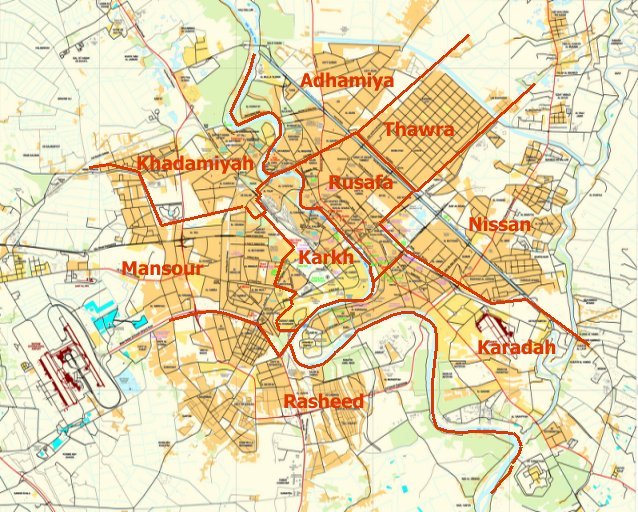
The U.S. military said last week it was building the 5-kilometer concrete wall in the Al-Adhamiyah quarter of Baghdad to protect minority Sunnis from attacks. Al-Maliki arrived in Egypt on April 22, his first stop on a four-nation Arab tour that will include Egypt, Kuwait, the U.A.E, and Oman. He is preparing for two international conferences on Iraq set to take place in the Egyptian Red Sea resort of Sharm el-Sheikh on May 3 and 4.
Earlier, al-Maliki said the violence in Iraq is not the result of a sectarian conflict but due to the actions of Al-Qaeda and its allies. Al-Maliki said violence in Baghdad is largely under control, thanks to a new security plan.
The U.S. military said last week it was building the 5-kilometer concrete wall in the Al-Adhamiyah quarter of Baghdad to protect minority Sunnis from attacks. Al-Maliki arrived in Egypt on April 22, his first stop on a four-nation Arab tour that will include Egypt, Kuwait, the U.A.E, and Oman. He is preparing for two international conferences on Iraq set to take place in the Egyptian Red Sea resort of Sharm el-Sheikh on May 3 and 4.
Earlier, al-Maliki said the violence in Iraq is not the result of a sectarian conflict but due to the actions of Al-Qaeda and its allies. Al-Maliki said violence in Baghdad is largely under control, thanks to a new security plan.
Labels: Azamiyah wall, Nouri Al-Maliki, Ryan Crocker, U.S. ambassador to Iraq