Thursday, May 10, 2007
Iraqi parliament votes to start legal proceedings against Al Jazeera
Media, Politics
(AP) - Parliament overwhelmingly voted Wednesday to start legal proceedings against Al-Jazeera television over perceived insults by the Arabic news channel against Iraq's top Shiite cleric, Grand Ayatollah Ali al-Sistani. It was not immediately clear what the legal action would amount to. Speaker Mahmoud al-Mashhadani, a Sunni Arab, said only that the matter would be decided by parliament's legal department.
The move by the 275-seat house followed protests Friday in the southern cities of Basra and Najaf by hundreds of Shiites angered by an Al-Jazeera talk show in which the host questioned al-Sistani's leadership credentials and appeared to cast doubt on whether he personally authored his edicts.
The controversy has received extensive coverage by the Iraqi media, with some Shiite television channels devoting hours of air time to politicians and clerics expressing indignation. And in Shiite Iran, al-Sistani's birthplace, parliament on Sunday decided to ban Al-Jazeera reporters from its building in protest.
"We regret the Iraqi decision," Al-Jazeera's editor in chief Ahmed al-Sheik said from Doha, the Qatari capital. "This is an Iraqi decision. There is nothing that we can do. We have no problem with the Iraqi government and we deal with it like any other government," he said in a telephone interview.
Debating the issue before the vote, which was taken by a show of hands, several deputies suggested that the Qatar-based network be sued before the International Criminal Court in The Hague for what they said was its role in stoking sectarian strife in Iraq, a charge routinely leveled by Shiite politicians against the station.
Criticism by Sunni and Kurdish legislators, however, was muted, with some suggesting that the best defense against Al-Jazeera was for Iraqis to put their own house in order. Responding to calls by some deputies for a boycott of Al-Jazeera by Iraqi politicians, Sunni Arab lawmaker Mahdi Hafez said the station's allegations should be countered by Iraqis appearing on its programs. In unusually candid comments, lawmaker Safiyah al-Suheil said the root cause of the latest furor over Al-Jazeera was that al-Sistani has been brought into politics.
Since the fall of Saddam Hussein's regime in 2003, Shiite politicians have accused Al-Jazeera of championing the former leader's rule and the Sunni insurgency. The channel has been banned from operating in Iraq since 2004.
The move by the 275-seat house followed protests Friday in the southern cities of Basra and Najaf by hundreds of Shiites angered by an Al-Jazeera talk show in which the host questioned al-Sistani's leadership credentials and appeared to cast doubt on whether he personally authored his edicts.
The controversy has received extensive coverage by the Iraqi media, with some Shiite television channels devoting hours of air time to politicians and clerics expressing indignation. And in Shiite Iran, al-Sistani's birthplace, parliament on Sunday decided to ban Al-Jazeera reporters from its building in protest.
"We regret the Iraqi decision," Al-Jazeera's editor in chief Ahmed al-Sheik said from Doha, the Qatari capital. "This is an Iraqi decision. There is nothing that we can do. We have no problem with the Iraqi government and we deal with it like any other government," he said in a telephone interview.
Debating the issue before the vote, which was taken by a show of hands, several deputies suggested that the Qatar-based network be sued before the International Criminal Court in The Hague for what they said was its role in stoking sectarian strife in Iraq, a charge routinely leveled by Shiite politicians against the station.
Criticism by Sunni and Kurdish legislators, however, was muted, with some suggesting that the best defense against Al-Jazeera was for Iraqis to put their own house in order. Responding to calls by some deputies for a boycott of Al-Jazeera by Iraqi politicians, Sunni Arab lawmaker Mahdi Hafez said the station's allegations should be countered by Iraqis appearing on its programs. In unusually candid comments, lawmaker Safiyah al-Suheil said the root cause of the latest furor over Al-Jazeera was that al-Sistani has been brought into politics.
Since the fall of Saddam Hussein's regime in 2003, Shiite politicians have accused Al-Jazeera of championing the former leader's rule and the Sunni insurgency. The channel has been banned from operating in Iraq since 2004.
Labels: Ahmed al-Sheik, Al Jazeera, Ayatollah Ali al-Sistani, Doha, Iraqi parliament, Safiyah al-Suheil


Friday, April 27, 2007
Film about Iraqi and foreign fighters wins award
Media
(Al Jazeera) - A film about the lives of Iraqi and foreign fighters in northern Baghdad has won first prize at the Al Jazeera International Documentary festival in the Qatari capital Doha. Meeting Resistance - directed by the UK/US team of Steve Connors and Molly Bingham - won the award, including a 50,000 Riyal ($13,737) prize, for the best long film.
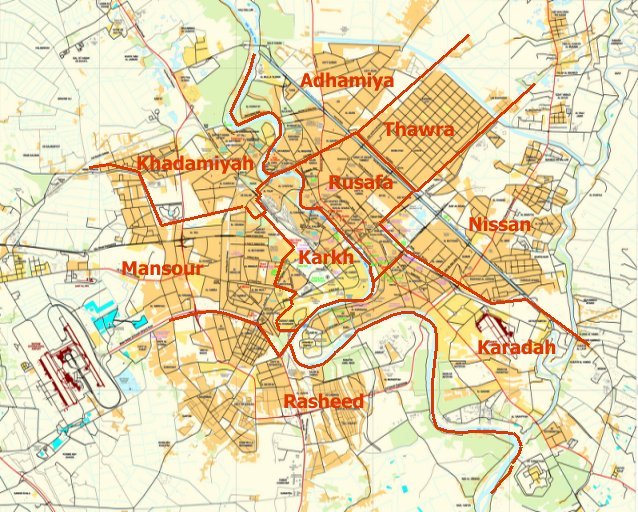
Meeting Resistance focuses on eight fighters based in the northern Baghdad suburb of Adhamiya and details their personal and political reasons for their involvement in attacks on US forces. The fighters come from a range of backgrounds. Most are Iraqi, but one man is a Syrian who says he came to Iraq after an appeal from his local mosque to "join the jihad".
Adhamiya is now reported to be a largely Sunni part of the Iraqi capital but the film - made between June 2003 and May 2004 - depicts the area's mixed nature before months of bloody sectarian conflict began. Three of the fighters are Shia, another is a former Iraqi Republican Guard officer who was married to a Shia woman. Some are motivated by a desire to end the US occupation of Iraq at that time while others draw on their religious beliefs and one is an imam at an Adhamiya mosque. All, however, are united by a desire to drive foreign forces from Iraq.
Meeting Resistance focuses on eight fighters based in the northern Baghdad suburb of Adhamiya and details their personal and political reasons for their involvement in attacks on US forces. The fighters come from a range of backgrounds. Most are Iraqi, but one man is a Syrian who says he came to Iraq after an appeal from his local mosque to "join the jihad".
Adhamiya is now reported to be a largely Sunni part of the Iraqi capital but the film - made between June 2003 and May 2004 - depicts the area's mixed nature before months of bloody sectarian conflict began. Three of the fighters are Shia, another is a former Iraqi Republican Guard officer who was married to a Shia woman. Some are motivated by a desire to end the US occupation of Iraq at that time while others draw on their religious beliefs and one is an imam at an Adhamiya mosque. All, however, are united by a desire to drive foreign forces from Iraq.
The film beat off competition from 32 other features to win the award at the third Al Jazeera documentary festival. First prize in the short film category went to a Chinese film, My Treasure. Another Chinese film, Butterflies, won the Jury's Award and a prize of 25,000 Riyals. Palestinian, Italian and Iranian films also picked up awards in some of the festival's other categories.
Labels: Adhamiyah, award, Doha, film, Iraq, Meeting Resistance, Molly Bingham, Steve Connors