Sunday, November 11, 2007
Iraq - Iran pipeline may be built
Labels: Abaadan port, Basra, Hussain al-Shahristani, Iran, Iraq, oil pipeline, South Oil Company


Special Inspector General for Iraq Reconstruction From SIGIR Observations
Although the overall security environment has improved recently, contractors, journalists, and Iraq’s citizens continue to live and work in an environment that is, in many places, still quite dangerous:
+ The Department of Labor (DoL) reported 72 new death claims this quarter for civilian contractors working on U.S.-funded projects in Iraq. Since Iraq reconstruction began, 1,073 death claims have been filed with the DoL. Reported deaths in this category were about 22% above the quarterly average.
+ DoS reported that three U.S. civilians died in Iraq this quarter. Since the beginning of the U.S. reconstruction effort, 235 U.S. civilian workers have died in Iraq. Non-military U.S. citizen deaths reported this quarter were 78% below the quarterly average.
+ This quarter, 2 journalists were killed in Iraq; 119 Iraqi and other journalists have been killed since March 2003, and 41 media support workers have been killed in Iraq since hostilities began, including 2 this quarter.
+ Violence continued to force Iraqis to migrate. The UN High Commissioner for Refugees (UNHCR) estimates that one of every seven Iraqis has been displaced by the conflict in Iraq. The UNHCR noted that large numbers of Iraqis continue to flee the country, and admission into Syria and Jordan became subject to visa approval this quarter. Internal migration is also limited by provincial restrictions on admission of internally displaced persons (IDPs).
Labels: civilian contractors, IDPs, Iraq, Iraqi refugees, journalists, reconstruction, SIGIR, UNHCR
Iraqi Minister Council removes legal immunity from foreign private security firms
General Dept of the Technical Affairs, Headquarters of Registration and Assessment of Private Security Companies
Letter No: 937, Date: Nov 1, 2007
To: All PSC
Sub: Removing the legal immunity
According to the directions of the Minister Council regarding moving the legal immunity
from all the foreign private security companies and deal with it according to Iraqi law.
Please notify that in all your future missions and give the direction to all your staff. For
your information all the Iraqi security departments were informed about it .The MNF
confirming taking the legal actions against any violator in the future. Including signing
your passports from the traveling and Jinsseya directorate to make your residence in Iraq
legal .And the violator will face legal punishment from the Iraqi law.
Col
The Director of Registration and Assessment of PSC office
Copy to: To be informed and to take the appropriate actions …..With
respect PSCAI, PSC.
In the Name of the People - The Presidency Council
Based on what was submitted by the Council of Ministers and ratified by the Council of
Representatives and in accordance with the provisions of Article 138 (Fifth) of the
Constitution, the Presidency Council has decided in its session held on / / / to promulgate
the following law.
No. ( ) of 2007
Provisions of the Iraqi law
Article 1:
Non-Iraqi security companies and its non-Iraqi employees and contractors shall be
subject to the Iraqi legislations and the jurisdiction of the Iraqi judiciary in all civil and
criminal cases. All immunities granted to them in accordance with any valid legislation
shall be canceled.
Article 2:
The categories mentioned in Article 1 of this law shall be subject to the Iraqi legislations
including those related to the residency, granting visas, possessing and carrying weapons,
paying taxes, fees and customs, registering companies and granting them license to work
in the Iraqi territories.
Article 3:
The vehicles, ships, airplanes belonging to the categories mentioned in Article 1 of this
law shall be subject to the procedures of registration, licensing, checking and inspection
stipulated in the Iraqi legislations.
Article 4:
This law shall be deemed as an amendment for the Dissolved CPA Order No17 of 2004.
Article 5:
This Law shall enter into force on the date of its publishing in the Official Gazette.
Labels: Interior Ministry, Iraq, legal immunity, private security firms, PSCs
Tuesday, October 16, 2007
U.S., Iraqi officials debate Blackwater's expulsion from Iraq
The Iraqi investigators issued five recommendations to the government of Prime Minister Nouri Al Maliki, which has since sent them to the US Embassy as demands for action. Point No. 2 in the report says: "The Iraqi government should demand that the United States stops using the services of Blackwater in Iraq within six months and replace it with a new, more disciplined organization that would be answerable to Iraqi laws." Sami Al Askari, a top aide to Al Maliki, said that point in the Iraqi list of demands was nonnegotiable.
"I believe the government has been clear. There have been attacks on the lives of Iraqi citizens on the part of that company (Blackwater). It must be expelled. The governmenthas given six months for its expulsion and it's left to the US Embassy to determine with Blackwater when to terminate the contract. The American administration must find another company," he told AP.
In talks between American diplomats and the Al Maliki government, Al Askari said, the US side was not "insisting on Blackwater staying." He was the only Iraqi or American official who would allow use of his name, others said information they gave was too sensitive. In an interview to be broadcast Monday on PBS, television presenter Charlie Rose asked Blackwater chief Erik Prince about the issue."We'll do what we're told and, you know, make the transition as smooth as possible," Prince said.
Labels: Blackwater, Iraq, Nisoor Square, private security contractors, Sami Al Askari, security
Wednesday, October 10, 2007
Political, Military, and Economic Dynamics in Iraq: A Graphic Overview
U.S. lands Iraq 700,000 ton wheat deal
Labels: Australia, Brett Stevenson, Iraq, U.S., wheat
Friday, October 05, 2007
Iraqis prevented from entering Syria without visas
The Iraqi official further added that the Syrian-Iraqi borders seemed the past two days almost deserted after previously receiving between 1,500 and 2,000 Iraqis every day. Any Arab is allowed to enter Syria without a visa. However, after the massive flow of Iraqi refugees from the ongoing conflict in that country into Syria, the Syrian government decided to impose visas on any visiting Iraqi.
According to the United Nations High Commissioner for Refugees (UNHCR) Antonio Guterres, about 2 million Iraqis have taken refuge in neighbouring countries, particularly in Jordan and Syria, placing a heavy burden on their hosts. In Syria, which sees the arrival of an estimated 40,000 Iraqis a month, refugees are seen to be contributing to a rise in the cost of housing and goods and the overcrowding of schools.
About 1.5 million Iraqi refugees currently live in Syria. The Syrian government provides the Iraqi refugees with free education and health care, but can no longer cope with the influx of Iraqis.
Labels: Iraq, refugees, Syria, visas
Kuwait will not accept partition of Iraq
The amendment has been widely interpreted as a proposal to divide Iraq along sectarian and ethnic lines into Sunni, Shiite and Kurdish regions. Shaikh Sabah also called on the United States to keep its troops in Iraq until stability is seen on the ground. "I say it frankly, I would like the United States to withdraw its troops from tomorrow, but do you think that if they pull out there will be stability in Iraq? I think not," he said.
"We will hold the United States responsible for the fighting in Iraq, therefore, I wish that they will not leave now before they maintain a strong army in Iraq that can protect Iraq and its people." Iraqi Foreign Minister Hoshiyar Zebari said on Monday that the resolution was well-meaning but failed to recognise the ethnic complexity of Iraqi cities and regions. The Arab League criticised the resolution and described the idea as "hostile to Arab interests."
Labels: federalism, Hoshiyar Zebari, Iraq, Kuwait, partition, Shaikh Sabah Al Ahmad Al Sabah
Calls grow for partition of Iraq
US officials say the number of Iraqi civilians and American soldiers killed in September was lower than at any time since January 2006. The overall trend has been downwards for four months. Lieutenant-general Raymond Odierno, the US deputy commander, said this week that al-Qaida bases and safe havens had been reduced by 60-70% since the surge began. Other contributory factors include increased cooperation from Sunni Arab tribesmen across central Iraq. Up to 30,000 Sunnis have reportedly volunteered to help US and Iraqi-government forces secure their neighbourhoods.
After months of bitter US complaints that Iran's Revolutionary Guard was aiding Shia militias and arming renegade Sunnis linked to al-Qaida, Tehran may be backing off. Gen Odierno said the supply of weapons from Iran grew dramatically from April to July, in support of a summer offensive by insurgents.
But after a deal made with Tehran last month by Iraq's Shia prime minister, Nouri al-Maliki, the flow is slowing. Sadly for the overall US strategy, political progress is not keeping pace. Mr Maliki's coalition government looks weaker than ever, unable to command a working parliamentary majority, or to pass key reconciliation measures. Seventeen ministries are without a minister and much central government funding remains frozen in the ruins of a collapsed bureaucracy.
Sensing division among Shias and reduced commitment from the Kurds, Sunni Arab and secular parties are threatening a no-confidence vote. US congressional criticism is mounting too. "There was just no sense of urgency on the part of the prime minister to drive the overarching goal that will help cement and solidify Iraq as a united country," said Republican senator Olympia Snowe after visiting Baghdad.
US officials, including President Bush, are leaning hard on Mr Maliki. But ironically, their success in thwarting Democrat attempts to impose a withdrawal timetable, plus the surge's recent advances, may have eased the immediate pressure on him. And if Mr Maliki were to fall, neither Washington nor Iraq's squabbling factions would easily find a viable alternative.
The impotence of the Baghdad government, and the willingness of tribal chiefs and provincial and municipal-level leaders to take charge of their security, budgets and social programmes, is encouraging talk of partition - or at least devolution of power beyond that envisaged in Iraq's federal constitution.
Independence-minded Kurdistan, in northern Iraq, is already going its own way. The Kurdish regional government recently signed five unilateral oil exploration deals, to fury in both Baghdad and Washington.
In the south, Mr Maliki's key Shia backer, the Supreme Islamic Iraqi Council, wants the nine majority-Shia southern provinces to join what could effectively become a state within a state. Its existential power struggle with Moqtada al-Sadr's Mahdi army, sworn opponent of Mr Maliki and the Americans, is increasingly distracting its attention from "national" priorities.
This has not gone unnoticed among US legislators and policymakers such as Democrat senator Joe Biden, who have long argued for Bosnia style, ethnically based partition. Mr Biden won Senate approval last week for a non-binding measure urging Iraq's division into Sunni, Shia and Kurd regions.
"Attempts to partition or divide Iraq by intimidation, force or other means would produce extraordinary suffering and bloodshed," the US government said. But many reply that, despite the surge's recent successes, extraordinary suffering is what Iraq has already got; and the illusion of central control cannot be sustained much longer.
Labels: Iraq, Kurdistan, Moqtada Al-Sadr, partition, SIIC, southern Iraq
Thursday, October 04, 2007
Iraq orders $100 mn. worth of light military equipment from China
The Iraqi president also called for faster U.S. weapons deliveries to strengthen Iraq's army. "The capacity of the factories here are not enough to provide us quickly with all that we need, even for the army," the newspaper quoted Talabani, who is visiting the United States, as saying. "One of our demands is to accelerate the delivery of the arms to the Iraqi army".
Last week the Pentagon said it was ready to sell Iraq weapons worth up to $2.3 billion to help its army expand and take over missions now carried out by U.S. and other foreign forces. It said the sale would include vehicles, small arms ammunition, explosives and communications equipment, as well as upgrades to 32 additional UH-1 helicopters.
The newspaper said U.S. officials conceded Washington faced problems delivering everything Baghdad needed. "We're working hard just to supply our own troops," an administration official told the newspaper. "Our factories are working for our own troops. So it's true we don't have the ability to provide these rifles and other equipment they're looking for."
Labels: China, Iraq, Iraqi police, Jalal Talabani, weapons
Iraq reconciliation drive offers bonuses for mixed marriages
Tens of thousands of Iraqis have been killed in sectarian violence since the U.S. invasion of 2003 that toppled Saddam Hussein, a minority Sunni who suppressed the majority Shi'ites and Kurds in the north. Feuding between politicians from the sectarian groups has all but paralysed the government of Shi'ite Prime Minister Nuri al-Maliki and stymied progress on reconciliation reforms Washington wants. "Today we have a new programme in which we want to break the sectarian strife," Hashemi said. "We will allocate a special bonus to those who break this hateful sectarian yoke and get married on the basis that his wife is an Iraqi, not because she is a Sunni or a Shi'ite."
Shi'ite Ali al-Kilabi, 29, married a Sunni woman two months ago and was happy with the $1,500 he received to pay off his marriage debts. "There are people who are so fanatical. We are neutral, we do not pay attention to these matters. We do not differentiate between Shi'ites or Sunnis," he told Reuters. "My wife and I do not argue because we are from a different sect. We condemn people who are sensitive about these matters."
The sectarian violence in Iraq has forced hundreds of thousands of people to move out of neighbourhoods dominated by one sect or another, leading to huge displacement of Iraqis. According to an Iraqi Red Crescent report for August 2007, nearly two million Iraqis have left from their homes since the bombing of a Shi'ite shrine in Samarra in February 2006 sparked a wave of sectarian violence.
Um Fuad's son, a Kurd, married a Sunni Arab a year ago. The couple was keen to get the money to pay hospital bills as his wife is about to have a baby. Um Fuad's other son married a Shi'ite and needs the cash to pay off wedding debts. "We do not differentiate between sects," she said.
But for some at the ceremony, the money was scant compensation for the loss and suffering they have endured since Saddam was toppled. Um Ubaida, a 25-year-old Sunni civil servant, looked pale and expressionless as she went to receive the wedded couples bonus to help with her debts. She married last year and had a baby two months ago, but has not seen her husband for seven months. "My husband is missing, he went to visit his brother in prison and he never came back," she said.
Labels: cash bonus, Iraq, marriage, Tariq al-Hashimi
WHO - cholera outbreak in Iraq spreads
Cholera is a gastrointestinal disease that is typically spread by drinking contaminated water and can cause severe diarrhea that, in extreme cases, can lead to fatal dehydration. It can be prevented by treating drinking water with chlorine and improving hygiene conditions. The global health body estimates that more than 30,000 people have come down with acute watery diarrhea, which may later be confirmed as cholera.
Kirkuk with 2,309 cases and Sulaimaniyah with 870 are the hardest-hit provinces, with numbers still rising. Both are in northern Iraq. But the disease is continuing to spread and it is "highly possible" it will reach as yet unaffected areas, WHO said. "The numbers of cases are remaining stable in Basra, Baghdad, Dahuk, Mosul and Tikrit," it said. "However, a case has now been confirmed in Wasit, a province that has previously been unaffected by the outbreak."
Diyala, a province neighboring Baghdad, has reported an increasing number of cases of acute watery diarrhea. Although the province has no confirmed cases of cholera, the symptoms indicate the presence of the disease, it said.
The agency said the Iraqi government has taken steps to curb the disease, but that the overall quality of water and sanitation is very poor, which greatly facilitates cholera contamination. "WHO is in the process of procuring 5 million water-treatment tablets, and two international WHO epidemiologists are being deployed to support the Ministry of Health in Iraq," it said.
Blackwater denies charges
The company is in the middle of a tug of war between the Iraqi government and the US state department following the alleged killing of 11 Iraqi civilians in Baghdad on September 16. Blackwater has been blamed.
The Iraqi government has called for the company to be expelled but the state department, which relies on Blackwater for protection of its diplomats, wants it to stay. The hearing offered the first opportunity to hear Blackwater's side of the story in detail. But the US justice department unexpectedly stepped in at the last minute and asked that the congressional committee and Mr Prince avoid specific questions about the September incident.
In an opening statement before the House oversight committee, Mr Prince, 38, defended his company in relation to the killings. "There has been a rush to judgment based on inaccurate information, and many public reports have wrongly pronounced Blackwater's guilt for the deaths of varying numbers of civilians," he said. "Congress should not accept these allegations as truth until it has the facts. Based on everything we currently know, the Blackwater team acted appropriately while operating in a very complex war zone on September 16."
Labels: Blackwater, Erik Prince, Iraq, private security companies
Poland to keep troops in Iraq despite attack on envoy
The attack came as Iraqi Prime Minister Nouri Al Maliki said amid mounting anger yesterday that Blackwater should leave the country because of the mountain of evidence against the under-fire US security firm. The House of Representatives is expected to vote on legislation that could see US contractors who commit felonies in Iraq and Afghanistan being prosecuted in US federal courts, a human rights activist said yesterday.
Labels: bomb attack, General Edward Pietrzyk, Iraq, Jaroslaw Kaczynski, Poland
Thursday, September 20, 2007
Wounded Iraqis speak out about Blackwater incident
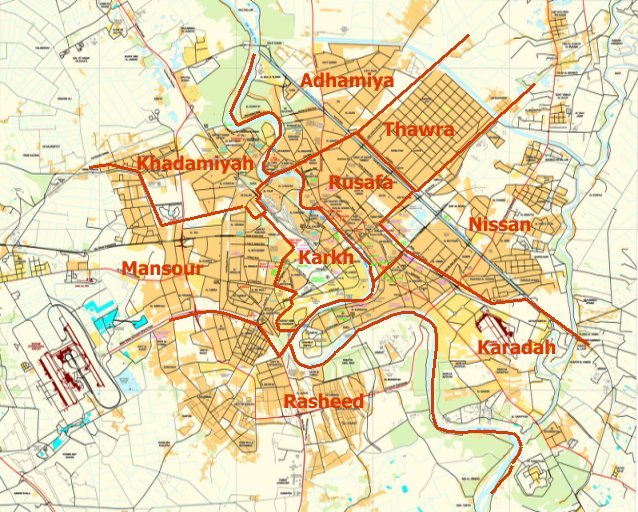
So what happened on that day on a square in the Mansour district of Baghdad? It depends on whom you ask.
Blackwater USA, the private security firm at the center of the controversy, says its employees simply defended themselves against armed attackers. Two men hospitalized with gunshot wounds disagree. They say the guards fired on people for no reason.
Hasan Jaber Salman lies in Yarmouk Hospital, bandages covering gunshot wounds in his back. Salman says he is a lawyer who was headed from a courthouse to the Ministry of Justice when he found his route blocked by four armored Blackwater SUVs. The roadblock soon caused a traffic snarl, so armed Blackwater guards began waving at the drivers, telling them to turn around and leave the area.
"So we turned back, and as we turned back they opened fire at all cars from behind," Salman said. "All my injuries, the bullets are in my back. "Within two minutes the security force arrived in planes -- part of the security company Blackwater. They started firing randomly at all citizens." Blackwater, in a statement issued after the incident, denied that gunfire came from aircraft. "The helicopters providing aerial support never fired weapons," it said.
The firm also said its employees "acted lawfully and appropriately in response to a hostile attack." But Salman claims the attack was unprovoked. "No one fired at them, they were not attacked by gunmen, they were not targeted by an explosion," he said. The firing continued until Salman's car crashed into a police checkpoint and flipped over, he said, adding that eight bullets struck his car and four struck him.
"My left shoulder is broken ... and my arm is broken. I had a surgery. ... They opened up my stomach," he said. "I swear to God no one did anything to them at all." The lawyer said he intends to sue Blackwater, which he already did in 2005 after his son was involved in a similar incident outside al-Muthana Air Base near Baghdad's international airport. That lawsuit has not yet been resolved, he said.
Laborer Abul-Raheem Amir said he was on his way to a job when the minibus he was in got caught in a traffic jam caused by an explosion. "A security company called Blackwater, they got out and kept on firing randomly at people, starting with the people walking or working the street -- even the traffic policeman, even the people who work in the area," Amir said.
"People at first thought we were safe in the minibus, but when they realized they were not, they started getting out and went to other places to save themselves," he recounted. "Unfortunately that did not work. As they got out, people were shot and killed." He said he tried to make a run for it after the driver and two women next to him on the minibus were shot. "I ran about 50 meters [about 55 yards] and then was shot, the first bullet. Still I kept running, but the second bullet dropped me to the ground. ... It broke my bones, and the third one made me start crawling."
Some people helped get him off the street and away from the carnage. The shooting lasted for about a half-hour, and there were some 30 bodies in the street, he said. "I remember people strewn on the streets, children, elderly, young men, elderly women. ... The street turned into the street of the dead, a graveyard," he said. "There was nothing I could do. Every man was for himself." Amir wonders what the Blackwater employees were thinking.
"Is this some kind of a show of force for them to flex their muscles?" he said. "Are they doing this to us, the victims, so they can advertise and promote their abilities through the Western media? ... Is their mission to protect one person by killing 10 unarmed people? And if they are protecting two people, then they shoot 100 unarmed people. ... Is this Vietnam? ... "Enough, enough," he said. "Enough of all that's happening. God's fury is coming. Enough of this. Enough."
Labels: Blackwater, Iraq, private security contractors
Iraqi parliamentary session cancelled after majority fail to attend
Labels: Council of Representatives, Iraq, politics
Wednesday, September 19, 2007
Study finds 50,000 more Iraqis displaced since July
Shiites make up some 65 percent of the displaced, while 31 percent are Sunnis and 4 percent Christian, according to an IOM survey of 114,732 families. "The majority of the displaced assessed are renting substandard shelter or are staying with friends of family, placing new burdens on host communities," the IOM said in its latest "Emergency Needs Assessments" report on Iraq.
The problem is compounded by many provinces now restricting entry and registration of displaced persons, and by the decision of Iraq's neighbors, Syria and Jordan, to impose visa requirements in order to stem the flow of refugees, it added. The organization's latest review did cite some progress in parts of Baghdad and the western province of Anbar but warned that it was by no means uniform or certain to continue.
Increased security, particularly in the capital, is the central aim of US President George W. Bush's "surge" strategy, which has come under heavy attack in recent weeks. "Some areas, such as Anbar and parts of Baghdad, have seen improved security and therefore decreased displacement," the IOM said in the report. However, people do continue to be displaced in the capital and often for a myriad reason of localized political factors, it said.
In Anbar Province, the IOM said there had been a stabilization in the number of displaced people since January, with "waves" of inhabitants returning coming to its capital, Ramadi, due to better security. A coalition of 42 Sunni tribes has joined with US forces in their fight against Al-Qaeda in Iraq since last year under the umbrella heading of the Anbar Rescue Council. The alliance is credited with helping improve security, but it suffered a grave blow last week after insurgents killed key US ally Sheikh Abdul Sattar Abu Risha.
Labels: IDPs, International Organization for Migration, Iraq
Tuesday, September 18, 2007
CRS report on Private Security Contractors in Iraq
Background, Legal Status, and Other Issues – Updated July 2007
services in Iraq, including security. From the information available in published
sources, this apparently is the first time that the United States has depended on
contractors to provide such extensive security in a hostile environment, although it
has previously contracted for more limited security services in Afghanistan, Bosnia,
and elsewhere. In Iraq, private firms known as Private Security Companies (PSC)
are currently providing security services such as the protection of individuals, nonmilitary
transport convoys, buildings and other economic infrastructure, as well as
the training of Iraqi police and military personnel.
Contractors to the coalition forces in Iraq operate under three levels of legal
authority: (1) the international order of the laws and usages of war and resolutions
of the United Nations Security Council; (2) U.S. law; and (3) Iraqi law, including
orders of the CPA (CPA Order number 17) that have not been superceded. Under the authority of
international law, contractors working with the military are civilian non-combatants
whose conduct may be attributable to the United States.44 Iraqi courts do not have
jurisdiction to prosecute them for conduct related to their contractual responsibilities
without the permission of the Sending State.45 Some contractors, particularly U.S.
nationals, may be prosecuted in U.S. federal courts or military courts under certain
circumstances.
U.S. officials in Baghdad have yet to clarify the legal status of foreign security contractors in Iraq, including whether they could be prosecuted by Iraqi authorities.
Many Iraqis see the contractors, who have worked in Iraq since the U.S.-led invasion to topple Saddam Hussein in 2003, as private armies that have acted for too long with impunity. "These cases have happened more than once and we can't keep silent in the face of them," Interior Minister Jawad al-Bolani said on Monday.
Ministry spokesman Brigadier-General Abdul-Karim Khalaf said Iraq did have the right to take action if the Blackwater force had fired on civilians. "Definitely we have the right. If they committed this act this should be tried," he said.
Labels: Blackwater, Congressional Research Service, CPA order 17, CRS, Iraq, private security contractors
Czech republic to help build a new Iraq
"The Czech government is following up on the developments of events in Iraq and is ready to continue offering help to the Iraqi government to build a new Iraq…," the statement indicated. Zibari expressed his government's gratitude for "the support offered by the Czech government with regards to providing stability and security, and training Iraqi security forces…," the statement said.
Describing the Czech government's solidarity with Iraq as a "long-term investment that serves the interests of the people of both countries," Zibari gave a detailed overview of recent developments in the political and security situation in Iraq, and expressed his government's keenness to settle unresolved issues.
Labels: Czech republic, Hoshyar Zibari, Iraq, Mirek Topolanek
Iraqi government to review status of all private security firms in Iraq
Blackwater has said its guards acted in self-defence in Sunday's incident. But the Iraqi interior ministry has claimed the men fired "randomly at citizens" in a crowded square in the capital, killing innocent bystanders and a policeman. The Blackwater guards were protecting a convoy carrying officials from the US State Department at the time.
Earlier, the US Secretary of State, Condoleezza Rice, telephoned Prime Minister Nouri Maliki to express her regret over the deaths and pledge to help carry out a "fair and transparent" investigation into the incident.
BLACKWATER USA FACTS
Founded in 1997 by three former US Navy SEALs
Headquarters in North Carolina
One of at least 28 Private Security Companies in Iraq
Employs 744 US citizens, 231 third-country nationals, and 12 Iraqis to protect US state department in Iraq (May 2007)
Provided protection for former CPA head Paul Bremer
Four employees killed by mob in Falluja in March 2004
Personnel have no combat immunity under international law if they engage in hostilities
A spokesman for the US State Department told the AFP news agency that during her phone call to Mr Maliki, Ms Rice had "reiterated that the United States does everything it can to avoid such loss of life in contrast to the enemies of the Iraqi people who deliberately target civilians". The two agreed to hold any wrongdoers accountable, according to Mr Maliki's spokesman.
Thousands of often heavily armed private security guards are employed in Iraq. Although they have no combat immunity under international law if they engage in hostilities, many critics say they are accountable only to their employers. Blackwater is one of the biggest private security contractors in Iraq and is reported to have a contract worth $300m (£150m) with the State Department to protect its diplomatic staff and equipment there. The BBC's Justin Webb in Washington says Blackwater's suspension could be a potentially serious blow to the department's work in Iraq.
Labels: Blackwater, Iraq, Iraqi government, PMCs, private security firms, PSCs, security, U.S. State Department