Friday, October 12, 2007
U.N. says PSC shootings could amount to war crimes
"For us, it's a human rights issue," said Ivana Vuco, a human rights officer with the U.N. Assistance Mission to Iraq, or UNAMI. "We will monitor the allegations of killings by security contractors and look into whether or not crimes against humanity and war crimes have been committed." The warnings followed two high-profile cases of shooting incidents involving private contractors on the streets of Baghdad.
Arikat spoke as UNAMI released its quarterly human rights report, which warns that increasing reliance on heavily armed teams in Iraq risks eroding the distinction between civilians and combatants. It notes several reports of "killings carried out by privately hired contractors with security-related functions in support of U.S. government authorities."
But the world body is still viewed by most Iraqis as a more neutral party, and Thursday's warnings likely were meant to invoke that position of moral authority. Vuco said international humanitarian rights law applies equally to contractors who work for the mostly Western firms providing security to diplomats and aid groups as it does to other parties in a conflict.
Labels: human rights, Ivana Vuco, private security companies, UNAMI, war crimes


Thursday, October 04, 2007
Blackwater denies charges
The company is in the middle of a tug of war between the Iraqi government and the US state department following the alleged killing of 11 Iraqi civilians in Baghdad on September 16. Blackwater has been blamed.
The Iraqi government has called for the company to be expelled but the state department, which relies on Blackwater for protection of its diplomats, wants it to stay. The hearing offered the first opportunity to hear Blackwater's side of the story in detail. But the US justice department unexpectedly stepped in at the last minute and asked that the congressional committee and Mr Prince avoid specific questions about the September incident.
In an opening statement before the House oversight committee, Mr Prince, 38, defended his company in relation to the killings. "There has been a rush to judgment based on inaccurate information, and many public reports have wrongly pronounced Blackwater's guilt for the deaths of varying numbers of civilians," he said. "Congress should not accept these allegations as truth until it has the facts. Based on everything we currently know, the Blackwater team acted appropriately while operating in a very complex war zone on September 16."
Labels: Blackwater, Erik Prince, Iraq, private security companies
Wednesday, September 19, 2007
U.S. embassy in Iraq suspends diplomatic convoys across Iraq
The government announced the investigation on Tuesday, after the interior ministry decided to "halt the licence" of Blackwater, which provides security to US diplomats in Iraq. Ali al-Dabbagh, a government spokesman, announced the decision "to review the operations of foreign and local security companies in Iraq". He said: "This came after the flagrant assault conducted by members of the American security company Blackwater against Iraqi citizens."
In a notice sent to Americans in Iraq, the US embassy said it had acted to review the security of its personnel and possible increased threats to those leaving the Green Zone while accompanied by security details after the weekend killing of Iraqi civilians involving Blackwater guards.
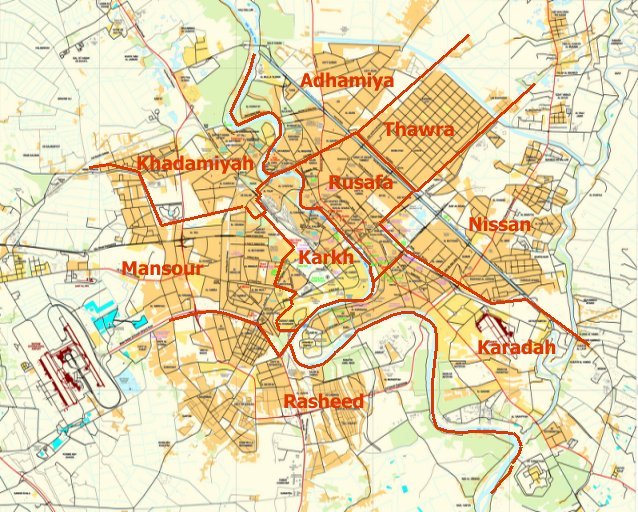
"In light of a serious security incident involving a US embassy protective detail in the Mansour District of Baghdad, the embassy has suspended official US government civilian ground movements outside the International Zone [Green Zone] and throughout Iraq," the notice said.
"This suspension is in effect in order to assess mission security and procedures, as well as a possible increased threat to personnel travelling with security details outside the International Zone," said the notice. Blackwater said on Monday that it had received no official notice from Iraq's interior ministry.
The toll from the shooting rose to nine - 10 civilians and one policeman - on Tuesday, according to a local hospital medic. US officials in Baghdad have yet to clarify the legal status of foreign security contractors in Iraq, including whether they could be liable for prosecution by Iraqi authorities. Riad Kahwaji, director of the Institute for Near East and Gulf Military analysis, told Al Jazeera: "Only the party that brought them [the private security firms] into Iraq can take them out of Iraq - and that is the US."
He said that under their contracts "neither Blackwater nor the other [private security] companies are obliged to obtain a licence from Iraq". Kahwaji said: "The chances are they are going to stay. Because a lot of the foreign companies and contractors that are rebuilding Iraq rely totally on these Western, or US-based, security companies. "They don't have any confidence in the Iraqi police and the Iraqi security services."
Condoleezza Rice, the US secretary of state, telephoned Nuri al-Maliki, Iraq's prime minister, on Monday to express regret over the death of innocent civilians. US and Iraqi sources said the shooting erupted after a bomb exploded near a US diplomatic convoy, but a US government incident report said armed men fired on the convoy and Blackwater guards responded. "Blackwater's independent contractors acted lawfully and appropriately in response to a hostile attack in Baghdad on Sunday," said a statement from the North Carolina company, reported by CNN on its website.
"Blackwater regrets any loss of life, but this convoy was violently attacked by armed insurgents, not civilians, and our people did their job to defend human life." Nevertheless, Abdul Sattar Ghafour Bairaqdar, a judge from Iraq's highest court, the Supreme Judiciary Council, said Blackwater could face trial. "This company is subject to Iraqi law and the crime committed was on Iraqi territory and the Iraqi judiciary is responsible for tackling the case," he said.
Muqtada al-Sadr, the Shia leader of the al-Mahdi Army militia, added his voice to anger over the incident, urged the government to "cancel this company's work, and the rest of the criminal and intelligence companies".
Labels: Abdul Sattar Ghafour Bairaqdar, Ali al-Dabbagh, Blackwater, Condoleezza Rice, diplomatic convoys, Green Zone, Moqtada Al-Sadr, private security companies, U.S. embassy Iraq
Tuesday, August 21, 2007
CRS report - Private Security Contractors in Iraq: Background, Legal Status, and Other Issues
Labels: 10th Iraqi Army division, accountability, Congressional Research Service, contractors, federal law, international law, Iraqi war, Military law, private security companies, PSCs, security
Sunday, May 27, 2007
Khadra Bridge Blown Up; Curfew In Fallujah To Search For Car Bombs
In other news, a Fallujah Police source stated, “A car bomb exploded near an IP checkpoint in the Hay Al Shurta area of Fallujah during the Friday Prayer. The source added, “The car bomb explosion killed two people and wounded nine. All of them lived in the houses near Al Abd School which the IPs made as a camp.” The source also said, “The explosion destroyed three houses and a number of stores.”
In related news, a source close to Fallujah’s Mayor said, “Fallujah authorities started a curfew in Fallujah. The curfew will continue indefinitely. The purpose of the curfew is to look for car bombs in the Fallujah area.” He added, “Many 4X4 trucks which belong to the Anbar Salvation Council went to Fallujah to support the IPs and Iraqi Army.”
In related news, yesterday, an IED explosion targeted a convoy of a foreign security company in the Kizayza area, north of Basrah. Eyewitnesses said, “The explosion destroyed one truck and killed everyone in it.” After the explosion, clashes occurred between vehicles in the convoy and unidentified gunmen.
Labels: Anbar Salvation Council, Basrah, car bomb, curfew, Fallujah, IED, Khadra bridge, private security companies
Friday, May 25, 2007
British security company hit in Basra
Another British military official later said that the vehicle belonged to the London-based Aegis Specialist Risk Management, a private security company, which said it had no knowledge of the incident. Children frolicked around the burning hulk of a sports-utility vehicle, squirting the wreckage and each other with toy water guns, an AFP photographer at the scene said. Although southern Iraq has been relatively calm, British military and private security forces frequently come under attack from the local Shiite militias that control Basra, the country's main sea port.
Labels: Aegis Defense Services, Basra, private security companies, roadside bombs, Shia militias
Monday, April 02, 2007
quarter of U.K. Iraq aid budget spent on private security companeis
In Iraq, a total of £145 million (US$290 million) has been spent on security guards to protect UK assets, with a further £20 million (US$40 million) going on police training and security advisers to the Iraqi government. The UK Iraqi aid budget over the same period was £644 million (US$1,288 million). The big beneficiaries have been the New York-based risk consulting company Kroll and the UK companies ArmorGroup and Control Risks. ArmorGroup, which is headed by the Conservative MP Sir Malcolm Rifkind, earned 50% of its revenues from Iraq last year.
Five years ago the UK government published a Green Paper on regulating private security companies but political action has not been forthcoming. John Hilary, Campaigns Director of War on Want, which has been pressing for legislation, says there is political resistance at the top. "As the pressure mounts on Blair and Brown to withdraw troops from Iraq, there is a growing possibility that their role will be increasingly taken up by these private military companies," he said. "It's easier for the government to allow this privatisation of war and turn a blind eye to regulation. It may be politically expedient but this flies in the face of a more ethical approach to actions of British companies overseas."
The rising cost of security at the expense of development aid reflects the American experience. According to the latest audit of US spending, 34% of the US$21 billion allocated for Iraqi reconstruction has been diverted to security, an increase from US$4.56 billion to US$6.31 billlion. For private contractors, the cost of security is now running at an average of 12% for each contract.
Chunks of the UK's Department for International Development's aid budget have also been diverted, according to latest figures from officials in Baghdad. In the last financial year more than £6 milllion (US$12 million) has been spent on private security companies. Over the four-year period, almost US$100 million has been allocated to the Foreign Office-led programme aimed at reforming the Iraqi police and prison service. The programme has yet to achieve its main objective of cleaning up the militia-infiltrated police in Basra, the UK policed area in the South of Iraq.
Labels: Armorgroup, Control Risks, Foreign Office Minister Kim Howells, Kroll, private security companies, Sir Malcolm Rifkind
Wednesday, March 21, 2007
ArmorGroups' profits fall after failure to win more Iraq contracts
In 2005, profit was boosted by a contract to train close protection officers for the Iraqi judiciary. However, this was not replaced with new business. As a result, pre-tax profit fell in the year to December 31 to $9.5m (£4.85m), down from $12.1m the previous year. The training problems overshadowed an improvement in Armor's protective security division, which accounts for most of its sales.
The company reduced its reliance on Iraq, cutting revenues from 59 per cent of group sales to 49 per cent after winning new contracts in the Middle East, Afghanistan and Africa. It also managed to improve margins in Iraq by reducing costs, hiring more locals and lowering capital investment.
Sales rose 17 per cent to $273.5m ($233m) on the back of growing business in protective security in Iraq, Afghanistan and Nigeria. Earnings per share were 13.35 cents (16.24 cents) and the recommended final dividend is 1.5p, giving a yearly total of 2.75p, the same as 2005. Its shares, which have rallied 43 per cent in the past three months because of the improved Iraq performance, fell 3p to 87p yesterday.
Labels: Armorgroup, Camp Ghassan, contracts, David Seaton, private security companies