Wednesday, October 10, 2007
Anbar Tribal Sheikhs Will Announce Political Front; Abu Risha Contacts Insurgent Groups To Strengthen His Power
Some people close to Abu Risha have said that relations between Abu Risha and Al Hayis are bad because Al Hayis met with the Iraqi government in Baghdad, but Al Hatim said, “The relations between Al Hayis and Abu Risha are good and there is no disagreement between them.” Al Hatim added, “We do not accept Al Hayis to represent our positions in his meetings with the government or with other sides.” He confirmed, “We have our opinion about the meeting between Jalal Al Din Saghier and Al Hayis.” Al Hatim continued, “We do not have problems with SICI, but everyone knows that the relationships between the Sunni and Shiite sides are tense. Meetings such as these will increase the tension between these groups. The reports that claim Sheikh Al Hayis and I are working against Sheikh Ahmed Abu Risha are incorrect. There is no tension between Abu Risha and Al Hayis.”
Al Hayis met with Sheikh Jalal Al Din Al Saghier, the Shiite Alliance and SICI member to discuss the problem of Anbar. During this meeting Al Hayis said, “Sheikh Abd Al Sattar Abu Risha played a large role in improving the opinion of Sunnis in Iraq.”
An anonymous leader from an insurgent group in Anbar said, “Al Hayis is not working for Anbar’s interest.” He confirmed, “Sheikh Ahmed Abu Risha is a good politician, but sometimes he flatters people. Some Sunni politicians are trying to take credit for our achievements.” He added, “We demand that Sheikh Ahmed Abu Risha follow the style of his brother Sheikh Abd Al Sattar Abu Risha.” He added “Al Hayis has visited Iran many times; therefore he must want to support any Iranian project in Iraq. Abu Risha has contacted the resistance leaders and that is important to us.”
In related news, Sunni Accord Front, Omar Abd Al Sattar said, “The Accord Front, Awakening Council, and the Tribal Council are working together with the Abu Risha family to serve Anbar Province.”
Labels: Anbar Salvation Council, Anbar Tribal Council, insurgent groups, Sheikh Ahmed Abu Risha, Sheikh Ali Al Hatim, Sheikh Hamid Al Hayis, Sheikh Jalal Al Din Al Saghier, SICI


Tuesday, September 18, 2007
Al-Qaeda in Iraq Takes Responsibility for Assassination of Abu Risha
The following are excerpts:
"On Thursday, September 13, 2007, Allah allowed your brothers in the [ISI] Ministry of [General] Security to track and kill the imam of heresy and apostasy called 'Abd Al-Sattar Abu Risha, head of the so-called Al-Anbar Salvation Council, in a courageous operation that took over a month to prepare...
"Members of the noble tribes [in the Al-Anbar district] asked the soldiers of the Islamic State [of Iraq] to rescue them from the militias that are collaborating [with the Americans and with the Al-Maliki government], and from the corruption they have spread in the city of Al-Ramadi...
"Other apostate leaders who are collaborating with the American plan should be aware that the swords of the mujahideen are lying in wait for them. We hereby announce the establishment of special security committees that will track and kill top tribal leaders who have sullied the reputation of their noble tribes by being friendly towards the soldiers of the Cross and towards the Shi'ite Al-Maliki government...
"We apologize for not giving [more] details about this courageous operation. [We do this] for security reasons, in order to protect the lives of the blessed tribe members who took part in this successful and blessed operation."
Labels: Al Qaeda, Anbar Salvation Council, assassination, Islamic State of Iraq, Malaysia, Sheik Abdul-Sattar abu Risha
Friday, September 14, 2007
Anbar tribes vow to avenge killing of Abu Risha as new leader elected
"We blame al-Qaeda and we are going to continue our fight and avenge his death," Sheikh Ahmed Abu Risha, brother of Abdul Sattar Abu Risha, said on Friday. Ahmed Abu Risha was elected the new leader of the Anbar Salvation Conference just hours after his brother's killing. Pallbearers carried Abdul Sattar Abu Risha's body from Ramadi to the cemetery 10km outside the city, while the funeral procession shouted "revenge, revenge on al-Qaeda." Others mourners chanted "there is no God but Allah and al-Qaeda is the enemy of Allah" and "Abdul Sattar is the pride of Ramadi".
Nuri al-Maliki, the Iraqi prime minister, was represented by Muwaffaq al-Rubaie, his national security adviser, who condemned the killing. "It is a national Iraqi disaster. What Abu Risha did for Iraq, no single man has done in the country's history," al-Rubaie told the mourners gathered in the sheikh's house. "We will support Anbar much more than before. Abu Risha is a national hero."
"This is a man who has had a controversial past, but in recent months he has become a very prominent figure, even meeting George Bush [the US president]," Al Jazeera's James Bays said. Abdul Sattar Abu Risha had urged the tribal leaders in other Iraqi provinces to follow Anbar's lead in co-operating with the central government against al-Qaeda
"He was returning home when his convoy was hit by a roadside bomb planted by insurgents," Colonel Tareq al-Dulaimi, Anbar security chief, said. "His car was hit directly." No group immediately claimed responsibility for the bombing. Sheikh Jubeir Rashid, a senior member of Abdul Sattar Abu Risha's group, told the Associated Press: "It is a major blow to the council, but we are determined to strike back and continue our work. "Such an attack was expected, but it will not deter us." Two of Abdul Sattar Abu Risha's bodyguards were also killed by the roadside bomb, Colonel Tareq Youssef, supervisor of Anbar police, said. Police announced a state of emergency in Ramadi after the bombing and set up additional checkpoints throughout the city, Rashid said. Anbar success
General David Petraeus, the senior US commander in Iraq, repeatedly pointed to successes in tackling a-Qaeda in Anbar during his testimony before the US congress. Omar Abdul Sattar from the Islamic Party of Iraq told Al Jazeera that Abdul Sattar Abu Rishar had become a national symbol of the "national war against al-Qaeda". "His programme now against al-Qaeda has become a national programme. Diyala province, Salahuddin province, Baghdad province are following now his programme," he said. The White House condemned Abdul Sattar Abu Risha's "assassination".
"His death also reminds us that the struggle will require continued perseverance, and the Iraqis are increasingly turning away from al-Qaeda, as a result of such extreme acts of violence," Kate Starr, White House national security council spokeswoman, said. Bush mentioned the killing in a speech on Thursday in which he announced that he may pull some 30,000 US troops out of Iraq by mid-2008 effectively ending the so-called surge.
Hoda Abdel Hamid, Al Jazeera's Iraq correspondent, said Abdul Sattar Abu Risha's death could derail some of the US successes. "Anbar province was really the capital of al-Qaeda in Iraq ... he managed to convince the tribes to give up their young people to make up the police and armed forces in the province," she said. Within hours of Abdul Sattar Abu Risha's death, some Islamist websites posted messages praising his killing, the Associated Press news agency reported. One called him "one of the biggest pigs of the Crusaders", while another said he would spend Ramadan "in the pits of hell".
Labels: Al Anbar, Al Qaeda, Anbar Salvation Council, assassination, Ramadi, Sheikh Abdul Sattar Abu Risha, Sheikh Ahmed Abu Risha
Bush plans longterm stay in Iraq
It follows repeated warnings from US officials of a "proxy war" with Iran. Last night's 18-minute address had been designed to unite a war-weary public and a restive Congress behind Mr Bush's plan for maintaining the bulk of US forces in Iraq for the duration of his presidency.
The president attempted to soften his proposal by endorsing the recommendation this week of the commander of US forces, General David Petraeus, for a phased withdrawal of 30,000 troops sent to Iraq this year in the temporary "surge". The first withdrawals of 5,700 soldiers could start by Christmas, the president said last night. However, even those drawdowns were contingent on the situation on the ground.
"The principle guiding my decisions on troop levels in Iraq is 'return on success'," Mr Bush stipulated, in advance excerpts of the speech released by the White House. "The more successful we are, the more American troops can return home." Earlier yesterday, Bush administration officials had said that decisions on any further withdrawals beyond the 5,700 would be deferred to March 2008, when Gen Petraeus is due to deliver another progress report on the war to Congress.
Mr Bush's plan to maintain a permanent military presence in Iraq flies in the face of opinion polls which show a majority of Americans support an exit from the war zone. He acknowledged those frustrations last night, saying: "Some say the gains we are making in Iraq come too late. They are mistaken. It is never too late to deal a blow to al-Qaida. It is never too late to advance freedom. And it is never too late to support our troops in a fight they can win."
However, the fragility of America's claim of the possibility of success in Iraq was dramatically underlined by the killing of a Sunni sheikh in Anbar province. Abdul Sattar Abu Risha's turnaround from attacking US forces to an alliance with them against al-Qaida had been held up by the Pentagon and the White House as a beacon of hope for Iraq.
Sheikh Abu Risha was seen as the living embodiment of cooperation between US forces and local clans in Anbar. He was blown up by a car or roadside bomb near his home in Ramadi yesterday morning. Such gains were so crucial to Mr Bush's calculations on selling his war plan to the US public that he did not even go to Baghdad during his lightning trip to Iraq. He spent his entire visit at the US air base in Anbar, meeting Iraqi tribal leaders and members of the Baghdad government. On his seven-hour visit, Mr Bush was photographed shaking hands with the sheikh, and the president hailed him as a hero.
In his current reporting on the state of the war to politicians in Washington, Gen Petraeus had called the rejection of al-Qaida by Sunni tribes "the most significant development of the past eight months". Anbar was the one bright spot in Gen Petraeus's report. Only a year ago, US officials had given Anbar up as politically lost.
Sheikh Abu Risha had been the most visible local advocate of that turnabout, giving interviews to Arabic satellite channels calling for an end to extremism. The general had said that it was the success of America's alliance with Sunni tribes under the sheikh in driving al-Qaida out of Anbar which had persuaded him that it was possible for the US to begin pulling out its forces without compromising security on the ground.
Labels: Anbar Salvation Council, assassination, General David Petraeus, George Bush, Iraq, Sheikh Abu Risha, U.S. troops
Thursday, September 13, 2007
Abu Risha: National Reconciliation Will Begin In Anbar…Central Iraqi Tribal Sheikhs Meet With Anbar Tribal Sheikhs
He added, “At the end of the meeting everyone prayed together and swore to be unified and to fight terrorists.” In related news, Sheikh Abu Sattar Abu Risha has confirmed that the tribes of southern, central Iraq, and Sadr City visited Ramadi and that this step is the right step to save the country from its problems. Sheikh Basim Al Hajawi delivered a speech on behalf of the Sadr City tribes and expressed his appreciation of the heroic role of the Anbar Awakening Council. Sheikh Basim has demanded that Iraq’s tribes imitate the Anbar Awakening Council and oust everyone that is trying to damage Iraq. Sheikh Thamir Al Dulaimi, the “Anbar Scientist Commission” chief said, “We should pursue and oust terrorists from Iraq.”
Labels: Anbar Salvation Council, Anbar Scientist Commission, Sadr City, Sheikh Abu Sattar Abu Risha, Sheikh Basim Al Hajawi, Sheikh Thamir Al Dulaimi, tribal sheiks
Anbar Salvation Council leader killed
"This is a man who has had a controversial past, but in recent months he has become a very prominent figure, even meeting George Bush," Al Jazeera's James Bays said. Abu Risha had urged the tribal leaders in other Iraqi provinces to follow al-Anbar's lead in co-operating with the central government against al-Qaeda. "He was returning home when his convoy was hit by a roadside bomb planted by insurgents," Colonel Tareq al-Dulaimi, al-Anbar security chief said. "His car was hit directly."
No group immediately claimed responsibility for the bombing. Sheikh Jubeir Rashid, a senior member of Abu Risha's group, told the Associated Press: "It is a major blow to the council, but we are determined to strike back and continue our work. "Such an attack was expected, but it will not deter us." Two of Abu Risha's bodyguards were also killed by the roadside bomb, Colonel Tareq Youssef, supervisor of Anbar police, said.
"It is a major blow to the council, but we are determined to strike back and continue our work." "His programme now against al-Qaeda has become a national programme. Diyala province, Salahuddin province, Baghdad province are following now his programme," he said. Bush is set to deliver a 15-minute address to the nation on Thursday evening (0100 GMT on Friday) is expected to announce that he may pull some 30,000 US troops out of Iraq by mid-2008 effectively ending the so-called "surge".
Labels: Anbar Salvation Council, Iraqi Islamic Party, Omar Abdul Satar, Ramadi, Sheikh Abdul Sattar Abu Risha, Sheikh Jubeir Rashid, state of emergency, Sunni tribal leader
Thursday, September 06, 2007
Tribal leaders, U.S. and Iraqi officials meet in Al Anbar
Some 3,000 US and Iraqi troops were deployed to secure the governate in the centre of the city where the forum was being held, officials said. Among US officials attending are Democratic Senator Joseph Biden, a 2008 White House contender, who arrived in Iraq earlier in the day, US Ambassador Ryan Crocker and Lieutenant General Ray Odierno, second in command of US forces in Iraq.
The delegation from Iraq's central government is headed by vice presidents Tareq al-Hashemi and Adel Abdel Mahdi and included deputy prime minister Barham Saleh. Members of the provincial government, including Governor Maamun Sami Rashid, were also among the two dozen or so officials at the meeting, as was Sheikh Sattar Abu Risha and 11 other tribal leaders from the so-called Anbar Awakening Conference.
The group, which comprises Sunni tribes who formed an alliance with American troops to claw back their neighbourhoods from Al-Qaeda's fighters, complains that it is not getting enough backing from Baghdad and that its volunteers are ill-equipped to take on the well-trained extremists. "All we are doing today is very important," Biden said in an address to the gathering.
"You have taken a bold decision in Anbar to fight the forces of destruction and terror ... Unity of Iraq is an Iraqi problem. America wants you to succeed and we will do whatever we can to enable you to succeed," he said. "Iraq's future is in your hands. Only you can determine the future. It's encouraging to see central government assisting you in Anbar. In America we are waiting to see how extensive that cooperation will be," Biden said. "If it is (extensive) you can count on America to stay, if it is not, we can say goodbye now."
Labels: Al Anbar, Anbar Salvation Council, tribal leaders
Thursday, August 16, 2007
Accord Front: Anbar Salvation Council’s Ministers (Nominees) Will NOT Represent Us
Ali Al Barrak, a spokesman for the Vice President’s (Al Hashimi’s) office, said: Al Hashimi has accepted the invitation to attend this conference of top-level political leadership, however, he made the following condition: all of Iraq’s political leaders must take part in this meeting! On another hand, Ayad Al Samaraie, the Accord Front’s Chief (in Iraq’s Parliament) emphasized the necessity of the government’s fulfilling the Constitution. He continued: Iraq is witnessing a political crisis; because, the leaders have abandoned the political programs. They abandoned the goals which all the sides participating in the political process had agreed on. Al Samaraie told the press, “Abandonment of the Constitution is the reason for Iraq’s political crisis.”
Recently, Al Maliki said that this (top-level political leaders) meeting will discuss: the political blocs’ demands, and which of these demands that we can accomplis but, only on the condition that the political blocs accept the need to: approve key legislation in the Parliament, and hold a confirmation vote (concerning the Sadr Movement’s six) Ministers who resigned. It has been a month since he (Al Maliki) submitted a list of replacement Ministers to Parliament.
It is expected that this top-level meeting will include many individuals, such as: the (Iraqi) Republic’s President – Jalal Talabani, plus Iraq’s two Vice Presidents – Adil Abd Al Mahdi and Tariq Al Hashimi, (Prime Minister) Al Maliki, Kurdistan’s Regional President – Massoud Barzani, and other leaders of (Iraq’s) political blocs.
Labels: Anbar Salvation Council, Ayad Al Samaraie, constitution, Iraqi Accordance Front, Salim Abid Al Jabouri, Tariq Al Hashemi
Dulaim Tribal Sheikhs And Anbar Salvation Council Submit Nominees To Replace Accord Front’s Ministers
Sheikh Ali Al Hatim, a Dulaim Tribal Chief, during a press conference, said, “During our meeting with the Prime Minister we discussed this list of nominees who were selected by us in order to replace the Accord Front’s Ministers.” He clarified: in reality, the Accord Front has failed to achieve any success; therefore, the Accord Front does not have the right to lead the people. The Accord Front has come to an impasse in the government.
Sheikh Al Hatim also mentioned: this list of nominees, whom we presented as (possible) replacements for the Accord’s Ministers, is based on the successful accomplishments which have occurred in Anbar Province where the government’s security forces and US forces had been unable to accomplish anything. Al Hatim said, “Our meeting with Al Maliki was positive. He (Al Maliki) was responsive to our demands.” However, Al Hatim added: Al Maliki wants to give the Accord Front another chance to reconsider its demands and maybe they will return to the government.
Regarding the subject of Anbar Salvation Council member – Hamid Al Hayis who wants to become the minister of one of Iraq’s “security ministries”, Al Hatim said, “Al Hayis can not nominate himself to fill any position. Subjects such as these should first be studied by the Anbar Salvation Council members before they are approved. Therefore, the reports about this subject are incorrect.”
Labels: Anbar Salvation Council, Dulaim Tribal Chiefs, Hamid Al Hayis, Iraqi Accordance Front, Karim Al Bukhati, Nouri Al-Maliki, Sheikh Ali Al Hatim
Wednesday, August 08, 2007
Al Dulaimi Wants To Learn Ramadi Resident’s Opinions About Returning To The Government
During this meeting, Al Dulaimi said, “The Accord Front calls for you to submit: your suggestions regarding the subject of (the Front’s) returning to the government and your ‘conditions’ which you want the Front to attach to this return. The Prime Minister is working to remove the Accord Front (isolate the front, or remove it from Iraq’s political process). This is what led to the Accord Front’s decision to withdraw from the government. The Front refuses to return to the government, unless we receive our full rights which they (the Al Maliki government) should guarantee.”
This is the first time Al Dulaimi has visited Ramadi since he accepted the position as Chief of the Accord Front. This visit came about due to the Accord Front’s desire to ‘return its people to the Front’ (bring its ‘base’ supporters back into the Accord Front). Ramadi citizens said, “Accord Front has lost many supporters due to the Front joining the political process which resulted in: poor levels of security and public services, increased sectarian problems, and increased displacements.”
During this visit, Al Dulaimi met with: Anbar’s Governor Mahmoun Rashid, (Anbar’s) Police Chief, District Council Members, Tribal Sheikhs, and Anbar Salvation Council Members who are supporting the security forces in the fight against Al Qaeda members in the city (Ramadi). Al Dulaimi visited the cities of Fallujah and Khalidya. He met with a number of former Iraqi Army (Saddam’s Regime) officers. Their meeting included discussions regarding the DeBaathification Law and, how this government has abused/misused this law in order to isolate (Sunni) groups.
Labels: Adnan Dulaimi, Al Anbar, Anbar Salvation Council, debaathification, Iraqi Accord Front, Mahmoun Rashid, Ramadi, tribal leaders
Tuesday, July 17, 2007
U.S. military turns to ex-insurgents to battle Al Qaeda in Iraq
"A lot of them are former Al Qaeda operatives ... but when they saw the stealing, murder, and terrorism, they realized it was not the way forward for Iraq," says Maj. John Woodward of San Antonio. But the risks of such a temporary solution are high, say critics, and the plan could foster new, powerful militias outside the control of the Iraqi Army. It's a strategy that also threatens to further fuel sectarian battles as LRFs are largely Sunni, posing a major threat to Shiite militias.
So far, however, it is too early to judge the effectiveness of this new group, but its creation clearly demonstrates a desire by the US to look for grass-roots solutions amid increasing frustration with the combat readiness – and even loyalty – of Iraqi forces. It also seems to indicate that the Americans are willing to take a short-term gamble on the LRFs in order to show some successes in the fight against AQI before September, when a highly anticipated progress report on Iraq is due to Congress.
The idea for LRFs was born out of the links US troops have sought to foster with Iraqi tribal leaders in Diyala Province as part of the US-led offensive "Arrowhead Ripper," which has been under way here for about a month. But the LRF initiative has little in common with the high-profile tribal Anbar Salvation Council, which was formally endorsed by Prime Minister Nouri al-Maliki and helped reduce violence there. Mr. Maliki has backed a Diyala version of that group called the Isnad (support) Council, but it has had much less impact due to the more fragmented nature of Diyala's tribal, ethnic, and sectarian makeup.
Maliki warned US forces last month against creating new militias in their fight against Al Qaeda-linked operatives. He insisted that all collaboration with local groups must be done through his government. "What the Americans are doing is very risky and unwise. They are planting the seeds for future wars," warned Sami al-Askari, a parliamentarian close to Maliki, commenting on groups like the LRF.
"The danger is that once they run Al Qaeda out, they may turn on you, the Iraqi government, or both."
Lt. Col. Keith Gogas, who commands the Diyala-based 6-9 Army unit, agrees with the concept of the LRF, but says he thinks the term itself may be problematic. He's working to cement local ties in other creative ways. Last Friday, he reunited a local tribal sheikh with his nephew, whom he helped get released from a US-run prison after the man had been detained for nearly 10 months on suspicion of being a member of the Shiite Mahdi Army militia and committing crimes against Sunnis in Diyala.
"You see how loyal and truthful the Americans are," says Sheikh Saad al-Siriwati to his kinsmen as he puts his arm around Colonel Gogas. "My tribe and I are eternally indebted to Gogas." Abu Saida, the predominantly Shiite town of Shiekh Saad, has come a long way from being one of the most violent in Diyala to the most cooperative with US forces in the fight against extremists. But just as the line between friend and foe is murky so, too, is the division between war and peace.
Labels: 6-9 Army unit, Al Qaeda in Iraq, Anbar Salvation Council, Diyala, Isnad Council, Legitimate Resistance Force, Lt. Col. Keith Gogas, militias, US Green Berets
Monday, June 25, 2007
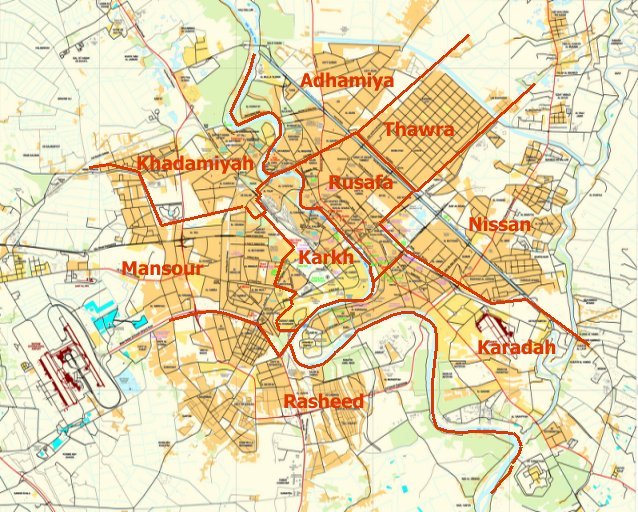
12 killed in Mansour Hotel bombing
In an equally deadly attack, a suicide truck bomber targeted an Iraqi police station shared with U.S. troops in Beiji, 155 miles north of Baghdad, killing nine people. Five American soldiers suffered minor wounds, the U.S. command said.
The bombing at the high-rise Mansour Hotel, on the west bank of the Tigris River in central Baghdad, struck at about noon as the lobby bustled with members of news media organizations headquartered at the hotel and other guests, witnesses said. A man wearing a belt of explosives walked into the lobby, approached the reception desk and detonated his bomb, police reported.
"It was a great breach of security because there are three checkpoints, one outside and two inside," said hotel worker Saif al-Rubaie, 28, who witnessed the blast and said all the casualties were Iraqis, most employees in the reception area.
Police said the dead included hotel resident Fassal al-Guood, a Ramadi tribal sheik and former governor of Anbar province who was a leader of the Anbar Salvation Council, which has partnered with U.S. and Iraqi officials to fight al-Qaida influence in Anbar. A noted Iraqi poet, Rahim al-Maliki, also was killed, said Iraqi Media Net, the government organization on whose television network al-Maliki appeared. Reports that al-Guood was a target of the bombing, possibly along with other Salvation Council sheiks, could not be confirmed.
The Mansour, which also houses the Chinese Embassy and is the Baghdad home for a number of Iraqi parliament members, is just a half-mile from the heavily fortified International Zone, where the U.S. Embassy and Iraqi government offices are situated. The attack was the fifth in a string of suicide and other bombings Monday morning, from Mosul and Beiji in the north to Hillah in the south. Two were aimed at U.S. targets.
Labels: Anbar Salvation Council, Beiji, Fassal al-Guood, Hillah, Mansour Hotel, Rahim al-Maliki, Siniyah, suicide bomber
Wednesday, June 06, 2007
Suicide bomber targets tribal chiefs
The bomb exploded in a pickup truck next to where the elders were trying to solve a tribal dispute in Amiriyah, 40 miles west of Baghdad, police said. The driver of the pickup had gained access to the market area by saying he needed to buy some watermelons, said Ahmed al-Issawi, 40, an owner of a food store there.
Labels: Abbas Mohammed, Al Qaeda in Iraq, al-Buissa tribe, Anbar Salvation Council, Fallujah, Maj. Jeff Pool, suicide bomber, tribal leaders
Tuesday, June 05, 2007
Leader of Anbar salvation Council says Islamic State of Iraq may have more weapons than the Iraqi Army
Labels: Anbar Salvation Council, Islamic State of Iraq, Sattay al-Anzi, Sheikh Abd al-Sattar Abu Rishah, weapons
Friday, June 01, 2007
Anti-Qaeda alliance gathers momentum
The microcosm mirrors what is happening in the western provinces, especially al-Anbar and Diyala, where Sunni tribes have united in an anti-Qaeda alliance. "I think this is going to be the end of the al-Qaeda presence here," mayor Abdul Khaliq told the Washington Post in a phone interview. He said that the fierce fighting Wednesday and Thursday began over accusations that al-Qaeda in Iraq had executed Sunnis without reason.
It appears to be the first time that a dynamic of isolation, which has been at work in the mainly Sunni and restive western province of al-Anbar, has spread to the capital.
Sunni tribal leaders recently formed an umbrella group, the Anbar Salvation Council, to join with U.S. and Iraqi troops in a common fight against al-Qaeda in Iraq, which used to dominate the province. They resent what they see as indiscriminate violence against civilians, including women and children, and also the presence of foreign fighters in al-Qaeda ranks.
According to the US coalition, 12,000 al-Anbar residents have joined the Iraqi security forces so far this year, compared with 1,000 in all of last year. In an attack clearly meant to intimidate the tribes, a suicide bomber blew himself up Thursday among 150 recruits waiting to enter a police compound in Fallujah. Later that day, six people were killed, including three policemen, in a carbomb blast in Ramadi.
Close to the international airport, Amiriyah has seen a mass exodus of Shiites and ongoing violence, and is considered a virtual no mans land.
Trouble arose on Tuesday, the Washington Post reports, when the Islamic Army, a powerful Sunni insurgent group, posted a statement at a local mosque criticizing al-Qaeda in Iraq for killing dozens of other Sunnis in Fallujah and Baghdad "on suspicion only," and warned them to stop the practice. "Down with al-Qaeda, long live the honest resistance." was graffitied on a wall on Wednesday and when al-Qaeda in Iraq members came to wipe the slogan off, a roadside bomb exploded killing three of them.
Al-Qaeda in Iraq's reprisal came in the form of an attack on a mosque killing the Islamic Army's leader, Razi al-Zobai, and complaining that the Islamic Army had become involved in the political process in Iraq, residents said. The Islamic Army retaliated in kind, striking a mosque and killing one of the group's leaders. As the fighting intensified, al-Qaeda in Iraq called in reinforcements arrived from other areas of the capital residents said. A four hour long battle left at least 15 fighters dead.
Labels: abduction, Al Qaeda in Iraq, Al-Anbar, Amariyah, Anbar Salvation Council, Diyala, Fallujah, Islamic Army, Ramadi, Razi al-Zobai, suicide bomber
Thursday, May 31, 2007
Suicide bomber hits police recruiting centre, kills 25
The Fallujah suicide bomber killed at least 10 policemen in the attack, which occurred about 11 a.m., according to a police official in the city who spoke on condition of anonymity because he was not authorized to release the information. The rest of the dead were civilians, many of them in line seeking jobs as policemen. He said as many as 50 were wounded.
Fallujah General Hospital had received 15 bodies and 10 wounded, according to a doctor there, who would not allow the use of his name because he feared retribution. The physician said he believed other casualties were taken to the nearby Jordanian Hospital and private clinics. A member of the Fallujah city council, who also asked for anonymity for fear of attack by insurgents, said there were at least 20 killed and 25 injured. The coordination of information in Fallujah was particularly difficult because the mobile telephone system has been working only sporadically.
Maj. Jeff Pool of the Multi-National Force-West said the Anbar province governor's office and the provincial police put the total number of dead at one Iraqi policeman, with six police and two civilians wounded in Fallujah, 40 miles west of Baghdad. Police said the bomber detonated explosives in his vest at the third of four checkpoints, standing among recruits who were lining up to apply for jobs on the force. The center had only opened Saturday in a primary school in eastern Fallujah.
The U.S. military and Iraqi army and police were running the center along with members of Anbar Salvation Council, a loose grouping of Sunni tribes that have banded together to fight al-Qaida. Police stations and recruiting posts have been a favorite target of Sunni insurgents and al-Qaida throughout the war.
Labels: Anbar Salvation Council, Fallujah, policemen, suicide bomber
Tuesday, May 29, 2007
Speak Freely; Official’s Son Kidnapped To Guarantee Secret Negotiations Between Government And Baathists
Labels: Abd Al Falah Mohammed, Anbar Salvation Council, Baath Party, hostage, negotiations
Monday, May 28, 2007
Round-up of violence across Iraq
(Reuters) - Following are security developments in Iraq at 1030 GMT on Monday:
* denotes new or updated item.
* BAGHDAD - A car bomb killed two people and wounded five others near al-Khilani square in central Baghdad, police said.
* BAGHDAD - Gunmen ambushed a police patrol and killed three policemen and wounded seven in the Fadhil district of central Baghdad, police said.
BAQUBA - The U.S. military said U.S. and Iraqi troops had raided a suspected al Qaeda prison camp near Baquba, 65 km (40 miles) north of Baghdad, on Sunday and freed 41 men, some of whom had been held for four months.
* NEAR BAIJI - Hamad al-Jouburi, the head of a regional "salvation council" set up to fight al-Qaeda, said that gunmen attacked his brother's two houses and abducted four of his sons and set the houses on fire in a village near Baiji, 180 km (110 miles) north of Baghdad. Earlier, local officials said gunmen killed the four sons of Jouburi's sister.
BAGHDAD - A security detainee died on Saturday in Camp Cropper, a U.S. detention facility in southern Baghdad, the U.S. military said. It said the likely cause of death was complications from diabetes.
ANBAR - U.S. forces detained nine suspected insurgents in raids against suspected al Qaeda insurgents in northern Mosul and western Anbar province, the U.S. military said.
RAMADI - A car bomb in a busy market killed seven people and wounded 12 on Sunday in the western outskirts of Ramadi, 110 km (70 miles) west of Baghdad, a hospital source said. Police said a suicide car bomber rammed his car into their checkpoint, wounding three policemen and a child.
BAGHDAD - A roadside bomb killed one person and wounded nine others in eastern Baghdad on Sunday, police said.
NAHRAWAN - Two people were killed and one other was wounded in a mortar attack on Sunday in Nahrawan, 30 km (20 miles) south of Baghdad, police said.
Labels: Al Anbar, al-Khilani square, Anbar Salvation Council, Baiji, Baquba, car bomb, Fadhil, Hamad al-Jouburi, mortar attacks, Nahrawan, Ramadi, roadside bombs
Sunday, May 27, 2007
Khadra Bridge Blown Up; Curfew In Fallujah To Search For Car Bombs
In other news, a Fallujah Police source stated, “A car bomb exploded near an IP checkpoint in the Hay Al Shurta area of Fallujah during the Friday Prayer. The source added, “The car bomb explosion killed two people and wounded nine. All of them lived in the houses near Al Abd School which the IPs made as a camp.” The source also said, “The explosion destroyed three houses and a number of stores.”
In related news, a source close to Fallujah’s Mayor said, “Fallujah authorities started a curfew in Fallujah. The curfew will continue indefinitely. The purpose of the curfew is to look for car bombs in the Fallujah area.” He added, “Many 4X4 trucks which belong to the Anbar Salvation Council went to Fallujah to support the IPs and Iraqi Army.”
In related news, yesterday, an IED explosion targeted a convoy of a foreign security company in the Kizayza area, north of Basrah. Eyewitnesses said, “The explosion destroyed one truck and killed everyone in it.” After the explosion, clashes occurred between vehicles in the convoy and unidentified gunmen.
Labels: Anbar Salvation Council, Basrah, car bomb, curfew, Fallujah, IED, Khadra bridge, private security companies
Tuesday, May 08, 2007
Friction between armed groups as split loyalties to the Anbar Slvation Council and Al Qaeda
Sheikh Abdul Sattar Abu Risha, President of Anbar Salvation Council, confirmed that some armed groups joined the Anbar Salvation Council to fight Al Qaeda. This is the main reason behind the internal fighting between these armed groups [some of these armed groups want to support Al Qaeda and others want to join the Anbar Salvation Council, and is thus causing internal friction among its members].
Sheikh Abd Al Jabar Al Hakim, who is one of Albu Asaf tribal Sheikhs in Taji area said, “The [non-Al Qaeda] armed groups were provoked when Al Qaeda demanded the loyalty from people in the Taji area. The armed [resistance] groups prefer to negotiate with US forces and [attempt] to impose their demands on the Iraqi government.
The MOI demand the armed groups to abide by the law and promised that they [armed groups] will receive fair trials for those accused of crimes [among the resistance group]. General Abdul Karim Al Kinani, Chief of National Leadership Center in the MOI said, “This announcement aims to mobilize efforts to eliminate Al Qaeda in Iraq and to contain other Iraqi armed groups.” Regarding issuing general amnesty for armed group members, Al Kinani added, “The government did not discuss such a project at this time. Regardless, some discussion has started with certain Iraqi armed groups inside and outside Iraq.” He believes that to control areas of these armed groups need more time and effort because the difficult geography these areas.
Brigadier Abdul Aziz Muhammed Jassim, Chief of Operations in the MOD said, “Separation and [internal] fighting between the armed groups is proof that there is an ideological difference between them. Some Iraqi armed groups have realized their mistakes when they allowed Al Qaeda to play the main role in Iraq and to impose its ideology on the Iraqi armed groups.”
Labels: Albu Asaf, Anbar Salvation Council, Sheikh Abd Al Jabar Al Hakim, Sheikh Abdul Sattar Abu Risha, The Islamic Emirate Triangle