Monday, May 28, 2007
Round-up of violence across Iraq
Security
Roundup of violence in Iraq - 5/27/2007 05:33 PM EDT
By Jenan Hussein, McClatchy Newspapers
The daily Iraq violence report is compiled by McClatchy Newspapers in Baghdad from police, military and medical reports. This is not a comprehensive list of all violence in Iraq, much of which goes unreported. All times are Iraq local times.
(Reuters) - Following are security developments in Iraq at 1030 GMT on Monday:
* denotes new or updated item.
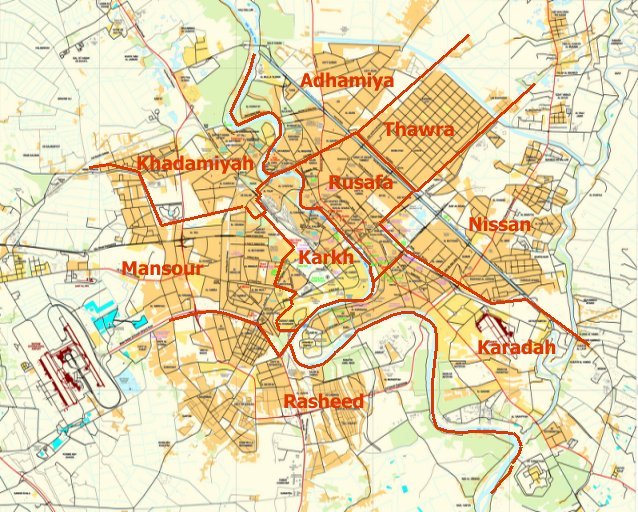
* BAGHDAD - A car bomb killed two people and wounded five others near al-Khilani square in central Baghdad, police said.
* BAGHDAD - Gunmen ambushed a police patrol and killed three policemen and wounded seven in the Fadhil district of central Baghdad, police said.
BAQUBA - The U.S. military said U.S. and Iraqi troops had raided a suspected al Qaeda prison camp near Baquba, 65 km (40 miles) north of Baghdad, on Sunday and freed 41 men, some of whom had been held for four months.
* NEAR BAIJI - Hamad al-Jouburi, the head of a regional "salvation council" set up to fight al-Qaeda, said that gunmen attacked his brother's two houses and abducted four of his sons and set the houses on fire in a village near Baiji, 180 km (110 miles) north of Baghdad. Earlier, local officials said gunmen killed the four sons of Jouburi's sister.
BAGHDAD - A security detainee died on Saturday in Camp Cropper, a U.S. detention facility in southern Baghdad, the U.S. military said. It said the likely cause of death was complications from diabetes.
ANBAR - U.S. forces detained nine suspected insurgents in raids against suspected al Qaeda insurgents in northern Mosul and western Anbar province, the U.S. military said.
RAMADI - A car bomb in a busy market killed seven people and wounded 12 on Sunday in the western outskirts of Ramadi, 110 km (70 miles) west of Baghdad, a hospital source said. Police said a suicide car bomber rammed his car into their checkpoint, wounding three policemen and a child.
BAGHDAD - A roadside bomb killed one person and wounded nine others in eastern Baghdad on Sunday, police said.
NAHRAWAN - Two people were killed and one other was wounded in a mortar attack on Sunday in Nahrawan, 30 km (20 miles) south of Baghdad, police said.
Labels: Al Anbar, al-Khilani square, Anbar Salvation Council, Baiji, Baquba, car bomb, Fadhil, Hamad al-Jouburi, mortar attacks, Nahrawan, Ramadi, roadside bombs


Thursday, May 17, 2007
Insurgents destroy helicopter, damage nine others
Security
(Middle East Online) - Insurgents destroyed a US military helicopter and damaged nine others in a mortar attack on a US airfield north of Baghdad, a US defense official said Wednesday. The attack, which occurred Sunday at a US air base at al-Taji but was not disclosed by the US military command in Baghdad, also wounded four US servicemembers, the official said, speaking on condition of anonymity.
"One helicopter was destroyed and nine were damaged," said the official, who said that six of the damaged helicopters have been repaired and are "fully mission capable." Insurgents appeared to have targeted the aircraft rather than have struck them with random fire, the official said. "There was some counter-battery fire," the official said. Attacks have damaged aircraft in the past but the military has rarely, if ever, reported so many helicopters being hit in a single insurgent attack. At least two types of helicopter were damaged in the attack but the official would not say what they were.
"One helicopter was destroyed and nine were damaged," said the official, who said that six of the damaged helicopters have been repaired and are "fully mission capable." Insurgents appeared to have targeted the aircraft rather than have struck them with random fire, the official said. "There was some counter-battery fire," the official said. Attacks have damaged aircraft in the past but the military has rarely, if ever, reported so many helicopters being hit in a single insurgent attack. At least two types of helicopter were damaged in the attack but the official would not say what they were.
Labels: helicopters, insurgents, mortar attacks, Taji
Thursday, May 10, 2007
Green Zone under attack again
Security
(AP) - A sharp increase in mortar attacks on the Green Zone - the one-time oasis of security in Iraq's turbulent capital - has prompted the U.S. Embassy to issue a strict new order telling all employees to wear flak vests and helmets while in unprotected buildings or whenever they are outside. The order, obtained by The Associated Press, has created a siege mentality among U.S. staff inside the Green Zone following a recent suicide attack on parliament. It has also led to new fears about long-term safety in the place where the U.S. government is building a massive and expensive new embassy.
The situation marks a sharp turnaround for the heavily guarded Green Zone - long viewed as the safest corner of Baghdad with its shops, restaurants, American fast-food outlets and key Iraqi and American government offices. The security deterioration also holds dire implications for the Iraqi government, which uses the Green Zone as a haven for key meetings crucial to its ability to govern. On Wednesday, for example, Vice President Dick Cheney held meetings in the Green Zone with Iraq's prime minister.
The increase in mortar attacks comes despite the presence of tens of thousands more American and Iraqi soldiers in the streets of Baghdad as part of the security crackdown ordered by President Bush in January.The vest and helmet security order was issued May 3, one day after four Asian contract workers working for the U.S. government were killed when rockets or mortars slammed into the Green Zone. It was at least the third straight day of barrages against the 3.5-square-mile area along the west bank of the Tigris River in the center of Baghdad.
Because of the "recent increase of indirect fire attacks" - the military term for mortar and artillery barrages - the order told embassy employees that until further notice, "outdoor movement" must be "restricted to a minimum." Government employees who work outside of a "hardened structure" such as the current embassy building or travel "a substantial distance outdoors" must wear "personal protective equipment," meaning flak jackets and helmets, the order said.
A U.S. Embassy spokesman confirmed the order was in effect until further notice. But he refused to say more, citing security, and would not allow his name to be published, citing embassy regulations. Attacks on the Green Zone are nothing new: They have occurred from time to time since the first months of the U.S. presence in Iraq. Often, the rounds landed in open fields - part of a system of parks that Saddam Hussein built when the area served as the headquarters of his regime.
But the latest attacks have been unnerving because of their frequency, the size of the ordnance and the accuracy of some hits. Some rounds appear to have been fired from Sunni insurgent strongholds to the south of the Green Zone. Others have come from areas where Shiite militiamen operate.
At last week's regional summit in the Egyptian resort of Sharm el-Sheik, U.S. Ambassador Ryan Crocker said it was unclear if the attackers were becoming more skilled, had better weapons or tools or were just getting lucky. He noted that it was difficult to stop mortar attacks. Extremists can carry the weapons in vehicles, set up quickly, fire them and drive away. It is also likely that rounds fired from Shiite areas are intended as a warning to Iraq's Shiite-led government not to bow to American pressure and disband the militias.
The situation marks a sharp turnaround for the heavily guarded Green Zone - long viewed as the safest corner of Baghdad with its shops, restaurants, American fast-food outlets and key Iraqi and American government offices. The security deterioration also holds dire implications for the Iraqi government, which uses the Green Zone as a haven for key meetings crucial to its ability to govern. On Wednesday, for example, Vice President Dick Cheney held meetings in the Green Zone with Iraq's prime minister.
The increase in mortar attacks comes despite the presence of tens of thousands more American and Iraqi soldiers in the streets of Baghdad as part of the security crackdown ordered by President Bush in January.The vest and helmet security order was issued May 3, one day after four Asian contract workers working for the U.S. government were killed when rockets or mortars slammed into the Green Zone. It was at least the third straight day of barrages against the 3.5-square-mile area along the west bank of the Tigris River in the center of Baghdad.
Because of the "recent increase of indirect fire attacks" - the military term for mortar and artillery barrages - the order told embassy employees that until further notice, "outdoor movement" must be "restricted to a minimum." Government employees who work outside of a "hardened structure" such as the current embassy building or travel "a substantial distance outdoors" must wear "personal protective equipment," meaning flak jackets and helmets, the order said.
A U.S. Embassy spokesman confirmed the order was in effect until further notice. But he refused to say more, citing security, and would not allow his name to be published, citing embassy regulations. Attacks on the Green Zone are nothing new: They have occurred from time to time since the first months of the U.S. presence in Iraq. Often, the rounds landed in open fields - part of a system of parks that Saddam Hussein built when the area served as the headquarters of his regime.
But the latest attacks have been unnerving because of their frequency, the size of the ordnance and the accuracy of some hits. Some rounds appear to have been fired from Sunni insurgent strongholds to the south of the Green Zone. Others have come from areas where Shiite militiamen operate.
At last week's regional summit in the Egyptian resort of Sharm el-Sheik, U.S. Ambassador Ryan Crocker said it was unclear if the attackers were becoming more skilled, had better weapons or tools or were just getting lucky. He noted that it was difficult to stop mortar attacks. Extremists can carry the weapons in vehicles, set up quickly, fire them and drive away. It is also likely that rounds fired from Shiite areas are intended as a warning to Iraq's Shiite-led government not to bow to American pressure and disband the militias.
Labels: Green Zone, IDF, mortar attacks