Tuesday, September 18, 2007
Al-Qaeda in Iraq Takes Responsibility for Assassination of Abu Risha
The following are excerpts:
"On Thursday, September 13, 2007, Allah allowed your brothers in the [ISI] Ministry of [General] Security to track and kill the imam of heresy and apostasy called 'Abd Al-Sattar Abu Risha, head of the so-called Al-Anbar Salvation Council, in a courageous operation that took over a month to prepare...
"Members of the noble tribes [in the Al-Anbar district] asked the soldiers of the Islamic State [of Iraq] to rescue them from the militias that are collaborating [with the Americans and with the Al-Maliki government], and from the corruption they have spread in the city of Al-Ramadi...
"Other apostate leaders who are collaborating with the American plan should be aware that the swords of the mujahideen are lying in wait for them. We hereby announce the establishment of special security committees that will track and kill top tribal leaders who have sullied the reputation of their noble tribes by being friendly towards the soldiers of the Cross and towards the Shi'ite Al-Maliki government...
"We apologize for not giving [more] details about this courageous operation. [We do this] for security reasons, in order to protect the lives of the blessed tribe members who took part in this successful and blessed operation."
Labels: Al Qaeda, Anbar Salvation Council, assassination, Islamic State of Iraq, Malaysia, Sheik Abdul-Sattar abu Risha


Friday, September 14, 2007
Anbar tribes vow to avenge killing of Abu Risha as new leader elected
"We blame al-Qaeda and we are going to continue our fight and avenge his death," Sheikh Ahmed Abu Risha, brother of Abdul Sattar Abu Risha, said on Friday. Ahmed Abu Risha was elected the new leader of the Anbar Salvation Conference just hours after his brother's killing. Pallbearers carried Abdul Sattar Abu Risha's body from Ramadi to the cemetery 10km outside the city, while the funeral procession shouted "revenge, revenge on al-Qaeda." Others mourners chanted "there is no God but Allah and al-Qaeda is the enemy of Allah" and "Abdul Sattar is the pride of Ramadi".
Nuri al-Maliki, the Iraqi prime minister, was represented by Muwaffaq al-Rubaie, his national security adviser, who condemned the killing. "It is a national Iraqi disaster. What Abu Risha did for Iraq, no single man has done in the country's history," al-Rubaie told the mourners gathered in the sheikh's house. "We will support Anbar much more than before. Abu Risha is a national hero."
"This is a man who has had a controversial past, but in recent months he has become a very prominent figure, even meeting George Bush [the US president]," Al Jazeera's James Bays said. Abdul Sattar Abu Risha had urged the tribal leaders in other Iraqi provinces to follow Anbar's lead in co-operating with the central government against al-Qaeda
"He was returning home when his convoy was hit by a roadside bomb planted by insurgents," Colonel Tareq al-Dulaimi, Anbar security chief, said. "His car was hit directly." No group immediately claimed responsibility for the bombing. Sheikh Jubeir Rashid, a senior member of Abdul Sattar Abu Risha's group, told the Associated Press: "It is a major blow to the council, but we are determined to strike back and continue our work. "Such an attack was expected, but it will not deter us." Two of Abdul Sattar Abu Risha's bodyguards were also killed by the roadside bomb, Colonel Tareq Youssef, supervisor of Anbar police, said. Police announced a state of emergency in Ramadi after the bombing and set up additional checkpoints throughout the city, Rashid said. Anbar success
General David Petraeus, the senior US commander in Iraq, repeatedly pointed to successes in tackling a-Qaeda in Anbar during his testimony before the US congress. Omar Abdul Sattar from the Islamic Party of Iraq told Al Jazeera that Abdul Sattar Abu Rishar had become a national symbol of the "national war against al-Qaeda". "His programme now against al-Qaeda has become a national programme. Diyala province, Salahuddin province, Baghdad province are following now his programme," he said. The White House condemned Abdul Sattar Abu Risha's "assassination".
"His death also reminds us that the struggle will require continued perseverance, and the Iraqis are increasingly turning away from al-Qaeda, as a result of such extreme acts of violence," Kate Starr, White House national security council spokeswoman, said. Bush mentioned the killing in a speech on Thursday in which he announced that he may pull some 30,000 US troops out of Iraq by mid-2008 effectively ending the so-called surge.
Hoda Abdel Hamid, Al Jazeera's Iraq correspondent, said Abdul Sattar Abu Risha's death could derail some of the US successes. "Anbar province was really the capital of al-Qaeda in Iraq ... he managed to convince the tribes to give up their young people to make up the police and armed forces in the province," she said. Within hours of Abdul Sattar Abu Risha's death, some Islamist websites posted messages praising his killing, the Associated Press news agency reported. One called him "one of the biggest pigs of the Crusaders", while another said he would spend Ramadan "in the pits of hell".
Labels: Al Anbar, Al Qaeda, Anbar Salvation Council, assassination, Ramadi, Sheikh Abdul Sattar Abu Risha, Sheikh Ahmed Abu Risha
Bush plans longterm stay in Iraq
It follows repeated warnings from US officials of a "proxy war" with Iran. Last night's 18-minute address had been designed to unite a war-weary public and a restive Congress behind Mr Bush's plan for maintaining the bulk of US forces in Iraq for the duration of his presidency.
The president attempted to soften his proposal by endorsing the recommendation this week of the commander of US forces, General David Petraeus, for a phased withdrawal of 30,000 troops sent to Iraq this year in the temporary "surge". The first withdrawals of 5,700 soldiers could start by Christmas, the president said last night. However, even those drawdowns were contingent on the situation on the ground.
"The principle guiding my decisions on troop levels in Iraq is 'return on success'," Mr Bush stipulated, in advance excerpts of the speech released by the White House. "The more successful we are, the more American troops can return home." Earlier yesterday, Bush administration officials had said that decisions on any further withdrawals beyond the 5,700 would be deferred to March 2008, when Gen Petraeus is due to deliver another progress report on the war to Congress.
Mr Bush's plan to maintain a permanent military presence in Iraq flies in the face of opinion polls which show a majority of Americans support an exit from the war zone. He acknowledged those frustrations last night, saying: "Some say the gains we are making in Iraq come too late. They are mistaken. It is never too late to deal a blow to al-Qaida. It is never too late to advance freedom. And it is never too late to support our troops in a fight they can win."
However, the fragility of America's claim of the possibility of success in Iraq was dramatically underlined by the killing of a Sunni sheikh in Anbar province. Abdul Sattar Abu Risha's turnaround from attacking US forces to an alliance with them against al-Qaida had been held up by the Pentagon and the White House as a beacon of hope for Iraq.
Sheikh Abu Risha was seen as the living embodiment of cooperation between US forces and local clans in Anbar. He was blown up by a car or roadside bomb near his home in Ramadi yesterday morning. Such gains were so crucial to Mr Bush's calculations on selling his war plan to the US public that he did not even go to Baghdad during his lightning trip to Iraq. He spent his entire visit at the US air base in Anbar, meeting Iraqi tribal leaders and members of the Baghdad government. On his seven-hour visit, Mr Bush was photographed shaking hands with the sheikh, and the president hailed him as a hero.
In his current reporting on the state of the war to politicians in Washington, Gen Petraeus had called the rejection of al-Qaida by Sunni tribes "the most significant development of the past eight months". Anbar was the one bright spot in Gen Petraeus's report. Only a year ago, US officials had given Anbar up as politically lost.
Sheikh Abu Risha had been the most visible local advocate of that turnabout, giving interviews to Arabic satellite channels calling for an end to extremism. The general had said that it was the success of America's alliance with Sunni tribes under the sheikh in driving al-Qaida out of Anbar which had persuaded him that it was possible for the US to begin pulling out its forces without compromising security on the ground.
Labels: Anbar Salvation Council, assassination, General David Petraeus, George Bush, Iraq, Sheikh Abu Risha, U.S. troops
Tuesday, September 11, 2007
Sistani aide assassinated in Basra
"Unknown gunmen stormed, last night, the house of Sayyed Hussein al-Husaini in al-Jiniynah neighborhood, northern Basra, and killed him," the source, who spoke on anonymity condition, told the independent news agency Voices of Iraq (VOI).
The source added that al-Husaini, a Sistani representative in Basra, is also the Imam of the Shiite al-Mahtah mosque. This is the second incident in as many days after unknown gunmen shot dead Sheikh Muslim al-Battat, an aide to Sistani, a week ago in Basra. Basra, a predominantly Shiite city, is 590 km south of Baghdad.
Labels: al-Mahtah mosque, assassination, Ayatollah Ali al-Sistani, Basra Provincial Council, Sayyed Hussein al-Husaini, Sheikh Muslim al-Battat
Monday, September 10, 2007
Prominent Sadr Movement Member Assassinated
On the other hand, the IPs announced that unidentified gunmen assassinated one of Muqtada Al Sadr’s assistants in Najaf. Najaf Police Chief, Brigadier General Abdul Karim Mustafa said unidentified gunmen assassinated Sheikh Mohammed Al Karawi [Iraqi dialect- Garawi], the manager of Najaf Tribal Relations Office in the Sadr Movement, in front of his house in Najaf. Gen. Mustafa added that the assassination was conducted Friday afternoon in front of Al Karawi’s house in the Al Jamiaa area in northern Najaf. The gunmen escaped. Mustafa added, “We have surrounded the entire neighborhood and the search continues to pursue, and we will arrest the criminals.”
A source in the Sadr Office confirmed the incident and demanded an investigation as to who was behind this incident. Al Karawi was responsible for tribal affairs in the Sadr office. Najaf has recently witnessed many assassinations of religious authority’s aides and political movement members. The three latest assassinations were of senior religious cleric Ali Sistani’s aides during the past three months.
Labels: assassination, Kufa, Moqtada Al-Sadr, Najaf, Najaf Tribal Relations Office, Sadr movement, Sheikh Mohammed Al Karawi
Tuesday, September 04, 2007
Sayid Al Sistani’s Representative Assassinated In Basrah
On Friday night, two gunmen, riding on a motorcycle, killed Al Sayid Muslim Al Battat, the Imam of the Al Orwat Al Wouthqa (Shiite) Mosque… (Imam Al Batat was) also was a representative for Sayid Al Sistani in Basrah Province. (His assassination occurred) in the Al Farsi area (of Basrah), while he (the Imam) was leaving his Mosque and returning home...his brother and cousin were with him (at the time of this attack)
All of the preceding statements are based on reports from an anonymous source in the (Basrah) Province Police Commander’s office. Meanwhile, according to eyewitnesses (elsewhere in Basrah): the (Basrah) office of the Mihrab Martyr Institute was fired upon by unidentified gunmen…in a car. One (of the Institute’s) guard was wounded; he was transported to the hospital.
Basrah City witnessed a security alert on Wednesday, due to recent events in Karbala. On the other hand a Basrah Police source stated: a police officer (an IP Captain) was released by the unidentified gunmen who had kidnapped him a week ago, south of Basrah city. The source explained, “One week after Captain Firas Saddoun Jassim was kidnapped…his kidnappers released him.” The source added, “This officer (CPT Jasim) is a Captain in a ‘special missions unit’ in Basrah. He was abducted by unidentified gunmen… a week ago, near his home in (Basrah’s) Asdiqaa neighborhood.” This source did not clarify: who had abducted this officer, or how he was released.
Labels: Al Sayid Muslim Al Battat, assassination, Basra, Sistani
Wednesday, August 22, 2007
Gunmen arrested for murder of Governor of Muthanna
The policeman refused to unveil the number of the arrested gunmen or their names, asserting that the "details would be announced in the next two days." A police source told VOI earlier that security forces arrested one of those who allegedly took part in the assassination of the governor near to the scene. "The man confessed of perpetrating the attack with other gunmen," the source also said.
Muthanna Governor Muhammad al-Hassani was killed when an explosive device went off near his motorcade while exiting the city of al-Rumeitha on Monday morning. Hassani, who occupied the post of Muthanna governor after the fall of the former regime in 2003, was a member in Badr Organization, once the military wing of Shiite leader Abdul-Aziz al-Hakim's Supreme Islamic Iraqi Council (SIIC).
The assassination comes 10 days after another targeted the Diwaniyah governor, Khalil Jalil Hamza, who was also an SIIC member, in a similar explosive device attack on his motorcade that killed him instantly. Samawa, the capital of Muthanna province, lies 280 km south of Baghdad.
Labels: assassination, Muhammad Ali al-Hassani, Samawa
Monday, August 20, 2007
Muthanna governor assassinated
On Aug. 11, the governor and police chief of another southern province, Qadasiyah, also were killed in a roadside bombing attack. Both governors were members of the influential Supreme Islamic Iraqi Council, a group led by Shiite politician Abdul-Aziz al-Hakim whose loyalists have been fighting the Mahdi Army militia for control of the oil-rich south. Muthanna was the first province that was transferred to Iraqi control last year.
Labels: assassination, Mohammed Ali al-Hassani, Muthanna, SICI, Supreme Islamic Iraqi Council
Thursday, August 09, 2007
Sunni Imam Assassinated In Western Baghdad
Labels: Al Jabbar Mosque, assassination, Khadra, Muslim Clerics Board, Sheikh Issa Ahmed Al Mohammadi, Sunni Imam
Tuesday, June 05, 2007
Al Sadr Threatens Armed Uprising And Accuses Americans Of Attempting To Assassinate Him
About the recent clashes between Mahdi Army and the Badr organization, Muqtada said, “It was a misunderstanding, we have had discussions and communicated with the other side to prevent any more clashes.” About Iran, Muqtada confirmed he rejects any Iranian interference in Iraqi issues and he is against the Iranian / American negotiations about Iraq. Also, he confirmed that Iraqi issues will be solved by Iraqis.”
Labels: assassination, Hezbollah, Mahdi Army, Moqtada Al-Sadr, U.S. forces, uprising
Friday, April 27, 2007
Round-up of violence across Iraq
Baghdad
- 4 citizens were killed and 10 were injured in a parked car bomb explosion near the house of Abdul Azeez Al Hakeem, the SCIRI head house in Jadiriyah neighborhood south Baghdad at 3,50 pm.
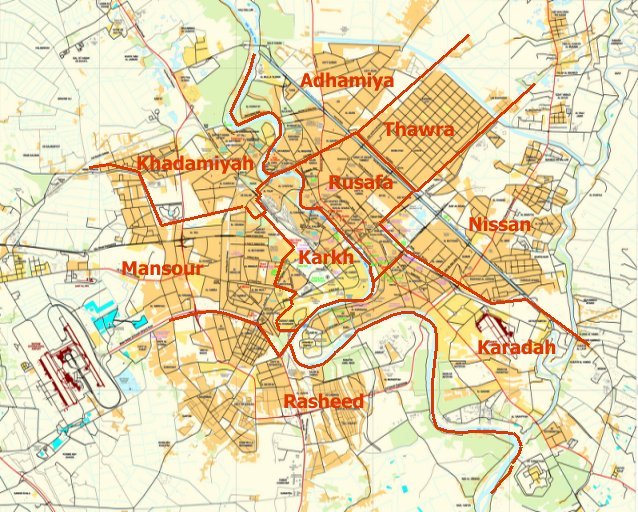
- 26 anonymous bodies were found in Baghdad today. 24 bodies were found in Karkh, the western part of Baghdad in the following neighborhoods ( 4 bodies in Saidiyah, 4 bodies in Amil, 3 bodies in Bayaa, 3 bodies in Elam, 2 bodies in Topchi, 2 bodies in Hurriyah, 2 bodies in Yarmouk, 2 bodies in Mamoun, 1 body in Harthiyah and 1 body in Risala.) 2 bodies were found in Rusafa, the eastern part of Baghdad, 1 body was found in Sadr city and 1 body was found in Nahrawan.
Diyala province
- A military source in Khalis town 10 KMs north of Baquba city said that unknown insurgents assassinated today an officer in the Iraqi army in Al Ghalibiyah area, a part of Khalis town. The source didn’t mention any more details about the incident.
- A military source said that 4 civilians were wounded in clashes between the residents of Al Mjedid area, a part of Khalis town, and insurgents of Al Qaida organization early morning today.
- Medical sources said that 8 citizens including 5 policemen were killed and 12 others including 7 policemen were injured in a suicide car bomb explosion targeted a check point north Khalios town.
Nainawa Province
- Security sources in Mosul city said that 4 Kurdish security members known as Beshmarga had been killed and 15 citizens including Beshmarga members were injured in two suicide car bomb explosions that targeted one of the centers of the PDK party (the party of Kurdistan region president Masoud Barzani in Zomar district north west of Mosul city.
Salahuddin
- Police sources in Tikrit city said that the wife and the daughter of Hashim Hasan Al Majeed, the cousin of the executed former Iraqi president, Saddam Hussein, had been killed today when insurgents attacked them inside their house in Al Qadisiyah neighborhood north Tikrit city early morning today. The source said that the insurgents kidnapped another daughter of Hashim Al Majeed.
Labels: assassination, car bomb, Chemical Ali, Diyala, insurgents, Jadiriyah, KDP, Mosul, Peshmerga, SCIRI, Tikrit
Monday, April 09, 2007
Round-up of violence across Iraq
BAGHDAD - The bodies of 17 people, some bearing signs of torture, were found across Baghdad during the past 24 hours, police said. Many of the bodies are thought to be victims of sectarian violence.
KHALIS - Gunmen assassinated Jalal al-Daini, a tribal leader, in the town of Khalis, 80 km (60 miles) north of Baghdad, police said.
KIRKUK - Police said they found the body of a member of the Kurdistan Democratic Party (KDP) who was stabbed to death near the northern city of Kirkuk, 250 km (155 miles) north of Baghdad.
OTHER DEVELOPMENTS:
NAJAF - Tens of thousands of Iraqis converged on the city of Najaf to denounce the U.S.-led occupation on the fourth anniversary of the occupation in Iraq.
Labels: assassination, Baghdad, bodies, Jalal al-Daini, KDP, Khalis, Kirkuk, Najaf, tribal leader