Thursday, October 04, 2007
Chemical Ali's execution delayed till after Ramadan
(Reuters) - Iraq will put off carrying out the death sentence against Saddam Hussein’s cousin, widely known as ‘Chemical Ali’, until the end of the Muslim holy month of Ramadan in 10 days time, the prime minister said on Wednesday. An Iraqi appeals court upheld Ali Hassan Al Majeed’s death sentence at a hearing on Sept. 4, with the sentence to be carried out within 30 days of that decision. That deadline was to expire on Thursday.
‘We seek a legal path for postponement because we do not want the execution this time to be carried out during Ramadan,’ Prime Minister Nuri Al Maliki told a news conference. The Muslim fasting month of Ramadan will end in about 10 days. Majeed, former Defence Minister Sultan Hashim and Saddam’s former army chief of staff Hussein Rashid were sentenced to death in June for planning and directing a military campaign in 1988 that prosecutors said killed up to 180,000 Kurds.
Rumours had swirled soon after the appeal court decision that Maliki’s Shia -led government would move to hang Majeed before the start of Ramadan last month but he remains in custody in a US detention facility. Sunni Arabs, dominant under Saddam, accused the government of acting with unseemly haste in carrying out Saddam’s death sentence on Dec. 30, four days after a court rejected his appeal in a separate case.
Sunni Arab governments, including Egypt and Saudi Arabia, also criticised the timing of the execution, which took place at the start of the Eid Al Adha religious feast. Majeed has also gone on trial for his role in crushing a Shia rebellion in southern Iraq in the aftermath of the 1991 Gulf War. Prosecutors in that case had warned he could be executed before the trial was completed.
‘We seek a legal path for postponement because we do not want the execution this time to be carried out during Ramadan,’ Prime Minister Nuri Al Maliki told a news conference. The Muslim fasting month of Ramadan will end in about 10 days. Majeed, former Defence Minister Sultan Hashim and Saddam’s former army chief of staff Hussein Rashid were sentenced to death in June for planning and directing a military campaign in 1988 that prosecutors said killed up to 180,000 Kurds.
Rumours had swirled soon after the appeal court decision that Maliki’s Shia -led government would move to hang Majeed before the start of Ramadan last month but he remains in custody in a US detention facility. Sunni Arabs, dominant under Saddam, accused the government of acting with unseemly haste in carrying out Saddam’s death sentence on Dec. 30, four days after a court rejected his appeal in a separate case.
Sunni Arab governments, including Egypt and Saudi Arabia, also criticised the timing of the execution, which took place at the start of the Eid Al Adha religious feast. Majeed has also gone on trial for his role in crushing a Shia rebellion in southern Iraq in the aftermath of the 1991 Gulf War. Prosecutors in that case had warned he could be executed before the trial was completed.
Labels: Ali Hassan al-Majid, Chemical Ali, death sentence, Ramadan


Tuesday, September 04, 2007
Death sentence confirmed for Chemical Ali
Crime
(AFP) - A top Iraqi court has confirmed the death sentence on "Chemical Ali" and two other cohorts of Saddam Hussein convicted of genocide and crimes against humanity, a senior judge said on Tuesday. "The Iraqi Supreme Court has confirmed the death sentence on Ali Hassan al-Majid, Sultan Hashim al-Tai and Hussein Rashid al-Tikriti," the court head Judge Aref Shaheen told a press conference.
Majid, widely known as "Chemical Ali," was the executed Iraqi dictator's most notorious hatchet man, Tai was his defence minister and Tikriti was armed forces deputy chief of operations. The three were sentenced to death on June 24 after being found responsible for the slaughter of thousands of ethnic Kurds in the so-called Anfal campaign of 1988. They will be hanged within 30 days in line with Iraqi law.
An estimated 182,000 Kurds were killed and 4,000 villages wiped out in the brutal campaign of bombings, mass deportation and gas attacks known as Anfal. "Thousands of people were killed, displaced and disappeared," Iraqi High Tribunal chief judge Mohammed al-Oreibi al-Khalifah said after he had passed sentence in June. "They were civilians with no weapons and nothing to do with war."
Majid, 66, was the last of the six defendants to learn his fate in the Anfal case -- the second trial of former Saddam cohorts on charges of crimes against humanity since the fall of the feared regime in 2003. He muttered only "Thanks be to God" before being led from the court. He and the other two condemned men are currently on trial for their roles in brutally crushing a Shiite uprising in southern Iraq in 1991, but the charges against them will be dropped once they have been executed.
Saddam's regime said the Anfal campaign was a necessary counter-insurgency operation during Iraq's eight-year war with neighbouring Iran. It involved the systematic bombardment, gassing and assault of areas in the Kurdish autonomous region, which witnessed mass executions and deportations and the creation of prison camps. Saddam, driven from power by a US-led invasion in April 2003, was executed on December 30 for crimes against humanity in a separate case and charges against him over the Anfal campaign were dropped.
Over the course of the trial, which opened on August 21, a defiant Majid said he was right to order the attacks.
"I am the one who gave orders to the army to demolish villages and relocate the villagers," he said at one hearing. "I am not defending myself. I am not apologising. I did not make a mistake."
Iraqi Kurds were jubilant following the verdicts but plans to execute Majid in a Kurdish province have been dropped to prevent the hanging appearing as revenge, an Iraqi government official said. Human Rights Watch has expressed concern that the Anfal verdicts could be "flawed" as in the previous trial of Saddam over the killing of Shiites from the village of Dujail in the 198os.
Majid, widely known as "Chemical Ali," was the executed Iraqi dictator's most notorious hatchet man, Tai was his defence minister and Tikriti was armed forces deputy chief of operations. The three were sentenced to death on June 24 after being found responsible for the slaughter of thousands of ethnic Kurds in the so-called Anfal campaign of 1988. They will be hanged within 30 days in line with Iraqi law.
An estimated 182,000 Kurds were killed and 4,000 villages wiped out in the brutal campaign of bombings, mass deportation and gas attacks known as Anfal. "Thousands of people were killed, displaced and disappeared," Iraqi High Tribunal chief judge Mohammed al-Oreibi al-Khalifah said after he had passed sentence in June. "They were civilians with no weapons and nothing to do with war."
Majid, 66, was the last of the six defendants to learn his fate in the Anfal case -- the second trial of former Saddam cohorts on charges of crimes against humanity since the fall of the feared regime in 2003. He muttered only "Thanks be to God" before being led from the court. He and the other two condemned men are currently on trial for their roles in brutally crushing a Shiite uprising in southern Iraq in 1991, but the charges against them will be dropped once they have been executed.
Saddam's regime said the Anfal campaign was a necessary counter-insurgency operation during Iraq's eight-year war with neighbouring Iran. It involved the systematic bombardment, gassing and assault of areas in the Kurdish autonomous region, which witnessed mass executions and deportations and the creation of prison camps. Saddam, driven from power by a US-led invasion in April 2003, was executed on December 30 for crimes against humanity in a separate case and charges against him over the Anfal campaign were dropped.
Over the course of the trial, which opened on August 21, a defiant Majid said he was right to order the attacks.
"I am the one who gave orders to the army to demolish villages and relocate the villagers," he said at one hearing. "I am not defending myself. I am not apologising. I did not make a mistake."
Iraqi Kurds were jubilant following the verdicts but plans to execute Majid in a Kurdish province have been dropped to prevent the hanging appearing as revenge, an Iraqi government official said. Human Rights Watch has expressed concern that the Anfal verdicts could be "flawed" as in the previous trial of Saddam over the killing of Shiites from the village of Dujail in the 198os.
Labels: Ali Hassan al-Majid, Chemical Ali, death sentence, Human Rights Watch, Hussein Rashid al-Tikriti, Sultan Hashim al-Tai
Tuesday, August 21, 2007
Trial opens for 15 of Saddam's aides
Crime
(BBC) - The trial has opened in Baghdad of 15 aides of former Iraqi leader Saddam Hussein for the suppression of a Shia uprising after the 1991 Gulf War. It is the third trial held by the Iraq High Tribunal. Among those in the dock is Saddam Hussein's cousin Ali Hassan al-Majid, known as "Chemical Ali". It is widely estimated that tens of thousands of people were killed when the short-lived uprising was crushed. In recent years, many mass graves have been uncovered.
The uprising started days after the US-led alliance had driven Saddam's forces out of Kuwait. Across the predominantly Shia provinces of southern Iraq there were apparently spontaneous rebellions. The trial will deal with crimes against humanity allegedly committed by Iraqi military leaders and leaders of the ruling Baath Party in putting down these rebellions and in the punishment of suspected supporters of the uprising. Majid has already been sentenced to death in an earlier trial for crimes against the Kurdish population, as have two more of the defendants.
US President George Bush Senior's decision not to press on to Baghdad after defeating Saddam Hussein's forces in Kuwait long remained contentious among Shia who believed they had a green light to stage an uprising. The fact that Saddam Hussein's forces were able to use helicopters as gunships against those who took part also caused concern. The trial could revive these controversies.
The uprising started days after the US-led alliance had driven Saddam's forces out of Kuwait. Across the predominantly Shia provinces of southern Iraq there were apparently spontaneous rebellions. The trial will deal with crimes against humanity allegedly committed by Iraqi military leaders and leaders of the ruling Baath Party in putting down these rebellions and in the punishment of suspected supporters of the uprising. Majid has already been sentenced to death in an earlier trial for crimes against the Kurdish population, as have two more of the defendants.
US President George Bush Senior's decision not to press on to Baghdad after defeating Saddam Hussein's forces in Kuwait long remained contentious among Shia who believed they had a green light to stage an uprising. The fact that Saddam Hussein's forces were able to use helicopters as gunships against those who took part also caused concern. The trial could revive these controversies.
Labels: Ali Hassan al-Majid, Chemical Ali, Iraq High Tribunal, Saddam Hussein, Shia uprising
Tuesday, July 17, 2007
Chemical Ali to be executed in Halabja
Crime
(AFP) - Iraq's Deputy Prime Minister Dr Barham Salih yesterday said the notorious 'Chemical Ali,' cousin and aide of Saddam Hussain, would be executed in the northern Kurdish town of Halabja. Salih made the announcement in the northern city of Sulaimaniya during a meeting with the Halabja Victims' Society, a non-profit organisation representing the victims of a poisonous gas attack there in 1988.
On March 16, 1988, Saddam's troops strafed Halabja with chemical gases, killing 5,000 Kurds in one of the biggest military operations against the people of the northern Kurdistan region during the Iran-Iraq war. The brutal attack was allegedly masterminded by Ali Hassan al-Majid, widely known as Chemical Ali for deploying poison gas against the Kurds.
An Iraqi court on June 24 sentenced Majid to hang for genocide, war crimes and crimes against humanity committed during the military campaign, which prosecutors claim killed 182,000 people. A nine-member appeals court is currently reviewing the sentence and is expected to give its decision soon. If the appeals panel certifies the sentence, Majid will have to be executed within 30 days under Iraqi law.
The Halabja attack took place during the military campaign but was not part of the trial which saw Majid and six others in the dock. On Thursday a senior Iraqi official said the government of Prime Minister Nuri al-Maliki was considering hanging Majid in Kurdistan region. "Thousands of our Kurdish people have requested that Chemical Ali be hanged in Kurdistan," said Bassim Ridha, an adviser to Maliki. "The government is considering these requests. However his sentence is still to be certified by the appeals court," he said.
On March 16, 1988, Saddam's troops strafed Halabja with chemical gases, killing 5,000 Kurds in one of the biggest military operations against the people of the northern Kurdistan region during the Iran-Iraq war. The brutal attack was allegedly masterminded by Ali Hassan al-Majid, widely known as Chemical Ali for deploying poison gas against the Kurds.
An Iraqi court on June 24 sentenced Majid to hang for genocide, war crimes and crimes against humanity committed during the military campaign, which prosecutors claim killed 182,000 people. A nine-member appeals court is currently reviewing the sentence and is expected to give its decision soon. If the appeals panel certifies the sentence, Majid will have to be executed within 30 days under Iraqi law.
The Halabja attack took place during the military campaign but was not part of the trial which saw Majid and six others in the dock. On Thursday a senior Iraqi official said the government of Prime Minister Nuri al-Maliki was considering hanging Majid in Kurdistan region. "Thousands of our Kurdish people have requested that Chemical Ali be hanged in Kurdistan," said Bassim Ridha, an adviser to Maliki. "The government is considering these requests. However his sentence is still to be certified by the appeals court," he said.
Labels: Ali Hassan al-Majid, Chemical Ali, Dr Barham Salih, Halabja
Wednesday, June 27, 2007
Chemical Ali to be hanged in Kurdistan
Crime
(AP) -- Saddam Hussein's cousin Ali Hassan al-Majid, known as "Chemical Ali," and two other regime officials will probably be hanged in Kurdistan if the appeals court upholds their death sentences, an Iraqi official said Tuesday. The official, who spoke on condition of anonymity because he was not supposed to release the information to the media, said no final decision had been taken but the executions would probably take place in either Irbil or Halabja.
Also sentenced to death were Sultan Hashim Ahmad al-Tai, the former defense minister who led the Iraqi delegation at the cease-fire talks that ended the 1991 Gulf War, and Hussein Rashid Mohammed, a former deputy director of operations for the Iraqi armed forces. They were convicted Sunday of genocide, war crimes and crimes against humanity for their roles in "Operation Anfal," a 1987-88 crackdown on Iranian-backed Kurdish rebels during the final years of the Iran-Iraq war.
The prosecution said up to 180,000 Kurds - including women and children - died in chemical weapons attacks, artillery barrages and mass deportations. Two other defendants were sentenced to life in prison for their roles in the crackdown and one was acquitted for lack of evidence.
Death sentences are automatically appealed, and the appellate court faces no time limit in reviewing cases. If the sentences are upheld, executions are supposed to take place within 30 days. Saddam was among the defendants when the trial began Aug. 21. But he was hanged in Baghdad on Dec. 30 for his part in the deaths of more than 140 Shiite Muslims in Dujail. Iraq's government is dominated by Shiites and Kurds.
Also sentenced to death were Sultan Hashim Ahmad al-Tai, the former defense minister who led the Iraqi delegation at the cease-fire talks that ended the 1991 Gulf War, and Hussein Rashid Mohammed, a former deputy director of operations for the Iraqi armed forces. They were convicted Sunday of genocide, war crimes and crimes against humanity for their roles in "Operation Anfal," a 1987-88 crackdown on Iranian-backed Kurdish rebels during the final years of the Iran-Iraq war.
The prosecution said up to 180,000 Kurds - including women and children - died in chemical weapons attacks, artillery barrages and mass deportations. Two other defendants were sentenced to life in prison for their roles in the crackdown and one was acquitted for lack of evidence.
Death sentences are automatically appealed, and the appellate court faces no time limit in reviewing cases. If the sentences are upheld, executions are supposed to take place within 30 days. Saddam was among the defendants when the trial began Aug. 21. But he was hanged in Baghdad on Dec. 30 for his part in the deaths of more than 140 Shiite Muslims in Dujail. Iraq's government is dominated by Shiites and Kurds.
Labels: Ali Hassan al-Majid, Chemical Ali, execution, Halabja, Irbil
Monday, June 25, 2007
Chemical Ali sentenced to death
Crime
(RFE/RL) - An Iraqi court has issued a death sentence to the man who has been widely known as "Chemical Ali" for masterminding the mass slaughter of ethnic Kurds in the late 1980s. The court sentenced Ali Hassan al-Majid, a cousin of former Iraqi President Saddam Hussein, to be hanged for ordering chemical-gas strikes, crimes against humanity, war crimes, and genocide. Al-Majid reportedly declared "Thanks be to God" after hearing the verdict. RFE/RL's Iraq Service reports a current curfew in Baghdad may mean a muted public response to the verdict.
The case relates to the series of military operations code-named Anfal (Spoils of War) that were conducted against ethnic Kurds in 1988, which prosecutors say killed up to 180,000 people. Sultan Hashim Ahmad, the commander of the Anfal campaign who reported directly to al-Majid, was also sentenced to death for his role ordering a large-scale attack against civilians and using chemical weapons and deportation against the Kurds.
The case relates to the series of military operations code-named Anfal (Spoils of War) that were conducted against ethnic Kurds in 1988, which prosecutors say killed up to 180,000 people. Sultan Hashim Ahmad, the commander of the Anfal campaign who reported directly to al-Majid, was also sentenced to death for his role ordering a large-scale attack against civilians and using chemical weapons and deportation against the Kurds.
Husayn Rashid al-Tikriti, former army chief of staff and secretary-general of the General Command of the Armed Forces, likewise received a death sentence after being convicted of drawing up military plans aimed at attacking the Kurdish population. Al-Tikriti reportedly interrupted the judge as his verdict was being delivered, saying, "Thank God, because we defended Iraq and we were not criminals." Five Of Six Sentenced
Two additional defendants, Farhan al-Juburi and Sabir al-Duri, received life sentences. Charges were dropped, however, against a former governor of the main northern city of Mosul, Taher al-Ani, for lack of evidence. The Amman-based defense team said it planned to appeal the sentences. Human Rights Watch has said the Anfal trial has been marred by procedural flaws. President Hussein, driven from power by the U.S.-led invasion in April 2003, was executed last December for crimes against humanity in a separate case.
Two additional defendants, Farhan al-Juburi and Sabir al-Duri, received life sentences. Charges were dropped, however, against a former governor of the main northern city of Mosul, Taher al-Ani, for lack of evidence. The Amman-based defense team said it planned to appeal the sentences. Human Rights Watch has said the Anfal trial has been marred by procedural flaws. President Hussein, driven from power by the U.S.-led invasion in April 2003, was executed last December for crimes against humanity in a separate case.
COMMENT: Tensions are likely to increase around the time of the execution with protests in various forms form former regime elements such as Baathists, ex-army and supporters of the former regime. COMMENT ENDS.
Labels: Ali Hassan al-Majid, Anfal trial, Chemical Ali, death sentences, Husayn Rashid al-Tikriti, Sultan Hashim Ahmad
Friday, April 27, 2007
Round-up of violence across Iraq
Security
(McClatchy Newspapers) - Key incidents - follow link for in-depth information.
The daily Iraq violence report is compiled by McClatchy Newspapers Special Correspondent Hussein Kadhim in Baghdad from police, military and medical reports. This is not a comprehensive list of all violence in Iraq, much of which goes unreported. It’s posted without editing as transmitted to McClatchy’s Washington Bureau.
Baghdad
- 4 citizens were killed and 10 were injured in a parked car bomb explosion near the house of Abdul Azeez Al Hakeem, the SCIRI head house in Jadiriyah neighborhood south Baghdad at 3,50 pm.
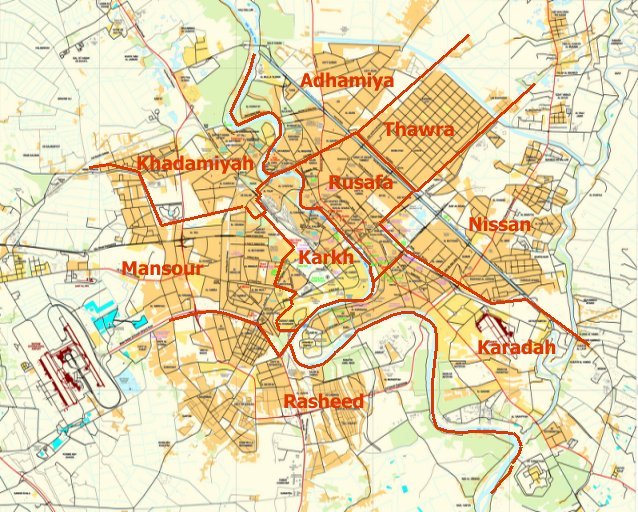
- 26 anonymous bodies were found in Baghdad today. 24 bodies were found in Karkh, the western part of Baghdad in the following neighborhoods ( 4 bodies in Saidiyah, 4 bodies in Amil, 3 bodies in Bayaa, 3 bodies in Elam, 2 bodies in Topchi, 2 bodies in Hurriyah, 2 bodies in Yarmouk, 2 bodies in Mamoun, 1 body in Harthiyah and 1 body in Risala.) 2 bodies were found in Rusafa, the eastern part of Baghdad, 1 body was found in Sadr city and 1 body was found in Nahrawan.
Diyala province
- A military source in Khalis town 10 KMs north of Baquba city said that unknown insurgents assassinated today an officer in the Iraqi army in Al Ghalibiyah area, a part of Khalis town. The source didn’t mention any more details about the incident.
- A military source said that 4 civilians were wounded in clashes between the residents of Al Mjedid area, a part of Khalis town, and insurgents of Al Qaida organization early morning today.
- Medical sources said that 8 citizens including 5 policemen were killed and 12 others including 7 policemen were injured in a suicide car bomb explosion targeted a check point north Khalios town.
Nainawa Province
- Security sources in Mosul city said that 4 Kurdish security members known as Beshmarga had been killed and 15 citizens including Beshmarga members were injured in two suicide car bomb explosions that targeted one of the centers of the PDK party (the party of Kurdistan region president Masoud Barzani in Zomar district north west of Mosul city.
Salahuddin
- Police sources in Tikrit city said that the wife and the daughter of Hashim Hasan Al Majeed, the cousin of the executed former Iraqi president, Saddam Hussein, had been killed today when insurgents attacked them inside their house in Al Qadisiyah neighborhood north Tikrit city early morning today. The source said that the insurgents kidnapped another daughter of Hashim Al Majeed.
Baghdad
- 4 citizens were killed and 10 were injured in a parked car bomb explosion near the house of Abdul Azeez Al Hakeem, the SCIRI head house in Jadiriyah neighborhood south Baghdad at 3,50 pm.
- 26 anonymous bodies were found in Baghdad today. 24 bodies were found in Karkh, the western part of Baghdad in the following neighborhoods ( 4 bodies in Saidiyah, 4 bodies in Amil, 3 bodies in Bayaa, 3 bodies in Elam, 2 bodies in Topchi, 2 bodies in Hurriyah, 2 bodies in Yarmouk, 2 bodies in Mamoun, 1 body in Harthiyah and 1 body in Risala.) 2 bodies were found in Rusafa, the eastern part of Baghdad, 1 body was found in Sadr city and 1 body was found in Nahrawan.
Diyala province
- A military source in Khalis town 10 KMs north of Baquba city said that unknown insurgents assassinated today an officer in the Iraqi army in Al Ghalibiyah area, a part of Khalis town. The source didn’t mention any more details about the incident.
- A military source said that 4 civilians were wounded in clashes between the residents of Al Mjedid area, a part of Khalis town, and insurgents of Al Qaida organization early morning today.
- Medical sources said that 8 citizens including 5 policemen were killed and 12 others including 7 policemen were injured in a suicide car bomb explosion targeted a check point north Khalios town.
Nainawa Province
- Security sources in Mosul city said that 4 Kurdish security members known as Beshmarga had been killed and 15 citizens including Beshmarga members were injured in two suicide car bomb explosions that targeted one of the centers of the PDK party (the party of Kurdistan region president Masoud Barzani in Zomar district north west of Mosul city.
Salahuddin
- Police sources in Tikrit city said that the wife and the daughter of Hashim Hasan Al Majeed, the cousin of the executed former Iraqi president, Saddam Hussein, had been killed today when insurgents attacked them inside their house in Al Qadisiyah neighborhood north Tikrit city early morning today. The source said that the insurgents kidnapped another daughter of Hashim Al Majeed.
Labels: assassination, car bomb, Chemical Ali, Diyala, insurgents, Jadiriyah, KDP, Mosul, Peshmerga, SCIRI, Tikrit
Monday, April 02, 2007
Prosecution asks for death sentence for Chemical Ali
(BBC) - Iraqi prosecutors have asked for death sentences against five defendants in the so-called Anfal trial for the 1980s crackdown on Iraq's Kurdish population. They include the alleged mastermind of the campaign - Saddam Hussein's cousin Ali Hassan al-Majid, known as "Chemical Ali" for his use of poison gas attacks. Mr Majid has acknowledged ordering scores of villages destroyed, saying they were "full of Iranian agents".
The trial was adjourned until 16 April when the defence will sum up its case.
In his closing remarks, chief prosecutor Munqith al-Faroon asked the court to convict the five and give them the harshest penalty because they "did not have mercy on elderly people or women or children - not even animals or plants or the environment". A sixth defendant - former Mosul governor Taher Tawfiq al-Ani - should be released however, the prosecutor said, because there was insufficient evidence against him.
The trial was adjourned until 16 April when the defence will sum up its case.
In his closing remarks, chief prosecutor Munqith al-Faroon asked the court to convict the five and give them the harshest penalty because they "did not have mercy on elderly people or women or children - not even animals or plants or the environment". A sixth defendant - former Mosul governor Taher Tawfiq al-Ani - should be released however, the prosecutor said, because there was insufficient evidence against him.
Labels: Ali Hassan al-Majid, Anfal trial, Chemical Ali, death sentences, Taher Tawfiq al-Ani