Monday, October 08, 2007
Iraqi govt releases video confessions from Shiite cult after Najaf battle in January
The fierce battle in the area of Zarga, north of Najaf, left 220 militants dead, including spiritual leader Dhia al-Garrawi. Iraq said the heavily-armed group planned to assassinate top Shi'ite scholars to destabilise the country. Riyadh al-Garrawi, who was captured after the fighting, said on the video confession that his brother, Dhia, had met both Allawi and Sunni cleric Harith al-Dari outside Iraq.
Dhia al-Garrawi had proclaimed himself the Mahdi, a messiah-like figure in Islam, and had a cult following. Allawi and Dari, both of whom spend most of their time abroad, are very critical of the Iraqi government and Dari has often accused it of forcing confessions from detainees for political ends. "(Dhia) requested me to arrange an interview with Allawi and (an intermediary) arranged a meeting with Allawi in Jordan," Riyadh al-Garrawi said on the video, shown at an Interior Ministry news conference.
He said Dhia also met Sunni cleric Dari at least twice to discuss political issues, in Syria's capital Damascus and the Gulf emirate of Dubai. "He told me they debated politics and agreed they were against federalism and favoured a secular state," he said.
Usama al-Nujeyfi, a lawmaker from Allawi's bloc, called the investigation results a sham. "It's not a proper investigation, it's all politicised. Dr. Allawi is a national leader who rejects violence in all its forms," he told Reuters. Dari was not immediately available for comment on the video confession.
Labels: Dhia al-Garrawi, Harith al-Dari, Iyad Allawi, Najaf, Riyadh al-Garrawi, Shiite cult, Zarga


Wednesday, September 12, 2007
Sadr bloc threatens to pull out of United Iraqi Alliance
Labels: Moqtada Al-Sadr, Najaf, Salah al-Ubaydi, United Iraqi Alliance
The security situation in Iraq through Iraqi eyes
Hassan Nassir in Al-Khadimiyah, Baghdad
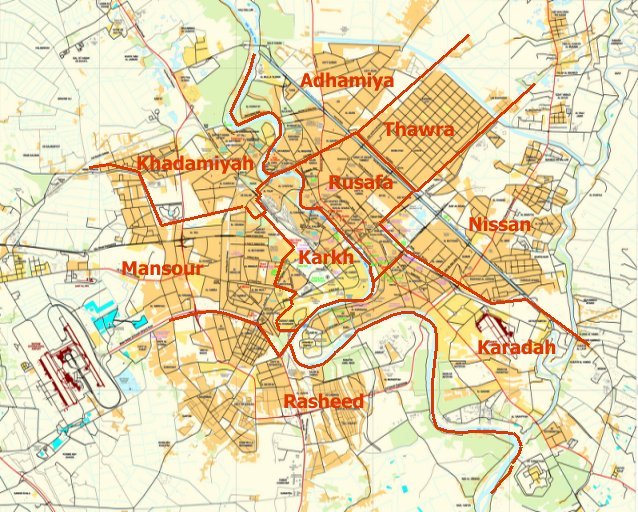
The security situation in my neighborhood in northwest Baghdad is more or less stable, but there are situations when we have gunfire, mortar fire, and confrontations. It is a working-class neighborhood; the standard of living here is average. There used to be a mixture in this neighborhood of Shi'a, Sunnis, Kurds, and even Christians, but many people have left. Now it is basically Shi'ite.
About four months ago, U.S. forces began to build a small, simple base in the area. They are active during the night. After midnight, they begin patrols, or walk along the street, or they may target particular houses or individuals. The militias are also present; they call themselves "popular committees" but we can call them militias. They don't appear constantly; they are in contact with each another and withdraw when the Americans move in, but they are here.
My neighborhood, Al-Jamil, close to Al-Sadr City, is primarily Shi'ite, but there are a number of Sunni and Christian homes, because the neighborhood residents have prevented their expulsion. It's a neighborhood with an above-average standard of living. U.S. forces have taken over a site to use as a camp or a base about 200-300 meters from where I live. The truth is that since the Americans have been stationed here, we have been aware of a number of operations, but I don't think that there is any link between the Americans and this neighborhood. We see them three or four times a day in their vehicles and Hummers, but they have never stopped to talk with the neighbors or other people.
here are no militia checkpoints in my neighborhood, and frankly I don't see the presence of such forces. Our neighborhood is maybe quieter than other neighborhoods. We can move freely around our neighborhood. I see girls and women who go out shopping normally. As for going to other neighborhoods, I only go to particular neighborhoods. For example, there are areas I cannot reach; I used to buy my clothes in Al-Adhamiyah or in the "Camp" neighborhood, but I am now forced to keep out of these areas. However, I can do my shopping on Palestine Street, which is crowded with shoppers, both male and female, even girls wearing trousers and without hijabs.
The neighborhood where I live is not really mixed in terms of Shi'a and Sunnis. There are very few Sunnis. We find that some of those with a limited education are anxious to carry guns at night, and sometimes hand grenades. We sometimes hear gunfire for a particular reason or for no reason at all. At the same time, we see that culture survives -- artists and writers are also living here.
We have not seen any U.S. forces. I haven't seen any Americans in the neighborhood, but some time ago there was an attack on the house of someone who was working as a contractor for the Americans. His house was attacked, and we then saw an American presence, but only for a very brief period.
There are no militia checkpoints in this area, because our neighborhood is within the city, and because the security agencies are somewhat alert and they spread out after 11 at night. But how do we know if there are any armed elements around? Any minor incident is accompanied by concentrated gunfire; this shows that people have weapons.
With regard to the security situation, we cannot call it good or bad. There is a police presence, and there is control over security, and there have not been any incidents in our actual neighborhood. But we hear that incidents do occur in the market and in the crowded areas, incidents involving explosions, assassinations at night.
My neighborhood's standard of living is low to medium. Most people are government employees. It does include the various sects: there are Shi'a, Sunnis, etc., but there is no differentiation here. The U.S. forces are not present in our neighborhood, but they do pass by on the main street. They have fixed bases where they are centered. Nobody is involved with them, nor does anybody go near them, except for those who work at their bases -- they are distant from us and people do not mix with them.
There are no checkpoints here manned by militias, and the control of the streets is in the hands of the police and army. We sometimes hear about armed elements, but not in our neighborhood. The armed elements are at the governorate level, and on the main roads and highways.
In general, the situation where I live is quiet up to a point, but we often hear about "the calm" before the storm. My neighborhood has as an above-average or good standard of living. The people there are mostly educated employees with government offices. There is no presence at all of U.S. forces, but there are two checkpoints manned by the local police in our area.
Sometimes when there are political activities, the militias appear and take control of the street, exhibiting all of their capabilities, to an amazing level. They have wireless communications devices, and they keep in contact. But they do not have a daily presence.
In our area, freedom of movement is practically total; there are no inconveniences or security pestering, except occasionally. But there are rumors that there are in fact assassinations, and they are aimed at political people, or those who had relations with the previous regime. In reality, there is fear, because the assassinations that are taking place are random. This may be on purpose, in order to "mix the cards." Actually this is the only issue people talk about in our neighborhood.
Labels: Al-Jamil, Al-Khadimiyah, Babylon, Baghdad, Iraq, Najaf, security, Tikrit
Sadrists react with anger to Petraeus report
"It has damaged the interests of the people because it does not reflect the true situation in Iraq," Mutayri told AFP. "The security situation is still bad, contrary to what the report said. The people are still isolated from each other because of sectarian strife, especially in Baghdad," he added. He was referring to claims by US commander General David Petraeus and Ambassador Ryan Crocker that violence levels had dropped significantly because of an American troop "surge" in Iraq.
Appearing before the US Congress on Monday, Petraeus said that as a result of the improved security situation, 30,000 troops could be withdrawn by July next year. Mutayri scoffed at the withdrawal timetable outlined by Petraeus, which would see the first batch of Marines return home as early as this month. "Our basic aim is not a timetable but full withdrawal... we will keep demanding that until the last soldier leaves Iraq," he said.
Petraeus's announcement, he added, was merely for "media purposes" and to camouflage the fact that the US administration wants to maintain "the largest possible number of forces in Iraq for strategic purposes." Fiery anti-American cleric Sadr, who has a thousands-strong militia known as the Mahdi Army, has constantly demanded the departure of foreign troops from Iraqi soil since the US-led invasion in March 2003. It launched two uprisings in 2004 but suffered bloody defeats at the hands of US forces in both, although the militia has continued its attacks on foreign troops.
A member of parliament representing Sadr political bloc, Ghufran Saad, told AFP that Petraeus's announcement of possible troop cutbacks was "not fresh news." "Every year they say numbers of troops will leave, but what we see is that their number is in fact increased," Saad said. "The Sadr group did not need to listen to the report to know what they were going to say because we know that the Americans are always trying to impose their mandate on Iraq," she added.
The timetable for withdrawal was "a deception of the Iraqi people because their presence or departure should be determined by the Iraqi government." Sadr's spokesman Sheikh Salah al-Obeidi was sceptical that the withdrawal would happen in the way outlined by Petraeus. "The command of the US forces will not hesitate to keep them in Iraq if the situation changes for a real or fabricated reason," he said.
On August 29, Sadr ordered the Mahdi Army to halt its militia activities, including assaults on US-led forces, for six months after it was widely accused of fomenting violence during a huge pilgrimage in the shrine city of Karbala that left 50 people dead. Attacks on American forces continue, however, with US commanders blaming "rogue" Mahdi Army elements beyond Sadr's control. Najaf, 160 kilometres (100 miles) south of Baghdad where Sadr has his headquarters, is Shiite Islam's holiest pilgrimage city and home to the shrine of Imam Ali.
Labels: Abdul-Mahdi al-Mutayri, General David Petraeus, Ghufran Saad, Mahdi Army, Moqtada Al-Sadr, Najaf, Sadrist bloc, Sheikh Salah al-Obeidi
Monday, September 10, 2007
Prominent Sadr Movement Member Assassinated
On the other hand, the IPs announced that unidentified gunmen assassinated one of Muqtada Al Sadr’s assistants in Najaf. Najaf Police Chief, Brigadier General Abdul Karim Mustafa said unidentified gunmen assassinated Sheikh Mohammed Al Karawi [Iraqi dialect- Garawi], the manager of Najaf Tribal Relations Office in the Sadr Movement, in front of his house in Najaf. Gen. Mustafa added that the assassination was conducted Friday afternoon in front of Al Karawi’s house in the Al Jamiaa area in northern Najaf. The gunmen escaped. Mustafa added, “We have surrounded the entire neighborhood and the search continues to pursue, and we will arrest the criminals.”
A source in the Sadr Office confirmed the incident and demanded an investigation as to who was behind this incident. Al Karawi was responsible for tribal affairs in the Sadr office. Najaf has recently witnessed many assassinations of religious authority’s aides and political movement members. The three latest assassinations were of senior religious cleric Ali Sistani’s aides during the past three months.
Labels: assassination, Kufa, Moqtada Al-Sadr, Najaf, Najaf Tribal Relations Office, Sadr movement, Sheikh Mohammed Al Karawi
Friday, September 07, 2007
Ayatollah Al Sistani Demands To Remove Weapons From The Holy Cities
Labels: Ayatollah Ali al-Sistani, Karbala, Najaf, Nouri Al-Maliki, safe zones
Al Rubaie: “Dangerous Decisions” Could Be Made During Meeting With Sadr Movement In Najaf
Meanwhile, the (Iraqi) Council of Ministers has released 46 detainees (people initially rounded up as suspects of involvement in Karbala’s clashes) who have been determined to have been detained under “insufficient grounds”. Yesterday, the Council of Ministers issued the following statement, “The investigative committee, which was established in accordance with PM Nuri Al Maliki’s instructions, has released 46 detainees. This committee will continue to execute its’ duties in checking the files (circumstances) of other detainees.”
The Sadr Movement has given the (Iraqi) government a deadline which expired yesterday about releasing the (Sadr Movement/Mahdi Army) detainees. If their prisoners were not released, the Sadr Movement has threatened the government with “disobedience” and “surprising reactions”.
On the other hand, Sadr Movement leaders have presented the “Karbala investigation committee” with evidence which proves that the Sadr Movement is innocent about starting the clashes which occurred in Karbala. A Sadr Movement leader confirmed, “CDs [video downloads?] that have been presented to the Committee show that ‘another group’ started these clashes…not the Sadr group.” According to this leader, the Committee has been convinced by this evidence; therefore, they have begun releasing the Sadr Movement members who had been arrested.
Iraq’s Voices News Agency reported that Al Rubaie stated, “There are dangerous ‘human rights violations’ which have been committed against the (Sadr Movement) detainees by militias in Karbala! The Sadr Movement members who have been detained since the events in Karbala last week have been tortured, and some have been killed!” Karbala Governorate Council Member – Hamid Khanoush, who is a senior leader in Karbala’s Sadr Movement, was arrested by the “3rd Brigade” and was tortured. Al Rubaie has called for the Iraqi Minister of Human Rights – (Ms.) Wijdan Mikhail (Salim) to: visit the prisons, and report on the “human rights violations” which are occurring.
Labels: Hamid Khanoush, human rights violation, Karbala, Mahdi Army, Najaf, Nassar al-Rubaie, Sadr movement
Al-Maliki determined to flush out Mahdi Army from Najaf, Karbala shrines
The sources, speaking on condition of anonymity, said Maliki is considering a plan to ‘uproot’ Sadr supporters similar to the policy of debaathification under which members and supporters of the former regime have been prevented from holding government posts. But it is not clear how Maliki would carry out such a pledge amid reports that the popularity of the young cleric and his Sadr movement is growing, particularly among the Shiites in Bagdad and major towns in southern Iraq. The movement which has 30 deputies in parliament and has the right to fill five ministerial posts has frozen its participation in the government in protest against Maliki’s policies.
Labels: Ayatollah Ali al-Sistani, Karbala, Mahdi Army, Najaf, Nouri Al-Maliki
Wednesday, September 05, 2007
Al-Maliki seeks Sistani's advice on filling empty ministerial posts
Speaking after the meeting, Maliki told reporters he had come to Najaf to seek Sistani's advice on filling empty ministerial posts and to get his thoughts on the possibility of reforming the government. "I discussed with him the case of the government. I asked his help in forming a government and nominating new ministers, or if there is the possibility to form a new government based on technocrats," he said.
Maliki did not say how Sistani responded, and the cleric's office declined to comment. One of the biggest blocs in the United Alliance, the movement of fiery Shi'ite cleric Moqtada al-Sadr, pulled out of the government in April in protest at Maliki's refusal to set a timetable for a U.S. troop timetable.
The biggest Sunni Arab bloc in parliament, the Accordance Front, has also pulled out its ministers, accusing Maliki of sectarianism. The walkouts have dealt a blow to efforts to bridge the deep divide between Iraq's Shi'ite and Sunni Arab communities and reach agreement on laws seen by Washington as vital to fostering national reconciliation.
Amid calls by some Democrats in Washington for his ouster, Maliki is under growing pressure to show political progress to match the military gains that have been made in certain areas. Maliki also said he was considering a proposal to declare Iraq's holy cities, which are home to some of the most important shrines in Shi'ite Islam, weapons-free zones, with only the military entitled to be armed.
Labels: Ayatollah Ali al-Sistani, Najaf, Nouri Al-Maliki
Tuesday, September 04, 2007
400 sentenced over clashes in Najaf
A dozen Iraqi security forces were also killed while a US attack helicopter was shot down, killing its two-member crew. Ahmed Duaibil, spokesman for the local government in Najaf, told Reuters the trials took place over three months at the Najaf police academy where the defendants were being held. A criminal judge was sent to the academy and tried the defendants in groups given the large numbers, he said. They were tried on charges related to terrorism, he added.
Witnesses were called, the defendants had lawyers and court officials attended the hearings, Duaibil added.
A court official in Najaf confirmed that 10 people had been sentenced to death and another 390 given jail terms. One of the lawyers, who declined to be identified for security reasons, said he had represented a group who were released for lack of evidence. He also confirmed the number of convictions.
Labels: Najaf, Soldiers of Heaven, the Mahdi
Thursday, August 30, 2007
Al-Sadr and the Mahdi Army
___
MUQTADA AL-SADR: The radical Shiite cleric commands influence as both a political force and leader of the Mahdi Army, a network of militiamen and other factions involved in community services. Based in the Shiite holy city of Najaf, al-Sadr is the son of the late Grand Ayatollah Mohammed Sadiq al-Sadr, the most powerful Shiite clerics in Iraq in the late 1990s. He was killed in a 1999 ambush that his followers blame on the regime of Saddam Hussein.
The younger al-Sadr launched two major uprisings against U.S. and coalition forces in 2004. He maintained his anti-American stance, but later agreed to work with the Washington-backed government of Prime Minister Nouri al-Maliki. In April, five of al-Sadr's followers resigned from al-Maliki's Cabinet to demand a resolution setting a timetable for U.S. troop withdrawal. Al-Sadr disappeared from public view at the start of the U.S.-led security crackdown in Baghdad in February. U.S. officials claimed al-Sadr was hiding in Iran, but al-Sadr never confirmed his whereabouts. He returned to the public stage in May with a fiery anti-American sermon to thousands of followers.
___
MAHDI ARMY: The militia faction was formed in the turbulent months after the U.S.-led invasion of Iraq in 2003 by fighters loyal to al-Sadr. It has grown into one of the most powerful armed groups in Iraq by offering both protection to Shiites and providing needed community outreach such as clinics and welfare services. The Madhi Army — often known by its Arabic name Jaish al-Mahdi, or JAM — mobilized the two uprising against U.S.-led forces in 2004 and turned al-Sadr into a major figure in post-Saddam Iraq.
The Mahdi Army began to fragment this year with some factions suspected of forging closer ties with Iran while breaking away from al-Sadr's grip. Mahdi militiamen have recently intensified battles with the Badr Brigade — the private army of Iraq's main Shiite political group — for control of areas across oil-rich southern Iraq.
The number of Mahdi members is unclear. Some estimates range as high as 50,000 to 60,000 hardcore fighters, but others have set the figure lower. There are also many non-militiamen who are sympathetic to al-Sadr and his movement. It takes its name from a messianic figure central to Shiite Islam: the Mahdi, or so-called Hidden Imam, who disappeared as a child in the 9th century. Shiites believe he will return one day to bring justice to Earth.
Labels: Badr Brigade, Jaish al-Mahdi, JAM, Mahdi Army, Mohammed Sadiq al-Sadr, Moqtada Al-Sadr, Najaf
Monday, August 20, 2007
Najaf tribes announce new front to fight Al Qaeda
The Al Ghazalat have raised a force of 300 armed men but other tribes are said to have promised more men and have asked the government for supplies and weapons. Sheikh Jawad al-Ghazali, the tribe’s chief, joined by other tribal elders, attended a rally in Najaf announcing the formation of “a new tribal front to fight Qaeda in southern Iraq.”
Reports say more tribes have come together in central Iraq to drive Qaeda from their areas. U.S. troops furnish these tribes with weapons. But Qaeda’s influence and popularity, particularly among Sunni Iraqis, is reported to be growing and the group has recently intensified its attacks on U.S. and Iraqi forces, mounting more deadly car bombings than ever before.
The apparently intrepid Qaeda in Iraq has even dared to assassinate powerful Sunni tribal leaders for coordinating with the U.S. against it – the thing which even former leader Saddam Hussein would have thought twice before doing. And as pressure on the group mounts in Baghdad and adjacent areas, Qaeda has begun regrouping in northern Iraq, using Mosul as one of its main garrisons.
Labels: Al Qaeda, Al-Ghazalat tribe, Najaf, Sheikh Jawad al-Ghazali
Thursday, August 16, 2007
Sadrists demonstrate in Najaf
The angry protesters called on the Iraqi government and U.S. forces to release detainees and for the immediate stop to arrest campaigns, which they described as being carried out randomly. “This demonstration aims to call on authorities to stop the recent arrest campaigns by U.S. forces against Sadrists,” the official spokesman for Muqtada al-Sadr, Sheikh Ahmed al-Shebani, told the independent news agency Voices of Iraq (VOI) during the demonstration.
A joint Iraqi and U.S. force last Monday arrested Emad al-Hasnawi, an activist from the Sadrist bloc, from his house in Missan neighborhood in Kufa. U.S. forces also arrested Sheikh Fuad al-Tarafi, a senior aide for Muqtada al-Sadr, last Sunday from his house in the neighborhood. “U.S. forces recently launched a new military operation dubbed “Phantom Strike” throughout Iraq, which mainly aims to crack down on Sadrists and elements of the Mahdi Army,” the sheikh also said.
“Muqtada al-Sadr is in Iraq,” al-Sebani also affirmed. U.S. reports recently asserted that the Shiite cleric is in Iran. “We still adhere to the political process. We withdrew from the government but still have members in the parliament,” he noted. The Sadrist bloc is one of the main components of the Unified Iraqi Coalition (UIC) and has 30 seats out of the 275-seat parliament.
Labels: demonstration, Emad al-Hasnawi, Najaf, Sadrist bloc, Sheikh Ahmed al-Shebani, Sheikh Fuad al-Tarafi
Wednesday, August 15, 2007
Tribal chiefs assassinated
Labels: Al-Dulaym tribe, Al-Ghazalat tribe, Al-Jubur tribe, Albu Khalifah tribe, Fallujah, Kirkuk, Najaf, Sheikh Fawwaz Saddah Sarih, Sheikh Muhsin Abdallah Hasan al-Sabil al-Juburi
Monday, August 13, 2007
Governor and police chief of Qadisiya killed
Iraqi police and soldiers tightly surrounded the centre of the Shia city of Najaf, where the bodies were brought on Sunday for burial. Carrying Iraqi flags and posters of Grand Ayatollah Ali al-Sistani, the country's Shia cleric, the mourners set out from the Shia Supreme Islamic Iraqi Council (SIIC) offices joined by a number of officials. Police said on Sunday they had arrested two men, a commander of a force that protects infrastructure in Diwaniya, and his deputy, who were believed to have been near the site of the attack.
In Baghdad, the office of Nuri al-Maliki, Iraq's prime minister, mourned the passing of Hamza and Hassan and announced that an investigation into their deaths was under way. Jalal Talabani, Iraq's president, had described the attack as a "cowardly terrorist act" by Sunnis fighters who had been displaced by the current security crackdown by Iraqi and US forces. Talabani's office said: "They have committed a crime in a secure part of our country after they were besieged and kicked out of Anbar, Diyala and Samarra."
General David Petraeus, the US military commander, and Ryan Crocker, the US ambassador, issued a joint statement condemning the killings. But Diwaniya residents said on Sunday they feared all-out war among rival Shia factions after Saturday's assassinations. The SIIC and supporters of Muqtada al-Sadr, the anti-American Shia leader, are said by local residents to be targeting each other in an armed conflict mainly through assassinations. SIIC's armed wing, the Badr Organisation, controls the police who fight al-Sadr's al-Mahdi Army militia. The Shia-dominated south has become increasingly restless as factions vie for control of the oil-rich region, often pitting police loyal to one bloc against militiamen of others.
Labels: Afak, Badr Organisation, Brig .Gen. Khalid Abed Hassan, Diwaniyah, Khalil Jalil Hamzah, Mahdi Army, Najaf, Nouri Al-Maliki, Qadisiya, SIIC
Monday, August 06, 2007
Shiites press for autonomy in southern Iraq
Multiple visions for unifying the county's southern provinces are emerging. The Supreme Islamic Iraqi Council (SIIC), one of the most powerful Shiite parties, is leading the charge to form an autonomous "South of Baghdad Region." But 45 southern tribal notables in Najaf last week signed their own pact that envisions creating "the self-rule government of the unified Iraqi south."
Regardless of which southern group wins out, Baghdad faces a formidable challenge that could mean not just the loss of electricity, but revenue from the region's ports and oil fields, and further fracturing along sectarian lines. When Najaf pulled the plug on its electricity from Baghdad, provincial spokesman Ahmed Duaibel said it was because the provincial officials felt Najaf was not getting its fair share of electricity. He says the province is prepared to turn on the power station's remote terminal unit, which normally allows Baghdad to manage the output, if Baghdad addresses provincial grievances.
But one prominent resident who is familiar with the workings of the local authority says the move is part of a larger effort to include Najaf in the "South of Baghdad Region." The other provinces included in the project are Babil, Basra, Dhi Qar, Diwaniyah (also known as Qadisiyah), Karbala, Maysan, Muthana, and Wasit.
In recent weeks, Ammar al-Hakim, the son of SIIC leader Abdul-Aziz al-Hakim, has been leading a passionate grassroots campaign to rally support for the project. "I call upon you to be totally prepared from now to form the South of Baghdad Region at the end of the period prescribed by parliament," he said. On July 21, he repeated the plea at another rally in Baghdad.
The national assembly had passed a controversial law in October 2006 outlining the mechanism for establishing regions in Iraq. The law allows for regions to be created starting early April 2008 provided local referendums are held on the issue. The law was opposed by Sunnis and Shiite rivals to SIIC, such as the Fadhila Party and Moqtada al-Sadr's movement, because they said it heralded the fragmentation of Iraq.
The power of regions is currently one of the points of contention in the constitutional amendment process, according to an aide to Sheikh Humam Hamoudi, who heads the constitutional amendment committee in parliament.
An alternative to the plan that SIIC is promoting is the pact from tribal leaders. Leaders from Basra, Dhi Qar, Diwaniyah, Maysan, and Muthana provinces signed a pact in Najaf that envisions creating "the self-rule government of the unified Iraqi south." They even elected a president and announced plans to form a legislative-type body made up of 130 sheikhs and experts.
Sheikh Abdul-Karim al-Mahamadawi, who supports the initiative, says it's an alternative to the federalist or "super-region" project of the SIIC that would give more powers to "real southerners" while maintaining a commitment to a unified Iraq.
Although Najaf and neighboring Karbala Province hold spiritual significance to Shiites, the viability of any regional federation hinges on Basra, which is the economic linchpin with its oil resources and sea access.
Besides enjoying a close relationship with Iraq's most revered Shiite cleric, Ayatollah Ali al-Sistani, and educating the public about the merits of the "South of Baghdad" project, Sheikh Saghir says his party has already drawn up a detailed blueprint for creating the regional administration and that regular meetings take place now between top political, economic, and security officials from all nine provinces to further the goal.
He says the issue is of "tremendous regional and strategic significance that leaves no room for misadventures."
But the project faces important obstacles from other influential elements within the Shiite community. There is Mr. Sadr who, despite his low profile in recent months and a US-led crackdown against his Mahdi Army militia, continues to enjoy wide support, especially among disaffected segments of Shiite society.
The Fadhila Party says that one of the main reasons why SIIC and its allies "orchestrated a campaign" to squeeze out Basra's governor, Muhammad al-Waeli, is because of his strong opposition to joining the federation. "They simply want to eliminate all those opposing the region project," says Jaber Khalifa, a Fadhila leader.
Labels: autonomy, Babil, Basra, Dhi Qar, Diwaniyah, Karbala, Maysan, Muthana, Najaf, Sheikh Humam Hamoudi, SIIC, southern Iraq, tribal leaders, Wasit
Friday, August 03, 2007
Second Sistani aide murdered in two weeks
Gunmen approached al-Akil and shot him dead around 10:30 p.m. Thursday, the security official said. He was the second al-Sistani aide murdered in less than two weeks, raising questions about the Shiite cleric's own safety. Sheik Abdullah Falak al-Basrawi, who also collected religious taxes for al-Sistani, was stabbed to death inside the cleric's fortified compound on July 27 or 28th, police said, and a security guard was arrested afterward.
A month earlier, yet another aide was killed in a drive-by shooting. It is unclear whether the killings are part of internal Shiite disputes or the work of Sunni insurgents opposed to the vast influence enjoyed by al-Sistani over Iraqi Shiites and politics.
Al-Sistani, who rarely leaves his compound and doesn't grant media interviews, has been the target of at least one assassination attempt since 2003. The cleric, who is in his 70s, commands the deep respect of Iraq's majority Shiites. A death other than one of natural causes could spark riots by millions of his followers and fuel more sectarian violence.
Najaf has been relatively safe compared to the violence in Baghdad or other cities in the volatile center and north of Iraq, but a series of unsolved murders in recent months have struck clerics, academics and security officials. None of the killings had an obvious motive or could be linked to tribal, personal or religious disputes.
Labels: Ayatollah Ali al-Sistani, Fadhil al-Akil, khoms, Najaf, Sheik Abdullah Falak al-Basrawi
Tuesday, July 31, 2007
Tragetting of Baath party members leads to further displacements
We want to prevent Saddam’s followers from returning to power and the best way is to exterminate them. Militants affiliated with Shia groups refused to give detailed information about the campaign but said their action was to guarantee the “cleansing of any remnants of Saddam Hussein’s regime”. “We want to prevent Saddam’s followers from returning to power and the best way is to exterminate them,” Abu Khalid Alawi, who said he was a senior local Shia militia member but declined to name his organisation, told IRIN.
The Iraqi government couldn’t be reached for comment but the governing council of Basra said they had started negotiations with militant leaders to get them to stop such attacks.
Labels: Baathists, Basra, IDPs, Iraqi Brothers Relief, Maysan, Muslim Organisation for Peace, Najaf, Shia militias
Monday, July 30, 2007
Gold found in Al Anbar, red mercury in Maysan
He added, "Field economic studies showed that gold is found in Anbar province and red mercury, which is the most expensive among minerals, is found in south-eastern of Maysan province."
Al-Manii explained, "The western region of Iraq, being of vast desert nature, comprises ethylene phosphate and sulpfur, while copper is found in Karbala and Najaf." He continued, "The results of these studies require the provision of means of research and exploration of non-oil minerals, which are expected to be found in larger proportions than the rough estimates, for not conducting exploration and production for many years."
Al-Manii called relevant authorities and specialists to achieve strategic plans to prospect for minerals other than oil.
Labels: Al Anbar, Ali Al-Manii, copper, gold, Karbala, Maysan, Najaf, red mercury, sulphur
Monday, July 23, 2007
Sistani aide stabbed to death in Najaf
An official at the Iranian-born cleric's office said the person arrested may have only played a supporting role in the weekend killing of Sheik Abdullah Falak al-Basrawi. His death came a little over a month after another al-Sistani aide was killed in a drive-by shooting. The official, who spoke on condition of anonymity because he was not authorized to speak to the media, said al-Sistani's office will launch an independent investigation into the killing of al-Basrawi, a confidante of al-Sistani who was in his late 30s.
According to different police accounts, al-Basrawi was slain late Friday or early Saturday at his office, which is approximately 30 to 40 yards away from where al-Sistani works and lives. That a killer was able to reach the heart of the compound, kill al-Basrawi and escape undetected has raised serious concern among al-Sistani's aides. But the official said al-Sistani refuses to move to a safer residence.
Security at al-Sistani's compound has been stepped up, with more armed guards posted at the entrance, which lies off the city's storied Rasoul street close to the gold-domed shrine of Imam Ali, Shiism's most revered saint. Routine body searches of visitors were markedly more thorough Sunday, and identity documents were examined more carefully, witnesses said.
It was not immediately clear whether al-Basrawi's killing was part of internal Shiite disputes or the work of Sunni insurgents opposed to the vast influence enjoyed by al-Sistani over Iraqi Shiites and politics. The official at al-Sistani's office also said theft may have been a motive. Al-Basrawi ran an office that collected a Shiite religious tax known as "khoms," which is paid to al-Sistani and used to run his seminaries and charities.
Al-Sistani, who rarely leaves his compound and doesn't grant media interviews, has been the target of at least one assassination attempt since 2003. The cleric, who is in his 70s, commands the deep respect of Iraq's majority Shiites. A death other than one of natural causes could spark riots by millions of his followers and fuel more sectarian violence.
Najaf has been relatively safe compared to the violence in Baghdad or other cities in the volatile center and north of Iraq, but a series of unsolved murders in recent months have struck clerics, academics and security officials. None of the killings had an obvious motive or could be linked to tribal, personal or religious disputes.
Najaf's deputy provincial governor, Abdul-Hussein Abtan, recently announced the arrest of nine leaders of what he called terrorist groups in the city, suggesting the overwhelmingly Shiite city has been infiltrated by Sunni insurgents who have been targeting Shiite civilians with bombings.
Labels: Ayatollah Ali al-Sistani, Brig. Gen. Abdul-Karim al-Mayahi, khoms, Najaf, Sheik Abdullah Falak al-Basrawi