Thursday, October 04, 2007
Gunmen in uniform kidnap civilians in Diyala
Labels: abduction, captives, Diyala, gunmen


Wednesday, September 19, 2007
Armed groups set oil tankers on fire
“Most of the trucks’ drivers, from Anbar and Salah el-Din provinces, are carrying crude oil from Baiji refinery to export it to Jordan and Syria through Anbar,” he added. “A number of the kidnapped drivers managed to escape,” the source also said. The Falluja-Samarra road is 100 km north of Baghdad. It links Baghdad to Anbar and Salah el-Din.
Labels: abduction, armed groups, oil tankers
Thursday, September 06, 2007
Electricity employees struggle with reconstruction due to insecurity
Electricity engineers and workers have become main targets of attacks. Meantime operations directed to cripple the already rickety power grid are reported to have increased recently. The killing of the engineers brings the number of electricity personnel killed on duty to 150 since the U.S. invasion of the country.
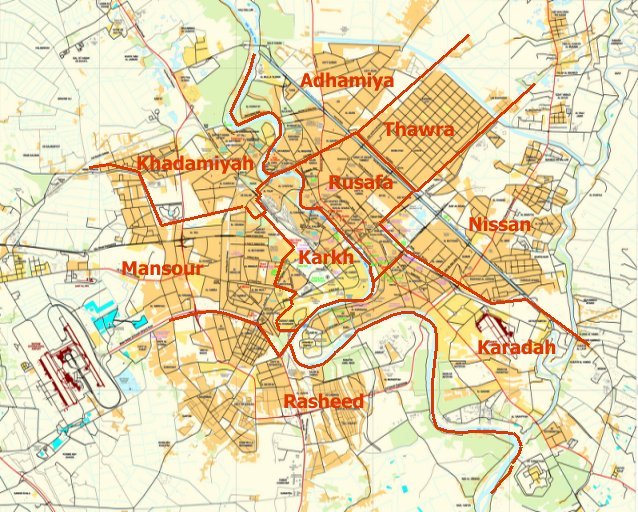
The Electricity Ministry says almost half of Baghdad is a dangerous area for its employees. “Our technicians and engineers cannot enter many areas in Baghdad, particularly in the Karkh Side of the city, to repair power failures due to the presence of gunmen,” a ministry source refusing to be named said.
Labels: abduction, electricity engineers, execution, Karkh, Ministry of Electricity, Waziriya
Tuesday, August 28, 2007
Deputy oil minister released
Wagga and four other officials were kidnapped on Aug. 14 by a large group of gunmen who stormed the state oil marketing organisation's building. One of the officials was freed a few days later, but Wagga and three others were held until Tuesday, the spokesman said. Oil Minister Hussain al-Shahristani has said as many as 100 gunmen had carried out the attack, carrying "sophisticated weapons" and wearing official uniforms. He described the kidnapping as political.
Labels: abduction, Abdul Jabbar al-Wagga, Deputy Oil Minister
Friday, August 24, 2007
Al Qaeda kidnaps women and children in attack on villages
About 200 Al Qaida fighters raided the villages of Shaikh Tamim and Ebrahim Yehia in restive Diyala province, north of Baghdad, early yesterday after launching a mortar attack on the area, police said. The attack came despite a US offensive in Diyala targeting Al Qaida. The US troops launched an operation in June to oust fighters who had taken over large parts of the provincial capital, Baquba. Many escaped to fight on.
Brigadier-General Ali Delayan, police chief of Baquba, told Reuters that 22 residents had been killed in the fighting along with 10 Al Qaida fighters. Several wounded residents said villagers were loyal to the Sunni insurgent group, the 1920 Revolution Brigade. Delayan said the attackers had escaped with eight women and seven children as hostages.
A mosque that served the two villages was destroyed in the fighting and its imam was among those killed, he added. Delayan said Al Qaida attackers mortared the villages before storming into them. Rocket-propelled grenades were used in the fighting, in which three houses were destroyed. He said the gun battle with fighters loyal to the 1920 Revolution Brigade, which has recently distanced itself from Al Qaida, was triggered by the execution of four men, including the mosque imam.
Police said they arrested 22 of the attackers. The Shiite-led government and the US military still view Al Qaida as the main threat to peace in Iraq, despite the fact that is fighters make up only a small percentage of Sunni militants and many of its leaders have been killed or captured.
Labels: abduction, Al Qaeda, Brigadier-General Ali Delayan, Diyala, Ebrahim Yehia, RPGs, Shaikh Tamim, Sunni militants, the 1920 Revolution Brigades
Tuesday, August 21, 2007
Deputy sciences and technology minister kidnapped
"The kidnappers phoned his family later and told them about the incident without demanding any ransom," he added. Al-Attar has a Ph.D. in Physics from the Baghdad University and he has been in his current post for more than two years. The man is married and has two children. No word was available from security authorities or the Iraqi government on the incident.
Labels: 10th Iraqi Army division, abduction, Arasat al-Hindiya, Baghdad, gunmen, r. Sameer Saleem al-Attar, sciences and technology ministry
Friday, August 17, 2007
Gunmen kidnap 10 civilians at fake checkpoint
Labels: abduction, Baqouba, fake checkpoint, gunmen
Wednesday, August 15, 2007
In brazen attack, gunmen in military uniform kidnap deputy oil minister
Jihad said the daylight raid on the company's compound which also houses residential quarters for its employees took place soon after the closing of the offices. Oil Minister Hussein Shahristani told state-run television that an investigation had been launched and some hostages were even "freed." "At 4:00 pm, a gang wearing Iraqi security uniforms broke into the compound and kidnapped five employees, including Wagaa," the minister said.
"We have marshalled all our forces and are carrying out raids on various hideouts and some of the hostages have been freed," he said without specifying the identity of the rescued victims. Insurgents dressed in security uniforms have often carried out raids on government buildings and abducted employees, many of whom are later found dead.
Labels: Abdel Jabar al-Wagaa, abduction, Deputy Oil Minister, State Oil Marketing Organisation
Friday, July 13, 2007
U.S. investigation concludes Iraqi police assisted attack on soldiers in Karbala
Labels: abduction, insurgents, Iraqi police, Karbala, murder, U.S. troops
Friday, June 29, 2007
Shia politicians doubt Maliki's support base in an already splintered coalition
"We thought the opposite, that is why leader Moqtada Al Sadr sent him a letter advising him to step down as long as he cannot stand against America's dominance on security and military resolutions in Iraq." Gazi Al Darraji, an Iraqi analyst, told Gulf News: "Since the kidnapping of five Britons from the Iraqi Finance Ministry a month ago, the relationship between Al Maliki and Al Sadr is not well because the kidnapping is considered a serious blow to Al Maliki's power."
Karbala, the second holiest city in Iraq, was home to a Shiite religious front opposed to Al Maliki's government. The front figures include Shiite clergymen Mohammad Al Yacoubi, Mahmoud Al Hasani and Mohammad Al Baghdadi, who called for Al Maliki to leave office. The Shiite opposition against the Iraqi prime minister comes along with other pressures on him to quit heading the Iraqi Ministers' council.
Buthaina Al Haydari, an Iraqi political researcher at Baghdad University, told Gulf News: "I believe that Al Maliki tried to please both Americans and Al Sadr, and that is impossible to achieve because two of them are fighting fierce rounds in Najaf, Diwaniyah, Nasiriyah and Al Sadr neighbourhood in Baghdad. Besides, some demands from Washington clashed with Al Maliki's opinions ... especially on the national reconciliation and dissolving of militia."
There are also rumours about differences between Al Maliki and Adel Abdul Mahdi, a member of the Shiite coalition. Discord sprang between the two after Abdul Mahdi hinted in a coalition meeting that Al Maliki's survival may end the unity of the Shiite coalition and it may withdraw the paper of selecting the new Prime Minister.
A source in Dawa Party, which Al Maliki belongs to, told Gulf News: "Abdul Mahdi went to the religious authorities in Najaf and asked them to put pressure on Al Maliki to step out and that is the reason for the discord between them."
Labels: abduction, Adel Abdul Mahdi, British hostages, Dawa party, Haidar Hussain, Karbala, Mahdi Army, Mahmoud Al Hasani, Mohammad Al Baghdadi, Mohammad Al Yacoubi, Moqtada Al-Sadr, Nouri Al-Maliki
Friday, June 01, 2007
Anti-Qaeda alliance gathers momentum
The microcosm mirrors what is happening in the western provinces, especially al-Anbar and Diyala, where Sunni tribes have united in an anti-Qaeda alliance. "I think this is going to be the end of the al-Qaeda presence here," mayor Abdul Khaliq told the Washington Post in a phone interview. He said that the fierce fighting Wednesday and Thursday began over accusations that al-Qaeda in Iraq had executed Sunnis without reason.
It appears to be the first time that a dynamic of isolation, which has been at work in the mainly Sunni and restive western province of al-Anbar, has spread to the capital.
Sunni tribal leaders recently formed an umbrella group, the Anbar Salvation Council, to join with U.S. and Iraqi troops in a common fight against al-Qaeda in Iraq, which used to dominate the province. They resent what they see as indiscriminate violence against civilians, including women and children, and also the presence of foreign fighters in al-Qaeda ranks.
According to the US coalition, 12,000 al-Anbar residents have joined the Iraqi security forces so far this year, compared with 1,000 in all of last year. In an attack clearly meant to intimidate the tribes, a suicide bomber blew himself up Thursday among 150 recruits waiting to enter a police compound in Fallujah. Later that day, six people were killed, including three policemen, in a carbomb blast in Ramadi.
Close to the international airport, Amiriyah has seen a mass exodus of Shiites and ongoing violence, and is considered a virtual no mans land.
Trouble arose on Tuesday, the Washington Post reports, when the Islamic Army, a powerful Sunni insurgent group, posted a statement at a local mosque criticizing al-Qaeda in Iraq for killing dozens of other Sunnis in Fallujah and Baghdad "on suspicion only," and warned them to stop the practice. "Down with al-Qaeda, long live the honest resistance." was graffitied on a wall on Wednesday and when al-Qaeda in Iraq members came to wipe the slogan off, a roadside bomb exploded killing three of them.
Al-Qaeda in Iraq's reprisal came in the form of an attack on a mosque killing the Islamic Army's leader, Razi al-Zobai, and complaining that the Islamic Army had become involved in the political process in Iraq, residents said. The Islamic Army retaliated in kind, striking a mosque and killing one of the group's leaders. As the fighting intensified, al-Qaeda in Iraq called in reinforcements arrived from other areas of the capital residents said. A four hour long battle left at least 15 fighters dead.
Labels: abduction, Al Qaeda in Iraq, Al-Anbar, Amariyah, Anbar Salvation Council, Diyala, Fallujah, Islamic Army, Ramadi, Razi al-Zobai, suicide bomber
Wednesday, May 30, 2007
Mahdi Army may be behind abduction of foreigners
Iraqi Foreign Minister Hoshyar Zebari said that the Mehdi Army, rather than al-Qaeda, could be responsible.
The Anglican vicar of Baghdad, Canon Andrew White, said the kidnapping could be linked to the recent killing of a radical Shia cleric by UK troops.
The Britons were seized at a government building near Baghdad's Sadr City suburb, a Mehdi Army stronghold.
The five men - a computer expert and four bodyguards - were taken from the finance ministry building in Baghdad. The kidnappers wore police uniforms and staged the capture without firing a shot, senior Iraqi officials said.
Mr Zebari said the kidnappings represented a "very serious challenge... to the government itself". The kidnappers probably had connections with local police in the area, he told the BBC's Today programme. "The number of people who were involved in the operation, to seal all the buildings, to set roadblocks, to get into the building with such confidence, [they] must have some connection."
Canon Andrew White said there was "very likely a connection" between Tuesday's kidnappings and the death of Abu Qadir, also known as Wissam Waili, a leader of the Mehdi Army militia, who was killed in Basra on 25 May. He told the BBC: "The worrying thing is this is obviously not a case for ransom demand; economic hostage-taking is fairly easy to deal with. "The fact is that just last week, one [leader] of the most militant wing of the Mehdi Army was killed by the British troops, and we now see that there is very likely a connection between these two [events]."
UK Prime Minister Tony Blair, speaking during a trip to Libya, said: "We will do everything we possibly can to help." In a statement, Foreign Secretary Margaret Beckett said support was being offered to the kidnap victims' next of kin at what was "clearly a very distressing time for all concerned". The Iraqi government itself has got a few questions to answer about this. "It is not sensible at this stage to speculate on what might have happened," the statement said. "We are working closely with the Iraqi authorities to establish the facts and doing all we can to secure their swift and safe release."
British embassy officials in Iraq are following up the case and the Iraqi government has set up a special operations room. The British government convened an emergency meeting of its Cobra crisis management committee to discuss the issue on Tuesday afternoon.
The four kidnapped security guards were working for Canadian-owned security firm GardaWorld. The company is one of the biggest suppliers of private security in Iraq, and is mainly staffed by Britons. The computer expert was working for Bearingpoint, a US management consultancy which has worked on development projects in Iraq since 2003. As yet, no group has taken responsibility for the abduction.
This is thought to be the first time Westerners have been abducted from a government facility. BBC security correspondent Frank Gardner said: "Because these men were very unusually seized from a government ministry in broad daylight by people dressed as special police commandoes, in an incredibly brazen raid, the Iraqi government itself has got a few questions to answer about this.
"I think the suspicion is that there was some connivance, possibly low or middle-level, within the police. The Iraqi police is known to be heavily infiltrated by Shia militias." BBC correspondent Jim Muir said similar abductions of large numbers of Iraqis had been blamed on Shia militias, but it was not being ruled out that Tuesday's raid could have been staged by Sunni insurgents. He said senior Iraqi officials said the kidnappers told guards at the Ministry of Finance building that they were from the Integrity Commission - the Iraqi government's internal watchdog.
Witnesses said that the street was sealed off at both ends and the kidnappers, in police camouflage uniforms, walked past guards at the finance ministry building on Palestine Street. A police source told the BBC that dozens of police vehicles were used in the operation. Frank Gardner said a team of experienced police hostage negotiators had already been assembled, and that extra staff had been flown to the British Embassy in Baghdad following the kidnappings.
Intense negotiations were going on with Iraqi officials, and US representatives in Iraq, he said. He added: "It's thought that it would be quite hard for them to abduct these people and take them too far from the area where they were seized without being detected. "So there will be back-channel contacts, SIS - the Secret Intelligence Service - will be involved in this, speaking to informers, trying to find out if anybody has seen anything suspicious, and trying to find out who they are dealing with here." About 200 foreigners of many different nationalities have been kidnapped in Iraq over the past four years, though the number has fallen dramatically since a few years ago.
Labels: abduction, Abu Qadir, Baghdad, Basra, Bearingpoint, Canon Andrew White, Cobra, GardaWorld, Hoshyar Zibari, Mahdi Army, Ministry of Finance, Wissam Waili
Tuesday, May 29, 2007
Round-up of violence across Iraq
BAGHDAD
- Around mid-day on Monday, police were ambushed responding to a call telling them that two mini buses had been taken by gunmen from Bab Al-Muadham to Fadhil area( east Baghdad). In the ensuing clash three policemen were killed and seven injured.
- At 2pm, a car bomb exploded near the Ghailani mosque, one of the loliest shrines for Sunni in Baghdad. At least 22 people were killed and 30 injured.
- Around 3 pm, a roadside bomb exploded near the Adila Khatoon mosque killing two and injuring five.
DIYALA ( 66 km north of Baghdad)
- Early in the day, gunmen opened fire on a police patrol at Ameen neighborhood north of Baquba, killing a police officer.
- Before mid-day, a squad of the fifth division of the Iraqi army raided a site in Shaqraq village north of Muqdadiya ( 45 km north east of Baghdad) killing four terrorists. They seized a large cache of weapons and ammunition.
- After mid-day, police patrol found two dead bodies in Doura neighborhood north Baquba. The corpses had bullet wounds in their heads and chests and signs of torture.
- Around 1 pm, gunmen killed one civilian and injured three when they opened fire on them at Saisabana village on the Baquba-Balad Rouz highway east of Baghdad.
- Around mid-day, an armed group opened fire randomly at Barawana village in Muqdadiya ( 45 km north east Baghdad) killing one civilian and injuring three.
SALAHUDDIN (175 km north of Baghdad)
- Sunday night, gunmen kidnapped 40 people on the Baghdad-Tikrit highway south of Samara (110 km north of Baghdad). All were from the Jibour and Shimar tribes whose members have formed a council of tribes to drive out terrorists.
KIRKUK ( 255 km north of Baghdad)
- Around 9 pm Sunday, a roadside bomb exploded when a police patrol passed through Awashra village on the main road of Hawija –Fatha ( west of Kirkuk). Three policemen were injured.
- At 5 am Monday, joint forces raided Sufra village near Kirkuk–Biji route (west Kirkuk) and took four into custody.
Labels: abduction, Adila Khatoon mosque, Baqouba, Diyala, Ghailani mosque, gunmen, Iraqi Army, Jibour tribe, Kirkuk, roadside bombs, Salahuddin, Shaqraq village, Shimar tribe, Sufra village
Westerners 'abducted in Baghdad'
"We are aware of reports that a group of westerners have been kidnapped. We are urgently looking into them," the UK foreign office said. Central Baghdad was also wracked by a bus explosion which killed at least 22 people and injured about 55. It is not clear if the parked minibus was carrying any passengers. The attack took place in Tayaran Square, where labourers wait for daily construction work. The blast comes a day after a car bomb killed at least 20 people in the Sinak commercial district in Iraq.
The gunmen entered the lecture room led by a man wearing a police major's uniform. "Where are the foreigners, where are the foreigners?," the gunmen shouted, according to the witness who was in the conference room.
At least 22 people were killed and 55 were wounded when a bomb planted in a parked minibus exploded in a busy commercial area in central Baghdad, police said. The blast was near a major intersection in Tayaran Square, an area filled with markets where day laborers, usually poor Shi'ites, queue for work.
No other details were immediately available.
More than 200 foreigners and thousands of Iraqis have been kidnapped since the U.S.-led invasion to topple
Saddam Hussein in 2003, although there had been a relative lull in the taking of foreigners in recent months.
Most of the foreign hostages who have been taken in Iraq have been released but at least 60 have been reported killed by their captors.
The witness in the Finance Ministry said another lecturer escaped being abducted because he was sitting apart from his colleagues. The lecturers, all men and employed by a U.S. organization, had given at least 12 lectures at the ministry over the past year, she said. There was no immediate comment from the U.S. Embassy. A source at the Finance Ministry confirmed the lecturers had been kidnapped but said he had no further information.
Tuesday's assault appeared to be the first time Westerners have been kidnapped from inside an Iraqi government building where many foreigners work assisting the government, and as contractors. A German woman, married to an Iraqi doctor, and her son were kidnapped on February 6. Last year two German engineers were captured in Iraq and held for 99 days before they were freed, although it was not clear if a ransom was paid. German archaeologist Susanne Osthoff was also held by an Islamist group.
Labels: abduction, bodyguards, British, Germans, lecturers, Ministry of Finance, Westerners
Monday, May 28, 2007
Two buses hijacked by insurgents in Baghdad
The insurgents then abducted at least 15 passengers and took them to a nearby abandoned government building, a police officer said on condition of anonymity because he was not authorized to talk to reporters.
The buses were heading from Baghdad's central Bab al-Mudham bus station to the city's eastern Shiite neighborhoods.
The fighting began when Iraqi security forces reached the scene about 30 minutes later, police said. Nine militants were arrested as they attacked security forces from nearby alleys with light weapons. According to Iraqi police, at least two U.S. helicopters were hovering overhead and U.S. forces had taken up positions near the fighting, but were not directly involved. Sunni insurgents have repeatedly clashed with U.S. and Iraqi forces in the Fadhil area, which is also known for its high crime rate.
Monday, May 21, 2007
Round-up of violence across Iraq
* denotes new or updated item.
* BAQUBA - Two people were killed and 15 wounded when three mortar rounds landed in the religiously mixed city of Baquba, police said.
* BAGHDAD - Two mortar rounds landed in the heavily fortified Green Zone, which houses the Iraqi parliament and U.S. embassy, in central Baghdad, police said. They did not know if there were any casualties.
* BAGHDAD - The Iraqi army killed two insurgents and detained 69 others in Baghdad during the past 24 hours, the Defence Ministry said. Another 26 insurgents were detained in other parts of Iraq.
* BAGHDAD - Militants kidnapped and killed a journalist from one of Iraq's most popular national newspapers, Azzaman, in southern Baghdad on Sunday, his employers said on Monday.
HIBHIB - Police said three Iraqi soldiers were killed and four wounded in clashes with gunmen who attacked a minibus carrying off-duty soldiers near the town of Hibhib, near Baquba, 65 km (40 miles) north of Baghdad. A hospital source and Iraqiya state television put the death toll at seven.
KHALIS - Four people were wounded by a car bomb in the town of Khalis, 80 km (50 miles) north of Baghdad, police said.
FALLUJA - A suicide car bomber rammed his vehicle into an Iraqi army checkpoint in the Sunni stronghold of Falluja, 50 km (35 miles) west of Baghdad, causing an unknown number of casualties, police said.
BAGHDAD - The office of Adnan al-Dulaimi, the head of the biggest Sunni group in parliament, said that the Iraqi army had opened fire on his motorcade in Adil district in western Baghdad. There were no casualties.
BAGHDAD - Four Iraqi policemen were wounded when a roadside bomb exploded near their patrol in Wazirya district in central Baghdad, police said.
ISKANDARIYA - Four people from al-Ubaidat tribe were killed and five wounded in clashes between them and gunmen in Iskandariya, 40 km (25 miles) south of Baghdad, police said.
BAGHDAD - A roadside bomb exploded near an Iraqi army patrol, killing three soldiers and wounding two in Adil district of western Baghdad, police said.
ISKANDARIYA - A roadside bomb exploded near a police patrol, wounding three policemen in Iskandariya, police said.
SAFRA - Saboteurs set an oil by-products pipeline on fire when they planted bombs beneath it in the village of Safra, 65 km (40 miles) southwest of Kirkuk, police and Oil North Company said.
NEAR TAL AFAR - A roadside bomb exploded near a police patrol, wounding three policemen in the main road between the town of Sinjar and Tal Afar, 420 km (260 miles) northwest of Baghdad, police said.
TIKRIT - Police said that they arrested Salah Khalil, the head of the Independent Electoral Commission of Iraq office in Salaheddine Province on Sunday in the city of Tikrit, police said. He was accused of supporting insurgents, a source said.
Labels: abduction, Adnan Dulaimi, al-Ubaidat tribe, Baqouba, Fallujah, Green Zone, Hibhib, Iskandariyah, Khalis, mortar rounds, Safra, suicide bomber
Tuesday, May 15, 2007
14 kidnapped from Kirkuk suburbs
Labels: abduction, Bayji, Iraqi Army, Kirkuk, Shiite Turkmen
Monday, May 07, 2007
Destiny of German hostages remains unknown
Labels: abduction, Germans, Hannelore Krause, hostages, Martin Yeager, The Battalions of the Arrows of Righteousness
Monday, April 23, 2007
23 Yazidis kidnapped and executed
The gunmen checked passengers' identification cards, then asked all Christians to get off the bus, said police Brig. Mohammed al-Wagga. With the Yazidis still inside, the gunmen drove them to eastern Mosul, where they were lined up along a wall and shot to death, al-Wagga said. Yazidis are concentrated mostly around the northern city of Mosul, 225 miles northwest of Baghdad.
After the killings, hundreds of Yazidis took to the streets of Bashika. Shops were shuttered and many Muslim residents closed themselves in their homes, fearing reprisal attacks. Police set up additional checkpoints across the city.
One must now be born Yezidi, and converts are not accepted. There is no specific Yezidi Holy text, but important information about Yezidi practices is contained in the Mes'haf i Resh, or "black book", and the Jilwa, or "book of revelation." The Yezidi religion places taboos on the eating of fish or the meat of gazelles; the wearing of blue clothing is forbidden.
COMMENT ENDS.
Labels: abduction, Bashika, Christians, execution, gunmen, Iraq, Mosul, Yezidis
Tuesday, April 17, 2007
Islamic State of Iraq says it will execute kidnapped Iraqi security forces
On Saturday, the group said it was giving the government 48 hours to free all Sunni Muslim women held in Iraq's prisons, saying otherwise it would kill the 20 men, whose pictures it published. It also demanded that the government hand over to it Interior Ministry agents accused of involvement in the widely publicised alleged rape of a Sunni woman and other reported rapes and killings of Sunnis.
Saturday's statement said the 20 men of various ranks, one of whom was identified by his Interior Ministry identification card as a security unit commander, had been abducted northeast of Baghdad. It did not give the date of the kidnappings. Islamic State in Iraq, formed last year by al Qaeda's wing in Iraq and several smaller Sunni insurgent groups, has claimed responsibility for mass kidnappings and a series of major attacks. Last month it shot dead 18 people, mostly police officers, whom it had kidnapped.
Labels: abduction, execution, Iraqi troops, Islamic State in Iraq