Tuesday, July 24, 2007
British Foreign Office appeals for information on hostages
Security
(The Times) - The Foreign Office admitted today that diplomats have no proof that five British civilians kidnapped in Iraq are still alive, as it launched a fresh appeal for information nearly two months after their abduction. The group, made up of four security guards and a consultant, were taken hostage on May 29 at the Iraqi Finance Ministry by dozens of armed insurgents dressed in the fatigues of police commandos.
One of those abducted was a consultant working for BearingPoint, an international firm providing technical and computer advice to the Iraqi Government, and the other four were security guards employed by GardaWorld, a Canadian-owned company which has offices in London and Hereford. The raid, which took place in broad daylight, was considered one of the most brazen abductions of Westerners since the fall of Saddam Hussein.
In a statement issued by the British embassy in Baghdad today, the Government appealed for information about the hostages' plight. The statement was issued in Arabic and aimed specifically at an Iraqi audience. "It’s now 55 days since the five British men were taken. We and their families are increasingly concerned for their welfare," Matthew Lodge, the British charge d’affaires in Baghdad told reporters.
"We have no evidence about their conditions, and we would like to know they are alive and well. We remain willing to listen and talk to those who may have any information about our people." A Foreign Office spokeswoman said that the statement was issued "to support ongoing work" to track down the hostages. She added: "We have not had proof of life." The decision to issue the statement is considered unusual in this case as the Foreign Office has deliberately kept a low profile since the hostages were taken.
Unlike the BBC's large-scale publicity campaign over the Alan Johnston kidnapping in Gaza, diplomats have decided that keeping the names, details and families of those kidnapped out of the media spotlight would be the best way to secure their release. On June 7, the British Ambassador to Iraq, Dominic Asquith, issued a statement appealing for their release and indicating that the Government was prepared to talk to the kidnappers.
Two weeks later, General David Petraeus, the top US commander in Iraq, told The Times that the five were being held by a secret cell of the Mahdi Army militia that was armed, trained and funded by Iran. Despite the Foreign Office's efforts, however, little evidence has emerged as to where the five are being held over the past two months.
The battle for information about the hostages was dealt a further blow when The Times disclosed on July 10 that Canon Andrew White, a vicar who had been working independently towards their release, had been forced to leave the country because of a "serious security threat". It had been reported that the kidnappers had threatened to kill the hostages unless Canon White, who worked at the last Anglican church in Iraq, stopped trying to find out where they were.
Labels: Bearingpoint, British Foreign Office, British hostages, Canon Andrew White, Finance Ministry, GardaWorld, Mahdi Army, Matthew Lodge


Thursday, May 31, 2007
British prisoners in Iraq could be used as bargaining tools
Security
(The Telegraph) - The five Britons captured in Iraq could be used as bargaining tools to secure the release of hundreds of Shia prisoners of war being held in Basra, it was disclosed last night. A senior official in the Mahdi army militia told The Daily Telegraph that the captives - four security guards and a computer expert - had been taken to put pressure on Tony Blair and George Bush.
"We are holding the British until they release our brothers from Camp Bucca in Basra," the cell commander said. "There are hundreds there under British security, some of them for years. When they are released the British will be allowed to go."Hundreds of US and Iraqi troops carried out raids yesterday in Sadr City - the Baghdad Shia suburb which is a Mahdi army stronghold - as more information about the kidnap became clear.
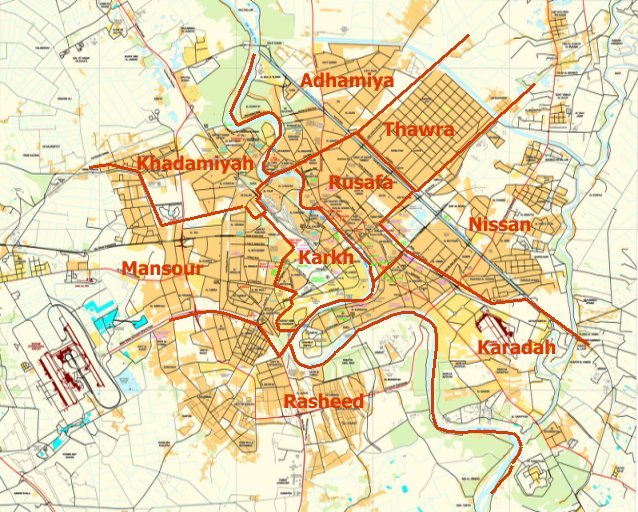
Immediately after the Britons were snatched from a finance ministry building in Baghdad on Tuesday, they were driven to a "hostage holding" centre near Sadr City's Mudafra Square, from where they were expected to be moved frequently to avoid detection.
Whitehall's emergency response unit, Cobra, met again yesterday and Margaret Beckett, the Foreign Secretary, said officials were working closely with the Iraqi authorities and doing everything they could to secure the captives' "swift and safe release". Mr Blair, on a visit to Sierra Leone, said: "We know the dangers and challenges there but we shouldn't let those that are prepared to use kidnapping and terror succeed."
The Foreign Office said there was "no firm indication yet" as to who was behind the abductions. The Mahdi army official said the order to seize the hostages was handed down by Hassan Salim, the militia's leading figure. He said the group was seeking to emulate what it saw as the successful outcome of the recent seizure of the 15 British sailors by its allies in the Iranian government. He added that the militia's demands had already been passed to Iraq's prime minister, Nouri al Maliki, a Shia Muslim close to the Mahdi army's political wing.
There has been no official confirmation of any demands being made. The official was directly contradicted by Sheikh Abdel al-Sattar al-Bahad, a senior aide to radical Shia cleric Moqtada al-Sadr, to whom the Mahdi army is intensely loyal. He denied any involvement by the Mahdi army.
GardaWorld, the Canadian security contractor which employs the security guards, and BearingPoint, a US management consultancy which employs the computer expert, said they were continuing to hope for the men's safe release. Their identities have not yet been released.
The men were snatched by up to 40 men, some in police uniforms. Hoshyar Zebari, Iraq's foreign minister, said it had been known "for some time" that insurgents had infiltrated the police and security services. For the kidnappers to act with such confidence they "must have some connection", he added.
Labels: Basra, Bearingpoint, Britons, Camp Bucca, Cobra, GardaWorld, Hassan Salim, Mahdi Army, prisoners, Sheikh Abdel al-Sattar al-Bahad
Wednesday, May 30, 2007
Mahdi Army may be behind abduction of foreigners
Security
(BBC) - A Shia militia group is thought to be behind the kidnapping of five Britons in the Iraqi capital Baghdad.
Iraqi Foreign Minister Hoshyar Zebari said that the Mehdi Army, rather than al-Qaeda, could be responsible.
The Anglican vicar of Baghdad, Canon Andrew White, said the kidnapping could be linked to the recent killing of a radical Shia cleric by UK troops.
The Britons were seized at a government building near Baghdad's Sadr City suburb, a Mehdi Army stronghold.
The five men - a computer expert and four bodyguards - were taken from the finance ministry building in Baghdad. The kidnappers wore police uniforms and staged the capture without firing a shot, senior Iraqi officials said.
Mr Zebari said the kidnappings represented a "very serious challenge... to the government itself". The kidnappers probably had connections with local police in the area, he told the BBC's Today programme. "The number of people who were involved in the operation, to seal all the buildings, to set roadblocks, to get into the building with such confidence, [they] must have some connection."
Canon Andrew White said there was "very likely a connection" between Tuesday's kidnappings and the death of Abu Qadir, also known as Wissam Waili, a leader of the Mehdi Army militia, who was killed in Basra on 25 May. He told the BBC: "The worrying thing is this is obviously not a case for ransom demand; economic hostage-taking is fairly easy to deal with. "The fact is that just last week, one [leader] of the most militant wing of the Mehdi Army was killed by the British troops, and we now see that there is very likely a connection between these two [events]."
UK Prime Minister Tony Blair, speaking during a trip to Libya, said: "We will do everything we possibly can to help." In a statement, Foreign Secretary Margaret Beckett said support was being offered to the kidnap victims' next of kin at what was "clearly a very distressing time for all concerned". The Iraqi government itself has got a few questions to answer about this. "It is not sensible at this stage to speculate on what might have happened," the statement said. "We are working closely with the Iraqi authorities to establish the facts and doing all we can to secure their swift and safe release."
British embassy officials in Iraq are following up the case and the Iraqi government has set up a special operations room. The British government convened an emergency meeting of its Cobra crisis management committee to discuss the issue on Tuesday afternoon.
The four kidnapped security guards were working for Canadian-owned security firm GardaWorld. The company is one of the biggest suppliers of private security in Iraq, and is mainly staffed by Britons. The computer expert was working for Bearingpoint, a US management consultancy which has worked on development projects in Iraq since 2003. As yet, no group has taken responsibility for the abduction.
This is thought to be the first time Westerners have been abducted from a government facility. BBC security correspondent Frank Gardner said: "Because these men were very unusually seized from a government ministry in broad daylight by people dressed as special police commandoes, in an incredibly brazen raid, the Iraqi government itself has got a few questions to answer about this.
"I think the suspicion is that there was some connivance, possibly low or middle-level, within the police. The Iraqi police is known to be heavily infiltrated by Shia militias." BBC correspondent Jim Muir said similar abductions of large numbers of Iraqis had been blamed on Shia militias, but it was not being ruled out that Tuesday's raid could have been staged by Sunni insurgents. He said senior Iraqi officials said the kidnappers told guards at the Ministry of Finance building that they were from the Integrity Commission - the Iraqi government's internal watchdog.
Witnesses said that the street was sealed off at both ends and the kidnappers, in police camouflage uniforms, walked past guards at the finance ministry building on Palestine Street. A police source told the BBC that dozens of police vehicles were used in the operation. Frank Gardner said a team of experienced police hostage negotiators had already been assembled, and that extra staff had been flown to the British Embassy in Baghdad following the kidnappings.
Intense negotiations were going on with Iraqi officials, and US representatives in Iraq, he said. He added: "It's thought that it would be quite hard for them to abduct these people and take them too far from the area where they were seized without being detected. "So there will be back-channel contacts, SIS - the Secret Intelligence Service - will be involved in this, speaking to informers, trying to find out if anybody has seen anything suspicious, and trying to find out who they are dealing with here." About 200 foreigners of many different nationalities have been kidnapped in Iraq over the past four years, though the number has fallen dramatically since a few years ago.
Labels: abduction, Abu Qadir, Baghdad, Basra, Bearingpoint, Canon Andrew White, Cobra, GardaWorld, Hoshyar Zibari, Mahdi Army, Ministry of Finance, Wissam Waili