Wednesday, October 17, 2007
Erbil suggests talks with Turkey, turns down Iraqi Army in place of Peshmerga
Ankara accuses Kurd held northern province of Iraq of offering refuge to Turkish Kurd rebels. "This is an internal issue and concerning the sovereignty of Iraq, and only the Iraqi government and its Kurdish regional counterpart will handle it," he added.
Sources in the Iraqi army told Gulf News that recent meeting between Iraqi Defence Minister Abdul Qader Mohammad Jasem and the Turkish ambassador in Baghdad focused on the Turkish government's request of sending Iraqi troops to the border to take the place of Kurdish Peshmerga elements which are accused by Ankara of sympathising with Kurdistan Workers Party (PKK) elements.
Mohammad Ehsan said the government in Arbil supports talks between Turkey and the PKK leadership. PKK is listed as a terrorist group. "Dialogue is the right way to solve the PKK problem and not by using excessive military power," the Kurdish minister said.
The minister said that Ankara had informed the United States and the Iraqi government that it would not entertain any representatives of Kurdistan government to attend the Turkish-Iraqi talks. The talks are aimed at resolving the military escalation along common borders between the two countries. "Arbil is more than excited to talk directly with Turkey to find a vital solution to the PKK crisis," the minister said.
"I believe the goal of Turkish government is to escalate the situation on the Iraqi border under the pretext of eliminating the hostile activities by PKK elements," Aaron Kamiran, an Iraqi political analyst, told Gulf News.
"The goal is political because launching a Turkish military operation in the region would not achieve any results because of the difficult and mountainous terrain. Hence the Turks want to send Iraqi and non-Kurdish troops to the border and they will raise problems between Arbil and Baghdad, especially with Arbil's insistence on rejecting the Turkish proposal."
He added: "What is important for Turks is to make sure that Iraq Kurdistan region will not be an independent entity or a confederate state in the future. Besides the non-Kurdish forces in the region may pose a guarantee for Turkey in this region, especially since normalisation situations in Kirkuk is implemented hastily".
Labels: Abdul Qader Mohammad Jasem, Iraqi Army, Kurdistan, Peshmerga, PKK, Turkey


Monday, August 06, 2007
Attempted assassination on one of al Sadr's top aides
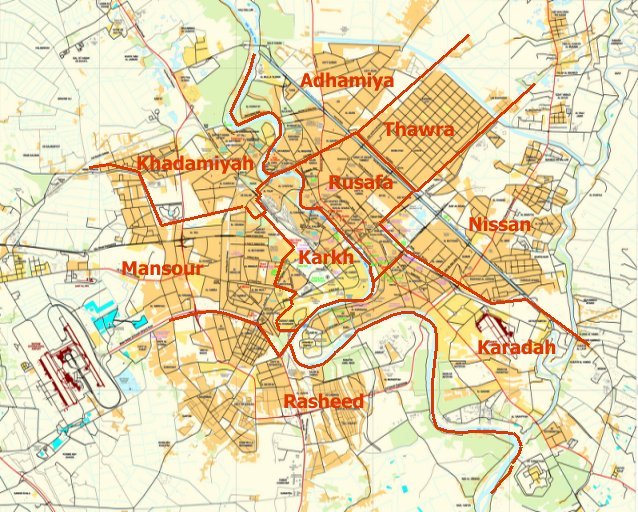
Sadr officials said that Sadr's top aide, Hazem al Araji, was in a convoy in the northwest Baghdad neighborhood of Kadhimiyah when armed men wearing Iraqi National Guard uniforms opened fire on him, injuring five of his bodyguards.
Sadr, an influential cleric, leads the Mahdi Army, which has infiltrated Iraqi security forces and is often accused of posing in Iraqi military uniforms to carry out its attacks. It is unclear whether the would-be assassins were actual Iraqi soldiers or possibly other backers of Sadr, whose movement has become splintered in recent months. A spokesperson for the Iraqi military could not be reached for comment Sunday.
Recently, al Araji was reported to have lost clout in the Sadr movement and some of his control over the Mahdi Army in Kadhimiyah.
Qahtan al Sudani, a spokesman for Araji who leads the Sadr office in Kadhimiyah, blamed the attack on Sunnis.
"We accuse the Baathist takfiris," al Sudani said referring to both Saddam Hussein's secular party and Sunni extremists.
Araji was a devotee of Sadr's late father, a prominent Iraqi ayatollah. Araji fled Iraq in 1999 after Sadr's father was killed and returned from exile in Canada in 2003. U.S. forces twice detained Araji after the Mahdi Army fought two bitter uprisings against the Americans in 2004, but released on both occasions.
Labels: assassination attempt, Hazem al Araji, Iraqi Army, Kadhimiya, Mahdi Army, Moqtada Al-Sadr, Qahtan al Sudani
Tuesday, July 03, 2007
Corruption rife as unemployed flock to join Iraqi army
“Unemployment is worse than death,” replied a young man amid a big crowd of people willing to register their names as volunteers at an army recruit center in Baghdad. Army recruitment centers have been scenes of repeated suicide bombing and hundreds of recruits have been killed in such attacks. Guards at the center at Alzawara Park could hardly bring some sort of order to a crowd of recruits fighting to present their papers.
Some recruits complained of corruption, saying officials in the center would normally ask for a tip of nearly 1,000 dollars to have their names registered as volunteers. Ali Hussain, whose application was not even handled, said he was turned away by an officer who openly asked for a bribe. “He (the officer) asked for ten 100 dollar bills. I asked him earnestly to reduce the amount, but he refused and my application was rejected. Finding a job is almost impossible and the only way to earn a decent living is by joining the army despite the hazards,” he said.
Other recruits refusing to be named said their applications were eventually rejected despite paying the money to those running the center. It was hard to get any of the officers in the center to speak on the record. One officer, who would only talk on condition of not revealing his name and rank, agreed that there was corruption in the army and particularly at recruiting centers.
“What you have discovered is true … but those found guilty of corruption are charged and dismissed. But I don’t think the problem is on the scale described in the media,” he said. He said the problem was that the number of volunteers always far exceeds what the army really needs. “This prompts some to use corruption and bribes in processing the applications,” he said.
Labels: corruption, Iraqi Army, recruitment, unemployment, volunteers
Wednesday, June 20, 2007
Al Musawi: 350 10th Division Soldiers Dismissed In Basrah
Labels: Basrah, Iraqi Army, Major General Ali Hamadi Al Musawi, mosque, shrine
Monday, June 04, 2007
U.S. military issues M-16 rifles to some Iraqi troops
HOW THE RIFLES COMPARE
(McClatchy Newspapers) - The U.S. military in Iraq has begun issuing American M-16 rifles to some Iraq troops in exchange for their AK-47 rifles, the cheap and sturdy weapon that currently hangs from the shoulder of virtually every Iraqi soldier, police officer, insurgent and militiaman.
U.S. military officials describe the switch, part of a $2 billion arms purchase for the country's fledgling security soldiers, as a modernization and a vote of confidence in Iraqi troops. The M-16 requires more care than the rugged and familiar AK-47, and demands a better-trained soldier.
That confidence extends only so far, however. With Iraq's security services infiltrated by both Sunni Muslim insurgents and Shiite militias, the U.S. military is requiring that each Iraqi soldier turn in his AK-47, take four days of training, and be photographed with the serial number of his new M-16.
Because the two weapons use different size ammunition, U.S. and Iraqi military leaders hope the change will staunch the flow of ammunition to bad guys. No one, though, thinks the AK-47 or its bullets will vanish from the war-torn Iraqi landscape any time soon.
"The different ammunition will prevent stealing," said Haida Mahmoud, a 31-year-old member of an Iraqi army quick response team in Wasit province southeast of Baghdad. "Now we only get half of the ammunition we should because the other half is stolen."
The AK-47 was developed in the Soviet Union in 1947 by Mikhail Kalashnikov - its name is an abbreviation for Automatic Kalashnikov-1947 - and is renowned for its ease of operation and ability to withstand miserable conditions. The M-16, which U.S. troops began using during the Vietnam War, is considered more accurate and lighter, but also more complicated to keep clean and operate.
U.S. military officials estimated before the war that between 1 million and 7 million AK-47s were in private hands in Iraq. Some reportedly sold for as little as $10. The number of Kalashnikovs only grew when the Iraqi military collapsed and many troops walked off with their AK-47s - some to defend their homes, others to fill arsenals of sectarian militias or insurgent groups.
At the same time, Iraq's porous borders with Syria and Iran make easy smuggling routes for small arms.
"The Middle East, and Iraq in particular, is awash in both AK-47s and AK-47 ammo," said Charles Heyman, a retired British infantry officer and the editor of Armed Forces of the United Kingdom. "It's not going away."
Still, Heyman said that arming Iraqi soldiers with the same weapons as the Americans they're fighting alongside is a savvy logistical move.
The U.S. troop surge that began three months ago, and the companion effort to increase security in Baghdad, puts U.S. and Iraqi soldiers together in what the military calls "joint security stations." Those work something like neighborhood precinct stations where American and Iraqi troops often share living quarters and supplies.
To keep them armed with incompatible weapons would be like issuing half an office staff Windows-based computers and the rest iMacs. Heyman said dumping the Kalashnikovs, then, streamlines operations. It also will make it more difficult for insurgents to make use of weapons that they capture or steal from official Iraqi arsenals.
Weapons theft has been rampant in Iraq. The Iraq Study Group report issued last year found "there are ample reports of Iraqi police officers participating in training in order to obtain a weapon, uniform, and ammunition for use in sectarian violence."
The Special Inspector General for Iraq Reconstruction concluded in a November 2006 audit that only 2 percent of the serial numbers were recorded of more than 500,000 U.S. weapons legally transferred to the country. Those weapons ranged from pistols to rocket launchers.
"The United States has no idea what happened to the majority of weapons it brought into the country," said Rachel Stohl, a senior analyst and small arms specialist for the Center for Defense Information. "We do know these weapons, in conjunction with the millions already in the country left from Saddam's era, are being used to perpetuate the violence and continued instability throughout Iraq."
Publicly, Iraqi defense officials and troops call the switch an endorsement of what they say is their growing professionalism. "We are modernizing our Army and this is the more modern weapon," said Maj. Gen. Majid Jwad, one of the Iraqis who test-fired both guns and weighed in on the decision.
Already, more than 1,000 Iraqi soldiers have made the switch to the $1,000 rifles, with three-fourths of the cost paid by the Iraqi government. The first M-16s, and M-4s for officers, have been placed with Iraqi troops who're working in concert with American troops in Baghdad. None has been given to police units, which are considered less reliable and more corrupt. But eventually their day will come, too.
Soldiers have to adapt to some differences. The Kalashnikov can fire its entire magazine with a single pull of the trigger. The M-16 - in a reflection of Americans' preference for precision soldiering - tops out at three-shot bursts. "We can't just hand them out from the back of a truck and say, `Hey, here's your weapon,'" said Col. David Dornblaser, a security assistance officer helping the Iraqis with their foreign arms buys. But the switch will be worth it, he said, because trafficking the new rifles will be difficult. Someone out of uniform carrying an M-16 would more obviously be toting a stolen weapon.
Labels: AK-47, Iraqi Army, M-16 rifles, M-4 rifles, U.S. military
Tuesday, May 29, 2007
Round-up of violence across Iraq
BAGHDAD
- Around mid-day on Monday, police were ambushed responding to a call telling them that two mini buses had been taken by gunmen from Bab Al-Muadham to Fadhil area( east Baghdad). In the ensuing clash three policemen were killed and seven injured.
- At 2pm, a car bomb exploded near the Ghailani mosque, one of the loliest shrines for Sunni in Baghdad. At least 22 people were killed and 30 injured.
- Around 3 pm, a roadside bomb exploded near the Adila Khatoon mosque killing two and injuring five.
DIYALA ( 66 km north of Baghdad)
- Early in the day, gunmen opened fire on a police patrol at Ameen neighborhood north of Baquba, killing a police officer.
- Before mid-day, a squad of the fifth division of the Iraqi army raided a site in Shaqraq village north of Muqdadiya ( 45 km north east of Baghdad) killing four terrorists. They seized a large cache of weapons and ammunition.
- After mid-day, police patrol found two dead bodies in Doura neighborhood north Baquba. The corpses had bullet wounds in their heads and chests and signs of torture.
- Around 1 pm, gunmen killed one civilian and injured three when they opened fire on them at Saisabana village on the Baquba-Balad Rouz highway east of Baghdad.
- Around mid-day, an armed group opened fire randomly at Barawana village in Muqdadiya ( 45 km north east Baghdad) killing one civilian and injuring three.
SALAHUDDIN (175 km north of Baghdad)
- Sunday night, gunmen kidnapped 40 people on the Baghdad-Tikrit highway south of Samara (110 km north of Baghdad). All were from the Jibour and Shimar tribes whose members have formed a council of tribes to drive out terrorists.
KIRKUK ( 255 km north of Baghdad)
- Around 9 pm Sunday, a roadside bomb exploded when a police patrol passed through Awashra village on the main road of Hawija –Fatha ( west of Kirkuk). Three policemen were injured.
- At 5 am Monday, joint forces raided Sufra village near Kirkuk–Biji route (west Kirkuk) and took four into custody.
Labels: abduction, Adila Khatoon mosque, Baqouba, Diyala, Ghailani mosque, gunmen, Iraqi Army, Jibour tribe, Kirkuk, roadside bombs, Salahuddin, Shaqraq village, Shimar tribe, Sufra village
Friday, May 18, 2007
Maliki pledges to clamp down on clashes in Nasiriyah
"The council held on Wednesday night a meeting headed by President Talabani in the presence of Premier Nouri al-Maliki, Head of the Unified Iraqi Coalition, Abdul Aziz al-Hakim, the two Vice Presidents Adel Abdul-Mahdi and Tareq al-Hashemi and the House Speaker Mahmud al-Mashhadani," Talabani's office said in a statement received by the independent news agency Voices of Iraq (VOI) on Thursday.
"President Talabani also posted the meeting with the outcome of his recent visit to Britain and his meeting with the outgoing British Prime Minister Tony Blair," the statement added. The meeting was also attended by a number of senior Iraqi officials and lawmakers. On Wednesday, fierce clashes erupted between Iraqi police forces and militiamen loyal to Shiite cleric Muqtada al-Sadr in the southern Iraqi city of Nassiriyah that left scores of casualties.
The Political Council for National Security was established in mid 2006 after forming the current Iraqi government under Nouri al-Maliki. It consists of the Iraq's president and the premier and speaker of the parliament, the two vice presidents, the premier's two deputies, president of Iraq's Kurdistan region, head of the supreme court and heads of the parliamentarian blocs. The council, a consultative body, tackles the political and security developments in the country.
Labels: Iraqi Army, Mahdi Army, Nasiriyah, Nouri Al-Maliki, Political Council for National Security
Thursday, May 17, 2007
Round-up of violence across Iraq
The daily Iraq violence report is compiled by McClatchy Newspapers in Baghdad from police, military and medical reports. This is not a comprehensive list of all violence in Iraq, much of which goes unreported. It’s posted without editing as transmitted to McClatchy’s Washington Bureau.
* Indicates a new or updated entry
* DIWANIYA - At least three civilians were killed, including a woman, and four others wounded in clashes between militiamen and security forces in the Shi'ite city of Diwaniya, 180 km (112 miles) south of Baghdad, police said.
BAGHDAD - Two civilians were killed and five wounded by a roadside bomb in the Diyala bridge area in southeastern Baghdad, police said.
* ISKANDARIYA - A roadside bomb killed one civilian and wounded three others in Iskandariya, 40 km (25 miles) south of Baghdad, police said.
HILLA - A policeman was killed and three of his family were wounded when a militant hurled a hand grenade at his home in Hilla, 100 km (60 miles) south of Baghdad, police said.
* BASRA - Gunmen killed a police major along with his son in the southern Iraqi port city of Basra, police said.
* DIWANIYA - Gunmen killed a civil servant in a drive-by shooting in Diwaniya, police said. It was not clear why he was targeted.
* LATIFIYA - Police found two bodies bearing signs of torture and bullet wounds in the small town of Latifiya 40 km (25 miles) south of Baghdad, police said.
* KIRKUK - Police found a bullet-riddled body in the ethnically mixed northern city of Kirkuk, police said.
* BAGHDAD - The Iraqi army killed six insurgents in different parts of Iraq over the last 24 hours, the Iraqi army said in a statement.
Labels: Basra, Diwaniya, grenade, gunmen, Hilla, Iraqi Army, Iskandariyah, Kirkuk, Latifiyah, militias, roadside bombs
Gunmen blow up Mosul - Arbil bridge, Badoush bridge
The bridge connects Mosul city to Arbil. Earlier, a police source said unknown gunmen detonated two car bombs on both sides of Badoush bridge in northern Iraq bringing down the bridge with no casualties. "Unknown gunmen blew up Badoush bridge this afternoon after they placed and remotely detonated two car bombs near both sides of the bridge," Brigadier Abul-Karim al-Juburi, head of Ninewa police operations room, told the independent news agency Voices of Iraq (VOI).
Badoush bridge connects Mosul, capital city of Ninewa province, to districts of Talafar and Rabia near the Iraqi borders with Syria in western Ninewa. Al-Juburi said "the attack left no casualties." The northern Iraqi city of Mosul was placed under curfew on Wednesday after clashes erupted in the Sunni city between armed groups and Iraqi security forces, a police source said.
"Armed clashes broke out this afternoon in a number of Mosul neighborhoods between armed groups and forces from Iraqi army and police," Brigadier Abdul-Karim al-Juburi, head of Ninewa police operations room, told the independent news agency Voices of Iraq (VOI). Following the clashes, the local government decided to impose a curfew on the city until further notice, Brigadier al-Juburi said.
Al-Jaburu gave no further details. Local residents told VOI on the phone that today afternoon Mosul had been a scene of clashes between gunmen and security forces while U.S. choppers were flying in the sky of the city as non-stop fire exchange was still heard all over Mosul. Mosul is 402 km north of Baghdad.
The attacks started after 7 p.m., when two suicide bombers detonated car bombs near the police station in Mosul, 360 kilometres northwest of Baghdad. Another two suicide car bombers blew up near the headquarters of the Democratic Party of Kurdistan in another area of town, said Wathiq al-Hamdani, provincial chief of police.
Another suicide car bomber targeting police was shot by guards before he could reach his target, al-Hamdani said. The series of attacks killed four police and wounded 30 other people, police said. Police fought back, killing 15 gunmen, al-Hamdani said.
Labels: Arbil, Badoush bridge, bridge Aski, Brigadier Abdul-Karim al-Juburi, car bomb, clashes, curfew, gunmen, Iraqi Army, Mosul
Wednesday, May 16, 2007
Mahdi Army clashes with Iraqi Army in Nasiriyah
A police lieutenant said Mehdi Army militias clashed with Iraqi forces after police arrested two militiamen on Tuesday on suspicion they were members of a team planting roadside bombs. Witnesses in Nasiriya, 375 km (235 miles) south of Baghdad, said the fighting erupted before dawn. Fighting eased by noon after the militias withdrew from the city's centre. Iraq's Shi'ite south has seen less violence than in Baghdad and other areas, but fighting between rival Shi'ite factions and security forces erupts from time to time.
Sadr, an influential cleric and political figure, commands the Mehdi Army militia, which has strongholds in Baghdad's Shi'ite areas and in the south."They burned all the vehicles in front of one of the provincial government buildings in the centre of the city, but the governor was in another building next to it," said Colonel Rahim Ali of the Iraqi police. Police moved quickly to close off roads leading into and out of Nasiriyah and declared a city-wide curfew as they moved to quell the violence.
When the sun rose on Wednesday the parking lot in front of one of the main local administration buildings was filled with the charred shells of scores of vehicles, according to police. Although the Shiite south of the country has seen less fighting than the areas in and around the capital, street fights often break out among rival political parties, many of which have infiltrated the security forces.
Labels: Iraqi Army, Mahdi Army, Nasiriyah
Tuesday, May 15, 2007
14 kidnapped from Kirkuk suburbs
Labels: abduction, Bayji, Iraqi Army, Kirkuk, Shiite Turkmen
Tuesday, May 01, 2007
Fears of a failed state if the U.S. withdraws too soon
The Iraqi army's administration has not kept up with its recruitment. Some units don't want to be deployed away from their home districts. On any day, one-quarter of the force is on vacation; soldiers get one week off in every four. Also compared with a contracted, professional army, Iraqi soldiers are hired as if it's for any job, and they are free to leave whenever they wish. Many do, officials say.
In combat, without American forces present, the Iraqi soldiers have no medical evacuation capacity and no air support. They rely on the U.S.-led coalition for equipment, training and supplies. "The sacrifice of U.S. soldiers and the families of soldiers ... is incredible," Gen. Ali Ghiran-Majeed says, speaking through a translator. "We Iraqis will never forget them. [But] we need the coalition to stay."
Polls of Iraqis this year have consistently shown an overwhelming majority want U.S. forces to leave -- but not just yet. And as much as the majority of Iraqis say they loathe the American presence, they also fear its end.
U.S. Brig. Gen. Dana Pittard says the American people are right to hold the U.S. policy accountable in Iraq, but he appeals for patience. "It takes time," he says. "A huge amount of progress has been made, but we're not there yet." He cites the Iraqi army. "In early 2005, there were two struggling IA [Iraqi army] divisions. Now there are 10 very capable IA divisions, and we're working on the 11th and 12th."
Pittard is counted a rising star in the U.S. military, a thoughtful man devoid of swagger. His experience includes a year commanding troops in Diyala province, which has recently descended into bloody chaos. He is frank in assessing the Iraqi military. "The Iraqi Security Forces cannot take the fight to the enemy without our assistance at this point," he says.
He says an American withdrawal, like many in Washington are pushing for, "would cause a huge vacuum that the enemies of Iraq would take advantage of. We cannot leave Iraq in disarray. We came here in 2003. We cannot leave this nation as a failed state," he says. A failed state is what almost everyone in Iraq predicts if the Americans go too early. It is one of the very few points of agreement here.
Labels: Brig. Gen. Dana Pittard, Gen. Ali Ghiran-Majeed, Iraqi Army, U.S. troop withdrawal
Friday, April 27, 2007
Petraeus warns violence will get worse before it improves
President George W. Bush has pledged to veto the bill, passed by the Senate on Thursday, and Petraeus said sectarian violence in Iraq would likely rise if his troops pulled back from securing Baghdad in the fall. "My sense is that there would be an increase in sectarian violence, a resumption of sectarian violence, were the presence of our forces and Iraqi forces, at that time, to be reduced," Petraeus told reporters at the Pentagon.
He said the new effort to curb violence with more troops, ordered by Bush in January, meant going into neighborhoods where extremists had been able to operate freely. "Because we are operating in new areas and challenging elements in those areas, this effort may get harder before it gets easier," said Petraeus, who has briefed Bush and members of Congress on the war during his visit to Washington.
"I think there is the very real possibility that there's going to be more combat action and that, therefore, there could be more casualties," he said. Petraeus said ultimate success in Iraq would be down to the Iraqis and their ability to reconcile. "We can provide the Iraqis an opportunity but they will have to exploit it," he said.
Labels: General David Petraeus, Iraq, Iraqi Army, U.S. military, U.S. troop withdrawal, violence
Thursday, April 26, 2007
Iraqi Army, KDP target of attacks
The city is located in Diyala province, which has seen some of the worst violence recently as mostly Sunni militants are believed to have fled to the area since U.S. and Iraqi troops launched a security crackdown in Baghdad on Feb. 14. On Wednesday, four Iraqi police officers were killed when a suicide bomber struck a police station in the Diyala city of Balad Ruz, 45 miles northeast of Baghdad.
Two days earlier, a double-suicide bombing struck a paratrooper outpost in the province, killing nine U.S. troops. An al-Qaida-linked group claimed responsibility. In other violence on Thursday, two suicide bombers attacked an office of the Kurdistan Democratic Party of Massoud Barzani, leader of the autonomous Kurdish region in Iraq, killing three of its guards and wounding five, police said.
The casualties could have been higher if guards had not opened fire on the two attackers, forcing them to detonate their explosives at least 50 yards from the office, police said. The attack occurred at about 8 a.m. in Zumar, a town that is 45 miles west of Mosul, the capital of Ninevah province. It was the second suicide attack this week aimed at the KDP in that area.
On Monday, a suicide car bomber attacked a KDP office in another town near Mosul, which is 225 miles northwest of Baghdad, killing at least 10 people and wounding 20. In a separate attack in Mosul on Monday, suspected insurgents assassinated a local KDP official in a drive-by-shooting, police said.
Labels: Iraqi Army, KDP, Khalis, suicide attacks, Zumar
Tuesday, April 24, 2007
British base turned over to Iraqi Army
The bulk of British soldiers in the city will now operate from a British base at Basra's main airport. After Tuesday's ceremony, during which British and Danish flags were lowered at Shaibah and an Iraqi one raised, Maj. David Gell, the British military spokesman in Basra, said: "It was a significant event marking the increasing capability of the Iraqi security forces. Closing these British bases enables us to focus on more productive operations designed to disrupt rogue militia activity, with less of our manpower tied down on base security and administrative tasks," he said in an interview.
Last week, Iraqi troops also took charge of security in the southern province of Maysan, a region that borders Iran. It was the fourth province to come under full Iraqi security control since the 2003 U.S.-led invasion, the others being the southern provinces of Dhi Qar, Muthanna and Najaf. Iraqi National Security Adviser Mowaffak al-Rubaie has said three Kurdish provinces in northern Iraq would follow next month, and then the southern provinces Karbala and Wassit.
Some British troops are still based in Maysan and are expected to continue training Iraqi security forces and patrolling Maysan's borders. British forces also will remain on call, if Iraqi officials decide they are need to support Iraqi security forces during fighting.
Prime Minister Tony Blair has announced that Britain will withdraw about 1,600 troops from Iraq in the next few months, and plans to make more cuts to Britain's 7,100-strong contingent by late summer. A British handover of security control in Basra is anticipated in months, but British forces have lately suffered their heaviest losses for more than two years in an intensifying battle against Shia militias in southern cities such as Basra.
Labels: British military, Denmark, Iraqi Army, Maj. David Gell, Shaibah logistics base
Terrorists disrupt delivery of ration cards to Mosul
Labels: Iraqi Army, Mosul, oil products, ration cards, Saad Ahmed Al Jabouri, World Food Program
Monday, April 23, 2007
Iraq, U.S. to spend $14 bn on Iraqi army
By end of 2007, the Iraqi army will field 170,700 soldiers -- 34,500 more than at the end of last year -- and swell from 10 to 12 divisions. The Iraqi police force -- including local, national and border patrol units -- will grow to 198,600 personnel, up from 192,200 in December 2006. The plan will also involve equipping the existing security forces with new American-made weapons, Dempsey said.
"We intend to take out the AK-47s and replace them with M16," Dempsey said, revealing that the veteran Soviet-designed assault rifle will be replaced by its American equivalent, which is still issued to some US units. Dempsey said Iraqi forces are currently equipped with weapons supplied by US-led coalition countries, the government of Iraq, weapons that have been donated by other countries and also those captured in raids.
In an attempt to ensure that weapons remain the hands of government forces, every soldier "will go through biometric screening" to issue them with secure ID cards tied to the issue of specific arms.
There have been many reports in recent years of Iraqi personnel selling US-issued weapons and ammunition on the open market. Developing Iraq's tiny air force will be a tough task, the general said. "The challenge is to build pilots. Most pilots stopped serious flying in 1991 which means Iraq has missed a generation of pilots," he said. "Weaponry is not the issue, it's the pilots," the general said, adding that over the next five to six years, 135 new pilots would be recruited annually.
The air force, which is already conducting transport and surveillance operations will also be equipped with 28 new Russian Mi-17 and American 16 UH-II helicopters in 2007. The Iraqi navy, seen as vital to protect the country's oil platforms, will also expand this year. Around 900 new sailors and marines will be recruited along with new patrol boats, Dempsey said.
Labels: Iraqi airforce, Iraqi Army, Iraqi navy, Lieutenant General Martin Dempsey, M16, Mi-17 helicopters, UH-II helicopters
Monday, April 09, 2007
Brits hand over key base to Iraqis
Iraqi army officials said at a ceremony marking the handover that their forces will soon take over other bases in and around Al-Basrah from the British military. Prime Minister Tony Blair said in February that Britain would begin withdrawing a quarter of its 7,000 troops in the coming months, although a recent pullout in Al-Basrah was described by a British commander as a repositioning in conjunction with a timetable.
Labels: 10th Iraqi Army division, Basra, British base, Iraqi Army, Shatt al-Arab base
Saturday, April 07, 2007
Round-up of violence across Iraq
* denotes new or updated item. Follow link for further information.
* SAMARRA - A suicide bomber targeting an Iraqi army checkpoint killed five Iraqi soldiers in Samarra, 100 km (62 miles) north of Baghdad, police said.
RAMADI - The death toll from a chlorine truck bomb attack on a police checkpoint in the western Iraqi city of Ramadi on Friday rose to 12 civilians, the U.S. military said. The blast wounded 43, including eight women and five children.
BAGHDAD - An explosively formed projectile (EFP) killed one U.S. soldier and wounded four when it blew up next to a U.S. patrol in eastern Baghdad on Friday, the U.S. military said.
HIMREEN - Gunmen kidnapped 10 people who were travelling in a minivan near Himreen, 100 km (60 miles) south of Kirkuk, police said. The identity of the victims and the motivation for the kidnapping were not immediately clear.
BAGHDAD - The bodies of 11 people were found dumped across Baghdad in the past 24 hours, police said.
SUWAYRA - Insurgents killed an Iraqi soldier and wounded six others when they attacked an Iraqi army base on Friday evening near Suwayra, just south of Baghdad, police said.
Labels: abduction, Baghdad, EFP, Himreen, Iraqi Army, Iraqi Army base, Ramadi, Samrra, suicide bomber, Suwayra
Thursday, April 05, 2007
Iraqi Forces to take control of Maysan in April
"The prime minister hereby authorises the governor of Maysan to receive security responsibility from the multinational forces in another achievement for the people of the province." British Lieutenant Colonel Kavin Stratford-Wright confirmed that troops were working towards transferring Iraqi control in the southern province of Maysan, which shares a border with Iran, in April.
"That transfer to provincial Iraqi control is projected to be this month. At that point, the responsibility is theirs and we'd only intervene in a security situation at their request," he told AFP from the southern city of Basra where British troops are based. "This is a positive thing. We're pleased the Iraqi prime minister has made this decision. It's an indication of further progress in the south," he said.
Maysan province will be the fourth out of Iraq's 18 provinces handed over to Iraqi security control and the third transferred by British-led troops since July. In August, British troops had handed over security in Amara, the capital of Maysan, but retained other regions of the province.
Stratford-Wright said multinational troops would continue to be in Maysan and would also retain forces on the border after the transfer. Prime Minister Tony Blair told parliament in February that the number of British troops would likely drop to 5,000 by the end of the year, compared to about 7,200 deployed in the country today.
Labels: Iraqi Army, Lieutenant Colonel Kavin Stratford-Wright, Maysan