Tuesday, October 16, 2007
U.S., Iraqi officials debate Blackwater's expulsion from Iraq
The Iraqi investigators issued five recommendations to the government of Prime Minister Nouri Al Maliki, which has since sent them to the US Embassy as demands for action. Point No. 2 in the report says: "The Iraqi government should demand that the United States stops using the services of Blackwater in Iraq within six months and replace it with a new, more disciplined organization that would be answerable to Iraqi laws." Sami Al Askari, a top aide to Al Maliki, said that point in the Iraqi list of demands was nonnegotiable.
"I believe the government has been clear. There have been attacks on the lives of Iraqi citizens on the part of that company (Blackwater). It must be expelled. The governmenthas given six months for its expulsion and it's left to the US Embassy to determine with Blackwater when to terminate the contract. The American administration must find another company," he told AP.
In talks between American diplomats and the Al Maliki government, Al Askari said, the US side was not "insisting on Blackwater staying." He was the only Iraqi or American official who would allow use of his name, others said information they gave was too sensitive. In an interview to be broadcast Monday on PBS, television presenter Charlie Rose asked Blackwater chief Erik Prince about the issue."We'll do what we're told and, you know, make the transition as smooth as possible," Prince said.
Labels: Blackwater, Iraq, Nisoor Square, private security contractors, Sami Al Askari, security


Friday, October 12, 2007
State Dept. may limit or phase out use of private security guards in Iraq
Condoleezza Rice to order the top-to-bottom review from a commission headed by Patrick Kennedy, one of the State Department's most experienced management officials. Kennedy has been told to concentrate on several key issues, according to the officials, who spoke on condition of anonymity because the review is still under way. Among them:
-Changes to the rules of engagement under which State Department security contractors operate, particularly for approaching suspicious vehicles, which is at the crux of the Sept. 16 incident. Blackwater insists its guards were fired upon, although Iraqi witnesses and the Iraqi government maintain the guards opened fire with no provocation when a vehicle got too close.
-Whether Blackwater's secretive corporate culture, reputed to have encouraged a "cowboy-like mentality," has led to its employees being more likely to violate or stretch the existing rules than those of the two other private security firms, Dyncorp and Triple Canopy, the State Department uses in Iraq.
-Whether it's feasible to eliminate or drastically curtail the use of private foreign contractors to protect U.S. diplomats in Iraq. And, if so, how to replace them.
Rice is eager for changes and has already accepted and implemented initial steps Kennedy urged in a preliminary report last week. They included improving government oversight of Blackwater by having federal agents accompany convoys and installing video cameras in their vehicles. Officials in the tight-knit world of security operatives in Baghdad said Blackwater was preparing a reorganization and possible downsizing. The officials spoke on condition of anonymity because of the issue's sensitivity. The company, based in Moyock, N.C., does not speak publicly about its operations or plans. Calls and e-mail messages left with Blackwater on Wednesday were not returned.
A top aide to Prime Minister Nouri al-Maliki told the AP that Washington was considering the findings of the Iraqi government's report into the incident and calls for reform. "But so far there has been no concrete answer from the U.S. Embassy showing it was definitely going to drop Blackwater," the aide said. The aide said the al-Maliki government told the U.S. Embassy, "We will draft and pass laws that would lift the immunity on these security companies to stop their reckless behavior."
Kennedy has been in Iraq for nearly two weeks with one of three outside experts Rice named to the commission, Eric Boswell, a former diplomat and intelligence official. The other two, retired Army Gen. George Joulwan and former Ambassador Stapleton Roy, were being briefed on the mission at the State Department on Wednesday before heading to Baghdad.
The officials said Kennedy's team was not expected to recommend eliminating all private contractors because it would have a profound impact on how U.S. diplomats work in Iraq. The State Department's own Bureau of Diplomatic Security lacks both the manpower and equipment, notably helicopters, to do the job, they said.
Blackwater is now the biggest of the three firms working for the department in Iraq with about 1,000 employees and handles protection in and around Baghdad, the most dangerous areas of the country. It has been paid as much as $1 billion for its work in Iraq. Dyncorp and Triple Canopy, which work in the north and south, are far smaller and face resource constraints.
Under the terms of the department's Worldwide Personal Protective Security contract, which covers privately contracted guards for diplomats in Iraq, Blackwater, Dyncorp and Triple Canopy are the only three companies eligible to bid on specific task orders there. If Blackwater goes, the slack would almost certainly have to be picked up by one or more other companies, which may require certifying other firms to bid, including non-U.S. ones, the officials said.
Of interest to the department is the possibility of forming Iraqi companies with Iraqi employees to protect U.S. diplomats as local guards do for embassy staff in other countries, they said. That would bring the guards fully under the jurisdiction of Iraqi law but is not a short-term option given inadequate training facilities. The Pentagon has been reluctant to provide security for diplomats but another alternative might be joint State-Defense department patrols. Yet another would be hiring Blackwater and other private guards as temporary U.S. government employees, the officials said.
Labels: Ambassador Stapleton Roy, Army Gen. George Joulwan, Blackwater, DynCorp, Eric Boswell, Nouri Al-Maliki, Patrick Kennedy, Triple Canopy, Worldwide Personal Protective Security contract
Wednesday, October 10, 2007
Iraqi govt wants Blackwater to pay $136 mn. compensation to families
"We want them to pay $8 million [about Dh29.3m] for each family," the source said. "The same level as the compensation for the Lockerbie victims." Blackwater had been told of the demand, the source said. It was unclear what the private American firm's response was. Iraqi government spokesman Ali Al Dabbagh said on Sunday an investigation set up by Prime Minister Nouri Al Maliki had found Blackwater "deliberately killed" the 17 people in the September 16 shooting in western Baghdad.
Blackwater has said its guards responded lawfully to a hostile threat against a US State Department convoy it was guarding, but Dabbagh said the investigation had also found there was no evidence they had come under fire.
The incident caused outrage among Iraqis who see security contractors like Blackwater as private armies which act with impunity. Blackwater employs about 1,000 people in Iraq. Its founder, former US Navy SEAL Erik Prince, told a Congressional hearing last week that his men had come under small-arms fire and "returned fire at threatening targets."
Labels: Ali Al Dabbagh, Blackwater, compensation, Erik Prince, Iraqi government
Monday, October 08, 2007
Iraqi government calls for Blackwater to hand over security agents
The tone of the Iraqi report appears to signal further strains between the government of Prime Minister Nouri al-Maliki and the White House over the deaths in Nisoor Square - which have prompted a series of U.S. and Iraqi probes and raised questions over the use of private security contractors to guard U.S. diplomats and other officials.
Al-Maliki ordered the investigation by his defense minister and other top security and police officials on Sept. 22. The findings - which were translated from Arabic by AP - mark the most definitive Iraqi positions and contentions about the shootings last month.
The report also highlights the differences in death tolls and accounts that have complicated efforts to piece together the chain of events as one Blackwater-protected convoy raced back toward Baghdad's Green Zone after a nearby bombing, while a second back-up team in four gun trucks sped into the square as a back-up team.
The Iraqi investigation - first outlined Thursday by The Associated Press - charges the four Blackwater vehicles called to the square began shooting without provocation. Blackwater contends its employees came under fire first. The government, at the conclusion of its investigation, said 17 Iraqis died. Initial reports put the toll at 11.
The United States has not made conclusive findings about the shooting, though there are multiple investigations under way and Congress has opened inquiries into the role of private security contractors. Last week, the FBI took over a State Department investigation, raising the prospect that it could be referred to the Justice Department for prosecution.
The Iraqi government report said its courts were to proper venue in which to bring charges. It said Blackwater's license to operate in Iraq expired on June 2, 2006, meaning it had no immunity from prosecution under Iraqi laws set down after the fall of Saddam Hussein in 2003. The government report also challenged the claim that a decree in June 2004 by then-Iraqi administrator L. Paul Bremer granted Blackwater immunity from legal action in incidents such as the one in Nisoor Square. The report said the Blackwater guards could be charged under a criminal code from 1969.
U.S. Embassy spokeswoman Mirembe Nantongo said the diplomatic mission would have no comment on the report. Iraq's Interior Ministry spokesman, Abdul-Karim Khalaf, said the document was in American hands.
The report found that Blackwater guards also had killed 21 Iraqi civilians and wounded 27 in previous shootings since it took over security for U.S. diplomats in Baghdad after the U.S. invasion. The Iraqi government did not say whether it would try to prosecute in those cases.
The State Department has counted 56 shooting incidents involving Blackwater guards in Iraq this year. All were being reviewed as part of the comprehensive inquiry ordered by Secretary of State Condoleezza Rice.
Labels: Abdul-Karim Khalaf, Blackwater, private security contractors
Friday, October 05, 2007
U.S. military reports find Blackwater at fault
Citing a senior U.S. military official, the Post said the military reports appear to corroborate the Iraqi government's contention that Blackwater was at fault. "It was obviously excessive. It was obviously wrong," a U.S. military official speaking on condition of anonymity told the newspaper. "The civilians that were fired upon, they didn't have any weapons to fire back at them. And none of the IP (Iraqi police) or any of the local security forces fired back at them," the official was quoted as saying.
The Blackwater guards appeared to have fired grenade launchers in addition to machine guns, the official told the Post. He said U.S. soldiers had reviewed statements from eyewitnesses and video footage recorded at the scene. An Iraqi Interior Ministry official and five eyewitnesses described a second deadly shooting involving the same Blackwater guards minutes after the incident in Nisoor Square, the Post reported.
The FBI is leading a State Department investigation of the incident, which occurred as Blackwater escorted a diplomatic convoy in western Baghdad. The Pentagon and a joint U.S.-Iraqi team are also looking into the incident. North Carolina-based Blackwater has said its guards reacted lawfully to an attack on the convoy they were protecting.
In previously unpublished remarks prepared for delivery at a congressional hearing, Blackwater Chairman Erik Prince said the Blackwater guards "came under small-arms fire" and "returned fire at threatening targets," the Post reported.
Portions of the remarks dealing with the incident were left out of his testimony after the Justice Department warned Blackwater the incident was under investigation, it reported. The Post did not say how they obtained these remarks. Blackwater is also under scrutiny over other shooting incidents involving Iraqis.
Labels: Blackwater, FBI, U.S. military
Iraqi investigation recommends Blackwater security guards face trial in Iraqi court
The three-member panel, led by Defense Minister Abdul-Qader al-Obeidi, determined that Blackwater guards sprayed western Baghdad's Nisoor Square with gunfire Sept. 16 without provocation, Minister of State for National Security Sherwan al-Waili told AP. The panel also found that 13 Iraqis were killed, not 11 as earlier disclosed, according to al-Waili told AP.
A parallel but unofficial investigation by seven members of the Interior Ministry found that 17 Iraqis were killed and 24 wounded, a member of the Interior Ministry panel said on condition that he not be identified because the findings were not public. He said its recommendations were nearly identical to those issued by the al-Obeidi investigative team.
Both reports were to go to the larger joint U.S.-Iraqi panel studying the shooting. The Sept. 16 incident was one of at least six involving deaths allegedly caused by Blackwater that authorities here have brought to the attention of the Americans.
The Federal Bureau of Investigation has also dispatched a team to Baghdad, and retired veteran diplomat Stapleton Roy is leading a diplomatic review, along with a former State Department and intelligence official, Eric Boswell. The panel, led by Patrick Kennedy, one of the most senior management experts in the U.S. foreign service, was to present an interim report early this month.
Security officials in Baghdad said the State Department report was expected to include information that two Blackwater guards involved in the incident suffered gunshot wounds. The officials would not be further identified because the report had not yet been made public. Blackwater has said its guards used their weapons only after they came under fire. But the official Iraqi investigation found that the Blackwater guards had not been fired on when they unleashed the fusillade. It said no shots were fired at Blackwater personnel throughout.
The report said that the Blackwater guards had violated accepted rules of engagement, should face trial in the Iraqi justice system and that the company should compensate the victims families. The guards currently are immune from prosecution in Iraq under a 2004 decree by L. Paul Bremer, a U.S. administrator in Iraq after the war. He issued the decree shortly before leaving Baghdad when political sovereignty was turned over to a provisional government.
In Washington on Thursday, the House passed a bill that would make all private contractors working in Iraq and other combat zones subject to prosecution by U.S. courts. Al-Obeidi's panel finished its work this week and submitted the report and recommendations to Prime Minister Nouri al-Maliki on Tuesday, according to al-Waili. Al-Waili said the report was issued under the signatures of al-Obeidi, Maj. Gen. Tariq al-Baldawi, the deputy minister of national security; and Maj. Gen. Hussein Ali Kamal, the deputy interior minister for intelligence and security affairs.
Blackwater is paid millions to protect State Department employees in Baghdad's dangerous environment and is widely known among Iraqis as a group to stay away from as convoys roar through the city, heavy guns at the ready on speeding armored vehicles.
Labels: Abdul-Qader al-Obeidi, Blackwater, Eric Boswell, FBI, Iraqi investigation, Patrick Kennedy, Stapleton Roy
Thursday, October 04, 2007
Blackwater denies charges
The company is in the middle of a tug of war between the Iraqi government and the US state department following the alleged killing of 11 Iraqi civilians in Baghdad on September 16. Blackwater has been blamed.
The Iraqi government has called for the company to be expelled but the state department, which relies on Blackwater for protection of its diplomats, wants it to stay. The hearing offered the first opportunity to hear Blackwater's side of the story in detail. But the US justice department unexpectedly stepped in at the last minute and asked that the congressional committee and Mr Prince avoid specific questions about the September incident.
In an opening statement before the House oversight committee, Mr Prince, 38, defended his company in relation to the killings. "There has been a rush to judgment based on inaccurate information, and many public reports have wrongly pronounced Blackwater's guilt for the deaths of varying numbers of civilians," he said. "Congress should not accept these allegations as truth until it has the facts. Based on everything we currently know, the Blackwater team acted appropriately while operating in a very complex war zone on September 16."
Labels: Blackwater, Erik Prince, Iraq, private security companies
U.S. contractors in Iraq may be liable under U.S. law
Under regulations originally imposed by the US government an estimated 180,000 private contractors working in Iraq are immune from local criminal prosecution. A US-Afghanistan agreement means thousands more have immunity in Afghanistan.
The legislation, if passed, will extend the reach of a federal law, called the Military Extraterritorial Jurisdiction Act (MEJA), to cover all US contractors overseas. Currently, only Department of Defence (DOD) contractors and other contractors supporting US forces are explicitly covered by the law.
Under Iraqi law, initially imposed by US occupation authorities in 2004, all non-Iraqi contractors are immune from prosecution in Iraqi courts. Because the Blackwater employees were contracted by the State Department - not DOD - prosecutors must first establish that they are acting in support of DOD in order to bring a case under MEJA.
Labels: Blackwater, House of Representatives, MEJA, Military Extraterritorial Jurisdiction Act, U.S. government contractors
Thursday, September 20, 2007
U.S. congress considers legislation for private security companies
Price has sponsored two bills that would bring all U.S. security contractors under federal criminal codes and require that the U.S. government provide more information about the cost and duties of private contractors.
Iraqi officials said Monday that they would revoke Blackwater's license to operate in Iraq and would insist that its employees responsible for the deaths, which Iraqi officials say resulted from an unprovoked shooting spree by the guards, face Iraqi courts.
"This is the first time the Iraq government has taken such strong actions against U.S. contract personnel," Price said. "The question of what we're going to do ... is a very crucial question in establishing credibility for dealing with this." Should Iraq follow through, its crackdown could have implications for tens of thousands of armed employees working in Iraq in various jobs. Price and others say it's unclear exactly what rules private security contractors fall under when operating in war zones.
Price's proposed legislation would clarify that private security contractors working for a U.S. government agency are subject to U.S. law. It would set up FBI units in Iraq to investigate suspected misconduct. The Department of State has begun an investigation into Sunday's shooting, but Price said it's unclear what authority the agency has to prosecute any suspects. He has asked Secretary of State Condoleezza Rice for her interpretation.
Bringing the contractors formally under U.S. laws would help the U.S. argument that suspected crimes need not be prosecuted in Iraqi courts. Blackwater is among the most prominent of the private security companies operating in Iraq, in part because of its State Department contract and in part because its employees have been involved in several high-profile incidents.
But the exact number of contractors in Iraq and what their jobs are aren't well known. Price and House Armed Services Chairman Ike Skelton, D-Mo., have asked the Government Accountability Office to issue a report on the subject, and GAO investigators have visited Iraq. The report, however, isn't expected for several months.
"There seems to be a potential conflict brewing about the applicability of Iraqi law," Price said in an interview. "So assuming that there is something here that deserves ... prosecution, then how willing and able the United States is to deal with it is a very important issue and will have a lot to do with the credibility of any case we make against Iraqi prosecution."
Price also has inserted rules in the defense authorization bill, now being debated in the Senate, to set standards for the rules of engagement and hiring of private security contractors, along with improved communication between contractors and the military. Sen. Barack Obama, D-Ill., has included many of the same provisions in an amendment he filed in the Senate to the defense authorization bill.
Republicans in Congress also have made efforts to bring security contractors under U.S. law. Last year, Sen. Lindsey Graham, a South Carolina Republican, inserted a clause in the defense authorization bill that made contractors working with the U.S. military subject to courts-martial. But the Pentagon hasn't yet drawn up specific guidelines on the clause, according to Peter Singer, a security expert with the Brookings Institution in Washington.
Labels: Blackwater, corruption, legislation
Wounded Iraqis speak out about Blackwater incident
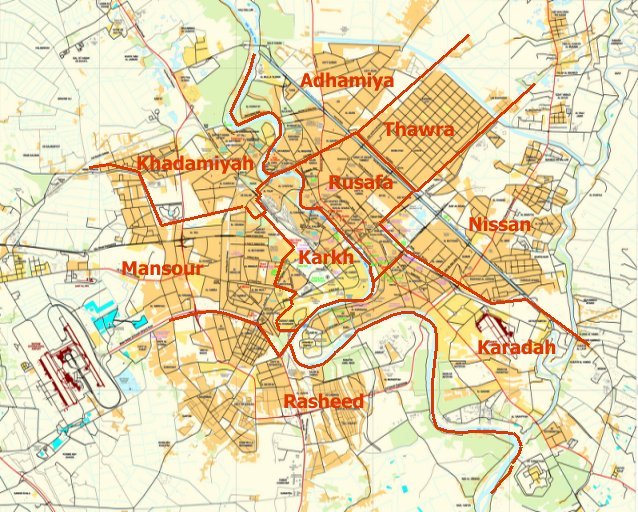
So what happened on that day on a square in the Mansour district of Baghdad? It depends on whom you ask.
Blackwater USA, the private security firm at the center of the controversy, says its employees simply defended themselves against armed attackers. Two men hospitalized with gunshot wounds disagree. They say the guards fired on people for no reason.
Hasan Jaber Salman lies in Yarmouk Hospital, bandages covering gunshot wounds in his back. Salman says he is a lawyer who was headed from a courthouse to the Ministry of Justice when he found his route blocked by four armored Blackwater SUVs. The roadblock soon caused a traffic snarl, so armed Blackwater guards began waving at the drivers, telling them to turn around and leave the area.
"So we turned back, and as we turned back they opened fire at all cars from behind," Salman said. "All my injuries, the bullets are in my back. "Within two minutes the security force arrived in planes -- part of the security company Blackwater. They started firing randomly at all citizens." Blackwater, in a statement issued after the incident, denied that gunfire came from aircraft. "The helicopters providing aerial support never fired weapons," it said.
The firm also said its employees "acted lawfully and appropriately in response to a hostile attack." But Salman claims the attack was unprovoked. "No one fired at them, they were not attacked by gunmen, they were not targeted by an explosion," he said. The firing continued until Salman's car crashed into a police checkpoint and flipped over, he said, adding that eight bullets struck his car and four struck him.
"My left shoulder is broken ... and my arm is broken. I had a surgery. ... They opened up my stomach," he said. "I swear to God no one did anything to them at all." The lawyer said he intends to sue Blackwater, which he already did in 2005 after his son was involved in a similar incident outside al-Muthana Air Base near Baghdad's international airport. That lawsuit has not yet been resolved, he said.
Laborer Abul-Raheem Amir said he was on his way to a job when the minibus he was in got caught in a traffic jam caused by an explosion. "A security company called Blackwater, they got out and kept on firing randomly at people, starting with the people walking or working the street -- even the traffic policeman, even the people who work in the area," Amir said.
"People at first thought we were safe in the minibus, but when they realized they were not, they started getting out and went to other places to save themselves," he recounted. "Unfortunately that did not work. As they got out, people were shot and killed." He said he tried to make a run for it after the driver and two women next to him on the minibus were shot. "I ran about 50 meters [about 55 yards] and then was shot, the first bullet. Still I kept running, but the second bullet dropped me to the ground. ... It broke my bones, and the third one made me start crawling."
Some people helped get him off the street and away from the carnage. The shooting lasted for about a half-hour, and there were some 30 bodies in the street, he said. "I remember people strewn on the streets, children, elderly, young men, elderly women. ... The street turned into the street of the dead, a graveyard," he said. "There was nothing I could do. Every man was for himself." Amir wonders what the Blackwater employees were thinking.
"Is this some kind of a show of force for them to flex their muscles?" he said. "Are they doing this to us, the victims, so they can advertise and promote their abilities through the Western media? ... Is their mission to protect one person by killing 10 unarmed people? And if they are protecting two people, then they shoot 100 unarmed people. ... Is this Vietnam? ... "Enough, enough," he said. "Enough of all that's happening. God's fury is coming. Enough of this. Enough."
Labels: Blackwater, Iraq, private security contractors
Joint Iraqi-U.S. committee to investigate Blackwater incident
Labels: Ali al-Dabbagh, Blackwater, investigation
Wednesday, September 19, 2007
U.S. embassy in Iraq suspends diplomatic convoys across Iraq
The government announced the investigation on Tuesday, after the interior ministry decided to "halt the licence" of Blackwater, which provides security to US diplomats in Iraq. Ali al-Dabbagh, a government spokesman, announced the decision "to review the operations of foreign and local security companies in Iraq". He said: "This came after the flagrant assault conducted by members of the American security company Blackwater against Iraqi citizens."
In a notice sent to Americans in Iraq, the US embassy said it had acted to review the security of its personnel and possible increased threats to those leaving the Green Zone while accompanied by security details after the weekend killing of Iraqi civilians involving Blackwater guards.
"In light of a serious security incident involving a US embassy protective detail in the Mansour District of Baghdad, the embassy has suspended official US government civilian ground movements outside the International Zone [Green Zone] and throughout Iraq," the notice said.
"This suspension is in effect in order to assess mission security and procedures, as well as a possible increased threat to personnel travelling with security details outside the International Zone," said the notice. Blackwater said on Monday that it had received no official notice from Iraq's interior ministry.
The toll from the shooting rose to nine - 10 civilians and one policeman - on Tuesday, according to a local hospital medic. US officials in Baghdad have yet to clarify the legal status of foreign security contractors in Iraq, including whether they could be liable for prosecution by Iraqi authorities. Riad Kahwaji, director of the Institute for Near East and Gulf Military analysis, told Al Jazeera: "Only the party that brought them [the private security firms] into Iraq can take them out of Iraq - and that is the US."
He said that under their contracts "neither Blackwater nor the other [private security] companies are obliged to obtain a licence from Iraq". Kahwaji said: "The chances are they are going to stay. Because a lot of the foreign companies and contractors that are rebuilding Iraq rely totally on these Western, or US-based, security companies. "They don't have any confidence in the Iraqi police and the Iraqi security services."
Condoleezza Rice, the US secretary of state, telephoned Nuri al-Maliki, Iraq's prime minister, on Monday to express regret over the death of innocent civilians. US and Iraqi sources said the shooting erupted after a bomb exploded near a US diplomatic convoy, but a US government incident report said armed men fired on the convoy and Blackwater guards responded. "Blackwater's independent contractors acted lawfully and appropriately in response to a hostile attack in Baghdad on Sunday," said a statement from the North Carolina company, reported by CNN on its website.
"Blackwater regrets any loss of life, but this convoy was violently attacked by armed insurgents, not civilians, and our people did their job to defend human life." Nevertheless, Abdul Sattar Ghafour Bairaqdar, a judge from Iraq's highest court, the Supreme Judiciary Council, said Blackwater could face trial. "This company is subject to Iraqi law and the crime committed was on Iraqi territory and the Iraqi judiciary is responsible for tackling the case," he said.
Muqtada al-Sadr, the Shia leader of the al-Mahdi Army militia, added his voice to anger over the incident, urged the government to "cancel this company's work, and the rest of the criminal and intelligence companies".
Labels: Abdul Sattar Ghafour Bairaqdar, Ali al-Dabbagh, Blackwater, Condoleezza Rice, diplomatic convoys, Green Zone, Moqtada Al-Sadr, private security companies, U.S. embassy Iraq
Tuesday, September 18, 2007
CRS report on Private Security Contractors in Iraq
Background, Legal Status, and Other Issues – Updated July 2007
services in Iraq, including security. From the information available in published
sources, this apparently is the first time that the United States has depended on
contractors to provide such extensive security in a hostile environment, although it
has previously contracted for more limited security services in Afghanistan, Bosnia,
and elsewhere. In Iraq, private firms known as Private Security Companies (PSC)
are currently providing security services such as the protection of individuals, nonmilitary
transport convoys, buildings and other economic infrastructure, as well as
the training of Iraqi police and military personnel.
Contractors to the coalition forces in Iraq operate under three levels of legal
authority: (1) the international order of the laws and usages of war and resolutions
of the United Nations Security Council; (2) U.S. law; and (3) Iraqi law, including
orders of the CPA (CPA Order number 17) that have not been superceded. Under the authority of
international law, contractors working with the military are civilian non-combatants
whose conduct may be attributable to the United States.44 Iraqi courts do not have
jurisdiction to prosecute them for conduct related to their contractual responsibilities
without the permission of the Sending State.45 Some contractors, particularly U.S.
nationals, may be prosecuted in U.S. federal courts or military courts under certain
circumstances.
U.S. officials in Baghdad have yet to clarify the legal status of foreign security contractors in Iraq, including whether they could be prosecuted by Iraqi authorities.
Many Iraqis see the contractors, who have worked in Iraq since the U.S.-led invasion to topple Saddam Hussein in 2003, as private armies that have acted for too long with impunity. "These cases have happened more than once and we can't keep silent in the face of them," Interior Minister Jawad al-Bolani said on Monday.
Ministry spokesman Brigadier-General Abdul-Karim Khalaf said Iraq did have the right to take action if the Blackwater force had fired on civilians. "Definitely we have the right. If they committed this act this should be tried," he said.
Labels: Blackwater, Congressional Research Service, CPA order 17, CRS, Iraq, private security contractors
Iraqi government to review status of all private security firms in Iraq
Blackwater has said its guards acted in self-defence in Sunday's incident. But the Iraqi interior ministry has claimed the men fired "randomly at citizens" in a crowded square in the capital, killing innocent bystanders and a policeman. The Blackwater guards were protecting a convoy carrying officials from the US State Department at the time.
Earlier, the US Secretary of State, Condoleezza Rice, telephoned Prime Minister Nouri Maliki to express her regret over the deaths and pledge to help carry out a "fair and transparent" investigation into the incident.
BLACKWATER USA FACTS
Founded in 1997 by three former US Navy SEALs
Headquarters in North Carolina
One of at least 28 Private Security Companies in Iraq
Employs 744 US citizens, 231 third-country nationals, and 12 Iraqis to protect US state department in Iraq (May 2007)
Provided protection for former CPA head Paul Bremer
Four employees killed by mob in Falluja in March 2004
Personnel have no combat immunity under international law if they engage in hostilities
A spokesman for the US State Department told the AFP news agency that during her phone call to Mr Maliki, Ms Rice had "reiterated that the United States does everything it can to avoid such loss of life in contrast to the enemies of the Iraqi people who deliberately target civilians". The two agreed to hold any wrongdoers accountable, according to Mr Maliki's spokesman.
Thousands of often heavily armed private security guards are employed in Iraq. Although they have no combat immunity under international law if they engage in hostilities, many critics say they are accountable only to their employers. Blackwater is one of the biggest private security contractors in Iraq and is reported to have a contract worth $300m (£150m) with the State Department to protect its diplomatic staff and equipment there. The BBC's Justin Webb in Washington says Blackwater's suspension could be a potentially serious blow to the department's work in Iraq.
Labels: Blackwater, Iraq, Iraqi government, PMCs, private security firms, PSCs, security, U.S. State Department
Thursday, July 19, 2007
Defense contractors challenge LOGCAP IV award, seek stay from GAO
Two days later, IAP Worldwide Services Inc., a Cape Canaveral, Fla., contractor, filed its own protest, also citing improper technical or price evaluations, according to Michael Golden, GAO's chief procurement attorney. IAP led a team of contractors that included industry giants Lockheed Martin, CACI and Blackwater. Officials with Contingency Management Group and IAP both declined to discuss the reasons for the protest.
The Army awarded its mammoth 10-year LOGCAP IV contract last month to three firms: the incumbent contractor, Kellogg, Brown and Root Services of Houston; former contract holder DynCorp International LLC of Fort Worth, Texas; and Fluor Intercontinental Inc. of Greenville, S.C. The three companies are each capped at $5 billion per year, although the Army does not expect the firms to reach the maximum value in any given year.
A fourth contractor, Serco Inc. of Vienna, Va., was awarded a $225 million support contract last February. The Army says Serco will assist in its planning and provide independent cost estimates, but will not play any oversight role or conduct any inherently governmental work.
In an e-mailed statement, KBR deferred questions about the protests to the Army, stating only that the company is "proud to have been chosen as one of three logistics support providers under the LOGCAP IV contract. We look forward to continuing our service to the U.S. forces deployed in the Middle East."
The three prime contractors will compete to deliver fuel, water and food, as well as field operations such as postal services, laundry and sanitation, to troops stationed in Iraq and Afghanistan. The indefinite quantity/indefinite delivery contract has a one-year base with nine option years and could be worth as much as $150 billion.
The use of multiple contractors is a departure from the sole-source strategy the Army has employed since the first LOGCAP contract was awarded in 1992. The change is "designed to enhance competition and reduce overall risk," said Daniel Carlson, a spokesman for the Army.
Previous incarnations of the logistics contract relied primarily on cost-plus task orders in which the Army and the contractor negotiated a price based on an estimate and adjusted the cost as needed. The government then paid the contractor a base reimbursement fee -- typically 1 percent -- on every task order and an additional 2 percent award fee if the work was done efficiently and honestly.
But watchdogs say the contract has been prone to abuse. KBR, which until recently was a subsidiary of Halliburton, was roundly criticized for its work on the 2001 LOGCAP III contract. Reports by GAO, the Defense Department inspector general and the Defense Contract Audit Agency found KBR overbilled the government for fuel and failed to justify $1.8 billion worth of work in Iraq and Kuwait.
And just days after the Army awarded the LOGCAP IV contract, the Special Inspector General for Iraq Reconstruction released a report alleging that KBR provided its employees with better housing than U.S. soldiers, overspent on food by $4.5 million and failed to provide accurate measurements of the fuel services it provided. KBR is in the process of reviewing the report, company spokeswoman Heather Browne said.
DynCorp, meanwhile, has been rapped for providing vague invoices on a State Department contract in Iraq, while Fluor was heavily criticized for its work on a temporary housing contract for Gulf Coast residents in the wake of Hurricane Katrina.
The Army plans to begin using its new LOGCAP IV contract in October, although the protests could delay its implementation. KBR's current LOGCAP contract expires in December, but the Army could exercise an option and extend it if needed.
Labels: Blackwater, CACI, Contingency Management Group LLC, DynCorp, Fluor, GAO, Halliburton, IAP Worldwide Services Inc., KBR, Lockheed Martin, LOGCAP IV, PAE Government Services, Shaw Group