Friday, October 12, 2007
State Dept. may limit or phase out use of private security guards in Iraq
(AP) -- The State Department may phase out or limit the use of private security guards in Iraq, which could mean canceling Blackwater USA's contract or awarding it to another company in line with an Iraqi government demand, The Associated Press has learned. Such steps would be difficult given U.S. reliance on Blackwater and other contractors, but they are among options being studied during a comprehensive review of security in Iraq, two senior officials said.
Condoleezza Rice to order the top-to-bottom review from a commission headed by Patrick Kennedy, one of the State Department's most experienced management officials. Kennedy has been told to concentrate on several key issues, according to the officials, who spoke on condition of anonymity because the review is still under way. Among them:
-Changes to the rules of engagement under which State Department security contractors operate, particularly for approaching suspicious vehicles, which is at the crux of the Sept. 16 incident. Blackwater insists its guards were fired upon, although Iraqi witnesses and the Iraqi government maintain the guards opened fire with no provocation when a vehicle got too close.
-Whether Blackwater's secretive corporate culture, reputed to have encouraged a "cowboy-like mentality," has led to its employees being more likely to violate or stretch the existing rules than those of the two other private security firms, Dyncorp and Triple Canopy, the State Department uses in Iraq.
-Whether it's feasible to eliminate or drastically curtail the use of private foreign contractors to protect U.S. diplomats in Iraq. And, if so, how to replace them.
Rice is eager for changes and has already accepted and implemented initial steps Kennedy urged in a preliminary report last week. They included improving government oversight of Blackwater by having federal agents accompany convoys and installing video cameras in their vehicles. Officials in the tight-knit world of security operatives in Baghdad said Blackwater was preparing a reorganization and possible downsizing. The officials spoke on condition of anonymity because of the issue's sensitivity. The company, based in Moyock, N.C., does not speak publicly about its operations or plans. Calls and e-mail messages left with Blackwater on Wednesday were not returned.
A top aide to Prime Minister Nouri al-Maliki told the AP that Washington was considering the findings of the Iraqi government's report into the incident and calls for reform. "But so far there has been no concrete answer from the U.S. Embassy showing it was definitely going to drop Blackwater," the aide said. The aide said the al-Maliki government told the U.S. Embassy, "We will draft and pass laws that would lift the immunity on these security companies to stop their reckless behavior."
Kennedy has been in Iraq for nearly two weeks with one of three outside experts Rice named to the commission, Eric Boswell, a former diplomat and intelligence official. The other two, retired Army Gen. George Joulwan and former Ambassador Stapleton Roy, were being briefed on the mission at the State Department on Wednesday before heading to Baghdad.
The officials said Kennedy's team was not expected to recommend eliminating all private contractors because it would have a profound impact on how U.S. diplomats work in Iraq. The State Department's own Bureau of Diplomatic Security lacks both the manpower and equipment, notably helicopters, to do the job, they said.
Blackwater is now the biggest of the three firms working for the department in Iraq with about 1,000 employees and handles protection in and around Baghdad, the most dangerous areas of the country. It has been paid as much as $1 billion for its work in Iraq. Dyncorp and Triple Canopy, which work in the north and south, are far smaller and face resource constraints.
Under the terms of the department's Worldwide Personal Protective Security contract, which covers privately contracted guards for diplomats in Iraq, Blackwater, Dyncorp and Triple Canopy are the only three companies eligible to bid on specific task orders there. If Blackwater goes, the slack would almost certainly have to be picked up by one or more other companies, which may require certifying other firms to bid, including non-U.S. ones, the officials said.
Of interest to the department is the possibility of forming Iraqi companies with Iraqi employees to protect U.S. diplomats as local guards do for embassy staff in other countries, they said. That would bring the guards fully under the jurisdiction of Iraqi law but is not a short-term option given inadequate training facilities. The Pentagon has been reluctant to provide security for diplomats but another alternative might be joint State-Defense department patrols. Yet another would be hiring Blackwater and other private guards as temporary U.S. government employees, the officials said.
Condoleezza Rice to order the top-to-bottom review from a commission headed by Patrick Kennedy, one of the State Department's most experienced management officials. Kennedy has been told to concentrate on several key issues, according to the officials, who spoke on condition of anonymity because the review is still under way. Among them:
-Changes to the rules of engagement under which State Department security contractors operate, particularly for approaching suspicious vehicles, which is at the crux of the Sept. 16 incident. Blackwater insists its guards were fired upon, although Iraqi witnesses and the Iraqi government maintain the guards opened fire with no provocation when a vehicle got too close.
-Whether Blackwater's secretive corporate culture, reputed to have encouraged a "cowboy-like mentality," has led to its employees being more likely to violate or stretch the existing rules than those of the two other private security firms, Dyncorp and Triple Canopy, the State Department uses in Iraq.
-Whether it's feasible to eliminate or drastically curtail the use of private foreign contractors to protect U.S. diplomats in Iraq. And, if so, how to replace them.
Rice is eager for changes and has already accepted and implemented initial steps Kennedy urged in a preliminary report last week. They included improving government oversight of Blackwater by having federal agents accompany convoys and installing video cameras in their vehicles. Officials in the tight-knit world of security operatives in Baghdad said Blackwater was preparing a reorganization and possible downsizing. The officials spoke on condition of anonymity because of the issue's sensitivity. The company, based in Moyock, N.C., does not speak publicly about its operations or plans. Calls and e-mail messages left with Blackwater on Wednesday were not returned.
A top aide to Prime Minister Nouri al-Maliki told the AP that Washington was considering the findings of the Iraqi government's report into the incident and calls for reform. "But so far there has been no concrete answer from the U.S. Embassy showing it was definitely going to drop Blackwater," the aide said. The aide said the al-Maliki government told the U.S. Embassy, "We will draft and pass laws that would lift the immunity on these security companies to stop their reckless behavior."
Kennedy has been in Iraq for nearly two weeks with one of three outside experts Rice named to the commission, Eric Boswell, a former diplomat and intelligence official. The other two, retired Army Gen. George Joulwan and former Ambassador Stapleton Roy, were being briefed on the mission at the State Department on Wednesday before heading to Baghdad.
The officials said Kennedy's team was not expected to recommend eliminating all private contractors because it would have a profound impact on how U.S. diplomats work in Iraq. The State Department's own Bureau of Diplomatic Security lacks both the manpower and equipment, notably helicopters, to do the job, they said.
Blackwater is now the biggest of the three firms working for the department in Iraq with about 1,000 employees and handles protection in and around Baghdad, the most dangerous areas of the country. It has been paid as much as $1 billion for its work in Iraq. Dyncorp and Triple Canopy, which work in the north and south, are far smaller and face resource constraints.
Under the terms of the department's Worldwide Personal Protective Security contract, which covers privately contracted guards for diplomats in Iraq, Blackwater, Dyncorp and Triple Canopy are the only three companies eligible to bid on specific task orders there. If Blackwater goes, the slack would almost certainly have to be picked up by one or more other companies, which may require certifying other firms to bid, including non-U.S. ones, the officials said.
Of interest to the department is the possibility of forming Iraqi companies with Iraqi employees to protect U.S. diplomats as local guards do for embassy staff in other countries, they said. That would bring the guards fully under the jurisdiction of Iraqi law but is not a short-term option given inadequate training facilities. The Pentagon has been reluctant to provide security for diplomats but another alternative might be joint State-Defense department patrols. Yet another would be hiring Blackwater and other private guards as temporary U.S. government employees, the officials said.
Labels: Ambassador Stapleton Roy, Army Gen. George Joulwan, Blackwater, DynCorp, Eric Boswell, Nouri Al-Maliki, Patrick Kennedy, Triple Canopy, Worldwide Personal Protective Security contract


Friday, October 05, 2007
Iraqi investigation recommends Blackwater security guards face trial in Iraqi court
(AP) - The official Iraqi investigation into the Blackwater shooting last month recommends that the security guards face trial in Iraqi courts and that the company compensate the victims, an Iraqi government minister told The Associated Press on Thursday.
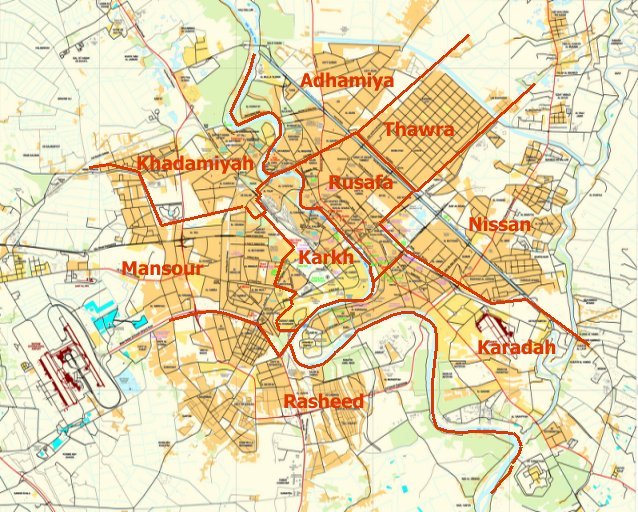
The three-member panel, led by Defense Minister Abdul-Qader al-Obeidi, determined that Blackwater guards sprayed western Baghdad's Nisoor Square with gunfire Sept. 16 without provocation, Minister of State for National Security Sherwan al-Waili told AP. The panel also found that 13 Iraqis were killed, not 11 as earlier disclosed, according to al-Waili told AP.
A parallel but unofficial investigation by seven members of the Interior Ministry found that 17 Iraqis were killed and 24 wounded, a member of the Interior Ministry panel said on condition that he not be identified because the findings were not public. He said its recommendations were nearly identical to those issued by the al-Obeidi investigative team.
Both reports were to go to the larger joint U.S.-Iraqi panel studying the shooting. The Sept. 16 incident was one of at least six involving deaths allegedly caused by Blackwater that authorities here have brought to the attention of the Americans.
The Federal Bureau of Investigation has also dispatched a team to Baghdad, and retired veteran diplomat Stapleton Roy is leading a diplomatic review, along with a former State Department and intelligence official, Eric Boswell. The panel, led by Patrick Kennedy, one of the most senior management experts in the U.S. foreign service, was to present an interim report early this month.
Security officials in Baghdad said the State Department report was expected to include information that two Blackwater guards involved in the incident suffered gunshot wounds. The officials would not be further identified because the report had not yet been made public. Blackwater has said its guards used their weapons only after they came under fire. But the official Iraqi investigation found that the Blackwater guards had not been fired on when they unleashed the fusillade. It said no shots were fired at Blackwater personnel throughout.
The report said that the Blackwater guards had violated accepted rules of engagement, should face trial in the Iraqi justice system and that the company should compensate the victims families. The guards currently are immune from prosecution in Iraq under a 2004 decree by L. Paul Bremer, a U.S. administrator in Iraq after the war. He issued the decree shortly before leaving Baghdad when political sovereignty was turned over to a provisional government.
In Washington on Thursday, the House passed a bill that would make all private contractors working in Iraq and other combat zones subject to prosecution by U.S. courts. Al-Obeidi's panel finished its work this week and submitted the report and recommendations to Prime Minister Nouri al-Maliki on Tuesday, according to al-Waili. Al-Waili said the report was issued under the signatures of al-Obeidi, Maj. Gen. Tariq al-Baldawi, the deputy minister of national security; and Maj. Gen. Hussein Ali Kamal, the deputy interior minister for intelligence and security affairs.
Blackwater is paid millions to protect State Department employees in Baghdad's dangerous environment and is widely known among Iraqis as a group to stay away from as convoys roar through the city, heavy guns at the ready on speeding armored vehicles.
The three-member panel, led by Defense Minister Abdul-Qader al-Obeidi, determined that Blackwater guards sprayed western Baghdad's Nisoor Square with gunfire Sept. 16 without provocation, Minister of State for National Security Sherwan al-Waili told AP. The panel also found that 13 Iraqis were killed, not 11 as earlier disclosed, according to al-Waili told AP.
A parallel but unofficial investigation by seven members of the Interior Ministry found that 17 Iraqis were killed and 24 wounded, a member of the Interior Ministry panel said on condition that he not be identified because the findings were not public. He said its recommendations were nearly identical to those issued by the al-Obeidi investigative team.
Both reports were to go to the larger joint U.S.-Iraqi panel studying the shooting. The Sept. 16 incident was one of at least six involving deaths allegedly caused by Blackwater that authorities here have brought to the attention of the Americans.
The Federal Bureau of Investigation has also dispatched a team to Baghdad, and retired veteran diplomat Stapleton Roy is leading a diplomatic review, along with a former State Department and intelligence official, Eric Boswell. The panel, led by Patrick Kennedy, one of the most senior management experts in the U.S. foreign service, was to present an interim report early this month.
Security officials in Baghdad said the State Department report was expected to include information that two Blackwater guards involved in the incident suffered gunshot wounds. The officials would not be further identified because the report had not yet been made public. Blackwater has said its guards used their weapons only after they came under fire. But the official Iraqi investigation found that the Blackwater guards had not been fired on when they unleashed the fusillade. It said no shots were fired at Blackwater personnel throughout.
The report said that the Blackwater guards had violated accepted rules of engagement, should face trial in the Iraqi justice system and that the company should compensate the victims families. The guards currently are immune from prosecution in Iraq under a 2004 decree by L. Paul Bremer, a U.S. administrator in Iraq after the war. He issued the decree shortly before leaving Baghdad when political sovereignty was turned over to a provisional government.
In Washington on Thursday, the House passed a bill that would make all private contractors working in Iraq and other combat zones subject to prosecution by U.S. courts. Al-Obeidi's panel finished its work this week and submitted the report and recommendations to Prime Minister Nouri al-Maliki on Tuesday, according to al-Waili. Al-Waili said the report was issued under the signatures of al-Obeidi, Maj. Gen. Tariq al-Baldawi, the deputy minister of national security; and Maj. Gen. Hussein Ali Kamal, the deputy interior minister for intelligence and security affairs.
Blackwater is paid millions to protect State Department employees in Baghdad's dangerous environment and is widely known among Iraqis as a group to stay away from as convoys roar through the city, heavy guns at the ready on speeding armored vehicles.
Labels: Abdul-Qader al-Obeidi, Blackwater, Eric Boswell, FBI, Iraqi investigation, Patrick Kennedy, Stapleton Roy