Friday, October 05, 2007
Iraqi investigation recommends Blackwater security guards face trial in Iraqi court
(AP) - The official Iraqi investigation into the Blackwater shooting last month recommends that the security guards face trial in Iraqi courts and that the company compensate the victims, an Iraqi government minister told The Associated Press on Thursday.
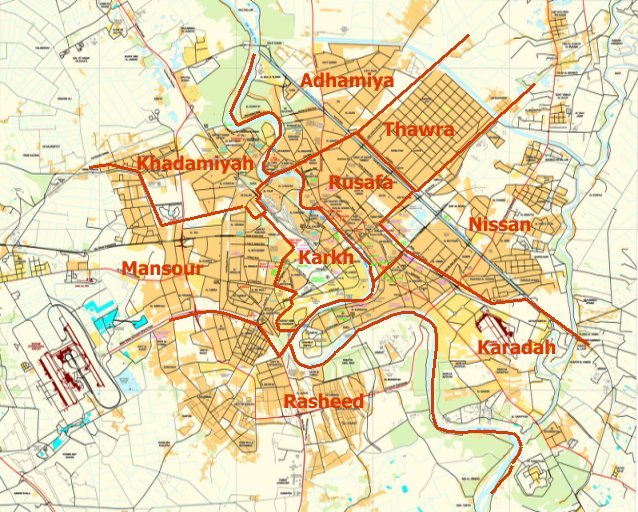
The three-member panel, led by Defense Minister Abdul-Qader al-Obeidi, determined that Blackwater guards sprayed western Baghdad's Nisoor Square with gunfire Sept. 16 without provocation, Minister of State for National Security Sherwan al-Waili told AP. The panel also found that 13 Iraqis were killed, not 11 as earlier disclosed, according to al-Waili told AP.
A parallel but unofficial investigation by seven members of the Interior Ministry found that 17 Iraqis were killed and 24 wounded, a member of the Interior Ministry panel said on condition that he not be identified because the findings were not public. He said its recommendations were nearly identical to those issued by the al-Obeidi investigative team.
Both reports were to go to the larger joint U.S.-Iraqi panel studying the shooting. The Sept. 16 incident was one of at least six involving deaths allegedly caused by Blackwater that authorities here have brought to the attention of the Americans.
The Federal Bureau of Investigation has also dispatched a team to Baghdad, and retired veteran diplomat Stapleton Roy is leading a diplomatic review, along with a former State Department and intelligence official, Eric Boswell. The panel, led by Patrick Kennedy, one of the most senior management experts in the U.S. foreign service, was to present an interim report early this month.
Security officials in Baghdad said the State Department report was expected to include information that two Blackwater guards involved in the incident suffered gunshot wounds. The officials would not be further identified because the report had not yet been made public. Blackwater has said its guards used their weapons only after they came under fire. But the official Iraqi investigation found that the Blackwater guards had not been fired on when they unleashed the fusillade. It said no shots were fired at Blackwater personnel throughout.
The report said that the Blackwater guards had violated accepted rules of engagement, should face trial in the Iraqi justice system and that the company should compensate the victims families. The guards currently are immune from prosecution in Iraq under a 2004 decree by L. Paul Bremer, a U.S. administrator in Iraq after the war. He issued the decree shortly before leaving Baghdad when political sovereignty was turned over to a provisional government.
In Washington on Thursday, the House passed a bill that would make all private contractors working in Iraq and other combat zones subject to prosecution by U.S. courts. Al-Obeidi's panel finished its work this week and submitted the report and recommendations to Prime Minister Nouri al-Maliki on Tuesday, according to al-Waili. Al-Waili said the report was issued under the signatures of al-Obeidi, Maj. Gen. Tariq al-Baldawi, the deputy minister of national security; and Maj. Gen. Hussein Ali Kamal, the deputy interior minister for intelligence and security affairs.
Blackwater is paid millions to protect State Department employees in Baghdad's dangerous environment and is widely known among Iraqis as a group to stay away from as convoys roar through the city, heavy guns at the ready on speeding armored vehicles.
Labels: Abdul-Qader al-Obeidi, Blackwater, Eric Boswell, FBI, Iraqi investigation, Patrick Kennedy, Stapleton Roy


Wednesday, May 23, 2007
Al-Sadr believed to be planning to take advantage of power vacuum
Politics
(AP) - From hiding, possibly in Iran, U.S. nemesis and radical anti-American Shiite cleric Muqtada al-Sadr is believed to be honing plans to sweep into the power vacuum made all the more intense by news that his chief Shiite rival has lung cancer. And he's betting the U.S. won't keep its troops in Iraq much longer. Al-Sadr aides and loyal lawmakers have told The Associated Press the cleric's ambitions mean he will avoid taking on the Americans militarily as he did in 2004, when his Mahdi Army militia fought U.S. forces to a standstill.
Instead, the 33-year-old cleric plans to keep up the drumbeat of anti-American rhetoric, consolidate political gains in Baghdad and the mainly Shiite south, and quietly foster even closer ties with neighboring Iran and its Shiite theocracy. The strategy is based in part on al-Sadr's belief that Washington will soon start pulling out troops or draw them down significantly, leaving behind a huge hole in Iraq's security and political power structure, al-Sadr's associates said.
Iraqi Defense Minister Abdul-Qader al-Obeidi told reporters Monday that Iraq's military is drawing up plans in case U.S.-led forces leave the country quickly. "The army plans on the basis of a worst-case scenario so as not to allow any security vacuum," al-Obeidi said. "There are meetings with political leaders on how we can deal with a sudden pullout." It was unclear whether al-Obeidi was referring to routine contingency planning, or if his remarks reflected a new realization among Iraqi leaders that the days of American support may be numbered.
Al-Sadr also believes, his associates said, that Shiite Prime Minister Nouri al-Maliki's government may not last much longer, given its failure to improve security, services and the economy. A government collapse is certain to be followed by a political realignment in which the Sadrist movement stands a good chance of emerging as the main player. Al-Sadr's loyalists have 30 of parliament's 275 seats.
The six lawmakers and aides spoke to the AP in separate interviews over the past week. Several agreed to speak of the movement's future only on condition of anonymity because they are not authorized to discuss strategy with outsiders. They stuck to broad outlines, declining to be drawn into specifics. "We gave the government a historic opportunity, but al-Maliki did not use it and that's why we are preparing for a state led by the Sadrist movement," said an al-Sadr political aide who is among those who spoke on condition of anonymity. "An Islamic state led by the Sadrists is our future," he said.
"We want an Islamic system," said Nassar al-Rubaie, a Sadrist lawmaker. "We want a presidential system that will produce someone with a power similar to that of a Muslim caliph." On Tuesday, Sadrist lawmakers met with Sunni Arab tribal leaders leading a fight against militants from al-Qaida in Iraq in the western Anbar province. In a joint statement, the two sides called for local elections to be held soon and for Iraq's rival political blocs to rise above their differences.
"We believe that the Sadrist movement is an independent and nationalist movement that we are ready to cooperate with," said Omar Abdul-Sattar, a lawmaker from the Iraqi Islamic Party, the nation's largest Sunni group.
"We believe that the Sadrist movement is an independent and nationalist movement that we are ready to cooperate with," said Omar Abdul-Sattar, a lawmaker from the Iraqi Islamic Party, the nation's largest Sunni group.
Labels: Abdul-Qader al-Obeidi, Iraqi Islamic Party, local elections, Moqtada Al-Sadr, Omar Abdul-Sattar Mahmud, Sunni tribal leaders