Wednesday, October 10, 2007
Iraqi govt wants Blackwater to pay $136 mn. compensation to families
(Reuters) - The Iraqi government wants US security firm Blackwater to pay $8 million in compensation to each of the families of 17 people killed in a shooting, a senior government source said yesterday. The source said the figure was roughly in line with compensation paid by the Libyan government to the families of the 270 people killed in the 1988 Lockerbie airline bombing over Scotland.
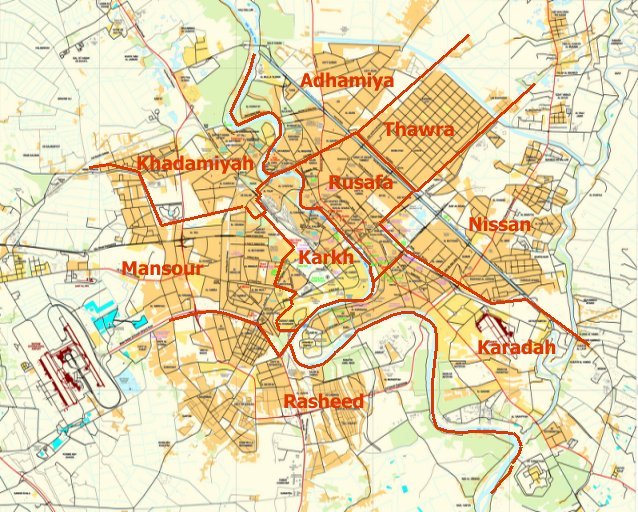
"We want them to pay $8 million [about Dh29.3m] for each family," the source said. "The same level as the compensation for the Lockerbie victims." Blackwater had been told of the demand, the source said. It was unclear what the private American firm's response was. Iraqi government spokesman Ali Al Dabbagh said on Sunday an investigation set up by Prime Minister Nouri Al Maliki had found Blackwater "deliberately killed" the 17 people in the September 16 shooting in western Baghdad.
Blackwater has said its guards responded lawfully to a hostile threat against a US State Department convoy it was guarding, but Dabbagh said the investigation had also found there was no evidence they had come under fire.
The incident caused outrage among Iraqis who see security contractors like Blackwater as private armies which act with impunity. Blackwater employs about 1,000 people in Iraq. Its founder, former US Navy SEAL Erik Prince, told a Congressional hearing last week that his men had come under small-arms fire and "returned fire at threatening targets."
"We want them to pay $8 million [about Dh29.3m] for each family," the source said. "The same level as the compensation for the Lockerbie victims." Blackwater had been told of the demand, the source said. It was unclear what the private American firm's response was. Iraqi government spokesman Ali Al Dabbagh said on Sunday an investigation set up by Prime Minister Nouri Al Maliki had found Blackwater "deliberately killed" the 17 people in the September 16 shooting in western Baghdad.
Blackwater has said its guards responded lawfully to a hostile threat against a US State Department convoy it was guarding, but Dabbagh said the investigation had also found there was no evidence they had come under fire.
The incident caused outrage among Iraqis who see security contractors like Blackwater as private armies which act with impunity. Blackwater employs about 1,000 people in Iraq. Its founder, former US Navy SEAL Erik Prince, told a Congressional hearing last week that his men had come under small-arms fire and "returned fire at threatening targets."
Labels: Ali Al Dabbagh, Blackwater, compensation, Erik Prince, Iraqi government


Friday, October 05, 2007
Arabs paid compensation to leave Kirkuk
(Gulf News) - The process of paying compensation for Arabs to leave Kirkuk and settle in other places has started, the governor of the troubled Iraqi province said. Abdul Rahman Mustafa, Governor of Kirkuk, told Gulf News: "The compensation process has already begun and every Arab who wishes to leave Kirkuk is being paid about 20 million Iraqi dinars ($16,000, Dh58,848). The compensation has been approved by the Committee for Normalising Situation in Kirkuk.
"The process is transparent and without any external pressure, and this first phase to implement Article 140 it will be followed by the census and referendum processes to determine Kirkuk's fate," he said. According to Article 140 of the Iraqi constitution, compensations will be paid to Shiite and Sunni Arab residents of the province to facilitate their return to native provinces. Kirkuk is facing a struggle for its identity between Kurds on one side and Arabs and Turkmen from the other. Thousands of Kurds were displaced from the province during Saddam Hussain's regime.
Mohammad Arslan, a member of the Turkmen Front in Kirkuk, told Gulf News: "The Patriotic Union of Kurdistan and the Kurdish Democratic Party are trying to change the province's demography by forcing Arabs and Turkmen to leave Kirkuk. I think people are being forced to accept compensations ... this will lead to confrontation."
"The process is transparent and without any external pressure, and this first phase to implement Article 140 it will be followed by the census and referendum processes to determine Kirkuk's fate," he said. According to Article 140 of the Iraqi constitution, compensations will be paid to Shiite and Sunni Arab residents of the province to facilitate their return to native provinces. Kirkuk is facing a struggle for its identity between Kurds on one side and Arabs and Turkmen from the other. Thousands of Kurds were displaced from the province during Saddam Hussain's regime.
Mohammad Arslan, a member of the Turkmen Front in Kirkuk, told Gulf News: "The Patriotic Union of Kurdistan and the Kurdish Democratic Party are trying to change the province's demography by forcing Arabs and Turkmen to leave Kirkuk. I think people are being forced to accept compensations ... this will lead to confrontation."
Labels: Abdul Rahman Mustafa, Article 140, compensation, Iraqi Turkmen Front, Kirkuk, Mohammad Arslan
Monday, September 10, 2007
Iraqi minister signs $6 mn. worth of compensation cheques for Arabs in Kirkuk
Government
(Voices of Iraq) - An Iraqi minister said she signed hundreds of checks at a total value of 6 million dollars on Sunday as compensations for the Arabs returning from Kirkuk to their original areas. "The Iraqi government allocated 200 million dollars as compensations for Arabs in Kirkuk who wish to return to their original provinces," said Nermin Othman, the minister of environment and the official in charge of financial affairs in the high committee on the application of article 140 of the constitution, during a press conference held in Arbil on Sunday.
Othman did not set a number of Arabs to receive the compensations, noting her committee forwarded a budget for the year 2008. "We offered the budget for the year 2008 because we believe that disbursing those compensations would not end this year," she said.
Art. 140 of the Iraqi constitution provides for normalizing conditions in the oil-rich city of Kirkuk, 250 km north of the Iraqi capital Baghdad, over three stages, starting with having the displaced Iraqis residing there returned to their original areas and compensated and ending with a referendum by the end of 2007 on whether Kirkuk should be annexed to the autonomous Iraqi Kurdistan region.
Article 140 of Iraq’s constitution states that in Kirkuk there must be a normalization (return of expelled and deported citizens), a census and then a referendum to be carried out no later than the end of 2007. Eligible citizens will vote in the referendum to decide whether they wish Kirkuk to be part of the Kurdistan Region, or to be a separate province outside it.
Implementation of article 140 of the Iraqi constitution is pertinent to the overall security situation of Iraq. Approved by the Shiite and Kurds, Article 140 calls for reversing the "Arabization" policy implemented under former Iraqi President Saddam Hussein.
Othman said each Arab family wishing to return to its original province would get 20 million Iraqi dinars (roughly US$ 16,000) with a plot of land in the city to which it would go and will have the right to sell their property in Kirkuk and other disputed areas. "Moreover, the displaced Kurds wishing to return to Kirkuk would have 10 million Iraqi dinars (roughly US$ 8,000) per each family," she said.
The Iraqi officials said she does not have an accurate number of the Arabs residing in Kirkuk and willing to return to their original provinces. "The number is growing day by day. There are some who register for returning to their original provinces while other Arabs do not wish to return," she noted.
Othman did not set a number of Arabs to receive the compensations, noting her committee forwarded a budget for the year 2008. "We offered the budget for the year 2008 because we believe that disbursing those compensations would not end this year," she said.
Art. 140 of the Iraqi constitution provides for normalizing conditions in the oil-rich city of Kirkuk, 250 km north of the Iraqi capital Baghdad, over three stages, starting with having the displaced Iraqis residing there returned to their original areas and compensated and ending with a referendum by the end of 2007 on whether Kirkuk should be annexed to the autonomous Iraqi Kurdistan region.
Article 140 of Iraq’s constitution states that in Kirkuk there must be a normalization (return of expelled and deported citizens), a census and then a referendum to be carried out no later than the end of 2007. Eligible citizens will vote in the referendum to decide whether they wish Kirkuk to be part of the Kurdistan Region, or to be a separate province outside it.
Implementation of article 140 of the Iraqi constitution is pertinent to the overall security situation of Iraq. Approved by the Shiite and Kurds, Article 140 calls for reversing the "Arabization" policy implemented under former Iraqi President Saddam Hussein.
Othman said each Arab family wishing to return to its original province would get 20 million Iraqi dinars (roughly US$ 16,000) with a plot of land in the city to which it would go and will have the right to sell their property in Kirkuk and other disputed areas. "Moreover, the displaced Kurds wishing to return to Kirkuk would have 10 million Iraqi dinars (roughly US$ 8,000) per each family," she said.
The Iraqi officials said she does not have an accurate number of the Arabs residing in Kirkuk and willing to return to their original provinces. "The number is growing day by day. There are some who register for returning to their original provinces while other Arabs do not wish to return," she noted.
Labels: Article 140, compensation, Kirkuk, Nermin Othman
Friday, September 07, 2007
$50 mn. compensation for Al Anbar
(Voices of Iraq) - A total of 50 million USD has been allocated to compensate those harmed in the western Iraqi province of Anbar, in addition to another 70 million USD for reconstructing the city, Iraqi Deputy Prime Minister Burham Saleh said on Thursday morning.
Speaking at the first session of the second forum on the reconstruction of the province, the deputy premier said that 50 million USD had been allocated for owners of houses and stores that were partially or totally destroyed in the violent acts in the province, while another USD 70 million had been allocated to reconstruct the province.
Saleh was delivered Prime Minister Nouri al-Malikis' address at the event. The second forum on reconstructing the province kicked off this morning with the participation of the two vice presidents, Tareq al-Hashemi and Adel Abdul Mahdi, in addition to Burham Saleh and the Minister of State for National Security Shirwan al-Waili. The province's infrastructure was destroyed in armed attacks in 2005.
Speaking at the first session of the second forum on the reconstruction of the province, the deputy premier said that 50 million USD had been allocated for owners of houses and stores that were partially or totally destroyed in the violent acts in the province, while another USD 70 million had been allocated to reconstruct the province.
Saleh was delivered Prime Minister Nouri al-Malikis' address at the event. The second forum on reconstructing the province kicked off this morning with the participation of the two vice presidents, Tareq al-Hashemi and Adel Abdul Mahdi, in addition to Burham Saleh and the Minister of State for National Security Shirwan al-Waili. The province's infrastructure was destroyed in armed attacks in 2005.
Labels: Al Anbar, compensation, Dr. Burham Saleh