Sunday, November 11, 2007
Iraq, the Surge, Partition, and the War: Public Opinion by City and Region
The results should be reviewed in detail. Polls do not provide some simply punch line insights, they rather provide a mosaic of the various attitudes Iraqis have towards key issues. Unless they are reviewed in detail, picking out one trend or result can be more misleading than helpful. This is particularly true of the results in this analysis. Some are consistent with the results of previous polls over a period of several years. Some reflect the initial impact of changes in US strategy and the surge at a time when the degree of added security in Baghdad and the impact of the tribal awakening in Anbar was less apparent to most Iraqis than it is today.The reader should also remember that the results in this report do reflect “hearts and minds” on a broad level. Decision makers often act on their own, very different perceptions. Violence and extremism are also generally driven by the views and actions of small minorities. Broad popular support for violence is rare, but this can have limited impact in a nation where minorities are willing to kill and use extreme violence with or without popular support.
That said, the results do provide important insights in several areas. They make it clear that Iraqis do not support breaking up the country, or separation and strong federalism at the expensive of national unity. They show that perceptions of violence are not eased by sectarian and ethnic divisions and are high in most areas with a dominant Arab Sunni or Arab Shi’ite population and leadership. They also indicate that Iraqis will tolerate a US and Coalition presence only as long as it is necessary to put an end to violence and until Iraqi forces are ready to take over the job. At the same time, they show a sharp decline in popular confidence in both the national and local governments, and the perception that violence and sectarian cleansing continue to rise. This is a warning that Iraq patience in the central government’s failures to move forward in accommodation and providing effective services is wearing thin, and that the Iraqi “clock” in demanding much more rapid progress may not be all that different from the American one.
Labels: CSIS, Iraqi government, Iraqi public opinion, sectarian cleansing, U.S. forces


Wednesday, October 10, 2007
Iraqi govt wants Blackwater to pay $136 mn. compensation to families
"We want them to pay $8 million [about Dh29.3m] for each family," the source said. "The same level as the compensation for the Lockerbie victims." Blackwater had been told of the demand, the source said. It was unclear what the private American firm's response was. Iraqi government spokesman Ali Al Dabbagh said on Sunday an investigation set up by Prime Minister Nouri Al Maliki had found Blackwater "deliberately killed" the 17 people in the September 16 shooting in western Baghdad.
Blackwater has said its guards responded lawfully to a hostile threat against a US State Department convoy it was guarding, but Dabbagh said the investigation had also found there was no evidence they had come under fire.
The incident caused outrage among Iraqis who see security contractors like Blackwater as private armies which act with impunity. Blackwater employs about 1,000 people in Iraq. Its founder, former US Navy SEAL Erik Prince, told a Congressional hearing last week that his men had come under small-arms fire and "returned fire at threatening targets."
Labels: Ali Al Dabbagh, Blackwater, compensation, Erik Prince, Iraqi government
Tuesday, September 18, 2007
Iraqi government to review status of all private security firms in Iraq
Blackwater has said its guards acted in self-defence in Sunday's incident. But the Iraqi interior ministry has claimed the men fired "randomly at citizens" in a crowded square in the capital, killing innocent bystanders and a policeman. The Blackwater guards were protecting a convoy carrying officials from the US State Department at the time.
Earlier, the US Secretary of State, Condoleezza Rice, telephoned Prime Minister Nouri Maliki to express her regret over the deaths and pledge to help carry out a "fair and transparent" investigation into the incident.
BLACKWATER USA FACTS
Founded in 1997 by three former US Navy SEALs
Headquarters in North Carolina
One of at least 28 Private Security Companies in Iraq
Employs 744 US citizens, 231 third-country nationals, and 12 Iraqis to protect US state department in Iraq (May 2007)
Provided protection for former CPA head Paul Bremer
Four employees killed by mob in Falluja in March 2004
Personnel have no combat immunity under international law if they engage in hostilities
A spokesman for the US State Department told the AFP news agency that during her phone call to Mr Maliki, Ms Rice had "reiterated that the United States does everything it can to avoid such loss of life in contrast to the enemies of the Iraqi people who deliberately target civilians". The two agreed to hold any wrongdoers accountable, according to Mr Maliki's spokesman.
Thousands of often heavily armed private security guards are employed in Iraq. Although they have no combat immunity under international law if they engage in hostilities, many critics say they are accountable only to their employers. Blackwater is one of the biggest private security contractors in Iraq and is reported to have a contract worth $300m (£150m) with the State Department to protect its diplomatic staff and equipment there. The BBC's Justin Webb in Washington says Blackwater's suspension could be a potentially serious blow to the department's work in Iraq.
Labels: Blackwater, Iraq, Iraqi government, PMCs, private security firms, PSCs, security, U.S. State Department
Monday, September 17, 2007
Iraqi government pulls Blackwater's security license
Interior Ministry spokesman Abdul-Karim Khalaf said eight civilians were killed and 13 were wounded when security contractors believed to be working for Blackwater USA opened fire in a predominantly Sunni neighborhood of western Baghdad. "We have canceled the license of Blackwater and prevented them from working all over Iraqi territory. We will also refer those involved to Iraqi judicial authorities," Khalaf said.
The spokesman said witness reports pointed to Blackwater involvement but said the shooting was still under investigation. It was not immediately clear if the measure against Blackwater was intended to be temporary or permanent. Blackwater, based in Moyock, N.C., provides security for many U.S. civilian operations in the country. Phone messages left early Monday at the company's office in North Carolina and with a spokeswoman were not immediately returned.
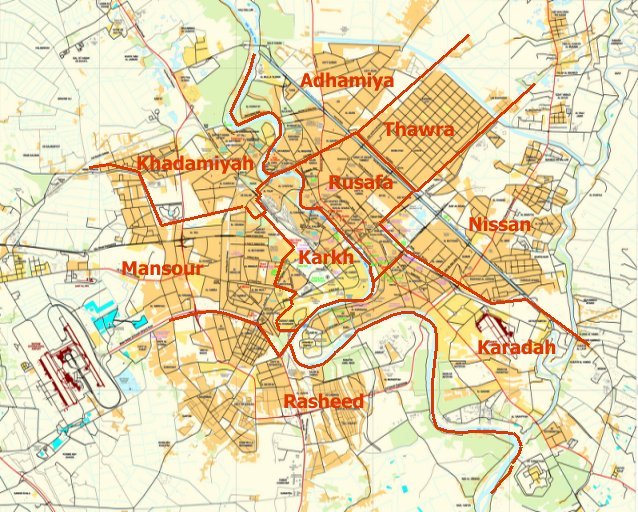
The U.S. Embassy said a State Department motorcade came under small-arms fire that disabled one of the vehicles, which had to be towed from the scene near Nisoor Square in the Mansour district. An embassy official provided no information about Iraqi casualties but said no State Department personnel were wounded or killed. He spoke on condition of anonymity because he was not authorized to speak to media.
He said the shooting was being investigated by the State Department's diplomatic security service and law enforcement officials working with the Iraqi government and the U.S. military. Prime Minister Nouri al-Maliki late Sunday condemned the shooting by a "foreign security company" and called it a "crime." The decision to pull the license was likely to face a challenge as it would be a major blow to a company that was at the forefront of one of the main turning points in the war.
The 2004 battle of Fallujah — an unsuccessful military assault in which an estimated 27 U.S. Marines were killed, along with an unknown number of civilians — was retaliation for the killing, maiming and burning of four Blackwater guards in that city by a mob of insurgents. Tens of thousands of foreign private security contractors work in Iraq — some with automatic weapons, body armor, helicopters and bulletproof vehicles — to provide protection for Westerners and dignitaries in Iraq as the country has plummeted toward anarchy and civil war.
Monday's action against Blackwater was likely to give the unpopular government a boost, given the contractors' widespread unpopularity. Many of the contractors have been accused of indiscriminately firing at American and Iraqi troops, and of shooting to death an unknown number of Iraqi citizens who got too close to their heavily armed convoys, but none has faced charges or prosecution.
The question of whether they could face prosecution is a gray legal area. Unlike soldiers, they are not bound by the Uniform Code of Military Justice. Under a special provision secured by American-occupying forces, they are exempt from prosecution by Iraqis for crimes committed there. Khalaf, however, denied that the exemption applied to private security companies.
The wartime numbers of private guards are unprecedented — as are their duties, many of which have traditionally been done by soldiers. They protect U.S. military operations and diplomats and have guarded high-ranking officials including Gen. David Petraeus, the top U.S. commander in Baghdad. They also protect journalists, visiting foreign officials and thousands of construction projects. Blackwater has an estimated 1,000 employees in Iraq, and at least $800 million in government contracts. It is one of the most high-profile security firms in Iraq, with its fleet of "Little Bird" helicopters and armed door gunners swarming Baghdad and beyond.
The secretive company, run by a former Navy SEAL, is based at a massive, swampland complex. Until the Sept. 11, 2001 terror attacks, it had few security contracts. Since then, Blackwater profits have soared. And it has become the focus of numerous controversies in Iraq, including the May 30 shooting death of an Iraqi deemed to be driving too close to a Blackwater security detail.
Labels: Abdul-Karim Khalaf, Blackwater Security Consulting, Interior Ministry, Iraqi government, Mansour, PSC, security firm
Friday, September 07, 2007
Iraqi govt names new deputy head of anti-corruption body
The new chairman of the Public Integrity Commission will be Moussa Faraj, said Sabah al-Saidi, the head of the parliament's anti-corruption committee. A government official, speaking on condition of anonymity because of the issue's sensitivity, said the outgoing chairman, Radhi al-Radhi, had requested retirement and that Prime Minister Nouri al-Maliki accepted. The official said Faraj will replace al-Radhi on a temporary basis until he is approved by parliament permanently to the new post.
Parliament Speaker Mahmoud al-Mashhadani has protested al-Radhi's removal, saying in a letter to al-Maliki on Wednesday that the move was "illegal and unconstitutional" because the commission is an independent body and not a government organization, the commission official said. But al-Saidi said al-Maliki has the right to name a replacement for al-Radhi as long as he is approved by parliament later.
Al-Maliki told reporters Monday that al-Radhi fled the country after being charged with corruption - a claim al-Radhi strongly denied, saying he was at a training course at the U.S. Department of Justice in Washington.
Labels: corruption, Iraqi government, Moussa Faraj, Public Integrity Commission, Radhi al-Radhi, Sabah al-Saidi
Tuesday, September 04, 2007
Fadhila Party May Return To The Government
Labels: Fadhela party, Iraqi government
Thursday, August 30, 2007
Iraq's parliament will not hold a vote of no confidence
Labels: Adel Abdel Mahdi, Iraqi government, Nouri Al-Maliki
Iraqi govt demands Iran stops shelling northern Iraq
Cross-border skirmishes occasionally occur as Iraq's neighbours Turkey and Iran combat Kurdish separatist rebels operating from bases in Iraq's mountainous northern region of Kurdistan. Iraqi Deputy Foreign Minister Mohammed al-Haj Hamoud summoned the Iranian ambassador on Tuesday to protest about the shelling, the Foreign Ministry said in a statement.
"The deputy foreign minister demanded the Iranian side immediately cease these attacks," the statement said.
"The affair would affect negatively the good neighbourly relationship between the two countries." The government in Iraq's largely autonomous Kurdistan region said on Tuesday that 450 families from 20 villages along the border had been evacuated because of shelling.
The Iraqi side of the border area is believed to be home to Kurdish PJAK militants seeking autonomy for Kurdish regions of Iran. There has been no official comment from Tehran about the shelling.
Labels: Iran, Iraqi government, Mohammed al-Haj Hamoud, northern Iraq, PJAK
Friday, August 17, 2007
Yezidi leader blames Iraq, Iran for attack
Labels: Al Qaeda, AMS, Anwar Mu'awiyah al-Umawi, Iran, Iraqi government, Iraqi Red Crescent, KRG, SICI, Sinjar, Yezidis
Friday, August 03, 2007
IAF spokesman accuses Maliki of running a 'non-inclusive' govt
Labels: Iraqi Accordance Front, Iraqi government, Nouri Al-Maliki, Salim al-Juburi, Tawafuq Front
Tuesday, July 31, 2007
US Army: 1920 Revolutionary Battalions Has Reconciled With The Iraqi Government
Labels: 1920 Revolutionary Battalions, Al Qaeda in Iraq, Iraqi government, reconciliation, U.S. military
Wednesday, July 25, 2007
Largest Sunni bloc suspends govt membership
"The Accordance Front announces the suspension of its membership in the government," Sheik Khalaf al-Elyan said at a news conference attended by the two other leaders of the three-party Accordance Front, Vice President Tariq al-Hashemi of the Iraqi Islamic Party and Adnan al-Dulaimi of the Congress of the People of Iraq. Al-Elyan leads the National Dialogue Council.
Reading from a prepared statement, al-Elyan said the front's demands included a pardon for security detainees not charged with specific crimes, a firm commitment by the government to human rights, the disbanding of militias and the inclusion of all parties in the government in dealing with the country's security situation.
The Sunni ministers already had been refusing to attend Cabinet meetings but said Wednesday they would stop going to work, effective immediately. The Accordance Front members of government include the deputy prime minister for security as well as the ministers of planning, higher education, culture, defense and the minister of state for women's affairs.
The decision also threatened to undermine weeks of behind-the-scene negotiations to form a coalition of moderate parties from all sects - dubbed "the alliance of moderates." So far only two Shiite and two Kurdish parties have signed up and they had been urging al-Hashemi's moderate Islamic Party, the country's largest Sunni Arab group, and independent Shiites to join them.
Wednesday's decision by the Accordance Front signaled that al-Hashemi had opted not to abandon his Sunni allies for the sake of joining the new group, which was to exclude al-Hashemi's militant partners as well as the Sadrists. In remarks at the news conference, however, al-Hashemi left open the possibility of joining the new alliance if the participants made an unequivocal announcement of "goodwill."
"There are no encouraging indications so far," al-Hashemi said, adding he had informed Talabani of the Accordance Front's decision to suspend its Cabinet membership on Tuesday. A statement by Talabani's office suggested that the Kurdish president sought to dissuade al-Hashemi from breaking with al-Maliki's government in their meeting the previous day.
Labels: Iraqi Accordance Front, Iraqi government, Iraqi Islamic Party, Nouri Al-Maliki, Sheik Khalaf al-Elyan, the alliance of moderates
Monday, July 02, 2007
Iraqi govt to privatise state-owned assets
The privatisation proposals could also include a massive extension of foreign participation in the oil industry. Sources close to the foreign ministry said the government believed it had struck a deal on the long-awaited hydrocarbon law which could see Parliament vote the legislation through in two weeks' time. If the legislation is passed, arrangements to allow foreign oil majors to enter into production-sharing agreements with Iraq's national oil company could then make it into the memorandum.
An executive at one of the smaller Western oil companies operating in Iraq said: "As you would expect, most of Iraq's non-oil assets are outdated and in pretty bad shape. But this would give people who wanted to operate in Iraq an opportunity to get in." The source added that Iraq's nationalised cement industry could be particularly attractive because the country's reconstruction will require a building bonanza.
However, sources cautioned that the move could simply be a sop to the American administration. The US Congress will consider a report on progress in Iraq in September and a privatisation programme could be presented as some kind of progress in lieu of any real improvement in the security situation. City sources said any instruction would be complicated by factionalism within Iraq's fragmented government. Hariri, while not ethnically Kurdish, is a member of the Kurdish democratic party.
Experts said investor appetite for Iraqi assets was relatively limited and was likely to remain so until the country's security improved considerably. But if attempts to privatise Iraq's non-oil assets went hand in hand with moves to open up the country's oil sector to foreign investment, they would have much greater appeal. The long-awaited passage of the hydrocarbon law is seen as critical to attracting foreign investment.
Smaller, maverick oil companies have already invested in Kurdish-controlled areas of Iraq, but the bulk of the oil is in the south and no oil major would consider investing without a reliable legal regime and a significant improvement in security.
Labels: Fawzi Hariri, Iraqi government, privatisation
Iraqi Cabinet Rejects Any MNF Operations Without Iraqi Force’s Permission Or Prior Coordination
Labels: Iraqi forces, Iraqi government, MNF operations, Sadr City
Sunday, May 27, 2007
Iraqi government pledges to protect Christians
Iraqi Christians, both at home and abroad, have welcomed the government's statement, which they have been waiting for a long time following many complaints by bishops and the clergy. They note however that the statement is only about intentions and that it does not contain any concrete steps to limit the campaign of persecution directed at the Christian community in the capital and Mosul. These two cities are at present the most affected by violence, threats and abuses, including seizure of property and forced conversion to Islam.
Similarly, Muslims are coming to the defence of their 'Christian brothers' in two ways. On the one hand, there are secular groups, unarmed and with no political influence, who in Baghdad have organised some protection for persecuted Christian families, including giving them refuge in their own homes; on the other, there are Muslim religious leaders who are speaking out against bloodshed regardless of faith. This is the case of the secretary general to the grand mufti of Iraq who in a signed message said: "We hear with sadness and distress about what is happening to our Christian brothers in Iraq. We [. . .] incriminate the perpetrator (sic)."
A few days ago, Shia leader Hussain Sadr also spoke about the issue. In an interview to a Christian satellite channel, he expressed his solidarity vis-à-vis his "Christian" brothers and all of Iraq's minorities.
Labels: Hussain Sadr, Iraqi Christians, Iraqi government
Friday, May 18, 2007
Iraq, Iran agree to laying oil pipeline
"The two agreed to lay the oil pipeline from southern Iraq to Abadan region in Iran in order to export more than 200,000 barrels per day of Iraqi crude oil to Iran according to crude oil international prices," he also said. He noted that the new pipeline will provide a new way to boost the country's export capacity to Iranian refineries in Abadan. "They also agreed to arrange a mutual visit for technicians from both countries to prepare the agreement's contracts," the official added.
Labels: Abadan region, Hasan Kazemi Qomi, Hussain al-Shahristani, Iran, Iraqi government, oil pipeline
Iraq asks Jordan to allow nationals to stay until year's end
Labels: Iraqi government, Jordan, Sa'd Jasim al-Hayyani, series G passports, series S passports
Thursday, May 10, 2007
Iraqi government to settle debt with Turkish bank
The debt began accumulating before the US invaded Iraq in 1991. In accordance with commercial agreements between the two countries before the first Gulf war, the Turkish Central Bank was proceeding with payments to Turkish exporters and contractors that do business in Iraq. The funds expended were later collected from the Iraqi government. The system was working smoothly until it broke down after the US invaded Iraq 16 years ago. Iraq has been unable to pay the remaining debt since then due to internal disorder created after the war.
The Iraqis’ debt to the Turkish Central Bank is equal to 31 percent of the bank’s annual expenditures. Although the bank is making allowances to hedge the risk for bad debts, it has not made any provision for receivables from Iraq since 2002, when it adopted international accounting standards.
The state-owned Turkish Pipeline Company (BOTAق) is also owed a significant sum by Iraq, totaling as much as $900 million. This debt stems from transportation costs through the Kirkuk-Yumurtalk oil pipeline. BOTAق officials say they are waiting for the Iraqi government to settle its debt with the government since there is no appropriate authority to deal with the problem.
Labels: BOTAق, debt, Ernst and Young, Iraqi government, Kirkuk-Yumurtalk oil pipeline, Turkey, Turkish Central Bank, Turkish Pipeline Company
Monday, May 07, 2007
Dulaimi says Sunni MPs marginalized
Al-Dulaimi, who is thought to be nearly 80, is one of the most outspoken critics of Shiite Prime Minister Nouri al-Maliki's government. He recently has returned from neighboring Jordan where he underwent surgery for an unspecified ailment, according to his ally and fellow Sunni lawmaker Salim Abdullah. "Our participation in this so-called national unity government is weak and marginalized and our ministers have no authority to serve Iraq or its people," he said.
He also complained that Shiite militias and death squads, both blamed for targeting Sunni Arabs in kidnappings and execution-style killings, have resumed their activity after staying out of sight in the initial stages of the joint U.S.-Iraqi security plan. The number of bodies thought to belong to victims of sectarian killings fell dramatically in the early stages of the security push, which began Feb. 14. The numbers began rising again after hitting a low of seven, although they remain below the average of 50 per day being reported before the plan.
U.S. military officials have warned that a series of bombings that have killed hundreds of Shiites in recent weeks were an attempt by al-Qaida-linked Sunni insurgents to provoke renewed violence by the militias thus igniting a full-scale civil war.
Al-Dulaimi, whose bloc has 44 of parliament's 275 seats, identified two areas of western Baghdad, the Sunni dominated Amil and the mixed Baiyaa, to be witnessing a resumption of sectarian cleansing by Shiite militiamen. Baiyaa was hit by a suicide bombing that killed at least 30 on Sunday.
Ali al-Dabbagh, al-Maliki's chief spokesman, said the government was aware of the allegations of sectarian cleansing in Baiyaa, blaming it on what he called criminal gangs that want to create the impression of a city torn by religious strife.
"We wish the government every success with the security plan but not at the expense of the Sunnis," al-Dulaimi's said. However, he added that his bloc had no intention to pull out from the political process "which we joined to help create an Iraq free of sectarian domination."
Labels: Adnan Dulaimi, Amil, Baiyaa, Iraqi Accordance Front, Iraqi government, politics, Shiite militias
Wednesday, May 02, 2007
Iraqi govt - draft oil law sent to parliament
But a dispute between the central government and autonomous, oil-rich Kurdistan over control of the world's third largest oil reserves has delayed its submission. Speaking to reporters in Saudi Arabia, Oil Minister Hussain al-Shahristani said Kurdish officials were happy with the law, adding he hoped it would pass by the end of May. "It has been sent to parliament now. There has been agreement among the political parties to work together to enact it by the end of the month. We are still hoping that parliament will be able to do that," Shahristani said.
"The KRG (Kurdish regional government) is not opposed to the draft law. On the contrary, they are very happy with the draft law." Haider al-Ibadi, a lawmaker and head of the economic and investment commission in parliament, told Reuters the parliament had not received any draft yet. "The parliament hasn't received the original draft yet," he said, adding he expected the cabinet would meet tomorrow to send the draft to parliament.
There was no immediate comment from Kurdish officials, who have said annexes in the draft are unconstitutional because they wrest oilfields from regional governments and place them under a new state oil company. Kurdish officials had warned they would try to block the bill, which is also vital to attracting foreign investment to boost Iraq's oil output and rebuild its shattered economy.
Labels: draft oil law, Haider al-Ibadi, Hussain al-Shahristani, Iraqi government, Iraqi parliament, KRG