Wednesday, July 04, 2007
Baghdad Governorate Council Has New Plan To Run Private Fuel Stations In Baghdad
Economy
(Badr Newspaper) - 3 JUL - Baghdad Governorate Council has agreed with the Oil Ministry to form a joint committee to create a plan to run private fuel stations. During a meeting held in the Oil Ministry headquarters and which was attended by Mr. Nazar Al Sultan, the Council’s Energy Committee Chief, and Mr. Mutasim Akram Hassan, an Oil Ministry advisor. Nazar Sultan said, “A technical and a legal committee will be formed that includes Baghdad Governorate Council members and Iraqi oil experts to create a plan to operate private fuel stations in Baghdad and to support the private sector.”
In related news, the Baghdad Governorate Council members discussed the subject of providing Baghdad Municipality with gasoline. The issue of supplying Baghdad Municipality with diesel was discussed for the purpose of carrying out projects and operating “pumping stations.” The council members decided to provide Baghdad Municipality with the gasoline that it needs.
In related news, the Baghdad Governorate Council members discussed the subject of providing Baghdad Municipality with gasoline. The issue of supplying Baghdad Municipality with diesel was discussed for the purpose of carrying out projects and operating “pumping stations.” The council members decided to provide Baghdad Municipality with the gasoline that it needs.
Mr. Nazar Al Sultan spoke about the fuel crisis in Baghdad and he called for a quick solution to this crisis. The Oil Ministry advisor stated that the reasons behind this crisis are corruption and the small number of fuel stations in Baghdad. He confirmed, “We have enough fuel but there are technical and security reasons that prevent us from providing Baghdad with more fuel.”
Mr. Mutasim Akram Hassan, the Oil Ministry Advisor for Distribution Efforts said, “The Oil Ministry has created a number of steps to resolve the fuel crisis, such as selling fuel directly to citizens who need it for small generators.” Nazar Al Sultan, the Energy Committee Chief, called for the distribution of fuel through the district councils and the Baghdad Governorate Council must be responsible for this matter. Al Sultan clarified that Dora Refinery needs to be used to its capacity to provide Baghdad with fuel.
Labels: Baghdad Governorate Council, corruption, Dora refinery, fuel stations, Oil Ministry, privatisation


Monday, July 02, 2007
Iraqi govt to privatise state-owned assets
Government, Investment
(Sunday Telegraph) - The Iraqi government has begun preparing the groundwork for what could be one of the biggest privatisations of state-owned assets. The Sunday Telegraph has learned that officials from the government have recently held talks with banking and legal advisers in London. City sources said Iraq's minister for industry, Fawzi Hariri, was looking to appoint advisers to draw up a memorandum of understanding to sell off the country's non-oil assets, ranging from petrochemical plants to construction companies, hotels and airlines, as early as this month.
The privatisation proposals could also include a massive extension of foreign participation in the oil industry. Sources close to the foreign ministry said the government believed it had struck a deal on the long-awaited hydrocarbon law which could see Parliament vote the legislation through in two weeks' time. If the legislation is passed, arrangements to allow foreign oil majors to enter into production-sharing agreements with Iraq's national oil company could then make it into the memorandum.
An executive at one of the smaller Western oil companies operating in Iraq said: "As you would expect, most of Iraq's non-oil assets are outdated and in pretty bad shape. But this would give people who wanted to operate in Iraq an opportunity to get in." The source added that Iraq's nationalised cement industry could be particularly attractive because the country's reconstruction will require a building bonanza.
However, sources cautioned that the move could simply be a sop to the American administration. The US Congress will consider a report on progress in Iraq in September and a privatisation programme could be presented as some kind of progress in lieu of any real improvement in the security situation. City sources said any instruction would be complicated by factionalism within Iraq's fragmented government. Hariri, while not ethnically Kurdish, is a member of the Kurdish democratic party.
Experts said investor appetite for Iraqi assets was relatively limited and was likely to remain so until the country's security improved considerably. But if attempts to privatise Iraq's non-oil assets went hand in hand with moves to open up the country's oil sector to foreign investment, they would have much greater appeal. The long-awaited passage of the hydrocarbon law is seen as critical to attracting foreign investment.
Smaller, maverick oil companies have already invested in Kurdish-controlled areas of Iraq, but the bulk of the oil is in the south and no oil major would consider investing without a reliable legal regime and a significant improvement in security.
The privatisation proposals could also include a massive extension of foreign participation in the oil industry. Sources close to the foreign ministry said the government believed it had struck a deal on the long-awaited hydrocarbon law which could see Parliament vote the legislation through in two weeks' time. If the legislation is passed, arrangements to allow foreign oil majors to enter into production-sharing agreements with Iraq's national oil company could then make it into the memorandum.
An executive at one of the smaller Western oil companies operating in Iraq said: "As you would expect, most of Iraq's non-oil assets are outdated and in pretty bad shape. But this would give people who wanted to operate in Iraq an opportunity to get in." The source added that Iraq's nationalised cement industry could be particularly attractive because the country's reconstruction will require a building bonanza.
However, sources cautioned that the move could simply be a sop to the American administration. The US Congress will consider a report on progress in Iraq in September and a privatisation programme could be presented as some kind of progress in lieu of any real improvement in the security situation. City sources said any instruction would be complicated by factionalism within Iraq's fragmented government. Hariri, while not ethnically Kurdish, is a member of the Kurdish democratic party.
Experts said investor appetite for Iraqi assets was relatively limited and was likely to remain so until the country's security improved considerably. But if attempts to privatise Iraq's non-oil assets went hand in hand with moves to open up the country's oil sector to foreign investment, they would have much greater appeal. The long-awaited passage of the hydrocarbon law is seen as critical to attracting foreign investment.
Smaller, maverick oil companies have already invested in Kurdish-controlled areas of Iraq, but the bulk of the oil is in the south and no oil major would consider investing without a reliable legal regime and a significant improvement in security.
Labels: Fawzi Hariri, Iraqi government, privatisation
Sunday, May 27, 2007
Ministry of Oil to privatise the National Oil Production Distribution Company in 2008
Economy
(Al Mada Newspaper) - 26 MAY - Deputy Oil Minister, Motassim Akram, announced that an oil products law will soon be issued which will allow individuals and companies to import fuel from outside Iraq. He confirmed that licenses will be issued to create competition in the market depending on some basic standards such as; the octane ratio, which should be 92% benzene.
He clarified that eight local companies have presented requests for licenses and the Oil Ministry has granted them. Akram was sorry because only one company from outside of Kurdistan presented a license request. Many owners with capital have left Baghdad and the provinces for outside Iraq or to Kurdistan.
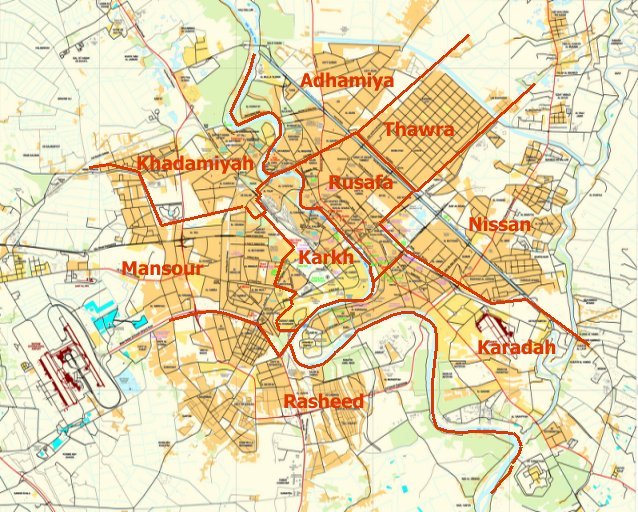
He pointed out that the Ministry has decided to open two fuel stations, one in Karkh and the other in Rasafa. They will sell fuel for 750 ID per liter. Locally produced fuel will remain at 400 ID per liter. He revealed that the Ministry of Oil has a plan to issue a decision to privatize the National Oil Production Distribution Company in 2008.
He further said that the current fuel crisis in Baghdad is a result of the Diyala Bridge being blown up by terrorists. The explosion influenced oil production distribution in Baghdad. Also, Al Jadriya and Double Bridge are closed to trucks because of the security plan which makes hundreds of trucks wait in long lines to pass.
Also, the Nasiriya-Dora pipeline was sabotaged and has made the situation worse. He added that the Ministry of Oil is suffering from the sabotage of the oil pipelines. He pointed out that the 12 inch Kirkuk-Bayji pipeline was sabotaged in the Mamlaha area. In addition, the pipeline between Dora and Rasafa was sabotaged as well. He confirmed that the hot areas are easier to distribute oil products, but Baghdad needs more procedures.
He said that Diyala Bridge should be fixed as well or the fuel crisis will continue. He added that Dora Refinery has a maximum amount of crude oil in storage but the Ministry can not move this oil from the refinery.
He clarified that eight local companies have presented requests for licenses and the Oil Ministry has granted them. Akram was sorry because only one company from outside of Kurdistan presented a license request. Many owners with capital have left Baghdad and the provinces for outside Iraq or to Kurdistan.
He pointed out that the Ministry has decided to open two fuel stations, one in Karkh and the other in Rasafa. They will sell fuel for 750 ID per liter. Locally produced fuel will remain at 400 ID per liter. He revealed that the Ministry of Oil has a plan to issue a decision to privatize the National Oil Production Distribution Company in 2008.
He further said that the current fuel crisis in Baghdad is a result of the Diyala Bridge being blown up by terrorists. The explosion influenced oil production distribution in Baghdad. Also, Al Jadriya and Double Bridge are closed to trucks because of the security plan which makes hundreds of trucks wait in long lines to pass.
Also, the Nasiriya-Dora pipeline was sabotaged and has made the situation worse. He added that the Ministry of Oil is suffering from the sabotage of the oil pipelines. He pointed out that the 12 inch Kirkuk-Bayji pipeline was sabotaged in the Mamlaha area. In addition, the pipeline between Dora and Rasafa was sabotaged as well. He confirmed that the hot areas are easier to distribute oil products, but Baghdad needs more procedures.
He said that Diyala Bridge should be fixed as well or the fuel crisis will continue. He added that Dora Refinery has a maximum amount of crude oil in storage but the Ministry can not move this oil from the refinery.
Labels: fuel station, Karkh, Ministry of Oil, Motassim Akram, National Oil Production Distribution Company, privatisation, Rasafa
Wednesday, February 28, 2007
Unions protest new oil law skewed in favour of foreign firms
Oil
(IPS) The U.S.-backed Iraqi cabinet approved a new oil law Monday that is set to give foreign companies the long-term contracts and safe legal framework they have been waiting for, but which has rattled labor unions and international campaigners who say oil production should remain in the hands of Iraqis. Independent analysts and labor groups have also criticized the process of drafting the law and warned that that the bill is so skewed in favor of foreign firms that it could end up heightening political tensions in the Arab nation and spreading instability. For example, it specifies that up to two-thirds of Iraq's known reserves would be developed by multinationals, under contracts lasting for 15 to 20 years.
According to local labor leaders, transferring ownership to the foreign companies would give a further pretext to continue the U.S. occupation on the grounds that those companies will need protection. This policy would represent a u-turn for Iraq's oil industry, which has been in the public sector for more than three decades, and would break from normal practice in the Middle East.
According to local labor leaders, transferring ownership to the foreign companies would give a further pretext to continue the U.S. occupation on the grounds that those companies will need protection. This policy would represent a u-turn for Iraq's oil industry, which has been in the public sector for more than three decades, and would break from normal practice in the Middle East.
Union leaders have complained that they, along with other civil society groups, were left out of the drafting process despite U.S. claims it has created a functioning democracy in Iraq. Under the production-sharing agreements provided for in the draft law, companies will not come under the jurisdiction of Iraqi courts in the event of a dispute, nor to the general auditor. The ownership of the oil reserves under this draft law will remain with the state in form, but not in substance, critics say. On Feb. 8, the labor unions sent a letter in Arabic to Iraqi President Jalal Talbani urging him to reconsider this kind of agreement.
The law was prepared by a three-member Iraqi cabinet committee, dominated by the Kurds and the Shiites. It is now expected to be ratified by parliament because the powerful faction leaders in the government have cleared it. The first draft was seen only by the committee of the Iraqi technocrat who penned it, nine international oil companies, the British and the U.S. governments and the International Monetary Fund. The Iraqi parliament will get its first glimpse next week.
Labels: draft oil law, foreign firms, privatisation, unions