Wednesday, August 22, 2007
Power supply worsens
Electricity
(IRIN) - The power supply situation has been getting worse and in the past three months millions of people have been getting less than three hours of mains power a day, according to the Iraq Aid Association. The Ministry of Electricity has acknowledged its inability to meet the needs of the population, blaming the chronic power cuts on lack of fuel and violence.
Emad Rafid, a senior official in the Ministry of Electricity, said the available supply of electricity was sufficient to meet half the demand. "Violence is preventing our workers from doing repair work in many dangerous areas and those districts are the ones with severe power shortages," he said, adding that the situation today was worse than at any time since the UN sanctions in the 1990s.
"The problem is worse in the capital, especially in the outskirts, but a solution is far from being found because of the violence," he said. The Ministry of Oil said there was a severe fuel shortage because the country's refineries were operating below capacity and also because of terrorist attacks on refineries. To compound the problem, a number of employees were abandoning their jobs because they feared being attacked.
Long queues in the severe heat can be seen at petrol stations, which operate for a few hours a day only. They sell to drivers only. You are not allowed to buy petrol in jerry cans. "I don't have a car to fill up. If I did I could siphon off the petrol into jerry cans at home. Black marketeers are selling petrol at 10 to 15 times more than at the pumps," Abdel-Rahman said.
The police said they have seen many cases of people getting injured through keeping petrol in their backyards and sometimes even in their homes. Over the past two weeks, at least one child and three men died as a result of this, according to the police. Power cuts have been one factor aggravating people's health. Many come to hospital suffering dehydration owing to the intense heat, which in the past would have been mitigated by air-conditioning, Youssera Abdallah, a senior official in the Ministry of Health, said.
"Hospitals are seriously affected by power cuts. We have installed an additional small generator in case the big ones stop working, as most generators don't work properly," Dr Ahmed Samaraie, a doctor at Yarmouk Hospital in Baghdad, said.The problem also affects maternity units and clinics, which have reduced their workload as the power cuts have increased.
Labels: electricity, Iraq, Iraq Aid Association, Ministry of Electricity, Ministry of Oil, power


Wednesday, July 25, 2007
Parliament Approves Law For Foreign Investment In Oil Refineries
Trade
(Asharq Al Awsat Newspaper) - 25 JUL - Yesterday, the Iraqi Parliament approved a draft law which will open the way for foreign companies to build refineries in Iraq and administrate them. With this law, the local governments will be able to deal with these companies independently. This law is different from the old oil law. The Iraqi government has presented the draft oil law to the Parliament; however, the Parliament has not started discussions on it yet.
Yesterday, Iraqi TV broadcasted the Parliament session and the Parliament approved the refinery law. The law states that the Ministry of Oil will provide oil to the investment companies at international prices without counting the transportation costs. The investment companies will have the right to determine the prices of their products and have the right to sell the oil inside Iraq or outside Iraq. These companies will be able to use the Iraqi oil institutions such as oil storage facilities, harbors and the pipe lines.
Labels: foreign companies, law, local governments, Ministry of Oil, oil refineries
Friday, July 20, 2007
Oil Ministry raises oil workers salaries
Oil
(Voices of Iraq) - The Iraqi oil ministry decided to raise the salaries of all workers in Iraqi oil companies in an effort to improve their standards of living, a ministerial statement read on Thursday. "Daily wages of skilled workers will increase from 5,800 Iraqi dinars (4.6 U.S. dollars) to 10,000 dinars (8 U.S. dollars), while wages of semi-skilled workers will rise from 4,650 dinars ($3.7) to 7,500 dinars ($6).
Unskilled workers' daily wages will also rise from 3,500 Iraqi dinars ($2.8) to 6,000 dinars ($4.8) and an overtime rate of 1,000 dinars/hour ($0.8) will be paid to all workers," according to the statement received by the independent news agency Voices of Iraq (VOI). The step was taken to boost productivity and improve the lives of workers, the statement added.
Unskilled workers' daily wages will also rise from 3,500 Iraqi dinars ($2.8) to 6,000 dinars ($4.8) and an overtime rate of 1,000 dinars/hour ($0.8) will be paid to all workers," according to the statement received by the independent news agency Voices of Iraq (VOI). The step was taken to boost productivity and improve the lives of workers, the statement added.
Labels: Ministry of Oil, oil workers, salaries
Sunday, May 27, 2007
Ministry of Oil to privatise the National Oil Production Distribution Company in 2008
Economy
(Al Mada Newspaper) - 26 MAY - Deputy Oil Minister, Motassim Akram, announced that an oil products law will soon be issued which will allow individuals and companies to import fuel from outside Iraq. He confirmed that licenses will be issued to create competition in the market depending on some basic standards such as; the octane ratio, which should be 92% benzene.
He clarified that eight local companies have presented requests for licenses and the Oil Ministry has granted them. Akram was sorry because only one company from outside of Kurdistan presented a license request. Many owners with capital have left Baghdad and the provinces for outside Iraq or to Kurdistan.
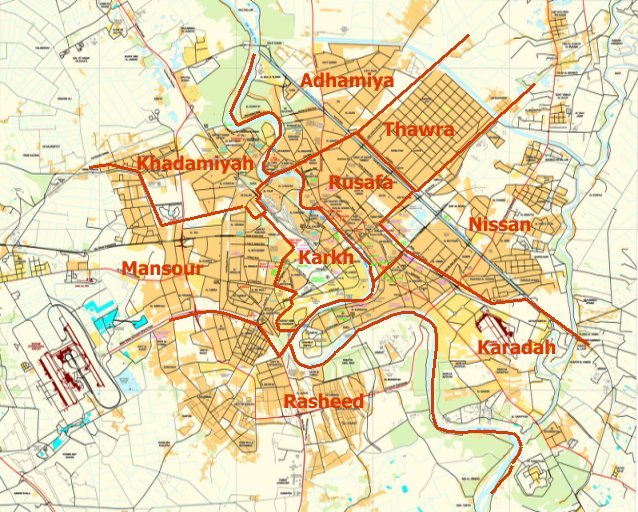
He pointed out that the Ministry has decided to open two fuel stations, one in Karkh and the other in Rasafa. They will sell fuel for 750 ID per liter. Locally produced fuel will remain at 400 ID per liter. He revealed that the Ministry of Oil has a plan to issue a decision to privatize the National Oil Production Distribution Company in 2008.
He further said that the current fuel crisis in Baghdad is a result of the Diyala Bridge being blown up by terrorists. The explosion influenced oil production distribution in Baghdad. Also, Al Jadriya and Double Bridge are closed to trucks because of the security plan which makes hundreds of trucks wait in long lines to pass.
Also, the Nasiriya-Dora pipeline was sabotaged and has made the situation worse. He added that the Ministry of Oil is suffering from the sabotage of the oil pipelines. He pointed out that the 12 inch Kirkuk-Bayji pipeline was sabotaged in the Mamlaha area. In addition, the pipeline between Dora and Rasafa was sabotaged as well. He confirmed that the hot areas are easier to distribute oil products, but Baghdad needs more procedures.
He said that Diyala Bridge should be fixed as well or the fuel crisis will continue. He added that Dora Refinery has a maximum amount of crude oil in storage but the Ministry can not move this oil from the refinery.
Labels: fuel station, Karkh, Ministry of Oil, Motassim Akram, National Oil Production Distribution Company, privatisation, Rasafa
Monday, May 14, 2007
Iraq’s Kurds Warn: Either Oil Or Separation
Oil, Kurdistan, Politics
(Al Mashriq Newspaper) - 13 MAY - Kurdistan Iraq’s government warned the central government in Baghdad yesterday that any reduction in the Kurd’s share of oil will lead to their separation from the nation. Qubad Talabani, son of the Iraqi President and the Kurdish government representative to the US said, “The oil is a red line to us and oil will determine whether we remain part of Iraq or not.”
The Iraqi and Kurdish regional governments reached an agreement on oil in February but they did not establish a final agreement regarding other primary laws. The date to implement these agreements is at the end of this month. However, at the meeting in the Ministry of Oil in Baghdad last month, where many Iraqi politicians and oil experts attended, they determined that there were items added to the original laws. There were also problems with the creation of the national Iraqi oil company.
Qubad Talabani added, “This means we have returned to square one and this matter is unacceptable to us; we are working to modernize Iraq, build a new Iraq, establish new rules, new policies, and we must rehabilitate the oil infrastructure. If some want to return to the old policies of President Saddam’s regime, where the government completely controlled the oil; sector without any supervision by the people or Parliament, I will say, ‘I am sorry, the Kurdish do not need this kind of Iraq nor will we invest in it."
Qubad Talabani added, “This means we have returned to square one and this matter is unacceptable to us; we are working to modernize Iraq, build a new Iraq, establish new rules, new policies, and we must rehabilitate the oil infrastructure. If some want to return to the old policies of President Saddam’s regime, where the government completely controlled the oil; sector without any supervision by the people or Parliament, I will say, ‘I am sorry, the Kurdish do not need this kind of Iraq nor will we invest in it."
Talabani clarified that the Iraqi national oil company should be completely open to foreign investment and should cooperate with the international community. He further added, “There must be a new payment procedure instead of waiting for the Finance Minister’s discretion. I do not want Kurdistan’s oil to be stolen or the Kurd’s money to be used against them again. Iraqi oil experts believe that the new oil law will give foreign companies the biggest share of oil. The experts also do not trust the current government to invest the oil profits for the benefit of coming Iraqi generations."
Labels: draft oil law, Iraqi National Oil Company, Kurdistan, Ministry of Oil, Qubad Talabani
Thursday, April 12, 2007
Changes to draft oil law discussed
Oil
(BI-ME) - Experts specialised in the oil sector and academics confirmed, at a symposium held in the city of Amarah in Southern Iraq, that the bill of oil and gas which is currently being discussed by the Parliament for approval “needs a review and adjustments” that are considered “essential”. They pointed out that there is a need “to ensure that the controversial draft law, will include compensations to the governorates producing oil and gas, with Missan Governate (bordering Iran) at the top, for the environmental damage caused by oil and gas exploration, and for agricultural land use in oil production”.
The symposium came out with other recommendations demanding not to work by the sharing-production contracts and stick to the risk and service contracts only on condition that any contract cannot be carried out only after gaining the consent of the oil and gas Federal Council. The seminar also proposed adding supplement 3 to supplement 2, and make it from the jurisdictions of the National Oil Company exclusively. Also, the contracts with oil companies must ensure the implementation of oil investment projects and give priority to extraction and production from the border fields, especially the ones common with the neighboring countries, giving priority to contracts that ensure marketing. Oil expert, Jassim Raheem Al-Ithari, said that “the law should be presented for broad discussion before it is approved”, noting that “articles 111 and 112 of the Constitution did not refer to the other national wealth other than oil and gas. Also the constitutional articles especially article 112, did not refer to the exploited fields that require resolving the controversy about them”.
The symposium recommended the adoption of the Amman symposium recommendations held recently on the new law. The legal expert in the Iraqi Oil Ministry, Jabbar Alsaidi, pointed out to “the importance of enhancing an Iraqi oil law, re-establishing the National Oil Company and to amend articles 111 and 112 of the Constitution, to pave the way for some of the parties to sign contracts without referring to Baghdad.”
He explained that the Cabinet “authorised” some bodies described by “regional” to negotiate and sign contracts just like the Ministry of Oil and the National Oil Company. The symposium stressed “the need for the parliament to ratify all contracts and the nomination of a supreme body to resolve the arising disputes“, suggesting “their settlement through the Federal Court”.
Labels: Amarah, draft oil law, Iraq National Oil Co., Jabbar Alsaidi, Jassim Raheem Al-Ithari, Ministry of Oil, Missan
Sunday, March 25, 2007
$60 million barrel refinery deal for northern Iraq
Oil
(Azzaman) - Plans are in place to construct two 10,000 barrel refineries in northern Iraq. The Ministry of Oil has signed a contract with state-owned General Company for Designs and Consultancy and other Iraqi firms to build the refineries. The 77-billion dinar (US$ 60,215,053) deal calls for the manufacture and installation of the equipment for the two refineries, one in Arbil and the other in Sulaimaniya.On completion, the refineries are expected to ease the current chronic fuel shortages in the Kurdish north. A statement by the ministry did not say when the refineries will be ready and whether Iraqi firms can do the job with foreign help. The statement said six state-owned firms belonging to the Ministry of Industry and Minerals were coordinating efforts to complete the refineries. It said the firms were involved in the construction of 10 such refineries in provinces in the central and southern parts of Iraq.
Labels: Arbil, General Company for Designs and Consultancy, Ministry of Oil, oil refineries, Sulaimaniya.
Wednesday, March 07, 2007
Ministry of Oil considering exporting to Syria
Oil, Syria, Jordan
(Azzaman) The Ministry of Oil is keen to diversify export outlets and is considering the possibility of reopening the pipeline via Syria. Oil Minister Hussain al-Shahrastani said both countries were “keen to reactivate the pipeline for the transfer of crude oil via Syrian territories.” But he said no agreement has been reached yet because the pipeline itself is in need of rehabilitation.
“The pipeline’s rehabilitation,” the minister said, “will need many requirements which will have to be met by both sides.” But Shahrastani said before talk of a resumption of exports via Syria or repair of the pipeline the security situation has to be dealt with first. He said the pipeline was already target of acts of sabotage inside Iraqi territory.
“It is important for the Syrian side to prevent the infiltration of saboteurs from its territories who target Iraqis and Iraq’s vital installations namely pipelines and oil projects,” Shahrastani said.
Mounting violence in western Iraq has prevented the country from resuming oil exports to Jordan. The minister said Iraq had agreed to resume exports to Jordan at preferential prices but both countries have found it almost impossible to carry out the deal. Shahristani said under the agreement the Jordanians were to ferry the crude from a point inside Iraqi territory to their refinery in Zarqa close to Amman.
But the drivers who were assigned to ship the crude through tankers could not make the trip owing to the upsurge in violence on the Iraqi side. Earlier reports had said that the Iraqi ministry, under political pressure, was no longer interested in the deal. But Shahristani said his ministry was keen to implement the deal once security conditions stabilize.
But the drivers who were assigned to ship the crude through tankers could not make the trip owing to the upsurge in violence on the Iraqi side. Earlier reports had said that the Iraqi ministry, under political pressure, was no longer interested in the deal. But Shahristani said his ministry was keen to implement the deal once security conditions stabilize.
Labels: Hussain al-Shahrastani, Jordan, Ministry of Oil, Oil Minister, Syria