Monday, October 08, 2007
U.S. military says it has detained 3 Iran-linked suspects in kidnapping of Brits
"The individuals detained during the raid are believed to be members of the Special Groups Militia network known for kidnapping, facilitating the transport of weapons and explosively-formed penetrators from Iran to Iraq, as well as bringing militants from Iraq into Iran for military training," it added.
"The three insurgents captured are believed to be responsible for the kidnapping of five British contractors in Baghdad on May 29," the statement noted. A group of armed men in police uniforms abducted the five Britons from the Iraqi Finance Ministry in May. Their fate is not known.
Labels: Iran, kidnapped Brits, Shiite militias, Special Groups Militia network


Wednesday, September 12, 2007
Petraeus decides not to send U.S. troops to Basra
"So I think we're in a wait-and-see approach with Basra. But we have every expectation that Basra will be resolved by Iraqis," he said at a press conference here. Petraeus, who was grilled by Congress for two days about the situation in Iraq, is scheduled to depart next week for London for talks on Britain's plans in Iraq.
The 5,500-British force has been pulled into an air base outside Basra since last week's handover of its last base inside the city, and plans call for reducing that force by 500 troops in the coming weeks. The British pull-back from bases in the south has been accompanied by a rise of factional violence among Shiite militias competing for control of the oil rich region, which has Iraq's only major port on the Gulf. Petraeus said the violence has subsided over the past month because of accommodations worked out by the Iraqis.
There are "lots of challenges, don't get me wrong," he said. "There's militia infiltration... All these different parties have elements and different structures in Iraq. "But they have come to accommodations that are allowing the functioning of activities down there. And, certainly, the oil has been flowing and the ports have been moving, and all the rest of that.
Petraeus said a four star Iraqi general has been assigned to the south and the Iraqi are moving in a special operations forces battalion and elements of a mechanized battalion while swapping out some army brigades. "In many cases, in that area, the presence of those forces, again, when it comes to intra-Shia rivalries, can sometimes be enough to keep the situation one in which they're shouting rather than shooting," he said.
Labels: Basra, General David Petraeus, security, Shiite militias, U.S. troops
Wednesday, August 22, 2007
Iran denies Revolutionary Guards working in Iraq
Major General Rick Lynch, commander of US forces in central Iraq, said that members of the Quds Force have set up base in Babil, Karbala and Najaf provinces and the southern outskirts of the capital. "If there are 50 members of the Quds force in Iraq, give the names of five of them," challenged Larijani. "Some people say arms with 'made in Iran' written onto them have entered Iraq from Iran. It is obvious that these statements are wrong," he added.
The US military has regularly accused the Quds Force of training Iraqi militants in the use of rockets and explosively formed penetrators (EFPs) -- fist-sized bombs capable of slicing through heavy armour -- but Lynch's comments were first claims that they are operating inside Iraq. The Quds Force is the covert operations unit of the Guards -- which the White House is seeking to blacklist as terrorist group. The United States accuses Shiite-majority Iran of inciting sectarian violence in Iraq. Iran denies the allegation and blames the US-led occupation for Iraq's insecurity.
Labels: Ali Larijani, EFPs, Iran, Iraq, Major General Rick Lynch, Quds Force, Revolutionary Guards, Shiite militias, southern Iraq
Monday, August 20, 2007
Revolutionary Guards believed to be training Shiite militias in s. Iraq
Lynch said there had been an increase in "indirect fire attacks" on US forces in his area of command and that rocket attacks were becoming "more accurate and more effective". Washington has accused Shiite Muslim Iran of fomenting violence in Iraq through its support for Shiite militias, especially in southern Iraq.
The US military also accuses Iran of supplying deadly roadside bombs, the biggest killers of US troops in Iraq, to Iraqi militias and has displayed caches of weapons it says are from Iran. Iran denies the charges and blames the 2003 US-led invasion for the sectarian violence between majority Shi'ites and minority Sunni Arabs that has killed tens of thousands.
The US military believes the Revolutionary Guards' Quds force is behind the shipping of weapons into Iraq, including armour-piercing "explosively formed penetrators". At a second round of landmark US-Iran talks on Iraqi security in July, US ambassador Ryan Crocker accused Iran of stepping up its support for militias in Iraq. Crocker also warned Tehran that its Quds operatives would not be safe in Iraq.
Labels: Army Maj. Gen. Rick Lynch, EFPs, indirect fire attacks, Quds Force, Revolutionary Guards, Ryan Crocker, Shiite militias, southern Iraq
Thursday, August 16, 2007
U.S. forces launch air assault south of Baghdad
Major-General Rick Lynch, commander of U.S. forces south of Baghdad, told Reuters on Wednesday that about 4,000 of his men would be involved in the operation and would use air strikes and air-mobile infantry units to attack insurgents in the Tigris River valley south of the Iraqi capital.Pointing on a map to the palm groves south of Baghdad in an area known as Arab Jabour, he said his troops had already pushed out many Sunni Arab militants in the past month and now planned to strike those who escaped southwards.
Washington sent an additional 30,000 troops to Iraq this year and has pushed them from big bases into neighborhood outposts in an effort to reduce sectarian violence and defeat both Sunni Arab insurgents and hostile Shi'ite militia. Operation Marne Husky involves sending infantry into territory where U.S. forces had not had a presence in the past, in an area south of Baghdad U.S. troops call the "Triangle of Death."
"Tonight it's going to be the first time in about a year they've seen coalition forces. They've had aircraft flying overhead. But they can't hide from infantry kicking down the doors," Lynch said. The U.S. commander in Iraq, General David Petraeus, is due to report to Congress next month on the success of his strategy. This week U.S. forces announced the launch of a countrywide offensive, operation Phantom Strike.
On Tuesday they announced the first part of Phantom Strike, known as operation Lightning Hammer, which began with an airborne assault on the Diyala River valley north of the capital. A spokesman for the unit said the soldiers were airlifted out before dawn having captured five suspected militants, destroyed homemade explosives and uncovered a cache of weapons.
Labels: air assault, Arab Jabour, Army Maj. Gen. Rick Lynch, Marne Husky, Operation Lightning Hammer, Operation Phantom Strike, Shiite militias, Sunni militants, U.S. forces
Wednesday, August 15, 2007
U.S. launches new offensive in Iraq
The military said 16,000 U.S. and Iraqi troops were involved in Operation Lightning Hammer against Sunni Islamist al Qaeda militants in the fertile crescent of the Diyala River which flows from the north into the Tigris near Baghdad. U.S. and Iraqi soldiers started the operation with a late-night air assault. Its focus was militants who fled an earlier crackdown in the provincial capital Baquba.
"Our main goal with Lightning Hammer is to eliminate the terrorist organisations ... and show them that they truly have no safe haven -- especially in Diyala," Major-General Benjamin Mixon, U.S. commander in northern Iraq, said in a statement. The operation was described as part of a larger countrywide Operation Phantom Strike, which U.S. forces announced on Monday.
They have so far given few details of Phantom Strike. But U.S. military offensives over recent months have been under way in the Tigris and Diyala valleys north of Baghdad and in the Euphrates valley south of the capital. Diyala province is a sectarian patchwork and has seen some of Iraq's worst violence. Police in the Diyala town of Khalis said they found 15 corpses identified as Sunni Arabs, executed by gun shots and dumped on the highway linking Baghdad and Kirkuk.
The United States has sent an additional 30,000 troops to Iraq this year and moved them from large bases into small neighbourhood outposts in an effort to reduce sectarian violence in the capital and surrounding provinces. U.S. forces say they have had success, especially against Sunni Arab militants who were their main enemies for the first three years after the fall of President Saddam Hussein in 2003. But they have faced increasing violence from Shi'ite militia, who they say have ties to Iraq's Shi'ite Muslim neighbour Iran.
Labels: Al Qaeda, Diyala, Iraq, Major-General Benjamin Mixon, offensive, Operation Lightning Hammer, Operation Phantom Strike, Shiite militias, U.S. forces
Monday, July 30, 2007
Petraeus and al-Maliki clash
It seems less a clash of personality than of policy. The Shiite Muslim prime minister has reacted most sharply to the American general's tactic of enlisting Sunni militants, presumably including past killers of Iraqi Shiites, as allies in the fight against al-Qaida here. An associate said al-Maliki once, in discussion with President Bush, even threatened to counter this by arming Shiite militias.
A tangle of issues confronts them, none with easy solutions:
- Al-Maliki, a Shiite activist who spent the Saddam Hussein years in exile, hotly objects to the recent U.S. practice of recruiting tribal groups tied to the Sunni insurgency for the fight against the Sunni extremists of al-Qaida, deemed "Enemy No. 1" by the Americans. His loud complaints have won little but a U.S. pledge to let al-Maliki's security apparatus screen the recruits.
- Aides say the Iraqi leader also has spoken bitterly about delivery delays of promised U.S. weapons and equipment for his forces.
- Petraeus, meanwhile, must deal with an Iraqi military and police force, nominally under al-Maliki's control, that often acts out of sectarian, namely Shiite, interests, and not national Iraqi interests. He faces a significant challenge in persuading al-Maliki to shed his ties to radical Shiite cleric Muqtada al-Sadr, who runs the Mahdi Army militia.
- On the political front, Crocker is grappling with the prime minister's seeming foot-dragging or ineffectiveness in pushing through an oil-industry law and other legislation seen as critical benchmarks by the U.S. government. Reporting to Congress in September, Crocker may have to explain such Iraqi inaction while U.S. troops are fighting and dying to give al-Maliki political breathing space.
First word of strained relations began leaking out with consistency earlier this month. Sami al-Askari, a key aide to al-Maliki and a member of the prime minister's Dawa Party, said the policy of incorporating one-time Sunni insurgents into the security forces shows Petraeus has a "real bias and it bothers the Shiites," whose communities have been targeted by Sunnis in Iraq's sectarian conflict.
"It is possible that we may demand his removal," al-Askari said.
A lawmaker from the al-Sadr bloc, who wouldn't allow use of his name because of the political sensitivity of the matter, said al-Maliki once told Petraeus: "I can't deal with you anymore. I will ask for someone else to replace you." Such a request isn't likely to get much of a hearing in Washington, where the Bush administration presents Petraeus as one general who can improve the Iraq situation.
Foreign Minister Hoshyar Zebari told Newsweek magazine the Petraeus-al-Maliki relationship is "difficult." For one thing, the Americans retain control of the Iraqi military. "The prime minister cannot just pick up the phone and have Iraqi army units do what he says. Maliki needs more leverage," Zebari said.
The prime minister has complained to President Bush about the policy of arming Sunnis, said the Sadrist lawmaker. "He told Bush that if Petraeus continues doing that, he would arm Shiite militias. Bush told al-Maliki to calm down," according to this parliament member, who said he was told of the exchange by al-Maliki. In Washington, White House officials who have sat in on Bush's video conferences with al-Maliki denied that exchange took place.
Labels: Al Qaeda, General David Petraeus, Hoshyar Zibari, Nouri Al-Maliki, Ryan Crocker, Sami al-Askari, Shiite militias, Sunni militants
Friday, May 25, 2007
Iraqi military experts warn fighting will escalate in Basrah
"Americans will keep a track of the Shiite militias, loyal to Iran, to prevent them from getting a grip on Basra and control of the situation, particularly as the government of [Prime Minister] Nouri Al Maliki is impotent and largely involved with militia infiltration in the state's institutions." He alleged: "The replacement does not amuse Al Maliki and other Shiite political and religious leaders who want to surrender the full security file to the Iraqi forces, which are accused by the British and Americans of being loyal to the dominant Shiite militias."
Sources close to Iraqi intelligence revealed that the Mehdi Army has mobilised itself and its supporters are preparing to return to Iraq immediately after an early pullout of British forces. Some do not rule out a coup attempt. Muaid Abdul Mustafa Al Dulaimi, an expert in strategic military studies, told Gulf News: "The Mehdi Army and rival Shiite militias will attempt a coup to seize control of the entire official military and security establishments in Basra and other southern Iraqi cities."
If this happens, "the [militias] will be extremely powerful and stronger than Al Maliki's government, especially as Iran will back the militias in the south more than supporting the government in Baghdad", Al Dulaimi said. It does not seem that Al Dulaimi's analysis is fully true as some reports confirm that the British withdrawal is likely to unleash a power struggle among main Shiite militia groups like the Mehdi Army and their rivals the Fadila party which engaged in clashes recently.
Some sceptics believe that the British and Americans have a role in creating the current conflict between the two Shiite groups to spark off an internal fight in the Shiite block. The security situation in Basra is growing critical and witnesses struggles for interests and power between the United States, Britain and Iran. The development may spur Americans to bring a strong central Iraqi government led by the former Baathists as its primary mission will be to suppress Shiite militias and end Iranian influence in southern Iraq.
Labels: Basra, coup attempt, Fadhela party, Mahdi Army, Shiite militias, Zaman Al Khuzai
Friday, May 11, 2007
Violence flares in mixed district in Baghdad
Snipers have begun appearing in parts of Baiyaa. Many stores have closed, and both Shiite and Sunni families have fled the area in recent weeks. Last Sunday, a car bomb devastated a food market, killing 30 people. The rumblings in Baiyaa have ominous implications for the U.S.-led security plan. They show that previously calm areas are still vulnerable to violence despite the flood of U.S.-Iraqi forces onto Baghdad's streets since February.
The precise reasons for Baiyaa's troubles are not clear, but accusations are thick on both sides. Sunni politicians have accused the Shiite-dominated government of allowing Shiite militias to operate in Baiyaa and elsewhere. Members of three Shiite families that fled Baiyaa a few days ago claimed Sunni extremists had threatened them. Those residents of the neighborhood spoke by telephone on condition of anonymity because they fear reprisals by armed gangs.
U.S. military spokesman Lt. Col. Scott Bleichwehl said security operations have been stepped up in the larger district that includes Baiyaa. The military has divided Baghdad into 10 districts, each with a permanent U.S.-Iraqi garrison, called a joint security station. The station for the Baiyaa district is in another neighborhood. Baiyaa, however, seemed ripe for trouble. Its dusty streets and low-slung houses borders areas where the Mahdi Army of anti-American cleric Muqtada al-Sadr holds sway.
Labels: Baiyaa, Bayaa, Janabi clan, Moqtada Al-Sadr, sectarian violence, Shiite militias, Sunni extremists
Monday, May 07, 2007
Dulaimi says Sunni MPs marginalized
Al-Dulaimi, who is thought to be nearly 80, is one of the most outspoken critics of Shiite Prime Minister Nouri al-Maliki's government. He recently has returned from neighboring Jordan where he underwent surgery for an unspecified ailment, according to his ally and fellow Sunni lawmaker Salim Abdullah. "Our participation in this so-called national unity government is weak and marginalized and our ministers have no authority to serve Iraq or its people," he said.
He also complained that Shiite militias and death squads, both blamed for targeting Sunni Arabs in kidnappings and execution-style killings, have resumed their activity after staying out of sight in the initial stages of the joint U.S.-Iraqi security plan. The number of bodies thought to belong to victims of sectarian killings fell dramatically in the early stages of the security push, which began Feb. 14. The numbers began rising again after hitting a low of seven, although they remain below the average of 50 per day being reported before the plan.
U.S. military officials have warned that a series of bombings that have killed hundreds of Shiites in recent weeks were an attempt by al-Qaida-linked Sunni insurgents to provoke renewed violence by the militias thus igniting a full-scale civil war.
Al-Dulaimi, whose bloc has 44 of parliament's 275 seats, identified two areas of western Baghdad, the Sunni dominated Amil and the mixed Baiyaa, to be witnessing a resumption of sectarian cleansing by Shiite militiamen. Baiyaa was hit by a suicide bombing that killed at least 30 on Sunday.
Ali al-Dabbagh, al-Maliki's chief spokesman, said the government was aware of the allegations of sectarian cleansing in Baiyaa, blaming it on what he called criminal gangs that want to create the impression of a city torn by religious strife.
"We wish the government every success with the security plan but not at the expense of the Sunnis," al-Dulaimi's said. However, he added that his bloc had no intention to pull out from the political process "which we joined to help create an Iraq free of sectarian domination."
Labels: Adnan Dulaimi, Amil, Baiyaa, Iraqi Accordance Front, Iraqi government, politics, Shiite militias
Tuesday, May 01, 2007
Al-Maliki's office accused of unfairly targeting senior Sunni officers
Since March 1, at least 16 army and national police commanders have been fired, detained or pressured to resign; at least nine of them are Sunnis, according to US military documents shown to The Washington Post. Although some of the officers appear to have been fired for legitimate reasons, such as poor performance or corruption, several were considered to be among the better Iraqi officers in the field. The dismissals have angered US and Iraqi leaders who say the Shiite-led government is sabotaging the military to achieve sectarian goals.
"Their only crimes or offences were they were successful against" the Mahdi Army, a powerful Shiite militia, said Brigadier General Dana Pittard, commanding general of the Iraq Assistance Group, which works with Iraqi security forces. "I'm tired of seeing good Iraqi officers having to look over their shoulders when they're trying to do the right thing."
The issue strikes at a central question about the fledgling government of Prime Minister Nouri Al Maliki: whether it can put sectarian differences aside to deliver justice fairly. Iraqi government officials denied that security force commanders have faced political pressure and said Al Maliki is committed to targeting all criminals equally. Sadiq Al Rikabi, a political adviser to Al Maliki, said the first two months of the Baghdad security plan show that Al Maliki "is not working on any agenda but the national agenda."
One adviser in the office, Basima Luay Hasun Al Jaidri, has enough influence to remove and intimidate senior commanders, and her work has 'stifled' many officers who are afraid of angering her, a senior US military official said. US commanders are considering installing a US liaison officer in the department to better understand its influence.
Labels: Basima Luay Hasun Al Jaidri, Brig. Gen. Dana Pittard, Iraq Assistance Group, Iraqi Army officers, Mahdi Army, Shiite militias
Thursday, April 12, 2007
Sectarian violence ongoing despite Baghdad security operation
Residents displaced in the past four months describe a new effort that haunts them after they flee. It begins with intimidating phone calls, then escalates into bombings or the dismantling of Sunni homes. The residents said the perpetrators were members of the Mahdi Army militia, which is loyal to radical Shiite cleric Muqtada al-Sadr. Al-Sadr reportedly has told his followers to lie low and not challenge U.S. troops as they fan out across the capital in an effort to restore order.
But that show of cooperation hasn't prevented the militia from trying to cement its grip on some formerly mixed-sect neighborhoods, residents report. Lt. Col Chris Garver, a U.S. military spokesman, didn't dispute that Mahdi Army members are still working to clear neighborhoods of Sunni residents. He said the security plan was in its early stages and that with three of five additional U.S. brigades now in Baghdad, there still weren't enough troops to halt illegal militia activities in every neighborhood.
"These are exactly the type of activities that we will clear, and free the neighborhoods from the influence of illegal armed groups, insurgents, militias or other criminals," Garver said. "In order for the plan to work, Iraqi residents must report these activities." Residents described a multifaceted program that begins with efforts to force a family to leave and continues even after the house is abandoned. Then, residents reported, Mahdi Army members work to persuade the homeowner to sell the abandoned house at below-market rates and to prevent the owner from installing a tenant.
A prominent member of the Mahdi Army, who asked not to be identified because he was admitting illegal activities, acknowledged that the militia was behind a campaign to drive what he termed "bad" Sunnis from Hurriyah. He was unapologetic, saying the militia acts on orders to kill or kick out Sunnis who are connected to insurgent groups that have killed thousands of Shiites. Asking Shiites not to pay rent to Sunnis was an educational campaign, he said. "This is wrong, and that amount of money may be used by Sunni terrorists for killing Shiites," he said. "We must inform them."
Labels: Kurds, Lt. Col Chris Garver, Mahdi Army, sectarian violence, Shiite militias
Friday, April 06, 2007
Iraqi Sunni scholars back 'resistance' to end U.S. occupation
The meeting, which was held outside Iraq for security reasons, also demanded 'the release of all detainees held by the government and occupation forces as a gesture of good faith towards reconciliation and building a new Iraq.' The conference was sponsored by the Iraqi Endowments Society, an umbrella that includes the country's top Sunni scholars.
The organization was set up shortly after the US-led invasion of Iraq in 2003, when the country's Ministry of Religious Affairs was dissolved and replaced by separate establishments for Shiites, Sunnis and other religions.
The conference called for discarding all forms of 'ethnic and sectarian strife' and denounced 'all inhuman practices including kidnappings, assassinations, detentions, coercive migration and aggressions on worship establishments.' Sunni leaders complained that at least 250 mosques were either destroyed or seized by Iran-backed Shiite militias which are affiliated with the Iraqi government.
The participants called for convening an 'expanded conference for all Iraqi scholars' including Shiite clerics with a view to 'halting the bloodshed' in Iraq and reinvigorating the Mecca Document that was reached by Sunni and Shiite leaders at the end of last year for ending sectarian violence.
The conference decided to set up the 'Iraq Scholars Council' and an 'Islamic Jurisprudence Complex' for issuing fatwas (judgements), a move designed to pre-empt opinions formed by takfir groups, which dub people as atheists.
Labels: Iraq Scholars Council, Iraqi Endowments Society, Iraqi Sunni scholars, Islamic Jurisprudence Complex, resistance, Shiite militias
Wednesday, March 28, 2007
Shiite gunmen go on killing rampage in Tal Afar
"Shi'ite armed groups killed Sunni men inside their homes. More than 50 were killed," said Brigadier Najim al-Jubouri, mayor of Tal Afar, which is close to the Syrian border and the regional capital of Mosul. He said 18 people had been detained. A security source who declined to be named said many of the suspects were policemen. A curfew was imposed as Iraqi soldiers took control of the city.
The killings came after the U.S. Senate on Tuesday endorsed a March 31, 2008, target date for withdrawing American combat troops from Iraq. The White House threatened a veto, moving Congress a step closer to a showdown with Bush over the war.
Gunmen raided the Tal Afar neighborhood shortly after twin truck bombings on Tuesday that police said killed 55 people and wounded 180. One suicide bomber lured victims to buy wheat loaded on his truck in a Shi'ite neighborhood. A second truck bomb exploded in a used car lot in a religiously mixed area.
Labels: Brigadier Najim al-Jubouri, Shiite militias, Tal Afar, Turkomen
Saturday, March 24, 2007
Sunni tribal leader tells U.S. to tackle Shia militias
Al-Gaood is a leading member of a Sunni family that plays a major role in tribal politics in Anbar. He is believed to have close ties with factions of former dictator Saddam Hussein's disbanded Baath Party. Al-Gaood has previously said a truce with the United States was possible if the Shiite-dominated government of Iraq were "dismissed" and new elections held. He said he was committed to the unity of Iraq and wanted sectarian violence to end.
Labels: Al Anbar, Baath Party, Flame of Iraq, Iran, Sheik Majeed al-Gaood, Shiite militias, tribal leaders, U.S., Wahaj el Iraq
Wednesday, March 21, 2007
MEK spokesman - Iran training Shiite militias
Jafarzadeh now heads a Washington-based think tank called Strategic Policy Consulting Inc., which deals with issues relating to Iran's nuclear and military activities and claims to obtain its information from a network of resistance informants inside that country. U.S. officials have taken a wary view of Jafarzadeh's affiliation in the past with the National Council of Resistance of Iran, whose military arm, the Mujahedeen Khalq, or MEK, was listed as a foreign terrorist organization by the U.S. State Department. Former Iraqi President Saddam Hussein allowed the group to operate camps in Iraq from which it launched attacks inside Iran.
Jafarzadeh said Iran's supreme leader, Ayatollah Ali Khamenei, and its president, Mahmoud Ahmadinejad, are closely connected to the training program, and he named Abu Ahmad Al-Ramisi, governor of southern Iraq's Muthanna province, and two members of Iraq's National Assembly as being secretly involved. A spokesman for Iran's U.N. Mission, Mohammad Mir Ali Mohammadi, said Jafarzadeh was an "official representative of MEK, which is a terrorist group, and even on the terrorist list of the U.S. State Department."
The U.S. Mission to the United Nations had no immediate comment on Jafarzadeh's latest claims about clandestine training of Iraqi fighters in Iran.
Jafarzadeh displayed maps and satellite photos showing some of the purported camps' locations, including two near the former shah's palace in Tehran, another south of the capital in Jalil Abad, and another, the Bahonar base in Karaj, where he said techniques of guerrilla warfare, including deception and intelligence-gathering are on the curriculum. Other camps, he said, are in Qom, in Isfahan and in Iraq-Iran border areas near Kermanshah, Kurdistan, Ilam and Khuzestan. The information, provided in bits and pieces by spies and informants, was sketchy on some aspects and detailed on others.
The camps are run by several top commanders of the Qods Force, the most highly trained branch of Iran's Revolutionary Guards Corps, with some members of Lebanon's Shiite Hezbollah militia also taking part, he said. He said the camps are under the command of Brig. Gen. Mohammad Shahlaei, a Revolutionary Guards officer who has been "involved in the Iranian regime's intervention in Iraqi affairs."
Labels: Alireza Jafarzadeh, Iran, Quds Force, Shiite militias, training camps
Tuesday, March 13, 2007
Petraeus says Iran, Syria, fuelling Iraq's insecurity
His comments follow a harsh exchange of words over the weekend between the U.S. and Iran at a conference in Baghdad on Iraq's security. The U.S. envoy to the talks, David Satterfield, said he had evidence that Iran was arming Shiite Muslim militias in Iraq, which his Iranian counterpart, Abbas Araghchi, vehemently denied. He called such accusations a "cover" for U.S. failures in Iraq.
At the conference, both Iran and Syria pledged to support moves to stabilize Iraq, including reconciliation among Iraq's factions. But U.S. and Iraqi leaders have questioned Iran's commitment to backing such American-led efforts. In the interview with ABC, Petraeus said cooperation from Iran and Syria would be key to stopping the violence in Iraq.
He said there are elements of Iran's Revolutionary Guards elite Quds Force that are training fighters and sending them into Iraq to fight U.S.-led forces. He said Iran is also sending "rockets, mortars and other explosives and munitions" into the country. "That's indisputable and again it's a very, very problematic situation four our soldiers and Iraqi soldiers," he told ABC. "And if it's something that can be brought to a halt through these initiatives of the Iraqi government, we would applaud that vigorously," he said, referring to the talks in Baghdad aimed at bringing security to the country.
Labels: Abbas Araghchi, General David Petraeus, Iran, Quds Force, Shiite militias, Syria
Thursday, March 01, 2007
U.S. troop casualties highest in Sunni areas
While U.S. military officials have held briefings to publicize their concerns about the potent bombs known as explosively formed projectiles (EFPs) or penetrators, casualty reports suggest that such weapons in the hands of Shiite militias are responsible for a relatively small number of American deaths.
U.S. officials have said that attacks with such weapons increased 150 percent in the past year. But a review of bombings by location shows that less than 10 percent of attacks that killed at least two American service members in the past 14 months were in areas where Shiite militias are dominant.
Those reports show that fewer than half the bomb attacks on heavily armored U.S. vehicles such as Abrams tanks and Bradley Fighting Vehicles were in areas where Shiite militias dominate. While it's difficult to know which armed group planted a bomb, analysts say the casualty numbers show that U.S. officials are exaggerating the importance of EFPs, which military officials say have been used only by Shiites.
"There were relatively few American deaths from explosively formed penetrators until recently, but you can say the same thing about attacks on helicopters or chlorine attacks," said Loren Thompson, a defense analyst with the Lexington Institute, a policy research group in Arlington, Va. "The fact of the matter is that the insurgents, both Sunni and Shiite, are becoming a lot more sophisticated in their tactics. Explosively formed penetrators are only one part of that, and they are not a particularly important part."
Pentagon officials say the issue is important because the Iranian government appears to be involved. "I think the issue is not whether or not materials and supplies are coming from Iran - they are - but rather how far up the Iranian leadership is involved," said Bryan Whitman, the Pentagon's chief spokesman.
U.S. military officials accuse Iran of supplying Shiite militants with EFPs, which fire a molten slug of metal that can punch through the thickest American armor, including tanks and other vehicles designed to withstand heavy blasts. The officials say the bombs have killed at least 170 U.S. and allied service members and wounded more than 620 since they were first discovered on the battlefield in mid-2004. "Explosively formed penetrators are not some exclusive franchise for the Iranians," Thompson said. "They are fairly common around the world."
Explosively formed penetrators are also known as shaped charges. The warheads were developed after World War I to penetrate tanks and other armored vehicles. Rocket-propelled grenades and antitank missiles are conventional examples. Shaped charges also are used in the oil and gas industry.
John Pike, the executive director of GlobalSecurity.org, an online clearinghouse for military, intelligence and homeland-security information, said that while designing a shaped charge would require expertise, fabricating the devices was simpler, requiring only skill in using metal-machining tools. Asked who'd have the expertise to manufacture a shaped charge, Pike cited "people who had worked with explosives in the petroleum industry." In Iraq, he said, "there would be a fair number of those."
U.S. military officials say EFPs are more dangerous than other types of roadside bombs because they typically produce more casualties. American casualty reports show that the deadliest roadside-bomb attacks of the war have occurred in predominantly Sunni areas or areas with mixed ethnic and religious populations.
Labels: EFPs, explosively formed projectiles, Iran, Shiite militias, Sunni insurgents
Abductions curbed by military operations
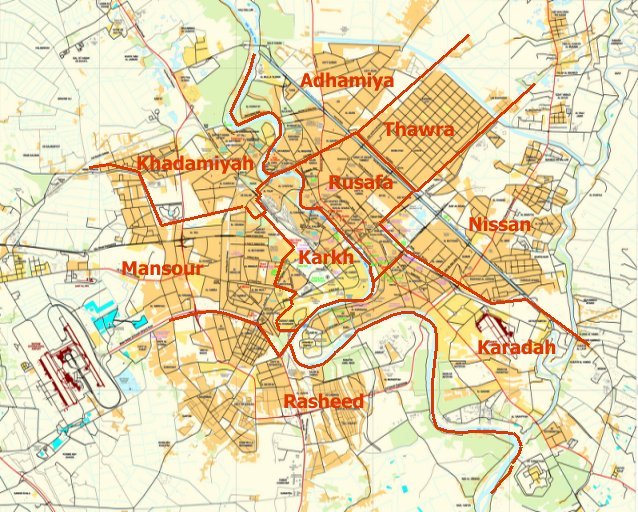
Some of the abductions aim to sponsor armed groups. In the Sunni-majority city of Al Adhamiya, kidnapping has another aspect. Captors tell the potential victim that if he doesn't pay the jihad payment, he will be abducted and then the bargains will start between them and his family.
Except Al Qaida in Iraq, which is led by Abu Hamza Al Muhajir, and the Shiite militias, the sole purpose of the kidnappings is to turn the hostage before a court that issues the death sentence to him. Money, therefore, has no place in these groups' minds. As in the case of Al Muhajir organisation, Shiite armed militias and specifically the Mehdi Army, have specific goals unless the kidnapped has Shiite roots.
Labels: Abu Hamza Al Muhajir, Al Qaeda in Iraq, hostages, kidnapping, operation Imposing Law, Shiite militias