Thursday, October 04, 2007
MNFI - Iranian detainee is key leader in Quds Corps
"The Iranian national who was detained by the U.S. forces in Sulaimaniya is involved in transferring armor-piercing explosively formed penetrators from Iran into Iraq and he is currently under questioning," Brig. Gen. Bergner told a news conference in Baghdad today.
The spokesman added "the detainee is a key leader of the Iranian Revolutionary Guards' Quds corps if compared to the Iranian persons detained in last January in Arbil."U.S. forces arrested an Iranian trade delegation member upon arrival in Sulaimaniya in Iraq's Kurdistan region two weeks ago. Mahmoud Farhadi, the Iranian detainee, was accused by U.S. forces of transferring weapons and infiltrators into Iraq. Tehran claimed that Farhadi is a civil-servant at Karminshah province.
The spokesman also said that Farhadi is "a commander of Zafar Battelion within Ramadan Brigade which is responsible for most Quds corps activities in Iraq. "With Farhadi, U.S. army in Iraq held five more Iranians who were detained from the Iranian Consulate in Arbil on 11th January 2007.
Labels: Brigadier General Kevin Bergner, EFPs, Iranian detainee, Mahmoud Farhadi, Quds Force, Ramadan Brigade, Sulaymaniyah, Zafar Battelion


Wednesday, August 22, 2007
Iran denies Revolutionary Guards working in Iraq
Major General Rick Lynch, commander of US forces in central Iraq, said that members of the Quds Force have set up base in Babil, Karbala and Najaf provinces and the southern outskirts of the capital. "If there are 50 members of the Quds force in Iraq, give the names of five of them," challenged Larijani. "Some people say arms with 'made in Iran' written onto them have entered Iraq from Iran. It is obvious that these statements are wrong," he added.
The US military has regularly accused the Quds Force of training Iraqi militants in the use of rockets and explosively formed penetrators (EFPs) -- fist-sized bombs capable of slicing through heavy armour -- but Lynch's comments were first claims that they are operating inside Iraq. The Quds Force is the covert operations unit of the Guards -- which the White House is seeking to blacklist as terrorist group. The United States accuses Shiite-majority Iran of inciting sectarian violence in Iraq. Iran denies the allegation and blames the US-led occupation for Iraq's insecurity.
Labels: Ali Larijani, EFPs, Iran, Iraq, Major General Rick Lynch, Quds Force, Revolutionary Guards, Shiite militias, southern Iraq
Monday, August 20, 2007
Revolutionary Guards believed to be training Shiite militias in s. Iraq
Lynch said there had been an increase in "indirect fire attacks" on US forces in his area of command and that rocket attacks were becoming "more accurate and more effective". Washington has accused Shiite Muslim Iran of fomenting violence in Iraq through its support for Shiite militias, especially in southern Iraq.
The US military also accuses Iran of supplying deadly roadside bombs, the biggest killers of US troops in Iraq, to Iraqi militias and has displayed caches of weapons it says are from Iran. Iran denies the charges and blames the 2003 US-led invasion for the sectarian violence between majority Shi'ites and minority Sunni Arabs that has killed tens of thousands.
The US military believes the Revolutionary Guards' Quds force is behind the shipping of weapons into Iraq, including armour-piercing "explosively formed penetrators". At a second round of landmark US-Iran talks on Iraqi security in July, US ambassador Ryan Crocker accused Iran of stepping up its support for militias in Iraq. Crocker also warned Tehran that its Quds operatives would not be safe in Iraq.
Labels: Army Maj. Gen. Rick Lynch, EFPs, indirect fire attacks, Quds Force, Revolutionary Guards, Ryan Crocker, Shiite militias, southern Iraq
Monday, August 13, 2007
Shiite militia tightens its grip as rogue elements become bolder
Details of the Aug. 5 ambush emerged this week in interviews with Kanbar, U.S. military and intelligence officials. It remains unclear whether the thugs sought to kill Kanbar or simply intimidate him, but suspicions over the source of the brazen assault pointed in just one direction: the powerful Shiite armed faction known as the Mahdi Army and its increasingly unpredictable trajectory.
The vast Mahdi network - ranging from hardcore fighting units to community aid groups - is emerging as perhaps the biggest wild card as Iraq's U.S.-backed government stumbles and the Pentagon struggles to build a credible Iraqi security force to allow an eventual U.S. withdrawal. Just a few months ago, the Mahdi Army and its leader, firebrand cleric Muqtada al-Sadr, were seen as reluctant - but critical - partners with Iraq's leadership. Al-Sadr agreed to government appeals to lessen his anti-American fervor and not directly challenge the waves of U.S. soldiers trying to regain control of Baghdad and surrounding areas. But now, the once-cohesive ranks of the Mahdi Army are splintering into rival factions with widely varying priorities.
Some breakaway guerrillas are accused by Washington of strengthening ties with Iranian patrons supplying parts for powerful roadside bombs - which accounted for nearly three-quarters of U.S. military deaths and injuries last month. The devices suggest that Shiite militias could replace Sunni insurgents as the top threat to American troops.
Other Mahdi loyalists are seeking to expand their footholds in the Iraqi military and police, frustrating U.S. attempts to bring more Sunni Muslims into the forces as part of national reconciliation goals. And in many Shiite strongholds across Iraq, Mahdi crews are trying to shore up their power and influence. The pace has picked up with the sense that the Shiite-led government of Prime Minister Nouri al-Maliki's government could be irrevocably damaged after political mutinies by Sunni and Shiite Cabinet ministers.
The Mahdi Army, meanwhile, appears to be going through its own leadership crisis. Al-Sadr has been unable to rein in the renegade Mahdi factions. On Friday, a U.S. military commander said al-Sadr had returned to Iran, where he spent several months earlier this year. Al-Sadr's top aides called the claim baseless. But there is no dispute that Mahdi Army operatives are busy planning for the future.
The militia is working behind-the-scenes to solidify control of rent markets, fuel distribution and other services in Shiite neighborhoods - taking a page from other influential groups across the region, such as Hezbollah, that have mixed militia muscle and social outreach. For the U.S. military, the gun-wielding attack on the Iraqi brigadier general in Kazimiyah - a main Shiite enclave in northern Baghdad - highlights just how far the Mahdi bosses are willing to go against anyone they cannot control.
"(He) is the cleanest guy you can find in Kazimiyah, and he works with us. That's why they want him dead," said Capt. Nick Kron, 28, a Richmond, Va., native with the Army's 1st Infantry Division. Kazimiyah - home to Baghdad's holiest Shiite shrine - puts the Mahdi Army's strength on full display. U.S. officials believe the head of the Kazimiyah faction is Hazim al-Araji, a Shiite imam and brother of Bahaa al-Araji, a Sadrist member of parliament. Through the al-Araji brothers, the Kazimiyah group has close ties to Iraqi politicians in the Green Zone, as well as to clerics in the holy city of Najaf, home to al-Sadr as well as Iraq's top Shiite religious figure, Grand Ayatollah Ali al-Sistani.
"With that political cover, these guys can get away with anything," said Lt. Col. Steve Miska, head of the 1st Infantry Division's Task Force Justice and the top U.S. officer in Kazimiyah. Each day, militiamen in civilian clothes patrol in the tight cluster of winding streets surrounding the Imam al-Kadhim shrine. U.S. forces keep their distance. They fear an all-out insurrection if they crack down on the Mahdi Army, often called by the Arabic acronym JAM. Also, they acknowledge that the Mahdi presence helps keep Sunni insurgents away.
"We could go downtown and have direct confrontation with JAM, and it'd be a tactical victory for us, but the political backlash would make it not worth it," said Miska, of Greenport, N.Y. The neighboring Shiite enclave of Shula is the base for the Mahdi Army's hit men, who kidnap and kill Sunnis - and increasingly, fellow Shiites - after trying them in impromptu Islamic courts, U.S. officials said.
The surge in Mahdi Army activity in Kazimiyah has also meant increased attacks on U.S. forces. In the past four months, more than a dozen powerful, armor-piercing bombs were found in Kazimiyah. The so-called EFPs - explosively-formed penetrators - are the type the U.S. believes are funneled to the Mahdi Army by Iranian agents. In May, an American soldier was killed by an EFP planted near the gates of a U.S. base in Kazimiyah.
Although U.S. forces have so far avoided full-scale confrontation with the Mahdi Army, strategic strikes appear to be increasing. Last week, American soldiers arrested an Iraqi Army company commander accused of involvement in planting roadside bombs to target U.S. forces. A known Mahdi Army operative, Maj. Ali Farhan, is also suspected of funneling weapons to militiamen and allowing them to pass freely through Iraqi checkpoints. He remains in U.S. custody.
On Tuesday, U.S. aircraft and soldiers attacked a suspected Shiite militia cell accused of importing the bombs and sending members to Iran for training. The U.S. military said 32 suspected militants were killed and 12 captured in raids that coincided with a visit to Tehran by Iraqi prime minister. For now, the Iraqi army officer Kanbar is in hiding. He is the only Iraqi official with a free pass to go unchecked through security at the U.S. military base in Kazimiyah. "He is a rare breed in Iraq ... He's serving his country as best he can in a very, very difficult political situation," Miska said.
Labels: Bahaa Al-Araji, Brig. Gen. Falah Hassan Kanbar, EFPs, Hazim al-Araji, Iran, JAM, Kazimiyah, Mahdi Army, Maj. Ali Farhan, Moqtada Al-Sadr, Sharia, Shula
Thursday, August 09, 2007
U.S. commander - Iranian explosives undermining security in Iraq
There were 99 EFP attacks in Iraq in July -- the most since counting began in December, Odierno said. That type of explosive accounted for one-third of the 79 U.S. troop deaths last month, he said. The military says both parts for the weapons and the weapons themselves are being brought across the border. The United States can't prove that Iran's central government is responsible for providing the weaponry, but officials have been saying for months that such activity is being conducted by Iran's Revolutionary Guards-Quds Force.
Iran officially has denied being involved in promoting insurgent activity, but some U.S. officials think the country's senior leaders must be aware of the activity if the Quds Force is involved. Asked about the EFP numbers, State Department spokesman Sean McCormack told reporters Wednesday that "we have not yet seen any positive results from the Iranians" and that at future meetings, "we will convey that we have not seen any positive developments."
Odierno said the United States is taking defensive action against the attacks, specifically by targeting Shiite extremist cells in Baghdad. "We continue to go after these EFP networks in Baghdad and all over the country," he said. Additionally, new armored vehicles are being shipped to Iraq. More than 17,000 are needed in Iraq, but right now there are only about 200, the Pentagon says.
Iran -- which says the huge border with Iraq is porous and has acknowledged that smugglers and black marketers do traverse it -- frequently likens the dilemma with problems the United States faces along its vast border with Mexico.
Military officials have said for weeks that they expect as many weapons as possible to be shipped from Iran to Iraq before September, when Gen. David Petraeus, the top U.S. commander in Iraq, and U.S. Ambassador to Iraq Ryan Crocker issue a report about progress there. The thinking is that Iran intends to make it look like the United States is not making any progress.
In addition to the Iranian-based explosives, military elements in Iran are also hurting Iraq's security, Odierno said. Insurgents trained in Iran have been firing rockets and mortars at Baghdad's Green Zone with greater precision, and money from Iran is ending up in the hands of Iraqi insurgents, he said.
All of this comes as a thaw has unfolded between the United States and Iran, which have been meeting in Iraq to discuss security. The ambassadors have met and a subcommittee has been formed to deal with security matters that have popped up. Iraq has spearheaded the effort. Officials have said the United States has made its position about Iranian involvement clear in the meetings, the last of which was Monday. Additionally, Iraqi Prime Minister Nuri al-Maliki was visiting Iran, where he was discussing security and other matters with officials there.
Labels: EFPs, explosively formed projectiles, Green Zone, Iran, Lt. Gen. Ray Odierno, MRAPS, Quds Force, Revolutionary Guards
Wednesday, August 08, 2007
40 killed in raid on Sadr City
Separately, fighting broke out early Wednesday between U.S.-led coalition forces and Mehdi Army militiamen in Sadr City, leaving at least eight people dead and 10 wounded, according to Iraq's Interior Ministry. The U.S. military denied that civilians were among the casualties in the raid. "There were women and children in the area when we conducted the operation but none were killed in the airstrike," Army Lt. Col. Christopher Garver said, according to Reuters.
Some critics of al-Maliki, from the Shiite Dawa party, say he has been reluctant to take on other Shiite militants. Al-Maliki says the Iraqi military is targeting all insurgents, no matter what sect they hail from. There is a lot of support for Iran in Sadr City. And the targeted terrorist cell is suspected of bringing weapons and the bombs called an "explosively formed penetrators" from Iran to Iraq and of "bringing militants from Iraq into Iran for terrorist training," the U.S. military said.
The military said the raid was built on "a series of coordinated operations" that commenced with a raid in the southern Iraqi city of Amara in June. Amara is in Maysan province in the Shiite heartland and it borders Iran.
"Coalition forces continue to attack the supply chain of illicit materials being shipped from Iran," the military said.
The military was targeting an individual who "acts as a proxy between Iran's Revolutionary Guard Corps-Quds Force and an "the Iraqi EFP network." "Reports also indicate that he assists with the facilitation of weapons and EFP shipments into Iraq as well as the transfer of militant extremists to Iran for training."
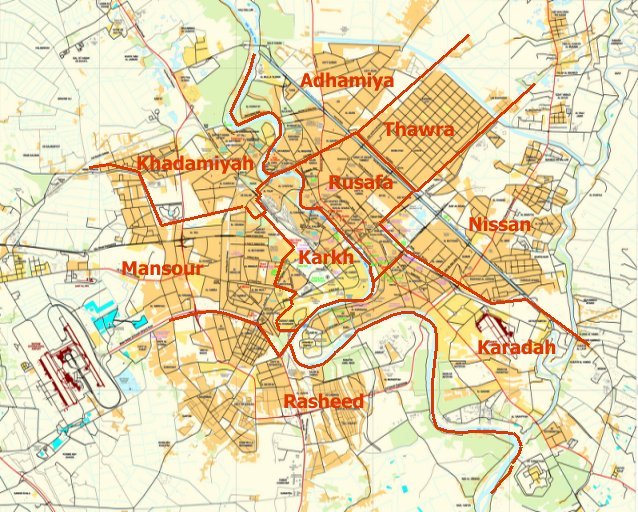
The fighting came as Iraq's government moved up a vehicle ban for Baghdad from 10 p.m. to 5 a.m. Wednesday. The official said the ban, which was imposed 15 hours earlier than expected, surprised residents who were headed to work and told by Iraqi security forces to return home. The ban is part of an effort, the official said, to curtail potential bomb attacks targeting the thousands of Shiite pilgrims who are trekking to a major religious shrine in the northwestern Baghdad neighborhood of Kadhimiya for an annual religious commemoration Thursday.
Labels: Amarah, EFPs, Iran, Lt. Col Chris Garver, Mahdi Army, militants, Quds Force, raid, Sadr City
Friday, June 01, 2007
U.S. military seeking talks with al-Sadr
"He has a grass-roots movement that he's always going to have; we have to recognize that," Lt. Gen. Raymond Odierno, the second-ranking American commander in Iraq, told McClatchy Newspapers in an interview this week. "We're trying to talk to him. We want to talk to him." At the same time, however, U.S. and British forces have stepped up operations against the Mahdi Army in the sprawling Shiite slum of Sadr City in Baghdad and the southern port city of Basra.
Odierno told McClatchy that he wasn't sure whether Sadr's resurfacing in the Shiite holy city of Kufa last week was a good or bad thing for American forces in Iraq. While the cleric was away, his organization became more fractionalized, and part of the reason for his return, Odierno said, was "the consolidation of his powers." This could mean cleaning up rogue elements of the Mahdi Army, he said. "I'm mixed; I'm not sure yet," Odierno said referring to the effect of Sadr's return on security. "I'll take a wait-and-see attitude."
Sadr largely inherited his constituency from the millions of impoverished Shiites in Iraq who are loyal to his father, the popular Mohammed Sadiq al-Sadr, whom Saddam Hussein's regime assassinated. While Muqtada al-Sadr's religious standing is shaky, his family name draws deep loyalty. Shiites credit his militia with protecting them from Sunni insurgents who target Shiite neighborhoods. But the Mahdi Army also is blamed for kidnapping and killing Sunni men.
Salah al-Obaidi, a senior Sadr aide, acknowledged that the U.S. has approached the cleric's supporters multiple times about talks with Sadr. He said the requests had been rebuffed. "This will be a betrayal for the country," Obaidi said. "Any cooperation with the occupier is forbidden."
If the Iranian-backed Sadr, who's cast himself as a national resistance figure, began talking with the U.S. he'd risk losing support in the Iraqi street. During his absence he issued statements with fiery anti-American rhetoric while calling on followers not to attack. He called for a demonstration in Najaf in April against the American presence in Iraq, and legislators from his movement are circulating a bill in parliament to set a timetable for a U.S. withdrawal.
Sadr's supporters have "no problem" if members of the U.S. Congress were to meet with Sadrists in parliament, Obaidi said. "We respect the American people. We have no problem with them. We know not all of them accept the occupation."
The U.S. military has begun to draw distinctions between Sadr and what it calls "rogue" Mahdi Army members. It most often links the men whom it detains and kills to Iran through their weapon of choice: explosively formed projectiles, which are armor-piercing bombs that the American military claims come from Iran. Separating Sadr from the Mahdi Army commanders whom the American military is targeting could set the stage for U.S.-Sadr talks.
Labels: Basra, EFPs, Lt. Gen. Ray Odierno, Moqtada Al-Sadr, Sadr City, U.S. military
Saturday, May 12, 2007
Round-up of violence across Iraq
Baghdad
- Around 8 am , a suicide truck (Hino) driver led his car near a petrol station at Al-Meda'en, but the police commandos of the checkpoint in the neighborhood exploded the truck with the suicide driver inside who was killed at the explosion . No casualties recorded.
- Around 9 am, a roadside bomb exploded at Amiriya neighborhood without casualties.
- Around 11 am, a roadside bomb exploded when an American patrol passed by at the commercial street in Saidiya neighborhood without any casualties.
- Around 12 pm, a roadside bomb exploded at Baladiyat neighborhood when an American patrol passed in the area without casualties recorded. Salahuddin
- Early morning, gunmen bombed Asad's brother's house , the chairman of Samara municipality , after forcing the whole family to evacuate the house which is in Hay Al-Sikak south Samara (North of Baghdad). Basrah
- At dawn, a roadside bomb exploded when a British vehicle passed through Timimiya neighborhood(near Ashar) in the downtown of Basra ( south of Iraq) having some damage to the vehicle with no casualties recorded.
- Around this day, a British patrol had found a trench filled with ammunitions north of Zubair (35 km west of Basra) including 20 mortar bombs ,30 cannon bombs and two grenades .
* denotes new or updated item.
* NEAR MAHMUDIYA - Insurgents attacked a team of seven U.S. soldiers and an Iraqi army interpreter south of Baghdad, killing five soldiers while three others were missing, the U.S. military said in a statement.
* NEAR LATIFIYA - Three bodies were found shot dead near the small town of Latifiya, 40 km (25 miles) south of Baghdad, police said.
BAGHDAD - U.S. forces detained three suspects and destroyed a car bomb during a raid in the Shi'ite stronghold of Sadr City aimed at breaking a network suspected of procuring sophisticated explosives from Iran, the U.S. military said. It said the three were believed to have ties to a secret network that smuggles so-called EFPs and sends Iraqi militants for training to Iran.
* DIWANIYA - Gunmen killed a policeman in front of his home in the southern Iraqi city of Diwaniya, police said.
* FALLUJA - Gunmen killed a man who was an army colonel under Saddam Hussein in Falluja, west of Baghdad, police said.
Labels: Diwaniya, EFPs, Fallujah, gunmen, insurgents, Latifiyah, Mahmudiya, Sadr City
Thursday, May 10, 2007
U.S. military blames Iran for arming Sunni insurgents
"It's not all Sunni insurgents but rather we do know that there is a direct awareness by Iranian intelligence officials that they are providing support to some select Sunni insurgent elements," Caldwell told reporters. On Sunday, a U.S. general also said powerful armor-penetrating roadside bombs believed to be of Iranian origin were turning up in the hands of Sunni insurgents south of Baghdad.
Maj. Gen. Rick Lynch, commander of the Army's Task Force Marne, said the presence of "explosively formed penetrators," or EFPs, in Sunni weapons caches suggests some degree of Iranian influence among Sunni as well as Shiite extremists. But Lynch, whose command covers the southern rim of Baghdad and mostly Shiite areas to the south, said it was unclear whether the Iranians were supplying the weapons directly or whether the Sunnis were buying them on the black market.
Caldwell said the weapons issue was still being investigated, but "we do know that they're providing support in terms of financial support at this point." U.S. military officials have been saying for months that the Iranians were supplying EFPs to Shiite militias, despite strong denials by Tehran. Some Sunni insurgent groups are strongly anti-Iranian, blaming the Shiite-dominated Iraqi government for helping Iran expand its influence here.
Labels: EFPs, explosively formed penetrators, Iran, Maj. Gen. Rick Lynch, Major General William Caldwell, Sunni insurgents
Sunday, May 06, 2007
U.S. forces arrest Shiites accused of smuggling bombs from Iran
A U.S. military statement did not identify them as Mahdi Army members but said they were part of a "secret cell" that smuggles powerful bombs known as "explosively formed penetrators," or EFPs, from Iran and sends Shiite fighters from Iraq for training in Iran. U.S. and some Iraqi officials suspect the Iranians may be stoking a growing power struggle among Shiite factions and political parties - despite the Tehran government's insistence that it is working to help bring stability to its neighbor Iraq.
Clashes broke out Friday in Baghdad and in the Shiite shrine city of Najaf when police said Mahdi Army gunmen attacked offices of the Supreme Council for the Islamic Republic in Iraq, or SCIRI, a key member of the U.S.-backed Iraqi government but with strong ties to Tehran. Four people were injured in Najaf, 100 miles south of Baghdad, prompting local authorities to impose a curfew. The clash in Baghdad occurred when Mahdi gunmen fired rocket-propelled grenades and automatic weapons at a SCIRI office in the Habibiya district, injuring two guards, police said.
In Diwaniyah, a Shiite city 80 miles south of Baghdad, suspected Shiite gunmen attacked a joint U.S.-Iraqi patrol late Friday, killing one Iraqi soldier and wounding four civilians, police said. It was unclear what provoked the attacks, but they appeared to be part of an escalating power struggle brewing throughout the dominant Shiite community, which intensified after Britain announced plans to draw down its troops in the mostly Shiite south.
Shiite parties are trying to oust the Shiite governor of oil-rich Basra province, and violence has broken out recently in Kut and other Shiite cities. Some Mahdi Army members in Sadr City have said a pro-Iranian faction has been sending fighters to Iran for training. The members spoke on condition of anonymity because of fears for their own safety.
In another sign of unrest, hundreds of angry Shiites poured onto the streets of Najaf and Basra to protest what they considered insults by Al-Jazeera television against Iraq's most revered Shiite cleric, Grand Ayatollah Ali al-Sistani.
The protesters were angered by an Al-Jazeera talk show this week in which the host, Egyptian Ahmed Mansour, questioned al-Sistani's leadership credentials and whether he authored his own religious edicts.
Unrest in Shiite areas adds a new and dangerous dimension to the challenge facing U.S. forces as they try to restore order in the capital during the 11-week Baghdad security operation.
Attacks using EFPs, the signature weapon of Shiite militias, are on the rise. The increase in attacks using EFPs, which the U.S. says come from Iran, suggest that the Shiite extremists may be shifting tactics, reducing their slaughter of Sunni civilians but focusing more on U.S. and Iraqi forces.
Labels: EFPs, explosively formed projectiles, Iran, Mahdi Army, Najaf, Sadr City, SCIRI, Shiite militants, Sistani, U.S. forces
Wednesday, April 11, 2007
U.S. - military - Iran has been training Iraqi fighters in the use of EFPs
"We know that they are being in fact manufactured and smuggled into this country, and we know that training does go on in Iran for people to learn how to assemble them and how to employ them," Maj. Gen. William Caldwell said at a weekly briefing. "We know that training has gone on as recently as this past month from detainees' debriefs." In January, U.S. officials said at least 170 U.S. soldiers had been killed by EFPs. Caldwell also said the U.S. military had evidence that Iranian intelligence agents were active in Iraq in funding, training and arming Shiite militia fighters.
"We also know that training still is being conducted in Iran for insurgent elements from Iraq. We know that as recent as last week from debriefing personnel," he said. "The do receive training on how to assemble and employ EFPs," Caldwell said, adding that fighters also were trained in how to carry out complex attacks that used explosives followed by assaults with rocket-propelled grenades and small arms.
"There has been training on specialized weapons that are used here in Iraq. And then we do know they receive also training on general tactics in terms of how to take and employ and work what we call a more complex kind of attack where we see multiple types of engagements being used from an explosion to small arms fire to being done in multiple places," Caldwell said.
The general would not say specifically which arm of the Iranian government was doing the training but called the trainers "surrogates" of Iran's intelligence agency. Caldwell opened the briefing by showing photographs of what he said were Iranian-made mortar rounds, RPG rounds and rockets that were found in Iraq.
Labels: complex attack, EFPs, explosively formed projectiles, Iran, Maj. Gen. William Caldwell, Shia militias, training
Friday, March 30, 2007
U.S. forces claim to have captured EFP importer
The suspect was believed to be involved with several violent extremist groups responsible for attacks against Iraqis and U.S.-led forces, according to the statement. It did not name the suspect or the groups, but the U.S. military has asserted in recent months that Iran's Revolutionary Guards and Quds force have been providing Shiite militias with weapons and parts for sophisticated armor-piercing bombs. The EFPs are responsible for the deaths of more than 170 American and coalition soldiers since mid-2004, the military says.
Residents claimed the man arrested was a 58-year-old father of six children who was unemployed. They said the raid began at 2 a.m. and targeted four houses, and the American and Iraqi troops seized money, a computer and several cell phones.
Labels: EFPs, explosively formed projectiles, Iran, Quds Force, Shia militias
Thursday, March 01, 2007
U.S. troop casualties highest in Sunni areas
While U.S. military officials have held briefings to publicize their concerns about the potent bombs known as explosively formed projectiles (EFPs) or penetrators, casualty reports suggest that such weapons in the hands of Shiite militias are responsible for a relatively small number of American deaths.
U.S. officials have said that attacks with such weapons increased 150 percent in the past year. But a review of bombings by location shows that less than 10 percent of attacks that killed at least two American service members in the past 14 months were in areas where Shiite militias are dominant.
Those reports show that fewer than half the bomb attacks on heavily armored U.S. vehicles such as Abrams tanks and Bradley Fighting Vehicles were in areas where Shiite militias dominate. While it's difficult to know which armed group planted a bomb, analysts say the casualty numbers show that U.S. officials are exaggerating the importance of EFPs, which military officials say have been used only by Shiites.
"There were relatively few American deaths from explosively formed penetrators until recently, but you can say the same thing about attacks on helicopters or chlorine attacks," said Loren Thompson, a defense analyst with the Lexington Institute, a policy research group in Arlington, Va. "The fact of the matter is that the insurgents, both Sunni and Shiite, are becoming a lot more sophisticated in their tactics. Explosively formed penetrators are only one part of that, and they are not a particularly important part."
Pentagon officials say the issue is important because the Iranian government appears to be involved. "I think the issue is not whether or not materials and supplies are coming from Iran - they are - but rather how far up the Iranian leadership is involved," said Bryan Whitman, the Pentagon's chief spokesman.
U.S. military officials accuse Iran of supplying Shiite militants with EFPs, which fire a molten slug of metal that can punch through the thickest American armor, including tanks and other vehicles designed to withstand heavy blasts. The officials say the bombs have killed at least 170 U.S. and allied service members and wounded more than 620 since they were first discovered on the battlefield in mid-2004. "Explosively formed penetrators are not some exclusive franchise for the Iranians," Thompson said. "They are fairly common around the world."
Explosively formed penetrators are also known as shaped charges. The warheads were developed after World War I to penetrate tanks and other armored vehicles. Rocket-propelled grenades and antitank missiles are conventional examples. Shaped charges also are used in the oil and gas industry.
John Pike, the executive director of GlobalSecurity.org, an online clearinghouse for military, intelligence and homeland-security information, said that while designing a shaped charge would require expertise, fabricating the devices was simpler, requiring only skill in using metal-machining tools. Asked who'd have the expertise to manufacture a shaped charge, Pike cited "people who had worked with explosives in the petroleum industry." In Iraq, he said, "there would be a fair number of those."
U.S. military officials say EFPs are more dangerous than other types of roadside bombs because they typically produce more casualties. American casualty reports show that the deadliest roadside-bomb attacks of the war have occurred in predominantly Sunni areas or areas with mixed ethnic and religious populations.
Labels: EFPs, explosively formed projectiles, Iran, Shiite militias, Sunni insurgents
Monday, February 26, 2007
Large weapons cache seized
The U.S. military has said elite Iranian corps are funneling EFPs to Shiite militias in Iraq for use against American troops. The area where the cache was found is dominated by Sunni insurgents but also includes pockets of Shiites. An informant tipped off Iraqi police to the weapons stash Saturday, the military said in a statement to the AP. It was discovered near Baqouba, the provincial capital of Diyala province, about 35 miles northeast of Baghdad.
Along with the EFPs, the weapons cache contained more than two dozen mortars and 15 rockets. There were enough metal disks to make 130 EFPs, the military said. The origin of the weapons seized Saturday was being investigated, said Lt. Col. Michael Donnelly, spokesman for Multinational Division-North. A statement from the U.S. military Monday said that 63 weapons caches have been discovered during major U.S.-Iraqi security sweeps around Baghdad that began Feb. 14. The arsenals included anti-aircraft weapons, armor-piercing bullets, bomb components and mortar rounds, the statement said.
Labels: Baqouba, EFPs, Iran, weapons cache