Monday, May 07, 2007
Dulaimi says Sunni MPs marginalized
Politics
(AP) - The leader of parliament's largest Sunni Arab bloc complained Sunday that Sunni members of the Shiite-led government were marginalized and given no real authority, charging that an 11-week-old U.S.-backed security push in Baghdad was victimizing the city's Sunni residents. A visibly angry Adnan al-Dulaimi, leader of the Iraqi Accordance Front, said he had nothing to fear from calls by Shiite lawmakers for lifting his parliamentary immunity to face questioning on alleged involvement in sectarian cleansing in Baghdad and inciting sectarian strife.
Al-Dulaimi, who is thought to be nearly 80, is one of the most outspoken critics of Shiite Prime Minister Nouri al-Maliki's government. He recently has returned from neighboring Jordan where he underwent surgery for an unspecified ailment, according to his ally and fellow Sunni lawmaker Salim Abdullah. "Our participation in this so-called national unity government is weak and marginalized and our ministers have no authority to serve Iraq or its people," he said.
He also complained that Shiite militias and death squads, both blamed for targeting Sunni Arabs in kidnappings and execution-style killings, have resumed their activity after staying out of sight in the initial stages of the joint U.S.-Iraqi security plan. The number of bodies thought to belong to victims of sectarian killings fell dramatically in the early stages of the security push, which began Feb. 14. The numbers began rising again after hitting a low of seven, although they remain below the average of 50 per day being reported before the plan.
U.S. military officials have warned that a series of bombings that have killed hundreds of Shiites in recent weeks were an attempt by al-Qaida-linked Sunni insurgents to provoke renewed violence by the militias thus igniting a full-scale civil war.
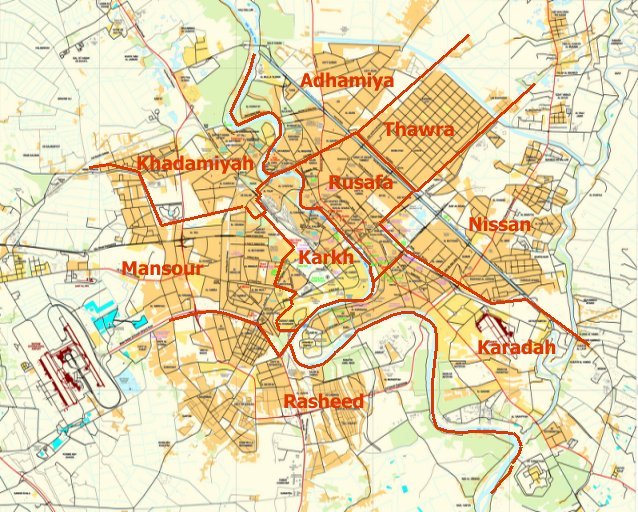
Al-Dulaimi, whose bloc has 44 of parliament's 275 seats, identified two areas of western Baghdad, the Sunni dominated Amil and the mixed Baiyaa, to be witnessing a resumption of sectarian cleansing by Shiite militiamen. Baiyaa was hit by a suicide bombing that killed at least 30 on Sunday.
Ali al-Dabbagh, al-Maliki's chief spokesman, said the government was aware of the allegations of sectarian cleansing in Baiyaa, blaming it on what he called criminal gangs that want to create the impression of a city torn by religious strife.
"We wish the government every success with the security plan but not at the expense of the Sunnis," al-Dulaimi's said. However, he added that his bloc had no intention to pull out from the political process "which we joined to help create an Iraq free of sectarian domination."
Al-Dulaimi, who is thought to be nearly 80, is one of the most outspoken critics of Shiite Prime Minister Nouri al-Maliki's government. He recently has returned from neighboring Jordan where he underwent surgery for an unspecified ailment, according to his ally and fellow Sunni lawmaker Salim Abdullah. "Our participation in this so-called national unity government is weak and marginalized and our ministers have no authority to serve Iraq or its people," he said.
He also complained that Shiite militias and death squads, both blamed for targeting Sunni Arabs in kidnappings and execution-style killings, have resumed their activity after staying out of sight in the initial stages of the joint U.S.-Iraqi security plan. The number of bodies thought to belong to victims of sectarian killings fell dramatically in the early stages of the security push, which began Feb. 14. The numbers began rising again after hitting a low of seven, although they remain below the average of 50 per day being reported before the plan.
U.S. military officials have warned that a series of bombings that have killed hundreds of Shiites in recent weeks were an attempt by al-Qaida-linked Sunni insurgents to provoke renewed violence by the militias thus igniting a full-scale civil war.
Al-Dulaimi, whose bloc has 44 of parliament's 275 seats, identified two areas of western Baghdad, the Sunni dominated Amil and the mixed Baiyaa, to be witnessing a resumption of sectarian cleansing by Shiite militiamen. Baiyaa was hit by a suicide bombing that killed at least 30 on Sunday.
Ali al-Dabbagh, al-Maliki's chief spokesman, said the government was aware of the allegations of sectarian cleansing in Baiyaa, blaming it on what he called criminal gangs that want to create the impression of a city torn by religious strife.
"We wish the government every success with the security plan but not at the expense of the Sunnis," al-Dulaimi's said. However, he added that his bloc had no intention to pull out from the political process "which we joined to help create an Iraq free of sectarian domination."
Labels: Adnan Dulaimi, Amil, Baiyaa, Iraqi Accordance Front, Iraqi government, politics, Shiite militias