Friday, May 11, 2007
Violence flares in mixed district in Baghdad
Security
(AP) - Three months into Baghdad's security crackdown, sectarian violence is back on the rise, this time, in a mixed neighborhood that had previously been relatively calm while Sunni-Shiite strife tore apart other parts of the Iraqi capital. Baiyaa, a middle-class district in western Baghdad, has started to display the fears and flight that have already carved up much of the city, which has become a patchwork of separate Sunni and Shiite enclaves.
Snipers have begun appearing in parts of Baiyaa. Many stores have closed, and both Shiite and Sunni families have fled the area in recent weeks. Last Sunday, a car bomb devastated a food market, killing 30 people. The rumblings in Baiyaa have ominous implications for the U.S.-led security plan. They show that previously calm areas are still vulnerable to violence despite the flood of U.S.-Iraqi forces onto Baghdad's streets since February.
Snipers have begun appearing in parts of Baiyaa. Many stores have closed, and both Shiite and Sunni families have fled the area in recent weeks. Last Sunday, a car bomb devastated a food market, killing 30 people. The rumblings in Baiyaa have ominous implications for the U.S.-led security plan. They show that previously calm areas are still vulnerable to violence despite the flood of U.S.-Iraqi forces onto Baghdad's streets since February.
In the early days of the security sweeps, American troops came into Baiyaa in large numbers and patrolled on foot, according to residents. But U.S. forces significantly scaled back by March and ventured only occasionally into Baiyaa, which is on the road leading to Baghdad's international airport. Security was left mostly in the hands of the Iraqi military, dominated by the country's Shiite majority.
The precise reasons for Baiyaa's troubles are not clear, but accusations are thick on both sides. Sunni politicians have accused the Shiite-dominated government of allowing Shiite militias to operate in Baiyaa and elsewhere. Members of three Shiite families that fled Baiyaa a few days ago claimed Sunni extremists had threatened them. Those residents of the neighborhood spoke by telephone on condition of anonymity because they fear reprisals by armed gangs.
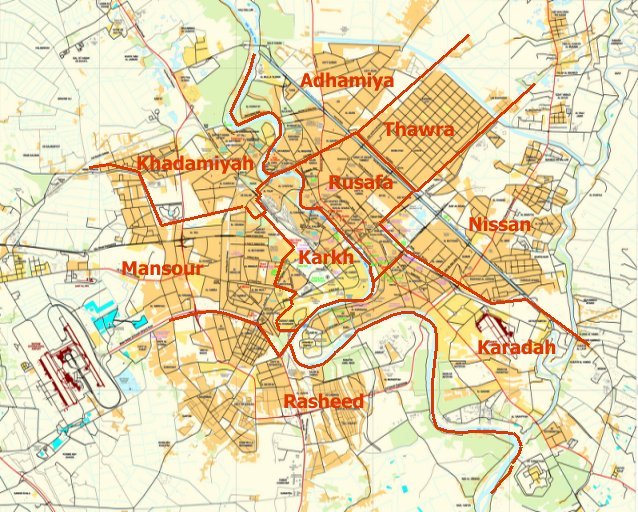
U.S. military spokesman Lt. Col. Scott Bleichwehl said security operations have been stepped up in the larger district that includes Baiyaa. The military has divided Baghdad into 10 districts, each with a permanent U.S.-Iraqi garrison, called a joint security station. The station for the Baiyaa district is in another neighborhood. Baiyaa, however, seemed ripe for trouble. Its dusty streets and low-slung houses borders areas where the Mahdi Army of anti-American cleric Muqtada al-Sadr holds sway.
The precise reasons for Baiyaa's troubles are not clear, but accusations are thick on both sides. Sunni politicians have accused the Shiite-dominated government of allowing Shiite militias to operate in Baiyaa and elsewhere. Members of three Shiite families that fled Baiyaa a few days ago claimed Sunni extremists had threatened them. Those residents of the neighborhood spoke by telephone on condition of anonymity because they fear reprisals by armed gangs.
U.S. military spokesman Lt. Col. Scott Bleichwehl said security operations have been stepped up in the larger district that includes Baiyaa. The military has divided Baghdad into 10 districts, each with a permanent U.S.-Iraqi garrison, called a joint security station. The station for the Baiyaa district is in another neighborhood. Baiyaa, however, seemed ripe for trouble. Its dusty streets and low-slung houses borders areas where the Mahdi Army of anti-American cleric Muqtada al-Sadr holds sway.
Baiyaa has a Shiite majority but is also the main commercial center of the Sunni-dominated part of Baghdad on the west bank of the Tigris River. Baiyaa's Sunnis are mostly drawn from the Janabi clan dominant in areas south of Baghdad known as the "triangle of death" because of insurgent activity and attacks against Shiites. Baiyaa's Shiites have their roots in southern Iraq.
COMMENT: The word on the street should not be ignored as simple hearsay, even though much of it is obviously false. It helps shape Iraqi opinions and perceptions. These are the latest rumours regarding Bayaa:
In the recent past, Al Rahman Mosque in Bayaa was well-known for harboring Wahabi fighters. In the past few weeks, the rumor is that these Wahabists opened fire on a US patrol that was passing near the mosque. However, the US forces thought that Mahdi Army members opened fire on them and they then fired and called in air support on Mahdi Army members who were at a nearby Hussainiya (Shiite religious complex). The US air support strikes killed many Mahdi Army members. In revenge, Mahdi Army members from Ali Al Bayaa Mosque destroyed Al Rahman Mosque. In the past week, since the clash with US forces, Mahdi Army members have taken over Al Rahman Mosque in Bayaa and changed its name to Imam Al Askari Mosque. COMMENT ENDS.
Labels: Baiyaa, Bayaa, Janabi clan, Moqtada Al-Sadr, sectarian violence, Shiite militias, Sunni extremists


Monday, May 07, 2007
Dulaimi says Sunni MPs marginalized
Politics
(AP) - The leader of parliament's largest Sunni Arab bloc complained Sunday that Sunni members of the Shiite-led government were marginalized and given no real authority, charging that an 11-week-old U.S.-backed security push in Baghdad was victimizing the city's Sunni residents. A visibly angry Adnan al-Dulaimi, leader of the Iraqi Accordance Front, said he had nothing to fear from calls by Shiite lawmakers for lifting his parliamentary immunity to face questioning on alleged involvement in sectarian cleansing in Baghdad and inciting sectarian strife.
Al-Dulaimi, who is thought to be nearly 80, is one of the most outspoken critics of Shiite Prime Minister Nouri al-Maliki's government. He recently has returned from neighboring Jordan where he underwent surgery for an unspecified ailment, according to his ally and fellow Sunni lawmaker Salim Abdullah. "Our participation in this so-called national unity government is weak and marginalized and our ministers have no authority to serve Iraq or its people," he said.
He also complained that Shiite militias and death squads, both blamed for targeting Sunni Arabs in kidnappings and execution-style killings, have resumed their activity after staying out of sight in the initial stages of the joint U.S.-Iraqi security plan. The number of bodies thought to belong to victims of sectarian killings fell dramatically in the early stages of the security push, which began Feb. 14. The numbers began rising again after hitting a low of seven, although they remain below the average of 50 per day being reported before the plan.
U.S. military officials have warned that a series of bombings that have killed hundreds of Shiites in recent weeks were an attempt by al-Qaida-linked Sunni insurgents to provoke renewed violence by the militias thus igniting a full-scale civil war.
Al-Dulaimi, whose bloc has 44 of parliament's 275 seats, identified two areas of western Baghdad, the Sunni dominated Amil and the mixed Baiyaa, to be witnessing a resumption of sectarian cleansing by Shiite militiamen. Baiyaa was hit by a suicide bombing that killed at least 30 on Sunday.
Ali al-Dabbagh, al-Maliki's chief spokesman, said the government was aware of the allegations of sectarian cleansing in Baiyaa, blaming it on what he called criminal gangs that want to create the impression of a city torn by religious strife.
"We wish the government every success with the security plan but not at the expense of the Sunnis," al-Dulaimi's said. However, he added that his bloc had no intention to pull out from the political process "which we joined to help create an Iraq free of sectarian domination."
Al-Dulaimi, who is thought to be nearly 80, is one of the most outspoken critics of Shiite Prime Minister Nouri al-Maliki's government. He recently has returned from neighboring Jordan where he underwent surgery for an unspecified ailment, according to his ally and fellow Sunni lawmaker Salim Abdullah. "Our participation in this so-called national unity government is weak and marginalized and our ministers have no authority to serve Iraq or its people," he said.
He also complained that Shiite militias and death squads, both blamed for targeting Sunni Arabs in kidnappings and execution-style killings, have resumed their activity after staying out of sight in the initial stages of the joint U.S.-Iraqi security plan. The number of bodies thought to belong to victims of sectarian killings fell dramatically in the early stages of the security push, which began Feb. 14. The numbers began rising again after hitting a low of seven, although they remain below the average of 50 per day being reported before the plan.
U.S. military officials have warned that a series of bombings that have killed hundreds of Shiites in recent weeks were an attempt by al-Qaida-linked Sunni insurgents to provoke renewed violence by the militias thus igniting a full-scale civil war.
Al-Dulaimi, whose bloc has 44 of parliament's 275 seats, identified two areas of western Baghdad, the Sunni dominated Amil and the mixed Baiyaa, to be witnessing a resumption of sectarian cleansing by Shiite militiamen. Baiyaa was hit by a suicide bombing that killed at least 30 on Sunday.
Ali al-Dabbagh, al-Maliki's chief spokesman, said the government was aware of the allegations of sectarian cleansing in Baiyaa, blaming it on what he called criminal gangs that want to create the impression of a city torn by religious strife.
"We wish the government every success with the security plan but not at the expense of the Sunnis," al-Dulaimi's said. However, he added that his bloc had no intention to pull out from the political process "which we joined to help create an Iraq free of sectarian domination."
Labels: Adnan Dulaimi, Amil, Baiyaa, Iraqi Accordance Front, Iraqi government, politics, Shiite militias
Sunday, May 06, 2007
Car bomb kills 25 in Baghdad
Security
(AP) - A car bomb ripped through a commercial district in western Baghdad on Sunday, killing at least 25 people and wounding dozens in one of the deadliest attacks in the capital in recent days. The blast occurred about noon in the mixed Sunni-Shiite Baiyaa neighborhood, the scene of frequent sectarian violence including a bombing and mortar attack last week that killed seven people. The bombing Sunday came amid an 11-week-old crackdown by U.S.-led forces intended to bring stability to Baghdad.
No one immediately claimed responsibility for the attack, which was part of a wave of violence across Iraq on Sunday that killed at least 37 people. Meanwhile, U.S. and Iraqi troops continued their operations in the city, entering the Shiite neighborhood of Sadr City on an early morning raid and searching houses in the area, known as a hotbed of Shiite militant groups. Aircraft flew over the neighborhood during the raid and carried out airstrikes on four houses, reducing one to a pile of bricks and rubble, police and witnesses said. The occupants of the destroyed house had apparently fled before the raid. Several cars were also charred and badly damaged.
In other violence Sunday, insurgents exploded a car bomb outside a police station in the town of Samarra, about 60 miles north of Baghdad, killing two police and a bystander, police said. A few minutes later, militants in the town attacked a police checkpoint near the al-Askari shrine, killing another police officer, police said.
A gunbattle between unidentified gunmen and Iraqi forces in a market in the town of Baqouba 35 miles northeast of Baghdad killed two civilians dead, police said. In the town of Kut, 100 miles southeast of Baghdad, a roadside bomb outside a teacher's house killed three of his children, all of them under the age of 10, police said. The parents were not injured in the attack. Police also found the bullet-riddled bodies of three men, who were blindfolded, handcuffed and dumped in the Tigris River in the town of Suwayrah, 25 miles south of Baghdad.
No one immediately claimed responsibility for the attack, which was part of a wave of violence across Iraq on Sunday that killed at least 37 people. Meanwhile, U.S. and Iraqi troops continued their operations in the city, entering the Shiite neighborhood of Sadr City on an early morning raid and searching houses in the area, known as a hotbed of Shiite militant groups. Aircraft flew over the neighborhood during the raid and carried out airstrikes on four houses, reducing one to a pile of bricks and rubble, police and witnesses said. The occupants of the destroyed house had apparently fled before the raid. Several cars were also charred and badly damaged.
In other violence Sunday, insurgents exploded a car bomb outside a police station in the town of Samarra, about 60 miles north of Baghdad, killing two police and a bystander, police said. A few minutes later, militants in the town attacked a police checkpoint near the al-Askari shrine, killing another police officer, police said.
A gunbattle between unidentified gunmen and Iraqi forces in a market in the town of Baqouba 35 miles northeast of Baghdad killed two civilians dead, police said. In the town of Kut, 100 miles southeast of Baghdad, a roadside bomb outside a teacher's house killed three of his children, all of them under the age of 10, police said. The parents were not injured in the attack. Police also found the bullet-riddled bodies of three men, who were blindfolded, handcuffed and dumped in the Tigris River in the town of Suwayrah, 25 miles south of Baghdad.
Labels: Baghdad, Baiyaa, Baqouba, car bomb, Kut, Sadr City, Samarra