Tuesday, October 16, 2007
U.S., Iraqi officials debate Blackwater's expulsion from Iraq
US and Iraqi officials are negotiating Baghdad's demand that security company Blackwater USA be expelled from the country within six months, and American diplomats appear to be working on how to fill the security gap if the company is phased out. The talks about Blackwater's future in Iraq flow from recommendations in an Iraqi government report on the incident Sept. 16 when, Iraqi officials determined, Blackwater guards opened fire without provocation in Baghdad's Nisoor Square and killed 17 Iraqi citizens.
The Iraqi investigators issued five recommendations to the government of Prime Minister Nouri Al Maliki, which has since sent them to the US Embassy as demands for action. Point No. 2 in the report says: "The Iraqi government should demand that the United States stops using the services of Blackwater in Iraq within six months and replace it with a new, more disciplined organization that would be answerable to Iraqi laws." Sami Al Askari, a top aide to Al Maliki, said that point in the Iraqi list of demands was nonnegotiable.
"I believe the government has been clear. There have been attacks on the lives of Iraqi citizens on the part of that company (Blackwater). It must be expelled. The governmenthas given six months for its expulsion and it's left to the US Embassy to determine with Blackwater when to terminate the contract. The American administration must find another company," he told AP.
In talks between American diplomats and the Al Maliki government, Al Askari said, the US side was not "insisting on Blackwater staying." He was the only Iraqi or American official who would allow use of his name, others said information they gave was too sensitive. In an interview to be broadcast Monday on PBS, television presenter Charlie Rose asked Blackwater chief Erik Prince about the issue."We'll do what we're told and, you know, make the transition as smooth as possible," Prince said.
The Iraqi investigators issued five recommendations to the government of Prime Minister Nouri Al Maliki, which has since sent them to the US Embassy as demands for action. Point No. 2 in the report says: "The Iraqi government should demand that the United States stops using the services of Blackwater in Iraq within six months and replace it with a new, more disciplined organization that would be answerable to Iraqi laws." Sami Al Askari, a top aide to Al Maliki, said that point in the Iraqi list of demands was nonnegotiable.
"I believe the government has been clear. There have been attacks on the lives of Iraqi citizens on the part of that company (Blackwater). It must be expelled. The governmenthas given six months for its expulsion and it's left to the US Embassy to determine with Blackwater when to terminate the contract. The American administration must find another company," he told AP.
In talks between American diplomats and the Al Maliki government, Al Askari said, the US side was not "insisting on Blackwater staying." He was the only Iraqi or American official who would allow use of his name, others said information they gave was too sensitive. In an interview to be broadcast Monday on PBS, television presenter Charlie Rose asked Blackwater chief Erik Prince about the issue."We'll do what we're told and, you know, make the transition as smooth as possible," Prince said.
Labels: Blackwater, Iraq, Nisoor Square, private security contractors, Sami Al Askari, security


Wednesday, October 10, 2007
U.S., Iraqis probe civilian killings by private security company
Security
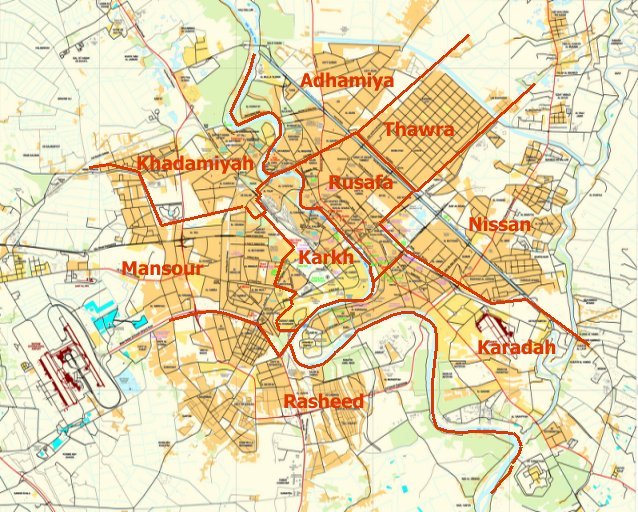
(AP) - U.S. and Iraqi officials Wednesday were investigating yet another shooting of Iraqi civilians by a heavily armed security firm linked to U.S. government-financed work in Iraq. The bodies of Marou Awanis and Geneva Jalal, the Christian women killed in the Tuesday shooting, were taken, meanwhile, to Baghdad's Armenian Orthodox Virgin Mary Church for funeral services. Iraqi authorities blamed the women's deaths on guards working for Unity Resources Group, a security company owned by Australian partners but with headquarters in Dubai in the United Arab Emirates.
Unity provides security services to RTI International, a group based in Research Triangle Park, N.C., that promotes governance projects in Iraq for the U.S. Agency for International Development. Both Unity and RTI acknowledged a security contract between them and both entities said RTI staffers were not present when the shooting occurred in Baghdad's Karradah district. A U.S. Embassy spokeswoman said RTI was under contract by USAID but was responsible for its own security.
Michael Priddin, chief operating officer of Unity, told The Associated Press on Wednesday the firm was working with Iraqi authorities "to find out the results of the shooting incident. ...we are trying to work out a true picture of what happened." In a statement issued Tuesday night, Priddin said, "We deeply regret this incident."
Iraqi government officials, police and witnesses said guards working for Unity fired on a white Oldsmobile as it approached their convoy Tuesday afternoon, killing the two women before speeding away from the latest bloodshed blamed on the deadly mix of heavily armed protection details on Baghdad's crowded streets.
The deaths of the women — including one who used the white sedan as an unofficial taxi to raise money for her family — came a day after the Iraqi government handed U.S. officials a report demanding hefty payments and the ouster from Iraq of embattled Blackwater USA for a chaotic shooting last month that left at least 17 civilians dead.
The Tuesday killings were certain to sharpen Iraqi government demands to curb the expanding array of security firms in Iraq watching over diplomats, aid groups and others. Accounts of the incident — from company statements, witnesses and others — suggested the Unity guards opened fire as the car failed to heed warnings to stop and drifted closer to the convoy near a Unity facility in Karrahah.
Four armored SUVs — three white and one gray — were about 100 yards from a main intersection in the Shiite-controlled district at about 1:40 p.m. As the car moved into the crossroads, the Unity guards threw a smoke bomb in an apparent bid to warn the driver not to come closer, said Riyadh Majid, an Iraqi policeman who saw the shooting. Two of the Unity guards then opened fire. The woman driving the car tried to stop, but was killed along with her passenger. Two of three people in the back seat were wounded.
Priddin's Tuesday statement offered a similar account: "The first information that we have is that our security team was approached at speed by a vehicle which failed to stop despite an escalation of warnings which included hand signals and a signal flare. Finally shots were fired at the vehicle and it stopped."
Iraqi police investigators said they collected 19 spent 5.56 mm shell casings, ammunition commonly used by U.S. and NATO forces and most Western security organizations. The pavement was stained with blood and covered with shattered glass from the car windows. Majid said the convoy raced away after the shooting. Iraqi police came to collect the bodies and tow the car to the local station.
A second policeman, who spoke on condition of anonymity because he feared retribution, said the guards were masked and wearing khaki uniforms. He said one of them left the vehicle and started to shoot at the car while another opened fire from the open back door of a separate SUV.
Iraqi anger has grown against the private security companies — nearly all based in the United States, Britian and other Western countries — as symbols of the lawlessness that has ravaged their country for more than four years.
Ali al-Dabbagh, Iraq's government spokesman, said: "Today's incident is part of a series of reckless actions by some security companies." Unity also has come under scrutiny before. In March 2006, the company issued an statement of sympathy after one of its guards was blamed for shooting a 72-year-old Iraqi-born Australian, Kays Juma, at a security checkpoint in Baghdad. Australian Foreign Minister Alexander Downer said Juma was killed because he was in a car that failed to stop. Unity said multi-national forces and Iraqi police also were present at the checkpoint at the time.
Unity provides armed guards and security training throughout Iraq. Its heavily armed teams are Special Forces veterans from Australia, the United States, New Zealand and Britain — as well as former law enforcement officers from those countries.
Unity provides security services to RTI International, a group based in Research Triangle Park, N.C., that promotes governance projects in Iraq for the U.S. Agency for International Development. Both Unity and RTI acknowledged a security contract between them and both entities said RTI staffers were not present when the shooting occurred in Baghdad's Karradah district. A U.S. Embassy spokeswoman said RTI was under contract by USAID but was responsible for its own security.
Michael Priddin, chief operating officer of Unity, told The Associated Press on Wednesday the firm was working with Iraqi authorities "to find out the results of the shooting incident. ...we are trying to work out a true picture of what happened." In a statement issued Tuesday night, Priddin said, "We deeply regret this incident."
Iraqi government officials, police and witnesses said guards working for Unity fired on a white Oldsmobile as it approached their convoy Tuesday afternoon, killing the two women before speeding away from the latest bloodshed blamed on the deadly mix of heavily armed protection details on Baghdad's crowded streets.
The deaths of the women — including one who used the white sedan as an unofficial taxi to raise money for her family — came a day after the Iraqi government handed U.S. officials a report demanding hefty payments and the ouster from Iraq of embattled Blackwater USA for a chaotic shooting last month that left at least 17 civilians dead.
The Tuesday killings were certain to sharpen Iraqi government demands to curb the expanding array of security firms in Iraq watching over diplomats, aid groups and others. Accounts of the incident — from company statements, witnesses and others — suggested the Unity guards opened fire as the car failed to heed warnings to stop and drifted closer to the convoy near a Unity facility in Karrahah.
Four armored SUVs — three white and one gray — were about 100 yards from a main intersection in the Shiite-controlled district at about 1:40 p.m. As the car moved into the crossroads, the Unity guards threw a smoke bomb in an apparent bid to warn the driver not to come closer, said Riyadh Majid, an Iraqi policeman who saw the shooting. Two of the Unity guards then opened fire. The woman driving the car tried to stop, but was killed along with her passenger. Two of three people in the back seat were wounded.
Priddin's Tuesday statement offered a similar account: "The first information that we have is that our security team was approached at speed by a vehicle which failed to stop despite an escalation of warnings which included hand signals and a signal flare. Finally shots were fired at the vehicle and it stopped."
Iraqi police investigators said they collected 19 spent 5.56 mm shell casings, ammunition commonly used by U.S. and NATO forces and most Western security organizations. The pavement was stained with blood and covered with shattered glass from the car windows. Majid said the convoy raced away after the shooting. Iraqi police came to collect the bodies and tow the car to the local station.
A second policeman, who spoke on condition of anonymity because he feared retribution, said the guards were masked and wearing khaki uniforms. He said one of them left the vehicle and started to shoot at the car while another opened fire from the open back door of a separate SUV.
Iraqi anger has grown against the private security companies — nearly all based in the United States, Britian and other Western countries — as symbols of the lawlessness that has ravaged their country for more than four years.
Ali al-Dabbagh, Iraq's government spokesman, said: "Today's incident is part of a series of reckless actions by some security companies." Unity also has come under scrutiny before. In March 2006, the company issued an statement of sympathy after one of its guards was blamed for shooting a 72-year-old Iraqi-born Australian, Kays Juma, at a security checkpoint in Baghdad. Australian Foreign Minister Alexander Downer said Juma was killed because he was in a car that failed to stop. Unity said multi-national forces and Iraqi police also were present at the checkpoint at the time.
Unity provides armed guards and security training throughout Iraq. Its heavily armed teams are Special Forces veterans from Australia, the United States, New Zealand and Britain — as well as former law enforcement officers from those countries.
Labels: Karradah, Michael Priddin, private security contractors, PSC, RTI, Unity Resources Group, URG
Monday, October 08, 2007
Iraqi government calls for Blackwater to hand over security agents
(AP) -- Iraqi authorities want the U.S. government to sever all contracts in Iraq with Blackwater USA within six months and pay $8 million in compensation to each of the families of 17 people killed when the firm's guards sprayed a traffic circle with heavy machine gun fire last month. The demands - part of an Iraqi government report examined by The Associated Press - also called on U.S. authorities to hand over the Blackwater security agents involved in the Sept. 16 shootings to face possible trial in Iraqi courts.
The tone of the Iraqi report appears to signal further strains between the government of Prime Minister Nouri al-Maliki and the White House over the deaths in Nisoor Square - which have prompted a series of U.S. and Iraqi probes and raised questions over the use of private security contractors to guard U.S. diplomats and other officials.
Al-Maliki ordered the investigation by his defense minister and other top security and police officials on Sept. 22. The findings - which were translated from Arabic by AP - mark the most definitive Iraqi positions and contentions about the shootings last month.
The report also highlights the differences in death tolls and accounts that have complicated efforts to piece together the chain of events as one Blackwater-protected convoy raced back toward Baghdad's Green Zone after a nearby bombing, while a second back-up team in four gun trucks sped into the square as a back-up team.
The Iraqi investigation - first outlined Thursday by The Associated Press - charges the four Blackwater vehicles called to the square began shooting without provocation. Blackwater contends its employees came under fire first. The government, at the conclusion of its investigation, said 17 Iraqis died. Initial reports put the toll at 11.
The United States has not made conclusive findings about the shooting, though there are multiple investigations under way and Congress has opened inquiries into the role of private security contractors. Last week, the FBI took over a State Department investigation, raising the prospect that it could be referred to the Justice Department for prosecution.
The Iraqi government report said its courts were to proper venue in which to bring charges. It said Blackwater's license to operate in Iraq expired on June 2, 2006, meaning it had no immunity from prosecution under Iraqi laws set down after the fall of Saddam Hussein in 2003. The government report also challenged the claim that a decree in June 2004 by then-Iraqi administrator L. Paul Bremer granted Blackwater immunity from legal action in incidents such as the one in Nisoor Square. The report said the Blackwater guards could be charged under a criminal code from 1969.
U.S. Embassy spokeswoman Mirembe Nantongo said the diplomatic mission would have no comment on the report. Iraq's Interior Ministry spokesman, Abdul-Karim Khalaf, said the document was in American hands.
The report found that Blackwater guards also had killed 21 Iraqi civilians and wounded 27 in previous shootings since it took over security for U.S. diplomats in Baghdad after the U.S. invasion. The Iraqi government did not say whether it would try to prosecute in those cases.
The State Department has counted 56 shooting incidents involving Blackwater guards in Iraq this year. All were being reviewed as part of the comprehensive inquiry ordered by Secretary of State Condoleezza Rice.
The tone of the Iraqi report appears to signal further strains between the government of Prime Minister Nouri al-Maliki and the White House over the deaths in Nisoor Square - which have prompted a series of U.S. and Iraqi probes and raised questions over the use of private security contractors to guard U.S. diplomats and other officials.
Al-Maliki ordered the investigation by his defense minister and other top security and police officials on Sept. 22. The findings - which were translated from Arabic by AP - mark the most definitive Iraqi positions and contentions about the shootings last month.
The report also highlights the differences in death tolls and accounts that have complicated efforts to piece together the chain of events as one Blackwater-protected convoy raced back toward Baghdad's Green Zone after a nearby bombing, while a second back-up team in four gun trucks sped into the square as a back-up team.
The Iraqi investigation - first outlined Thursday by The Associated Press - charges the four Blackwater vehicles called to the square began shooting without provocation. Blackwater contends its employees came under fire first. The government, at the conclusion of its investigation, said 17 Iraqis died. Initial reports put the toll at 11.
The United States has not made conclusive findings about the shooting, though there are multiple investigations under way and Congress has opened inquiries into the role of private security contractors. Last week, the FBI took over a State Department investigation, raising the prospect that it could be referred to the Justice Department for prosecution.
The Iraqi government report said its courts were to proper venue in which to bring charges. It said Blackwater's license to operate in Iraq expired on June 2, 2006, meaning it had no immunity from prosecution under Iraqi laws set down after the fall of Saddam Hussein in 2003. The government report also challenged the claim that a decree in June 2004 by then-Iraqi administrator L. Paul Bremer granted Blackwater immunity from legal action in incidents such as the one in Nisoor Square. The report said the Blackwater guards could be charged under a criminal code from 1969.
U.S. Embassy spokeswoman Mirembe Nantongo said the diplomatic mission would have no comment on the report. Iraq's Interior Ministry spokesman, Abdul-Karim Khalaf, said the document was in American hands.
The report found that Blackwater guards also had killed 21 Iraqi civilians and wounded 27 in previous shootings since it took over security for U.S. diplomats in Baghdad after the U.S. invasion. The Iraqi government did not say whether it would try to prosecute in those cases.
The State Department has counted 56 shooting incidents involving Blackwater guards in Iraq this year. All were being reviewed as part of the comprehensive inquiry ordered by Secretary of State Condoleezza Rice.
Labels: Abdul-Karim Khalaf, Blackwater, private security contractors
Thursday, September 20, 2007
Wounded Iraqis speak out about Blackwater incident
Security
(CNN) -- It was last Sunday in western Baghdad. Helicopters circled overhead while armed guards, privately hired by the U.S. government, were conducting an ordinary mission to protect U.S. State Department employees. But within minutes there was an explosion, a hail of gunfire, and bodies in the streets. The Iraqi Interior Ministry says at least 10 Iraqis were killed and 10 wounded. Another government spokesman, Ali al-Dabbagh, told CNN that at least 20 people died, with 35 wounded.
So what happened on that day on a square in the Mansour district of Baghdad? It depends on whom you ask.
Blackwater USA, the private security firm at the center of the controversy, says its employees simply defended themselves against armed attackers. Two men hospitalized with gunshot wounds disagree. They say the guards fired on people for no reason.
Hasan Jaber Salman lies in Yarmouk Hospital, bandages covering gunshot wounds in his back. Salman says he is a lawyer who was headed from a courthouse to the Ministry of Justice when he found his route blocked by four armored Blackwater SUVs. The roadblock soon caused a traffic snarl, so armed Blackwater guards began waving at the drivers, telling them to turn around and leave the area.
"So we turned back, and as we turned back they opened fire at all cars from behind," Salman said. "All my injuries, the bullets are in my back. "Within two minutes the security force arrived in planes -- part of the security company Blackwater. They started firing randomly at all citizens." Blackwater, in a statement issued after the incident, denied that gunfire came from aircraft. "The helicopters providing aerial support never fired weapons," it said.
The firm also said its employees "acted lawfully and appropriately in response to a hostile attack." But Salman claims the attack was unprovoked. "No one fired at them, they were not attacked by gunmen, they were not targeted by an explosion," he said. The firing continued until Salman's car crashed into a police checkpoint and flipped over, he said, adding that eight bullets struck his car and four struck him.
"My left shoulder is broken ... and my arm is broken. I had a surgery. ... They opened up my stomach," he said. "I swear to God no one did anything to them at all." The lawyer said he intends to sue Blackwater, which he already did in 2005 after his son was involved in a similar incident outside al-Muthana Air Base near Baghdad's international airport. That lawsuit has not yet been resolved, he said.
Laborer Abul-Raheem Amir said he was on his way to a job when the minibus he was in got caught in a traffic jam caused by an explosion. "A security company called Blackwater, they got out and kept on firing randomly at people, starting with the people walking or working the street -- even the traffic policeman, even the people who work in the area," Amir said.
"People at first thought we were safe in the minibus, but when they realized they were not, they started getting out and went to other places to save themselves," he recounted. "Unfortunately that did not work. As they got out, people were shot and killed." He said he tried to make a run for it after the driver and two women next to him on the minibus were shot. "I ran about 50 meters [about 55 yards] and then was shot, the first bullet. Still I kept running, but the second bullet dropped me to the ground. ... It broke my bones, and the third one made me start crawling."
Some people helped get him off the street and away from the carnage. The shooting lasted for about a half-hour, and there were some 30 bodies in the street, he said. "I remember people strewn on the streets, children, elderly, young men, elderly women. ... The street turned into the street of the dead, a graveyard," he said. "There was nothing I could do. Every man was for himself." Amir wonders what the Blackwater employees were thinking.
"Is this some kind of a show of force for them to flex their muscles?" he said. "Are they doing this to us, the victims, so they can advertise and promote their abilities through the Western media? ... Is their mission to protect one person by killing 10 unarmed people? And if they are protecting two people, then they shoot 100 unarmed people. ... Is this Vietnam? ... "Enough, enough," he said. "Enough of all that's happening. God's fury is coming. Enough of this. Enough."
So what happened on that day on a square in the Mansour district of Baghdad? It depends on whom you ask.
Blackwater USA, the private security firm at the center of the controversy, says its employees simply defended themselves against armed attackers. Two men hospitalized with gunshot wounds disagree. They say the guards fired on people for no reason.
Hasan Jaber Salman lies in Yarmouk Hospital, bandages covering gunshot wounds in his back. Salman says he is a lawyer who was headed from a courthouse to the Ministry of Justice when he found his route blocked by four armored Blackwater SUVs. The roadblock soon caused a traffic snarl, so armed Blackwater guards began waving at the drivers, telling them to turn around and leave the area.
"So we turned back, and as we turned back they opened fire at all cars from behind," Salman said. "All my injuries, the bullets are in my back. "Within two minutes the security force arrived in planes -- part of the security company Blackwater. They started firing randomly at all citizens." Blackwater, in a statement issued after the incident, denied that gunfire came from aircraft. "The helicopters providing aerial support never fired weapons," it said.
The firm also said its employees "acted lawfully and appropriately in response to a hostile attack." But Salman claims the attack was unprovoked. "No one fired at them, they were not attacked by gunmen, they were not targeted by an explosion," he said. The firing continued until Salman's car crashed into a police checkpoint and flipped over, he said, adding that eight bullets struck his car and four struck him.
"My left shoulder is broken ... and my arm is broken. I had a surgery. ... They opened up my stomach," he said. "I swear to God no one did anything to them at all." The lawyer said he intends to sue Blackwater, which he already did in 2005 after his son was involved in a similar incident outside al-Muthana Air Base near Baghdad's international airport. That lawsuit has not yet been resolved, he said.
Laborer Abul-Raheem Amir said he was on his way to a job when the minibus he was in got caught in a traffic jam caused by an explosion. "A security company called Blackwater, they got out and kept on firing randomly at people, starting with the people walking or working the street -- even the traffic policeman, even the people who work in the area," Amir said.
"People at first thought we were safe in the minibus, but when they realized they were not, they started getting out and went to other places to save themselves," he recounted. "Unfortunately that did not work. As they got out, people were shot and killed." He said he tried to make a run for it after the driver and two women next to him on the minibus were shot. "I ran about 50 meters [about 55 yards] and then was shot, the first bullet. Still I kept running, but the second bullet dropped me to the ground. ... It broke my bones, and the third one made me start crawling."
Some people helped get him off the street and away from the carnage. The shooting lasted for about a half-hour, and there were some 30 bodies in the street, he said. "I remember people strewn on the streets, children, elderly, young men, elderly women. ... The street turned into the street of the dead, a graveyard," he said. "There was nothing I could do. Every man was for himself." Amir wonders what the Blackwater employees were thinking.
"Is this some kind of a show of force for them to flex their muscles?" he said. "Are they doing this to us, the victims, so they can advertise and promote their abilities through the Western media? ... Is their mission to protect one person by killing 10 unarmed people? And if they are protecting two people, then they shoot 100 unarmed people. ... Is this Vietnam? ... "Enough, enough," he said. "Enough of all that's happening. God's fury is coming. Enough of this. Enough."
Labels: Blackwater, Iraq, private security contractors
Tuesday, September 18, 2007
CRS report on Private Security Contractors in Iraq
Congressional Research Service (CRS) - Private Security Contractors in Iraq:
Background, Legal Status, and Other Issues – Updated July 2007
Background, Legal Status, and Other Issues – Updated July 2007
Summary:
The United States is relying heavily on private firms to supply a wide variety of
services in Iraq, including security. From the information available in published
sources, this apparently is the first time that the United States has depended on
contractors to provide such extensive security in a hostile environment, although it
has previously contracted for more limited security services in Afghanistan, Bosnia,
and elsewhere. In Iraq, private firms known as Private Security Companies (PSC)
are currently providing security services such as the protection of individuals, nonmilitary
transport convoys, buildings and other economic infrastructure, as well as
the training of Iraqi police and military personnel.
services in Iraq, including security. From the information available in published
sources, this apparently is the first time that the United States has depended on
contractors to provide such extensive security in a hostile environment, although it
has previously contracted for more limited security services in Afghanistan, Bosnia,
and elsewhere. In Iraq, private firms known as Private Security Companies (PSC)
are currently providing security services such as the protection of individuals, nonmilitary
transport convoys, buildings and other economic infrastructure, as well as
the training of Iraqi police and military personnel.
Legal Status and Authorities
Contractors to the coalition forces in Iraq operate under three levels of legal
authority: (1) the international order of the laws and usages of war and resolutions
of the United Nations Security Council; (2) U.S. law; and (3) Iraqi law, including
orders of the CPA (CPA Order number 17) that have not been superceded. Under the authority of
international law, contractors working with the military are civilian non-combatants
whose conduct may be attributable to the United States.44 Iraqi courts do not have
jurisdiction to prosecute them for conduct related to their contractual responsibilities
without the permission of the Sending State.45 Some contractors, particularly U.S.
nationals, may be prosecuted in U.S. federal courts or military courts under certain
circumstances.
Contractors to the coalition forces in Iraq operate under three levels of legal
authority: (1) the international order of the laws and usages of war and resolutions
of the United Nations Security Council; (2) U.S. law; and (3) Iraqi law, including
orders of the CPA (CPA Order number 17) that have not been superceded. Under the authority of
international law, contractors working with the military are civilian non-combatants
whose conduct may be attributable to the United States.44 Iraqi courts do not have
jurisdiction to prosecute them for conduct related to their contractual responsibilities
without the permission of the Sending State.45 Some contractors, particularly U.S.
nationals, may be prosecuted in U.S. federal courts or military courts under certain
circumstances.
Blackwater said its guards reacted "lawfully and appropriately" to a hostile attack. It said late on Monday it had received no official notice from Iraq's Interior Ministry.
U.S. officials in Baghdad have yet to clarify the legal status of foreign security contractors in Iraq, including whether they could be prosecuted by Iraqi authorities.
Many Iraqis see the contractors, who have worked in Iraq since the U.S.-led invasion to topple Saddam Hussein in 2003, as private armies that have acted for too long with impunity. "These cases have happened more than once and we can't keep silent in the face of them," Interior Minister Jawad al-Bolani said on Monday.
Ministry spokesman Brigadier-General Abdul-Karim Khalaf said Iraq did have the right to take action if the Blackwater force had fired on civilians. "Definitely we have the right. If they committed this act this should be tried," he said.
U.S. officials in Baghdad have yet to clarify the legal status of foreign security contractors in Iraq, including whether they could be prosecuted by Iraqi authorities.
Many Iraqis see the contractors, who have worked in Iraq since the U.S.-led invasion to topple Saddam Hussein in 2003, as private armies that have acted for too long with impunity. "These cases have happened more than once and we can't keep silent in the face of them," Interior Minister Jawad al-Bolani said on Monday.
Ministry spokesman Brigadier-General Abdul-Karim Khalaf said Iraq did have the right to take action if the Blackwater force had fired on civilians. "Definitely we have the right. If they committed this act this should be tried," he said.
Labels: Blackwater, Congressional Research Service, CPA order 17, CRS, Iraq, private security contractors
Saturday, May 05, 2007
Security companies challenge army over $475 mn contract
Business, Contracts
(Washington Post) - Two private security contractors have lodged formal protests against the Army, claiming they have been unfairly excluded from competing for one of the largest security jobs in Iraq, according to government documents and sources familiar with the matter.
The contract, potentially worth $475 million, is for providing intelligence services to the Army and wide-ranging security for the Army Corps of Engineers during reconstruction work in Iraq. It will replace another agreement that was to expire by month's end but is now being extended for up to six months while the challenges are resolved.
The Defense Department's process for acquiring weapons and other equipment has been rocked by recent scandals and the scrutiny of the "revolving door" that can benefit former Pentagon officials. The protests come at a time when members of Congress are demanding more scrutiny of private security contractors. Marcy Kaptur (D-Ohio), of the House defense appropriations subcommittee, said she has been frustrated in attempts to seek information about Aegis Defense Services, a British firm that holds the current security contract in Iraq. She has requested an audit of the firm by the Special Inspector General for Iraq Reconstruction.
"When [the Defense Department] refuses to provide information that should be public, I am -- what's the word? -- incensed," she said. The special inspector general has agreed to launch an audit, said spokeswoman Denise Burgess. Three years ago, DynCorp International challenged the awarding of the first security contract, worth $293 million, to Aegis, a firm led by Tim Spicer, a former lieutenant colonel in the Scots Guards whose previous firm, Sandline International, had been hired by warring factions in Papua New Guinea and Sierra Leone in the 1990s.
Aegis is in the running for the new contract, but Blackwater Security Consulting is challenging the Army over the process. The Government Accountability Office, which is reviewing the protests, declined to provide a copy of Blackwater's written challenge, but in a copy obtained independently, Blackwater wrote that the Army's decision to exclude it was "defective" and "meaningless," in part because the military did not explain how it evaluated the contractor's offer.
Blackwater, which is based in North Carolina, also wrote that it "never had an opportunity to ask relevant questions" about how the Army eliminated its proposal. Blackwater provides security in Iraq under a State Department contract but does not participate in the Iraqi operations centers that fall under the new Army contract. Blackwater spokeswoman Anne Tyrrell declined comment.
Erinys Iraq is also challenging the Army's decision to exclude its offer; in its protest, the British contractor contends that the Army did not thoroughly review its proposal and failed to follow procurement rules, according to a source familiar with the protest. Erinys already provides security for some military personnel in Iraq under a separate contract. Robert Nichols, Erinys's outside counsel, declined comment.
Christopher Krafchek, an attorney for the Army assigned to the case, also declined to comment. Under the Army's bidding guidelines, it can exclude contractors from what it calls the "competitive range" because it is using a negotiated procurement process, meaning that it will base its decision not on the lowest bid price but on what it determines is the best value.
Several other firms are competing for the new Army contract, sources say, in addition to Aegis, which works side-by-side with Erinys in Baghdad's Green Zone on similar but separate contracts. Aegis came under fire two years ago when the special inspector general found that the firm could not prove that its armed employees received proper weapons training or that it had vetted Iraqi employees to ensure they did not pose a threat. Aegis said that the government's audit was done shortly after the firm arrived in Iraq, before proper procedures were in place.
While Aegis declined to discuss its bid, it defends its work in Iraq. "Aegis has a very good track record," said Kristi M. Clemens, the company's executive vice president. "We've served the U.S. government very well in our current capacity."
The contract, potentially worth $475 million, is for providing intelligence services to the Army and wide-ranging security for the Army Corps of Engineers during reconstruction work in Iraq. It will replace another agreement that was to expire by month's end but is now being extended for up to six months while the challenges are resolved.
The Defense Department's process for acquiring weapons and other equipment has been rocked by recent scandals and the scrutiny of the "revolving door" that can benefit former Pentagon officials. The protests come at a time when members of Congress are demanding more scrutiny of private security contractors. Marcy Kaptur (D-Ohio), of the House defense appropriations subcommittee, said she has been frustrated in attempts to seek information about Aegis Defense Services, a British firm that holds the current security contract in Iraq. She has requested an audit of the firm by the Special Inspector General for Iraq Reconstruction.
"When [the Defense Department] refuses to provide information that should be public, I am -- what's the word? -- incensed," she said. The special inspector general has agreed to launch an audit, said spokeswoman Denise Burgess. Three years ago, DynCorp International challenged the awarding of the first security contract, worth $293 million, to Aegis, a firm led by Tim Spicer, a former lieutenant colonel in the Scots Guards whose previous firm, Sandline International, had been hired by warring factions in Papua New Guinea and Sierra Leone in the 1990s.
Aegis is in the running for the new contract, but Blackwater Security Consulting is challenging the Army over the process. The Government Accountability Office, which is reviewing the protests, declined to provide a copy of Blackwater's written challenge, but in a copy obtained independently, Blackwater wrote that the Army's decision to exclude it was "defective" and "meaningless," in part because the military did not explain how it evaluated the contractor's offer.
Blackwater, which is based in North Carolina, also wrote that it "never had an opportunity to ask relevant questions" about how the Army eliminated its proposal. Blackwater provides security in Iraq under a State Department contract but does not participate in the Iraqi operations centers that fall under the new Army contract. Blackwater spokeswoman Anne Tyrrell declined comment.
Erinys Iraq is also challenging the Army's decision to exclude its offer; in its protest, the British contractor contends that the Army did not thoroughly review its proposal and failed to follow procurement rules, according to a source familiar with the protest. Erinys already provides security for some military personnel in Iraq under a separate contract. Robert Nichols, Erinys's outside counsel, declined comment.
Christopher Krafchek, an attorney for the Army assigned to the case, also declined to comment. Under the Army's bidding guidelines, it can exclude contractors from what it calls the "competitive range" because it is using a negotiated procurement process, meaning that it will base its decision not on the lowest bid price but on what it determines is the best value.
Several other firms are competing for the new Army contract, sources say, in addition to Aegis, which works side-by-side with Erinys in Baghdad's Green Zone on similar but separate contracts. Aegis came under fire two years ago when the special inspector general found that the firm could not prove that its armed employees received proper weapons training or that it had vetted Iraqi employees to ensure they did not pose a threat. Aegis said that the government's audit was done shortly after the firm arrived in Iraq, before proper procedures were in place.
While Aegis declined to discuss its bid, it defends its work in Iraq. "Aegis has a very good track record," said Kristi M. Clemens, the company's executive vice president. "We've served the U.S. government very well in our current capacity."
Labels: Aegis Defense Services, Blackwater Security Consulting, DynCorp International, Erinys Iraq, private security contractors, Tim Spicer
Saturday, March 31, 2007
No information on contractors kidnapped four months ago
Security
(International Herald Tribune) - Friends and family of six private security contractors kidnapped in Iraq more than four months ago are frustrated over the lack of information from the U.S. government — and one friend has left for the Middle East to try to contact the kidnappers. The five Americans and one Austrian were kidnapped Nov. 16 in southern Iraq when their truck convoy was ambushed.
Mark Koscilski, a friend of kidnapped American contractor Paul Johnson Reuben, left the United States on Thursday for Kuwait, where he hopes to contact the kidnappers and begin negotiations to free the five, said Sharon DeBrabander, the mother of kidnapped American John Roy Young, 44. "I believe he's going to try to get on one of their news channels where all the Iraqi people can see it, so we can see if someone might have some information or know where they might be," DeBrabander said.
DeBrabander said her family has been given almost no information from government agencies, including the FBI and the U.S. State Department, and Young's employer, Crescent Security Group Inc. "We don't know if they're alive or dead," DeBrabander said. Videos of the hostages were released in December — the last update the family has received. Young appeared to have lost about 25 pounds (11.3 kilograms) and "looked like crap," said his son, John Robert Young.
A State Department spokeswoman said Thursday she could not provide any information on the hostages.
"The office of Overseas Citizens Services routinely works with families of kidnapping victims to provide information and assistance," spokeswoman Janelle Hironimus said. "I've been real quiet before, but now I'm mad," DeBrabander said. "I want more answers than what we've been getting."
Mark Koscilski, a friend of kidnapped American contractor Paul Johnson Reuben, left the United States on Thursday for Kuwait, where he hopes to contact the kidnappers and begin negotiations to free the five, said Sharon DeBrabander, the mother of kidnapped American John Roy Young, 44. "I believe he's going to try to get on one of their news channels where all the Iraqi people can see it, so we can see if someone might have some information or know where they might be," DeBrabander said.
DeBrabander said her family has been given almost no information from government agencies, including the FBI and the U.S. State Department, and Young's employer, Crescent Security Group Inc. "We don't know if they're alive or dead," DeBrabander said. Videos of the hostages were released in December — the last update the family has received. Young appeared to have lost about 25 pounds (11.3 kilograms) and "looked like crap," said his son, John Robert Young.
A State Department spokeswoman said Thursday she could not provide any information on the hostages.
"The office of Overseas Citizens Services routinely works with families of kidnapping victims to provide information and assistance," spokeswoman Janelle Hironimus said. "I've been real quiet before, but now I'm mad," DeBrabander said. "I want more answers than what we've been getting."
Labels: abduction, Austria, Crescent Security Group Inc., John Roy Young, Paul Johnson Reuben, private security contractors, U.S.