Wednesday, September 19, 2007
U.S. embassy in Iraq suspends diplomatic convoys across Iraq
The government announced the investigation on Tuesday, after the interior ministry decided to "halt the licence" of Blackwater, which provides security to US diplomats in Iraq. Ali al-Dabbagh, a government spokesman, announced the decision "to review the operations of foreign and local security companies in Iraq". He said: "This came after the flagrant assault conducted by members of the American security company Blackwater against Iraqi citizens."
In a notice sent to Americans in Iraq, the US embassy said it had acted to review the security of its personnel and possible increased threats to those leaving the Green Zone while accompanied by security details after the weekend killing of Iraqi civilians involving Blackwater guards.
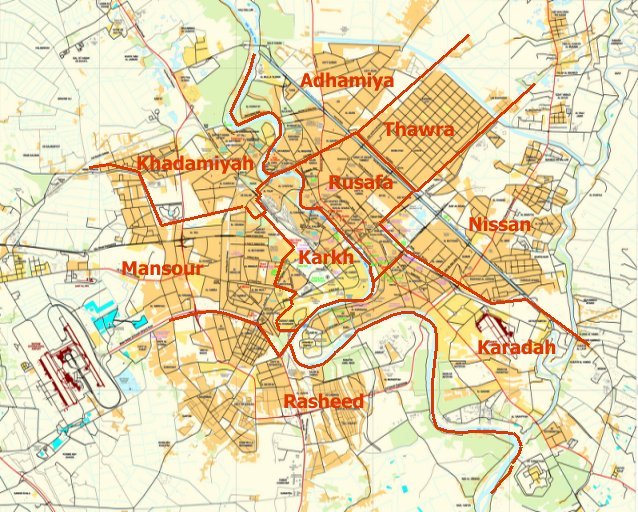
"In light of a serious security incident involving a US embassy protective detail in the Mansour District of Baghdad, the embassy has suspended official US government civilian ground movements outside the International Zone [Green Zone] and throughout Iraq," the notice said.
"This suspension is in effect in order to assess mission security and procedures, as well as a possible increased threat to personnel travelling with security details outside the International Zone," said the notice. Blackwater said on Monday that it had received no official notice from Iraq's interior ministry.
The toll from the shooting rose to nine - 10 civilians and one policeman - on Tuesday, according to a local hospital medic. US officials in Baghdad have yet to clarify the legal status of foreign security contractors in Iraq, including whether they could be liable for prosecution by Iraqi authorities. Riad Kahwaji, director of the Institute for Near East and Gulf Military analysis, told Al Jazeera: "Only the party that brought them [the private security firms] into Iraq can take them out of Iraq - and that is the US."
He said that under their contracts "neither Blackwater nor the other [private security] companies are obliged to obtain a licence from Iraq". Kahwaji said: "The chances are they are going to stay. Because a lot of the foreign companies and contractors that are rebuilding Iraq rely totally on these Western, or US-based, security companies. "They don't have any confidence in the Iraqi police and the Iraqi security services."
Condoleezza Rice, the US secretary of state, telephoned Nuri al-Maliki, Iraq's prime minister, on Monday to express regret over the death of innocent civilians. US and Iraqi sources said the shooting erupted after a bomb exploded near a US diplomatic convoy, but a US government incident report said armed men fired on the convoy and Blackwater guards responded. "Blackwater's independent contractors acted lawfully and appropriately in response to a hostile attack in Baghdad on Sunday," said a statement from the North Carolina company, reported by CNN on its website.
"Blackwater regrets any loss of life, but this convoy was violently attacked by armed insurgents, not civilians, and our people did their job to defend human life." Nevertheless, Abdul Sattar Ghafour Bairaqdar, a judge from Iraq's highest court, the Supreme Judiciary Council, said Blackwater could face trial. "This company is subject to Iraqi law and the crime committed was on Iraqi territory and the Iraqi judiciary is responsible for tackling the case," he said.
Muqtada al-Sadr, the Shia leader of the al-Mahdi Army militia, added his voice to anger over the incident, urged the government to "cancel this company's work, and the rest of the criminal and intelligence companies".
Labels: Abdul Sattar Ghafour Bairaqdar, Ali al-Dabbagh, Blackwater, Condoleezza Rice, diplomatic convoys, Green Zone, Moqtada Al-Sadr, private security companies, U.S. embassy Iraq


Monday, September 03, 2007
Bush arrives on surprise visit to Iraq
Bush landed at al-Asad Air Force base, west of Baghdad in Anbar province, the White House said as the president's plane touched down.
The White House said Bush's national security adviser Steven Hadley was on the plane also. The president had left early Monday for a meeting of the Asia-Pacific Economic Cooperation forum in Sydney, Australia, with the leaders of Australia, China, Japan, Russia and other members of APEC. He was due to arrive in Australia on Tuesday.
Bush was to leave the APEC forum early to return to Washington to prepare for a crucial progress report on Iraq from U.S. commander General David Petraeus and Ambassador Ryan Crocker. The report is a focal point of an intensifying debate over whether the United States should withdraw its forces from Iraq.
Labels: al-Asad Air Force base, Condoleezza Rice, George Bush, Iraq, Robert Gates, Steven Hadley
Friday, August 03, 2007
Gates pessimistic about Iraq's political progress
"I just think in some ways we probably all underestimated the depth of the mistrust and how difficult it would be for these guys to come together on legislation, which, let's face it, is not just some kind of secondary thing," Gates said aboard his plane en route to Washington.
"The kinds of legislation they're talking about establish the framework of Iraq for the future, so it's almost like our constitutional convention. . . . And the difficulty in coming to grips with those we may all have underestimated six or eight months ago," when the Bush administration began implementing its policy of a U.S. troop buildup. Gates' assessment was the frankest by an administration official since the troop buildup began, and it came in the midst of heated debate in Washington about what the U.S. should do in Iraq in the face of an Iraqi government that hasn't met the benchmarks that Congress established in May.
While Gates was in the region, six Sunni Muslim ministers resigned from the Iraqi Cabinet, saying that Prime Minister Nouri al Maliki, a Shiite, has done nothing to meet their demands, including disbanding Shiite militias. Gates called the resignations "discouraging." The bad news continued Thursday, as Sunni Vice President Tariq al Hashemi, the only Iraqi Accordance Front member who remains in Maliki's government, told McClatchy Newspapers that he also is on the verge of resigning.
Hashemi said he'd told U.S. Ambassador Ryan Crocker on Wednesday that the Iraqi government needed a "political shock" to stop it from continuing to marginalize the Sunnis. He said that without a change, Crocker and Army Gen. David Petraeus, the U.S. military commander in Iraq, would be forced to issue a negative report on Iraq to Congress in September.
"We need these major political moves to tell everybody that what is happening is in no way tolerable," Hashemi said. "Nobody on earth or in Iraq is happy with the performance of the government."
Gates spoke at the end of a rare joint Middle East tour with Secretary of State Condoleezza Rice, during which both warned of the growing regional threat from Shiite Iran, urged Sunni Arab countries such as Saudi Arabia to throw their support behind the Maliki government and promised U.S. support for Israel and the Palestinians in establishing a Palestinian state.
Iraq's Sunni Arab neighbors expressed strong fears about the aftermath should U.S. troops pull out, but were reluctant to support the Maliki government, which Sunni politicians in Iraq accuse of turning a blind eye to Shiite militias' attacks on Sunnis.
Labels: Condoleezza Rice, Robert Gates, Tariq Al Hashemi
Tuesday, June 19, 2007
Bush administration will clamp down on PKK
"We did discuss the issues of the PKK," said Condoleezza Rice. "We discussed the importance of the trilateral security mechanism that Iraq, the United States, and Turkey instituted some time ago, and the importance of accelerating the work of the mechanism, because the Iraqis do not want - and we do not want - their territory to be used for terrorist acts against their neighbor."
The Kurdistan Workers' Party, known as the PKK, seeks autonomy for Kurds in southeastern Turkey. It is regarded as a terrorist organization by the Bush administration, which has joined with Iraqi and Turkish officials to seek ways to oust the guerrillas from northern Iraq. Turkey has recently massed troops along its border with Iraq amid continued skirmishes with PKK fighters, as well as PKK attacks on Turkish military targets.
Labels: Condoleezza Rice, Hoshiyar Zebari, PKK
Friday, May 04, 2007
Rice meets with Syrian Foreign Minister over Iraq
They are due to focus on border security, Iraqi refugees and political reconciliation between Iraqi factions and ethnic and religious communities. Baghdad is dependent on U.S. military support in its drive to halt a slide into all-out civil war by stamping out sectarian violence and defeating insurgents who draw support from the Sunni Arab minority once-dominant under Saddam Hussein. But the diplomats, who declined to be named, said Iran was holding out against substantial contacts with U.S. Secretary of State Condoleezza Rice.
Rice and Iranian Foreign Minister Manouchehr Mottaki exchanged pleasantries over lunch on Thursday, but a U.S. official said a bilateral meeting was not planned for Friday. "We'll see if any other kind of interaction occurs," the official added.
Rice's encounter with Mottaki and talks with Syria's foreign minister on Thursday marked a shift in U.S. President George W. Bush's once resolute opposition to high-level contacts with Iran and Syria. Baghdad's interest in seeing a Rice-Mottaki meeting is clear as it is widely acknowledged that Shi'ite Muslim Iran is an influential force on Iraq, both as a neighbor and because of its links with elements in the Shi'ite-led Iraqi government. The U.S. ambassador to Iraq, Ryan Crocker, did not rule out a meeting between Rice and Mottaki.
In Sharm el-Sheikh on Thursday Rice had a 30-minute meeting with Syrian Foreign Minister Walid al-Moualem -- Washington's highest-level contact with Syria in more than two years. She described the talks as "professional and business-like" and said she had urged Syria to stop foreign fighters entering Iraq. Moualem said the talks were "frank and constructive". "I didn't lecture him, he didn't lecture me," said Rice.
Labels: Condoleezza Rice, Iran, Iraq, Manouchehr Mottaki, Sharm el-Sheikh, Syria
Wednesday, May 02, 2007
Top diplomats arrive at Sharm el-Sheikh for Iraq conference
On her way to Egypt, US Secretary of State Condoleezza Rice said the onus was on Iraq's neighbours to show their commitment to ending the violence, warning that their own stability was at stake. Completing a shift in US policy, Rice was expected to talk to Syria and Iran, who have been accused by Washington of funding and abetting Iraq's Sunni insurgency and Shiite militias respectively. A rumoured meeting with her Iranian counterpart, Manouchehr Mottaki, would mark the first bilateral talks between the foes' top diplomats since the United States cut relations in 1980. However, Iran has yet to give an unequivocal sign it is ready for talks and Deputy Foreign Minister Mehdi Mostavafi said on Tuesday the conditions were not right for a "dialogue" with Rice at the conference.
In the run-up to the landmark conference, Western and regional leaders have hammered home the same message that Iraq's influential neighbours need to do their share. As preparatory consultations kicked off in Sharm el-Sheikh on Wednesday, Iraqi government spokesman Ali al-Dabbagh urged the international community to help rescue his country.
The Sharm el-Sheikh conference is the second attempt in two months to bring Iraq's neighbours together in a bid to reach a consensus on means of ending the carnage. In readiness for the 27 foreign ministers and 22 other delegations due to attend the talks, Egyptian police threw up a tight security cordon around the resort.
Rice was expected to arrive in Egypt later Wednesday. She was due to go straight into preliminary talks with Iraqi Prime Minister Nuri al-Maliki and other officials.
The two-day conference starts in earnest on Thursday with the launch of the International Compact with Iraq (ICI), an initiative providing a framework for Iraq's security and economic development. US Treasury Deputy Secretary Robert Kimmitt said the talks would seek to achieve further debt relief for Iraq's embattled economy and set clear benchmarks for its increased integration. But he remained cautious on the results that could be expected from the talks.
Labels: Condoleezza Rice, International Compact with Iraq, Iraq, Manouchehr Mottaki, Sharm al-Sheikh Conference
Monday, April 30, 2007
Iran agrees to participate in Sharm el-Sheikh Iraq conference
Al-Maliki's national security adviser, Mowaffak al-Rubaie, said Sunday that the U.S. has not provided Iraq with any "solid evidence" that Iran is arming fighters in Iraq. Secretary of State Condoleezza Rice is also expected to attend the Iraq conference in the Egyptian resort of Sharm El-Sheik on Thursday and Friday, raising the possibility of a rare direct encounter between high-level U.S. and Iranian officials. In Washington, Rice would not rule out a meeting with the Iranians, whose delegation will be led by Foreign Minister Manouchehr Mottaki.
Iraqi leaders had been pressing for the Iranians to attend the meeting in Sharm el-Sheik for weeks, but Iran refused to commit, in part because of fears that it would come under pressure from the U.S. and others about its nuclear program. In addition, the Iranians have been lobbying for release of five Iranians held by the U.S. in Iraq since January. The U.S. has accused the five of links to an Iranian Revolutionary Guard unit that arms and trains Shiite extremists in Iraq and elsewhere in the Middle East.
The decision to attend "came after consultations between Iraqi officials and the Iranian president," Foreign Ministry spokesman Mohammad Ali Hosseini said in an interview with Iranian state television. Senior Iranian envoy Ali Larijani flew to Baghdad on Sunday for talks with al-Maliki and other senior Iraqi officials, the highest-ranking Iranian official to visit Iraq since the collapse of Saddam Hussein's regime in 2003. During their meeting, Larijani told al-Maliki that all countries that want stability in the region "have no choice but to support Iraq's elected government."
Iraq's other neighbors as well as Egypt, Bahrain and representatives of the five permanent U.N. Security Council members have also agreed to attend the meeting. Apart from security issues, the U.S. and Iraq hope the conference will produce an agreement to forgive Iraq's huge debts and offer financial assistance in return for an Iraqi pledge to implement political and economic reforms.
But Iraq's Arab neighbors are expected to demand that the Baghdad government, dominated by Shiites and Kurds, do more to reach out to its own disgruntled Sunni Arabs before they pledge substantial aid. On Sunday, President Bush called Iraq's Sunni vice president, Tariq al-Hashimi, to discuss the importance of the reconciliation process and the need for all Iraqi parties to work together to stabilize the country, according to Gordon Johndroe, a spokesman for the White House National Security Council.
The Iraqis, for their part, were anxious for the Iranians to attend to give them leverage against their Sunni-dominated neighbors and to help press their case that Sunni extremists, including al-Qaida, pose the gravest threat to stability.
Labels: Adviser Mowaffaq al-Rubaie, Ali Larijani, Condoleezza Rice, Iran, Manouchehr Mottaki, Mohammad Ali Hosseini, Nouri Al-Maliki, Sharm al-Sheikh Conference
Monday, April 23, 2007
Rice urges Iran to participate in Sharm el-Sheikh Iraq conference
Ms Rice denied that the Bush administration’s Iran policy had ever been directed at regime change, insisting that the aim was to “have a change in regime behaviour”. Washington’s need to secure the right regional environment for its eventual withdrawal from Iraq is growing ever more acute as its “surge” of extra troops is failing to contain the violence. Last Wednesday alone nearly 200 people died in bombings, and on Sunday 17 Iraqis were killed.
That “hostile forces” would respond to the US security plan was to be expected, Ms Rice said, blaming al Qaeda, not Iran, for the suicide bombings. She said two more US brigades were still to be deployed, adding the US needed “a little time” to judge the “trend lines”. Ms Rice’s attempts to draw Iran into the conference – which will include Iraq’s neighbours as well as the permanent members of the UN security council and the G8 industrialised nations – contrasted with her previous resistance to such talks.
Since then there had been a “rebalancing”, she said, particularly after President George W. Bush’s speech on January 10 announcing the extra troops and a more aggressive response to Iran’s perceived role in arming and training Iraqi Shia militia. Analysts said it remained to be seen whether the US had achieved what Robert Gates, the defence secretary, said in January was the “leverage” it needed before engaging Iran.
Iran says it will decide on its attendance at the May 3-4 conference after meeting Hoshyar Zebari, Iraq’s foreign minister, this week. Iran’s foreign ministry spokesman on Sunday noted a “softening” in Ms Rice’s rhetoric. But he added that any “shift” should be put into practice.
Labels: Condoleezza Rice, conference, Iran, Iraq, Manouchehr Mottaki, security, Sharm el-Sheikh
Saturday, April 07, 2007
International Iraq security conference to take place in Egypt on May 3 - 4
(DPA) - An international conference on Iraq originally planned for April will take place in Egypt on May 3 - 4, Iraqi Foreign Minister Hoshyar Zebari reported Saturday at a press conference in Baghdad. Participating in the foreign minister conference in addition to Iraq's neighbours will be the five permanent members of the United Nations Security Council, the members of the G8 as well as Egypt, Bahrain and representatives of international organizations.
The conference will for the first time in years also bring together at the same table the foreign ministers of the United States and Iran. A preparatory meeting at the official level took place March 10 in Baghdad. The May meeting is to sound out possibilities of stabilizing the situation in violence-stricken Iraq as well as easing tensions in the region, Zebari said.
A US State Department official on Thursday said direct talks between US Secretary of State Condoleezza Rice and Iranian Foreign Minister Manouchehr Mottaki would not be ruled out.
Labels: Condoleezza Rice, Egypt, G8, Iraq security conference, Manouchehr Mottaki, UNSC
Friday, March 16, 2007
Second Iraq security meeting in early April
A first meeting dubbed an Iraq neighbors conference but which also included diplomats from other Arab states and the five permanent UN Security Council members -- Britain, China, France, Russia and the US -- was held March 10 in Baghdad. Those talks focused on efforts to stabilize the US-backed Baghdad government and end sectarian and insurgent violence that Washington has said it fueled by Iran and Syria.
During the meeting the US ambassador to Baghdad, Zalmay Khalilzad, held direct talks with senior Iranian officials in the highest level contact between the two states in more than four years. The April meeting is due to include the foreign ministers of the same countries plus Japan and Canada.
Labels: Condoleezza Rice, Iran, security talks, Syria, Turkey
Saturday, February 17, 2007
Rice lauds early progress in Baghdad
While major car bombings and death squad killings in Baghdad have declined, a double car bombing on Saturday at a crowded market in the northern city of Kirkuk killed at least 10 people and wounded 60, police sources said. The explosions took place in the Rahim Awa district, a predominantly Kurdish area of the ethnically mixed city.
Rice said Iraq's leaders needed to speed up efforts to reconcile warring Shi'ite and Sunni groups, finalize an oil revenue sharing law and hold provincial elections. Rice said she would press those issues when she met Shi'ite Prime Minister Nuri al-Maliki, President Jalal Talabani, a Kurd, and Sunni Vice President Tareq al-Hashemi. "The wait for progress can't be endless. Those (issues) need to move along more quickly," said Rice, who last month said the Iraqi government was on "borrowed time. This is a group of leaders that need to deliver."
Labels: al-Maliki, Baghdad, car bombs, Condoleezza Rice, Kirkuk, Talabani