Tuesday, May 15, 2007
Government bans media from scenes of bombings
Media
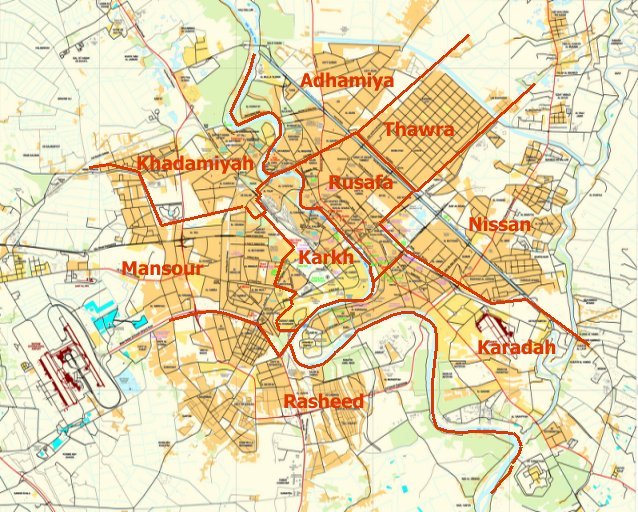
(AP) - Iraqi police prevented news photographers and camera operators from filming the scene of a bombing Tuesday under a new policy limiting coverage of the devastating explosions that have become a hallmark of the violence in the country. To enforce its order that a group of Iraqi journalists leave Tayaran Square, where the bombing occurred, police fired several shots in the air, reporters said.
Brig. Gen. Abdel Karim Khalaf, the operations director at the Interior Ministry, said this weekend that Iraq's government has decided to bar news photographers and cameramen from the scene of bombings. The order was aimed at preventing journalists from distributing evidence needed for the investigation, protecting the privacy and human rights of those wounded and keeping insurgents and militias from keeping track of their success rate, Khalaf said.
He denied that the new regulation was aimed at curtailing press freedoms, saying other countries have similar restrictions. U.S. and Iraqi forces launched a security crackdown in Baghdad three months ago in an effort to improve security in the capital, where scores of people often die each day in roadside and suicide bomb attacks, and in sectarian violence involving majority Shiites and minority Sunnis
Brig. Gen. Abdel Karim Khalaf, the operations director at the Interior Ministry, said this weekend that Iraq's government has decided to bar news photographers and cameramen from the scene of bombings. The order was aimed at preventing journalists from distributing evidence needed for the investigation, protecting the privacy and human rights of those wounded and keeping insurgents and militias from keeping track of their success rate, Khalaf said.
He denied that the new regulation was aimed at curtailing press freedoms, saying other countries have similar restrictions. U.S. and Iraqi forces launched a security crackdown in Baghdad three months ago in an effort to improve security in the capital, where scores of people often die each day in roadside and suicide bomb attacks, and in sectarian violence involving majority Shiites and minority Sunnis
Labels: Brig. Gen. Abdel Karim Khalaf, Iraq, media


Monday, May 07, 2007
Al Jazeera banned in Iranian parliament for insulting Sistani
Religion, Media
(Al Jazeera) - Iran has banned Al-Jazeera from its parliament, saying one of its talkshows had insulted the most revered Shia cleric in Iraq. Gholam Ali Hadad Adel, the parliament's speaker, said: "Parliament has decided to prevent Al Jazeera journalists from entering until this network makes a formal apology for insulting [Grand] Ayatollah Ali al-Sistani."
Iran said questions from the host of the "Without Borders" programme had questioned the legitimacy of Sistani's leadership in Iraq. Hadad Adel said: "This is a plot of the enemies of Islam and Iraq and news networks like Al Jazeera committed this insult because of their influential role."
The Iranian-born al-Sistani is Shia Islam's leading cleric and commands huge respect in both Iran and Iraq. Last week he held talks with Ali Larijani, Iran's top national security official, in the Shia holy city of Najaf. The new furore about comments made about the cleric recalls a similar controversy in December 2005 when Iraqi Shias protested against the channel after a talk show guest accused Sistani of favouring the US occupation.
After that incident, Tehran summoned the ambassador of Qatar, where Al Jazeera is based. Al-Jazeera's Tehran bureau was shut down by the authorities in April 2005 amid accusations of stirring up violence in its coverage of clashes in the ethnic Arab majority city of Ahvaz and only reopened 14 months later.
Iran said questions from the host of the "Without Borders" programme had questioned the legitimacy of Sistani's leadership in Iraq. Hadad Adel said: "This is a plot of the enemies of Islam and Iraq and news networks like Al Jazeera committed this insult because of their influential role."
The Iranian-born al-Sistani is Shia Islam's leading cleric and commands huge respect in both Iran and Iraq. Last week he held talks with Ali Larijani, Iran's top national security official, in the Shia holy city of Najaf. The new furore about comments made about the cleric recalls a similar controversy in December 2005 when Iraqi Shias protested against the channel after a talk show guest accused Sistani of favouring the US occupation.
After that incident, Tehran summoned the ambassador of Qatar, where Al Jazeera is based. Al-Jazeera's Tehran bureau was shut down by the authorities in April 2005 amid accusations of stirring up violence in its coverage of clashes in the ethnic Arab majority city of Ahvaz and only reopened 14 months later.
COMMENT: Iraq's Iranian-born 75-year-old most senior Grand Ayatollah Ali al-Sistani is one of only five living grand ayatollahs. He's known for his more moderate views—he supports an Islamic state but rejects an Iranian-style theocracy. He is revered by conservative and mainstream Shiites (who make up 60% of Iraq's poplulation), both in Iraq and abroad, for his authority to interpret Islamic law and provide guidance on day-to-day matters. He tacitly supports the United Iraqi Alliance, the leading Shiite coalition that supports strong regional governments, prosecuting ex-Baathists, and strictly enforcing the constitution. At times he's been critical of the U.S. handling of post-war Iraq. COMMENT ENDS.
Labels: Al Jazeera, Ayatollah Ali al-Sistani, Gholam Ali Hadad Adel, Iran, media
Wednesday, April 25, 2007
KRg and Dubai company to build $400 mn 'media city'
Kurdistan, Commerce, Media, Construction
(Reuters) - The Iraqi Kurdish regional government and a Dubai firm are to build a $400 million (around Dh1.4 billion) "media city" in Arbil, officials said. International television networks will be attracted to the stable Kurdistan region because worsening violence stopped them having offices in Baghdad, they said.
Under the deal to create the Arbil City Media Company, the regional government will have a 60 per cent stake and the Dubai sound TV and Cinema Production company a 40 per cent stake. Start-up capital will be $40 million (around Dh147 million). The company, which will oversee the creation of a complex of television studios, hotels, shops and housing, will then be open to shareholders. Anwar Al Yasiri, an Iraqi who runs the Dubai company, said his firm and a British company would build the complex in a northern Arbil suburb within two years.
Opportunities
"The philosophy of the government to support such a project is to create job opportunities for the sons of the area and to support and develop the tourism and media city sectors," Civil Society Affairs minister George Mansour said. Mansour helped establish Iraq's media network after Saddam Hussain's fall in 2003. The project will include a television transmission and re-transmission centre with a capacity for up to 120 stations.
Under the deal to create the Arbil City Media Company, the regional government will have a 60 per cent stake and the Dubai sound TV and Cinema Production company a 40 per cent stake. Start-up capital will be $40 million (around Dh147 million). The company, which will oversee the creation of a complex of television studios, hotels, shops and housing, will then be open to shareholders. Anwar Al Yasiri, an Iraqi who runs the Dubai company, said his firm and a British company would build the complex in a northern Arbil suburb within two years.
Opportunities
"The philosophy of the government to support such a project is to create job opportunities for the sons of the area and to support and develop the tourism and media city sectors," Civil Society Affairs minister George Mansour said. Mansour helped establish Iraq's media network after Saddam Hussain's fall in 2003. The project will include a television transmission and re-transmission centre with a capacity for up to 120 stations.
Labels: Anwar Al Yasiri, Arbil, Arbil City Media Company, construction, Dubai sound TV and Cinema Production company, KRG, media