Monday, June 04, 2007
Security plan only able to protect 146 of the 457 Baghdad neighbourhoods despite troop surge
Security
(AP) - U.S.-led forces have control of fewer than one-third of Baghdad's neighborhoods despite thousands of extra troops nearly four months into a security crackdown, a newspaper reported Monday, an assessment that came as the U.S. casualty toll soared. But military officials said they have warned all along that the fight would not be easy.
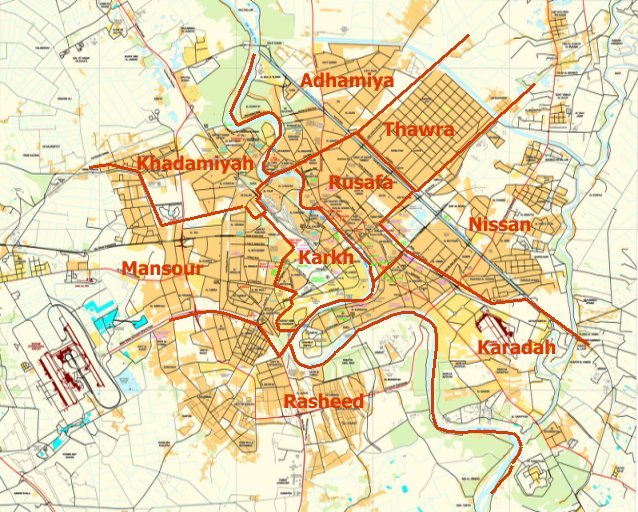
Iraqi police also said at least six people were killed and 14 were wounded in three separate bombings Monday in Baghdad. The New York Times said an American assessment of the security plan through late May found that American and Iraqi forces were able to "protect the population" and "maintain physical influence over" only 146 of the 457 Baghdad neighborhoods.
Troops have either not begun operations aimed at rooting out insurgents or still face "resistance" in the remaining 311 neighborhoods, according to the report, which cited a one-page assessment along with summaries from brigade and battalion commanders in Baghdad. U.S. and Iraqi military officials played down the report.
"We have stated all along that this was going to be harder before it gets easier," military spokesman Lt. Col. Christopher Garver said. "It's going to be a tough fight over the summer and the plan is just in its beginning stages."
It appeared to be the first comprehensive analysis of the progress of the operation that began Feb. 14. Gen. David Petraeus, the top U.S. commander in Iraq, is due to report in September on whether the current troop increase is working amid a fierce debate in Washington over whether President Bush should begin withdrawing American forces.
The U.S. military announced Sunday that 14 American soldiers had been killed over a three-day period in a deadly start for June and raising to at least 3,493 members of the U.S. military who have died since the Iraq war started in March 2003, according to an Associated Press count. May was the third bloodiest month since the war began, with 127 troop deaths reported.
Following initial optimism over the operation to quell sectarian violence, unrelenting bombings staged by suspected Sunni insurgents have killed hundreds of Iraqis. U.S. commanders have cited a drop in the numbers of execution-style killings usually blamed on Shiite militias but those numbers also have seen a recent spike.
U.S. military leaders in charge of the Baghdad drive, now nearing the end of its fourth month, have repeatedly complained that both the Iraqi army and police units that were sent to Baghdad for the operation are often at only 60 percent full strength, if that.
He acknowledged some challenges with the Iraqi troops, including concerns that some were biased in their loyalties to one side or another, apparently referring to the sectarian bent of predominantly Shiite forces. Iraqi military spokesman Brig. Gen. Qassim al-Moussawi said Baghdad has 184 neighborhoods and "we are controlling more than 50 percent of them." The U.S. and Iraqi military frequently differ over details and designations of neighborhoods.
The police are deeply infiltrated by Shiite militiamen who use their membership in the force more for sectarian purposes against Sunni Muslims than in conducting police operations on behalf of the government of Prime Minister Nouri al-Maliki.
Labels: Baghdad, troop surge, U.S. forces