Tuesday, July 17, 2007
Georgia sends more troops to Iraq
Security
(The Georgian Times) - “A small group” of Georgian servicemen was sent to Kuwait on July 16, which will join Georgian troops in Iraq on July 23, the Georgian Ministry of Defense said. The move is part of Georgian troops surge in Iraq from the current 850 to 2,000, making Georgia the second biggest contributors, after the United States, to Iraqi operations in terms of per capita troop deployment. Remaining additional Georgian troops will be sent to Kuwait and then to Iraq, gradually, between July 20 and July 22.
Labels: Georgia, Iraq, troop surge


Monday, June 04, 2007
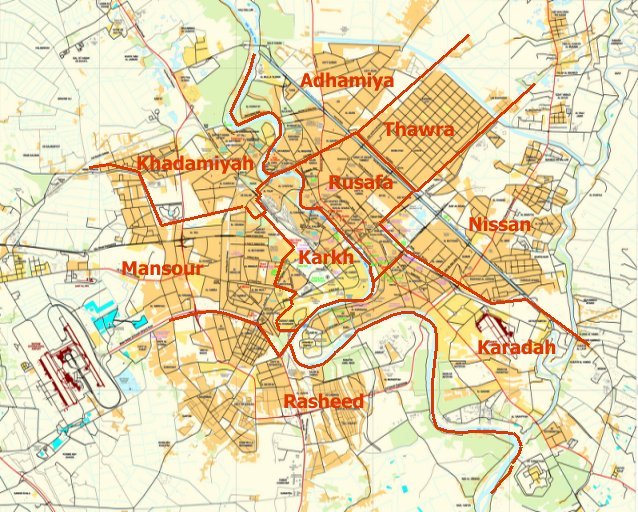
Security plan only able to protect 146 of the 457 Baghdad neighbourhoods despite troop surge
Security
(AP) - U.S.-led forces have control of fewer than one-third of Baghdad's neighborhoods despite thousands of extra troops nearly four months into a security crackdown, a newspaper reported Monday, an assessment that came as the U.S. casualty toll soared. But military officials said they have warned all along that the fight would not be easy.
Iraqi police also said at least six people were killed and 14 were wounded in three separate bombings Monday in Baghdad. The New York Times said an American assessment of the security plan through late May found that American and Iraqi forces were able to "protect the population" and "maintain physical influence over" only 146 of the 457 Baghdad neighborhoods.
Troops have either not begun operations aimed at rooting out insurgents or still face "resistance" in the remaining 311 neighborhoods, according to the report, which cited a one-page assessment along with summaries from brigade and battalion commanders in Baghdad. U.S. and Iraqi military officials played down the report.
"We have stated all along that this was going to be harder before it gets easier," military spokesman Lt. Col. Christopher Garver said. "It's going to be a tough fight over the summer and the plan is just in its beginning stages."
It appeared to be the first comprehensive analysis of the progress of the operation that began Feb. 14. Gen. David Petraeus, the top U.S. commander in Iraq, is due to report in September on whether the current troop increase is working amid a fierce debate in Washington over whether President Bush should begin withdrawing American forces.
The U.S. military announced Sunday that 14 American soldiers had been killed over a three-day period in a deadly start for June and raising to at least 3,493 members of the U.S. military who have died since the Iraq war started in March 2003, according to an Associated Press count. May was the third bloodiest month since the war began, with 127 troop deaths reported.
Following initial optimism over the operation to quell sectarian violence, unrelenting bombings staged by suspected Sunni insurgents have killed hundreds of Iraqis. U.S. commanders have cited a drop in the numbers of execution-style killings usually blamed on Shiite militias but those numbers also have seen a recent spike.
U.S. military leaders in charge of the Baghdad drive, now nearing the end of its fourth month, have repeatedly complained that both the Iraqi army and police units that were sent to Baghdad for the operation are often at only 60 percent full strength, if that.
He acknowledged some challenges with the Iraqi troops, including concerns that some were biased in their loyalties to one side or another, apparently referring to the sectarian bent of predominantly Shiite forces. Iraqi military spokesman Brig. Gen. Qassim al-Moussawi said Baghdad has 184 neighborhoods and "we are controlling more than 50 percent of them." The U.S. and Iraqi military frequently differ over details and designations of neighborhoods.
The police are deeply infiltrated by Shiite militiamen who use their membership in the force more for sectarian purposes against Sunni Muslims than in conducting police operations on behalf of the government of Prime Minister Nouri al-Maliki.
Iraqi police also said at least six people were killed and 14 were wounded in three separate bombings Monday in Baghdad. The New York Times said an American assessment of the security plan through late May found that American and Iraqi forces were able to "protect the population" and "maintain physical influence over" only 146 of the 457 Baghdad neighborhoods.
Troops have either not begun operations aimed at rooting out insurgents or still face "resistance" in the remaining 311 neighborhoods, according to the report, which cited a one-page assessment along with summaries from brigade and battalion commanders in Baghdad. U.S. and Iraqi military officials played down the report.
"We have stated all along that this was going to be harder before it gets easier," military spokesman Lt. Col. Christopher Garver said. "It's going to be a tough fight over the summer and the plan is just in its beginning stages."
It appeared to be the first comprehensive analysis of the progress of the operation that began Feb. 14. Gen. David Petraeus, the top U.S. commander in Iraq, is due to report in September on whether the current troop increase is working amid a fierce debate in Washington over whether President Bush should begin withdrawing American forces.
The U.S. military announced Sunday that 14 American soldiers had been killed over a three-day period in a deadly start for June and raising to at least 3,493 members of the U.S. military who have died since the Iraq war started in March 2003, according to an Associated Press count. May was the third bloodiest month since the war began, with 127 troop deaths reported.
Following initial optimism over the operation to quell sectarian violence, unrelenting bombings staged by suspected Sunni insurgents have killed hundreds of Iraqis. U.S. commanders have cited a drop in the numbers of execution-style killings usually blamed on Shiite militias but those numbers also have seen a recent spike.
U.S. military leaders in charge of the Baghdad drive, now nearing the end of its fourth month, have repeatedly complained that both the Iraqi army and police units that were sent to Baghdad for the operation are often at only 60 percent full strength, if that.
He acknowledged some challenges with the Iraqi troops, including concerns that some were biased in their loyalties to one side or another, apparently referring to the sectarian bent of predominantly Shiite forces. Iraqi military spokesman Brig. Gen. Qassim al-Moussawi said Baghdad has 184 neighborhoods and "we are controlling more than 50 percent of them." The U.S. and Iraqi military frequently differ over details and designations of neighborhoods.
The police are deeply infiltrated by Shiite militiamen who use their membership in the force more for sectarian purposes against Sunni Muslims than in conducting police operations on behalf of the government of Prime Minister Nouri al-Maliki.
Labels: Baghdad, troop surge, U.S. forces
Sunday, May 06, 2007
New air combat brigade to increase U.S. helicopter fleet by 34 per cent
Security
(Baltimore Sun) - The final troop contingent in President Bush's plan to improve security, a brigade that includes 152 attack and transport helicopters, will arrive in the Iraqi capital soon, a U.S. commander said. With the arrival of the 3rd Combat Aviation Brigade, 3rd Infantry, based in Savannah, Ga., the addition of 28,500 troops begun in mid-February will be complete. The brigade will be based at Camp Victory near the Baghdad airport, Maj. Gen. James Simmons, deputy commander of multinational forces, said Friday.
The new air combat brigade will increase the U.S.-led force's helicopter fleet by 34 percent. Also coming are 3,200 pilots, crew, mechanics and other support personnel. Helicopters are increasingly important tools in the war because insurgent attacks have made ground transport dangerous in many areas of Iraq. Despite the increased reliance of the U.S. military on choppers, there had been no increase in the fleet since the war began in March 2003, Simmons said.
The announcement in March that the air combat brigade, as well as almost 4,000 other support troops, were coming in addition to 21,500 extra troops committed to Iraq infuriated war opponents who saw it as a backdoor method of squeezing more troops into an unpopular conflict. When completed, the buildup will bring the U.S. troop level in Iraq to 160,000.
Bush and the Democratic-controlled Congress are locked in a bitter struggle over an Iraq war funding bill. Bush vetoed a bill last week that would have made future funding for the war conditional on a timetable for a phased withdrawal of U.S. forces. The current helicopter fleet in Iraq includes 449 choppers. With the arrival of the new brigade, Iraq will be home to four of the Army's 10 air combat units.
Since June 2003, 58 helicopters have been lost in Iraq, of which 28 were shot down by ground fire. The rest crashed in accidents. According to a tally by the Brookings Institution, a Washington think tank, 179 people died in those crashes.
The new air combat brigade will increase the U.S.-led force's helicopter fleet by 34 percent. Also coming are 3,200 pilots, crew, mechanics and other support personnel. Helicopters are increasingly important tools in the war because insurgent attacks have made ground transport dangerous in many areas of Iraq. Despite the increased reliance of the U.S. military on choppers, there had been no increase in the fleet since the war began in March 2003, Simmons said.
The announcement in March that the air combat brigade, as well as almost 4,000 other support troops, were coming in addition to 21,500 extra troops committed to Iraq infuriated war opponents who saw it as a backdoor method of squeezing more troops into an unpopular conflict. When completed, the buildup will bring the U.S. troop level in Iraq to 160,000.
Bush and the Democratic-controlled Congress are locked in a bitter struggle over an Iraq war funding bill. Bush vetoed a bill last week that would have made future funding for the war conditional on a timetable for a phased withdrawal of U.S. forces. The current helicopter fleet in Iraq includes 449 choppers. With the arrival of the new brigade, Iraq will be home to four of the Army's 10 air combat units.
Since June 2003, 58 helicopters have been lost in Iraq, of which 28 were shot down by ground fire. The rest crashed in accidents. According to a tally by the Brookings Institution, a Washington think tank, 179 people died in those crashes.
Labels: 3rd Combat Aviation Brigade, Camp Victory, Maj. Gen. James Simmons, troop surge
Tuesday, March 13, 2007
Al-Maliki visits Ramadi as more troops arrive in Diyala
Security, Politics
(CNN) Iraq's Shiite Prime Minister Nuri al-Maliki journeyed to the insurgent-wracked province of Anbar on Tuesday, to meet with Sunni tribal chiefs helping U.S. forces, said an official with the prime minister's office.
Al-Maliki's unannounced trip to Anbar's capital of Ramadi comes as U.S. commanders prepare to send some 4,000 Marines to the province, which has long been a flash point for insurgent violence. The prime minister is set to meet with citizens and government officials.
The new chief of U.S.-led forces in Iraq, Gen. David Petraeus, praised Ramadi leaders last week for their support against insurgents, including al Qaeda in Iraq. "Tribes in Ramadi have one after the other after another volunteered to join the local police and have all of a sudden become a very, very serious force for al Qaeda in Iraq to reckon with," Petraeus said. "There's really only a small portion of eastern Ramadi that is still viewed as having some extremist elements in it."
Al-Maliki's visit includes some symbolism, as the Shiite leader reaches out to tribal leaders in the Sunni-dominated region, amid months of sectarian killings in Baghdad and elsewhere. Minority Sunnis ruled under Saddam Hussein and his regime often oppressed Iraqis who belonged to the Shiite majority. Now, members of both sects share power with ethnic Kurds in Iraq's fledgling government.
Al-Maliki's unannounced trip to Anbar's capital of Ramadi comes as U.S. commanders prepare to send some 4,000 Marines to the province, which has long been a flash point for insurgent violence. The prime minister is set to meet with citizens and government officials.
The new chief of U.S.-led forces in Iraq, Gen. David Petraeus, praised Ramadi leaders last week for their support against insurgents, including al Qaeda in Iraq. "Tribes in Ramadi have one after the other after another volunteered to join the local police and have all of a sudden become a very, very serious force for al Qaeda in Iraq to reckon with," Petraeus said. "There's really only a small portion of eastern Ramadi that is still viewed as having some extremist elements in it."
Al-Maliki's visit includes some symbolism, as the Shiite leader reaches out to tribal leaders in the Sunni-dominated region, amid months of sectarian killings in Baghdad and elsewhere. Minority Sunnis ruled under Saddam Hussein and his regime often oppressed Iraqis who belonged to the Shiite majority. Now, members of both sects share power with ethnic Kurds in Iraq's fledgling government.
COMMENT: Al-Maliki is raising his profile and leading by example. He is trying to demonstrate to Iraqis that the government has the security situation enough under control for him to travel around. He also visited an area in Baghdad on Friday. He also needs to appear accommodating to the Sunnis because he is losing support in his own block as Fadhela has left the UIA and the Kurds are showing interest in Allawi's newly formed Iraqi National Front.
The local tribes are an important factor and a force to be reckoned with. People listen to them, and if they don't support the security effort, they will be supporting the insurgency as many of them have done. However, Al Qaeda in Iraq killed too many civilians for the liking of many of the tribes, who have now turned against the insurgents and bring their local knowledge and private militias to contribute to the larger national security effort. COMMENT ENDS.
Labels: al-Maliki, Diyala, Ramadi, tribal leaders, troop surge
Monday, March 12, 2007
U.S. to withdraw troops if surge fails
Security
(The Guardian) The United States has begun planning to gradually withdraw combat soldiers from Iraq and place a greater emphasis on training if the current troop increase fails, it was reported today. The Los Angeles Times said the fallback strategy, based partly on the US experience in El Salvador in the 1980s, was in the early planning stages. A Pentagon official told the paper: "This part of the world has an allergy against foreign presence. You have a window of opportunity that is relatively short. Your ability to influence this with a large US force eventually gets to a point that is self-defeating."
The LA Times report came as the president, George Bush, confirmed at the weekend that he would send an extra 4,700 combat support troops and military police to Iraq in addition to the "surge" of 21,500 combat forces announced in January. Mr Bush is also sending an extra 3,500 troops to Afghanistan in expectation of increased fighting in spring.
A whittling down of the US military presence would fit in with comments made to Congress by the defence secretary, Robert Gates, last month. He said that if the "surge" failed, the fallback plan would include moving troops "out of harm's way". Such a plan would also come close to the recommendations of the Iraq Study Group, which included Mr Gates before his appointment as the defence secretary. The US has about 141,000 US troops in Iraq and the current buildup will add 21,500 combat soldiers and several thousand more support troops as part of a new strategy to deprive safe havens for insurgents.
The plan is being implemented by General David Petraeus, the new US commander for Iraq and a counterinsurgency expert who won praise for his record in Mosul, northern Iraq, at the start of the 2003 war.
But even his supporters admit that Gen Petraeus has only about six months to improve the situation, particularly to reduce the level of sectarian killing in Baghdad.
A whittling down of the US military presence would fit in with comments made to Congress by the defence secretary, Robert Gates, last month. He said that if the "surge" failed, the fallback plan would include moving troops "out of harm's way". Such a plan would also come close to the recommendations of the Iraq Study Group, which included Mr Gates before his appointment as the defence secretary. The US has about 141,000 US troops in Iraq and the current buildup will add 21,500 combat soldiers and several thousand more support troops as part of a new strategy to deprive safe havens for insurgents.
The plan is being implemented by General David Petraeus, the new US commander for Iraq and a counterinsurgency expert who won praise for his record in Mosul, northern Iraq, at the start of the 2003 war.
But even his supporters admit that Gen Petraeus has only about six months to improve the situation, particularly to reduce the level of sectarian killing in Baghdad.
Labels: General David Petraeus, troop surge, troop withdrawal, U.S.
Wednesday, February 14, 2007
Al-Zawahiri says U.S. troop surge is bound to fail
Insurgency
(Al Jazeera) Al-Qaeda's deputy leader has described the US plan to send 21,500 more troops to Iraq as a gamble that is bound to fail. In an audio tape posted on the internet on Tuesday, Ayman al-Zawahiri also criticised the Democratic Party for not changing US policies.
"[Bush's] addiction to gambling ... motivates him to continue to place losing bets until he goes completely bankrupt," he said. "Were the Americans to leave [Bush] alone, he would continue to send their forces to Iraq until the Mujahideen kill the last one of their soldiers." Al-Zawahiri's statement was transcribed on the website of the SITE Institute, a US private organisation that tracks Islamists' use of the internet. It was not immediately possible to authenticate the statement.
Labels: Al-Qaeda, al-Zawahiri, troop surge, U.S.