Thursday, September 13, 2007
U.S. general - Iranian supplied rocket used in attack on military base
Security
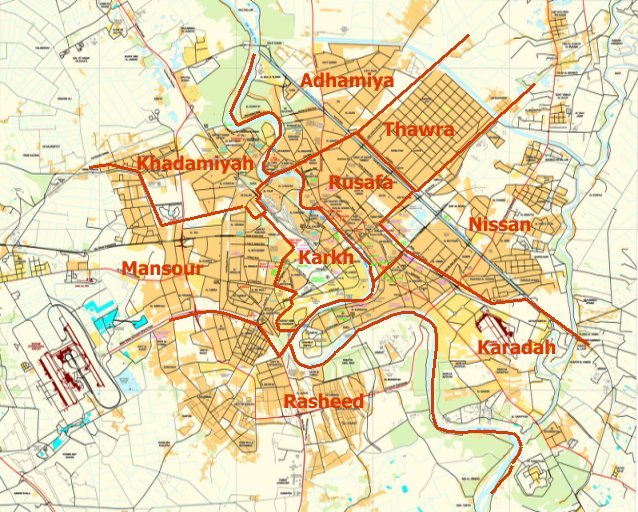
(AFP) -- A US general in Iraq on Thursday pointed the finger of blame at Shiite militiamen using what he said was an Iranian-supplied rocket for a fatal attack two days ago on a military base near Baghdad. Major General Kevin Bergner said the rocket was launched from the Rasheed area of west Baghdad which he said was a stronghold of the Mahdi Army militia of firebrand Shiite cleric Moqtada al-Sadr.
The military said one person was killed and 12 injured in an "indirect fire" attack on Tuesday on Camp Victory, a sprawling military base near Baghdad international airport. Bergner, spokesman for US forces in Iraq, told a press conference the rocket was similar to those supplied in the past by "Iranian sources" to Mahdi Army fighters.
He acknowledged however that there was no direct evidence to prove that Mahdi Army fighters were behind Tuesday's attack nor that the weapon had definitely been supplied by Iranian forces. "It was consistent with rockets supplied in the past by Iranian sources to Jaysh al-Mahdi," he said, using the US military's term for the Mahdi Army.
Sadr has called on his militia to halt armed activities for six months, but attacks are continuing. "We do see some elements obeying Sadr's pledge," said Bergner. "But we also see some members who are disobeying his pledge."
Labels: Baghdad, Camp Victory, Iran, Mahdi Army, Major General Kevin Bergner


Monday, June 04, 2007
Iraqi industries to support U.S. military in Iraq
Industry
(AFP) - After years using outside contractors to tend to the needs of its Iraq bases, the US military is now building zones outside its army posts so Iraqi businesses can actually benefit from their presence. The plan, which has been several months in preparation, is part of a wider effort to stimulate local employment and end years of funnelling lucrative contracts to providers from outside the country.
"Let's get American and third country contractors out of that business and let's get Iraqis into that business," Brigadier Steven Anderson, a driving force behind the programme, told AFP. "Let's get Iraqis employed and get them out of the bomb-making business and into the support-providing business," added the deputy chief of staff for resources and sustainment.
The Iraq-based industrial zone (I-BIZ) programme was conceived last year when military commanders recognised the need to boost employment to put a dent in the violence raging throughout the country. "There is a clear focus both by the Iraqi government and on the part of the US mission of beginning this process to see more jobs created," a US official in Baghdad told reporters in May.
The idea is comparatively simple and mirrors the support industries to be found outside US bases in South Korea and Germany. It will involve building a protected area for Iraqis to provide products, services and maintenance.
The plan is a major departure from the first four years of the US presence in Iraq when nearly every need was provided by large US contractors such as Kellogg Brown and Root, a Halliburton subsidiary. KBR in turn brought in thousands of foreign workers, mainly from south Asia. Unlike citizens from other countries hosting US bases, Iraqis have seen few financial benefits from having more than 140,000 US troops in their country.
A December 2004 suicide attack on a US military dining facility in Mosul killed 14 soldiers and for all intents and purposes ended the employment of locals on bases. Iraqi unemployment was bad before the 2003 US invasion, but following a series of decisions by the Coalition Provisional Authority to disband the army and shut down state-owned industries, it soared to an estimated 48 percent.
One of the most tangible results of this shift is the ongoing mission by Deputy Defence Secretary Paul Brinkely to restart dozens of mothballed state-owned factories. The I-BIZ programme would coordinate with Brinkley's efforts and the reopened factories could have storefronts in the industrial zones, Anderson said. For now, the project is in its infancy, with a two-year-old prototype near the southern city of Diwaniyah. The first true zone will open in August next to the massive Camp Victory base at Baghdad airport. Over the next year, further zones will appear at Tikrit's Camp Speicher, at Camp Taji just north of Baghdad and at Talil Air Base, in the south near Nasiriyah. Construction began six weeks ago on the Camp Victory Iraqi zone which will hold around 35 businesses over 25 acres.
Labels: Brigadier Steven Anderson, Camp Victory, contractors, I-BIZ, Iraqi businesses, KBR, Paul Brinkley, U.S. military
Sunday, May 06, 2007
New air combat brigade to increase U.S. helicopter fleet by 34 per cent
Security
(Baltimore Sun) - The final troop contingent in President Bush's plan to improve security, a brigade that includes 152 attack and transport helicopters, will arrive in the Iraqi capital soon, a U.S. commander said. With the arrival of the 3rd Combat Aviation Brigade, 3rd Infantry, based in Savannah, Ga., the addition of 28,500 troops begun in mid-February will be complete. The brigade will be based at Camp Victory near the Baghdad airport, Maj. Gen. James Simmons, deputy commander of multinational forces, said Friday.
The new air combat brigade will increase the U.S.-led force's helicopter fleet by 34 percent. Also coming are 3,200 pilots, crew, mechanics and other support personnel. Helicopters are increasingly important tools in the war because insurgent attacks have made ground transport dangerous in many areas of Iraq. Despite the increased reliance of the U.S. military on choppers, there had been no increase in the fleet since the war began in March 2003, Simmons said.
The announcement in March that the air combat brigade, as well as almost 4,000 other support troops, were coming in addition to 21,500 extra troops committed to Iraq infuriated war opponents who saw it as a backdoor method of squeezing more troops into an unpopular conflict. When completed, the buildup will bring the U.S. troop level in Iraq to 160,000.
Bush and the Democratic-controlled Congress are locked in a bitter struggle over an Iraq war funding bill. Bush vetoed a bill last week that would have made future funding for the war conditional on a timetable for a phased withdrawal of U.S. forces. The current helicopter fleet in Iraq includes 449 choppers. With the arrival of the new brigade, Iraq will be home to four of the Army's 10 air combat units.
Since June 2003, 58 helicopters have been lost in Iraq, of which 28 were shot down by ground fire. The rest crashed in accidents. According to a tally by the Brookings Institution, a Washington think tank, 179 people died in those crashes.
Labels: 3rd Combat Aviation Brigade, Camp Victory, Maj. Gen. James Simmons, troop surge