Monday, August 06, 2007
Samarra mosque attack mastermind killed
Security
(McCltachy newspapers) - U.S. military officials said Sunday that coalition forces had killed the al Qaida mastermind of an attack in February 2006 that obliterated the golden dome of a sacred Shiite mosque in Samarra and fueled sectarian killings that left thousands dead.
Haitham al Badri, also accused of plotting the destruction of the same mosque's two towering minarets in June, was killed Thursday after he and three other insurgents emerged from buildings that military forces had been monitoring, U.S. officials said. The four men were about to stage an ambush on troops when coalition units attacked them, said Lt. Col. Christopher Garver, a spokesman for the U.S.-led forces. Only later did the military realize it had killed a high-profile target.
After bombers blew up the famed golden dome of the Askariya Mosque in Samarra, about 65 miles north of Baghdad, Shiites took to the streets, and thousands of Sunnis and Shiites died in the ensuring violence. Iraq's national security adviser Mowaffak al Rubaie said recently that during the February 2006 attack, al Badri and five others rounded up the mosque guards, bound them and spent hours planting explosives in the mosque's gold dome, which was shattered by the bombing.
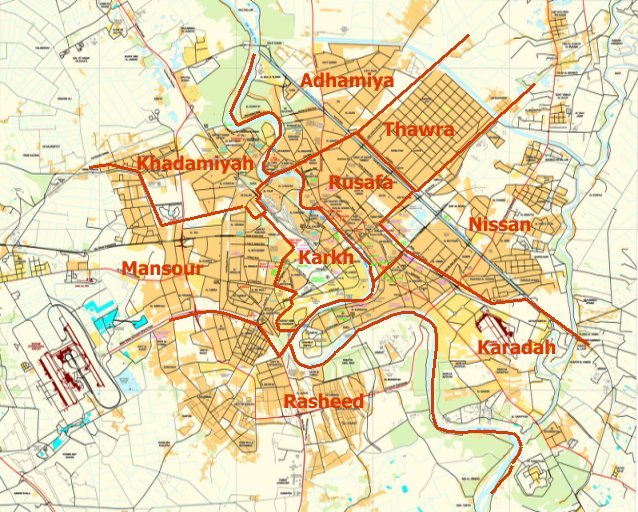
Also Sunday, men wearing Iraqi military uniforms tried to gun down one of radical Shiite cleric Muqtada al Sadr's top aides, raising questions about whether the powerful Mahdi Army controlled by Sadr may be turning on its own, using tactics typically linked to the Mahdi Army itself. Sadr officials said that Sadr's top aide, Hazem al Araji, was in a convoy in the northwest Baghdad neighborhood of Kadhimiyah when armed men wearing Iraqi National Guard uniforms opened fire on him, injuring five of his bodyguards.
Sadr, an influential cleric, leads the Mahdi Army, which has infiltrated Iraqi security forces and is often accused of posing in Iraqi military uniforms to carry out its attacks. It is unclear whether the would-be assassins were actual Iraqi soldiers or possibly other backers of Sadr, whose movement has become splintered in recent months.
A spokesperson for the Iraqi military could not be reached for comment Sunday. Recently, al Araji was reported to have lost clout in the Sadr movement and some of his control over the Mahdi Army in Kadhimiyah. Qahtan al Sudani, a spokesman for Araji who leads the Sadr office in Kadhimiyah, blamed the attack on Sunnis. "We accuse the Baathist takfiris," al Sudani said referring to both Saddam Hussein's secular party and Sunni extremists.
Labels: Al Qaeda, Askariya shrine, Haitham al Badri, Lt. Col Chris Garver, Samarra, U.S. forces


Monday, July 02, 2007
Kurds offer Kurdish battalion to protect Askariya shrine
Security
(AP) - Kurdish officials offered to provide troops to protect a Shiite shrine in the central Iraqi city of Samarra that was heavily damaged twice in bombings the past 16 months, destroying its dome and minarets, officials said Sunday. The offer would have to be approved by the Shiite-led government of Prime Minister Nouri al-Maliki but could anger many Sunni Arabs in Samarra, who are suspicious of the Kurds.
The Askariya shrine in Samarra, 95 kilometers (60 miles) north of Baghdad, is one of the holiest places for Shiites, and a February 2006 bombing that destroyed its golden dome sparked retaliation by Shiites and a brutal cycle of sectarian killings. Despite heightened security, it was struck again last month, bringing down its two minarets.
A delegation from the autonomous Kurdish region of northern Iraq made the proposal to Shiite cleric Muqtada al-Sadr, who recently called off a march to Samarra planned for July 5 after the government and Sunni leaders urged him to do so for fear of sectarian clashes.
"A Kurdish delegation visited (the holy city of) Najaf and came forward with the initiative to protect the holy shrine and guarantee security to the companies and workers who will rebuild the shrine," said Saleh al-Aujaili, a legislator from al-Sadr's bloc in parliament. He said the Sadrist movement welcomes the proposal.
Brig. Gen. Jabbar Yawar, an undersecretary for the Kurdish regional Ministry of Peshmerga (Kurdish militiaman), said a predominantly Kurdish battalion of the Iraqi army's 2nd Brigade is ready to go to Samarra to protect the shrine. "The force will be mixed of Kurds, Arabs and Turkomen and does not belong to any (ethnic) group," Yawar said. He added that the force was waiting for a decision by the Baghdad government. Government spokesman Ali al-Dabbagh was not in the country for comment and repeated calls to other government officials went unanswered.
Defense Ministry spokesman Mohammed al-Askari said there is no need for a force to deploy in the area since the Iraqi army's 4th Division, made up mainly of Shiite and Sunni Arabs, is deployed in Salahuddin province, where Samarra is located. He added that an Iraqi army force has deployed around the shrine since the June 13 bombing.
Labels: Askariya shrine, Brig. Gen. Jabbar Yawar, Moqtada Al-Sadr, Najaf, Peshmerga, Samarra
Friday, June 29, 2007
UNESCO adds Samarra to World Heritage Sites list
Culture
(AFP) - The United Nations Educational, Scientific and Cultural Organization (UNESCO) announced the latest additions to its list of World Heritage Sites on Thursday, singling out the Iraqi shrine city of Samarra as a new site that is also a site in danger.
Ever since the US-led war in Iraq broke out in 2003, the shrine city has been repeatedly targeting by bombings. It was once a powerful Islamic capital and ruled over the provinces of the Abbasid Empire, which extended from Tunisia to Central Asia in the ninth century.
Last week, Iraq signed a multi-million-dollar deal with UNESCO to rebuild a revered Shiite mosque in the city. The mosque was all but destroyed by two attacks, most recently on June 13. The first bombing, in 2006, destroyed the shrine's golden dome and sparked reprisals that have claimed tens of thousands of lives. The follow-up attack earlier this month destroyed the shrine's two gold-covered minarets.
In addition to the site in Samarra, a silver mine on a Japanese island, rock carvings in Namibia and the iconic Sydney Opera House were added to the UN body's register of places that hold global cultural significance. There are 830 sites on the list already.
Labels: Askariya shrine, Samarra, UNESCO, World Heritage Sites
Al-Sadr delays Samarra shrine march
Security
(Al Jazeera) - Muqtada al-Sadr, a Shia cleric, has postponed his followers' march toward a bombed Shia shrine north of Baghdad. "Muqtada al-Sadr has decided to postpone the march to Samarra for several reasons, including the government's inability to secure the route and many officials' appeals for a postponement," Sheikh Asad Al-Nassiri, an aide to the cleric, said on Friday. He made the announcement during a Friday sermon in nearby Kufa.
Earlier on Friday, the Iraqi Accordance Front, the largest Sunni bloc in Iraq's parliament called on al-Sadr to cancel the march, saying it was too dangerous. Al-Sadr had called for his followers to march to the Askariya shrine in Samarra known for its shimmering golden dome destroyed by suspected al-Qaeda bombers in February 2006.
After a second attack toppled the mosque complex's minarets earlier this month, the cleric called for Shias to march to the shrine on July 5. The statement by the Sunni bloc, which holds 44 seats in the 275-member legislature, came a day after the Iraqi cabinet and the defence ministry both made similar pleas, saying the road to the mosque was not yet secure.
"We call on our Shia brothers and those in the al-Sadr movement to postpone their planned visit in July to the Askariya shrine, which was the target of two terrorist criminal attacks that aimed to divide Iraqis," the statement said.
Labels: Askariya shrine, Iraqi Accordance Front, Moqtada Al-Sadr, Samarra, Sheikh Asad Al-Nassiri
Thursday, June 28, 2007
al-Sadr vows Samarra march to proceed despite warnings
Security
(AP) - Radical Shiite cleric Muqtada al-Sadr vowed Thursday to go ahead with a planned march to a devastated shrine in central Iraq but insisted the goal was not to confront Sunnis who live along the way. Instead, al-Sadr said the march was aimed at bringing Shiites and Sunnis closer together and breaking down the barriers imposed by the Americans and Sunni religious extremists.
The march is set for July 5 to the Askariya shrine in Samarra, which was bombed for a second time June 13. Sunni organizations and government officials have urged al-Sadr to cancel the march, fearing it will escalate sectarian violence that already has claimed thousands of lives. Prime Minister Nouri al-Maliki's office issued a statement Thursday calling on people not to go to the central city because securing the road between Baghdad and Samarra will take "some time."
"As we appreciate the people's feelings to go to Samarra in a peaceful march, we declare that securing the road to the city has not been completed according to commanders in the area," the statement said. Some Sunnis also fear that the march will bring thousands of Shiites to Samarra in a bid to change the demographics of the predominantly Sunni city. Al-Sadr insisted that his marchers will return to their homes as soon as the march is over.
"We call upon all Iraqis, whether tribesmen, dignitaries or officials to show the good will and cooperate in order for this march to be successful and to be a turning point in improving the fractured relations," al-Sadr said. Since his return from Iran last month, al-Sadr has been trying to show himself as a unifying figure for Iraqis rather than a divisive Shiite leader. His posters can be seen in some streets of Baghdad with a caption reading: "I am not a Shiite and not a Sunni. I am Iraqi."
Al-Sadr called Iraqis of all sects and ethnic groups to take part in the march, which is to mark the birthday of Islam's Prophet Muhammad's daughter, Fatima. "We hope that this year will be good for Iraqis when they get closer to each other by breaking all the barriers that were placed by the occupiers and takfiris," al-Sadr said.
Al-Sadr's Mahdi Army militia launched two uprising against U.S. troops in 2004 and is widely blamed for much of the sectarian violence against Sunnis. An aide said thousands of gunmen will guard the demonstrators, who are expected to come from the predominantly Shiite south and Baghdad's eastern slum of Sadr City.
He said that the government has sent al-Sadr intelligence reports warning that Sunni insurgents are planning attacks against the Shiite demonstrators. Samarra, located 60 miles north of Baghdad, is an area where al-Qaida's Iraq branch is known to be active. The shrine is revered by Shiites even though the city is mostly Sunni.
Labels: Askariya shrine, Moqtada Al-Sadr, Samarra
Tuesday, June 26, 2007
Association of Muslim Scholars urges al-Sadr to cancel Shia march
Politics, Religion, Security
(AP) - An influential Sunni clerical organization urged Shiite Muslims on Monday to cancel a march toward a destroyed shrine in an Iraqi central city, warning that such a move will further enflame sectarian hatred. The statement by the Association of Muslim Scholars was in response to a call by radical Shiite cleric Muqtada al-Sadr for his followers to march July 5 to Samarra's Askariya shrine, which was bombed for a second time June 13.
Such a march by Shiites in predominantly Sunni area could lead to more sectarian violence between the two Muslim sects. Thousands of Sunnis and Shiites have been killed in sectarian killings in the past two years.
"We want you to be aware that this step in this current situation is not suitable and its risks are clear to everyone," the Sunni association said in the statement. "The goals behind this movement are very dangerous. There are some parties who want to make use of your feelings of love for these shrines to have their ambitions of tearing Iraq's unity and provoking a nonstop sectarian dispute among its people."
"The citizens of Samarra will consider this huge march in their city as an invasion on their areas, and the parts who pushed you might attack you as well, and the blame would be fall on Samarra's people," the statement said. "We appeal you to forsake this demonstration now for the sake of your country, your unity and Islam," The letter said.
An aide to al-Sadr, who spoke on condition of anonymity because of the sensitivity of the matter, said that the cleric is insisting on the march despite efforts by the government to talk him out of it. The aide said thousands of gunmen will guard the demonstrators, who are expected to come from the predominantly Shiite south and Baghdad's eastern slum of Sadr City. He said that the government has sent al-Sadr intelligence reports warning that insurgents are planning attacks against the Shiite demonstrators.
July 5 is the Islamic calendar anniversary of the birth of the mother of Imam Hussein, a major Shiite saint. Samarra, 60 miles north of Baghdad, is an area where al-Qaida is known to be active. The Askariya shrine is revered by Shiites even though the city is mostly Sunni.
Labels: Al Qaeda, Askariya shrine, Moqtada Al-Sadr, Muslim Scholars Association, Samarra