Wednesday, August 29, 2007
52 dead in Karbala as rival Shiite militias battle for power
However, the violence among rival Shia factions appeared to have spread overnight. Fighters attacked the offices of a powerful Shia party in at least five cities, setting many of them ablaze. In a separate incident on Wednesday in Mosul to the north, armed men raided an Iraqi police checkpoint on Wednesday and killed five policemen and a civilian, police said.
Al-Maliki, in a statement on Wednesday, said: "The situation in Karbala is under control after military reinforcements arrived and police and military special forces have spread throughout the city to purge those killers and criminals." Sporadic and occasionally sustained gunfire could still be heard after dawn in the city, coming from the area around the shrines of Imam Hussein and Imam Abbas.
The fighting killed 52 people and wounded 206 on Tuesday, a senior security official in Baghdad said. The general director of the al-Hussein hospital in Karbala, 110km south of the capital, said it had received 34 bodies and treated 239 wounded. Ali Kadhum, an official at the shrines' media office, said the two shrines had been slightly damaged, with bullets hitting their domes and minarets and an electric power station ruined.
Hundreds of thousands of pilgrims had gathered in the city to mark the birthday of the 12th and last Shia imam. The interior ministry accused al-Mahdi army, a militia loyal to Muqtada al-Sadr, the Shia leader, of attacking government forces in Karbala, the site of two shrines under the control of the Supreme Iraqi Islamic Council (SIIC). Al-Sadr's forces are vying with the SIIC for power in the regions south of Baghdad.
Al-Sadr called for calm on Tuesday night but police said SIIC buildings were torched overnight in Baghdad's Kadhimiya neighbourhood, in the city of Kufa, in Iskandariya and in al-Hamza district of Babil province. Another SIIC headquarters was struck by rocket-propelled grenades in the centre of Najaf.
This week's Shia pilgrimage was to have reached its high point on Tuesday night and Wednesday morning. Thousands thronged the city to mark the12th imam's birthday. Pilgrims had earlier complained about the level of security - which they said was so high it made movement frustratingly slow near the Imam al-Hussein mosque. Security was high as pilgrims have been killed in previous years by suicide bombers.
Major-General Abdul-Karim Khalaf, a spokesman for the interior ministry, said al-Maliki had dispatched more troops to the area from Baghdad and the surrounding areas. Khalaf described the armed men as "criminals" and said that the curfew was imposed because of fears for the large mass of pilgrims. He said: "The situation now is under control, but what is worrying is that the pilgrims are in huge numbers."
Labels: Badr Organisation, curfew, Karbala, Mahdi Army, Major-General Abdul-Karim Khalaf, Moqtada Al-Sadr, Nouri Al-Maliki, Sha'abaniya, Shiite pilgrims, SIIC


Tuesday, August 28, 2007
Authorities evacuate pilgrims from Kerbala
Hundreds of thousands of pilgrims are in Kerbala, many having come from other Shi'ite cities and also Baghdad. A senior hospital official in Kerbala said six people had been killed and 28 wounded in the clashes. Police earlier said gunmen armed with automatic weapons and pistols tried to take control of the area around the two shrines. They confronted the police and army who opened fire.
The violence follows clashes between police and pilgrims on Monday night in which at least six people were killed on the eve of one of the holiest events on the Shi'ite calendar. Pilgrims are celebrating the 9th century birth of Mohammad al-Mahdi, the last of 12 imams Shi'ites revere as saints and who they believe never died and will return to save mankind.
Labels: evacuation, Imam Abbas shrine, Imam Hussein, Karbala, Mohammad al-Mahdi shrine, Shiite pilgrims
Pilgrims shot on the way to religious festival
In another attack near Iskandiriyah, Amari said a man and his daughter were shot dead also while driving to Karbala, huge where crowds of pilgrims are gathering to celebrate an eighth-century imam. Tuesday's killings come after five people were shot dead by police gunfire in Karbala late on Monday when pilgrims became agitated at tight security cordons which created long queues. An AFP correspondent said the atmosphere in the city's winding streets was calm and the mood festive on Tuesday, with pilgrims carrying the green flags of Islam thronging the city's two main shrines.
Karbala police expect two million pilgrims to gather to mark the birth anniversary of Mohammed al-Mahdi, the 12th imam of Shiite Islam, who the faithful believe disappeared from the northern Iraqi town of Samarra and will return one day to save the world. Leading Shiite cleric Sheikh Abdul-Hadi al-Mahamadawi appealed for calm after Monday's shootings. "Everyone should comply with the orders of the leader Moqtada al-Sadr," Mahamadawi, a senior cleric in Sadr's office in Karbala, said through loudspeakers at the Hussein shrine. "A Muslim should not kill another Muslim," he quoted Sadr, one of Iraq's most influential Shiite leaders, as saying.
Police said 15,000 security force members have been deployed across the city while medical officials said 53 ambulances and 24 medical teams are on standby and 750 units of blood have been stored in case of emergency. A vehicle ban has been in place since Sunday.
Unlike other Shiite rituals in Karbala, usually to mark the deaths of the two imams buried there, pilgrims will not be flagellating themselves with iron chains or cutting their foreheads with swords. Instead they will pay homage in the shrines of Imam Hussein and Abbas to observe Imam Mahdi's birth anniversary although there is no shrine to Mahdi himself as he is still believed to be alive.
Karbala became a pilgrimage site for Shiites after the slaying of Imam Hussein in 680 by armies of the Sunni caliph Yazid. A grandson of the Prophet Mohammed, tradition holds that Hussein was decapitated and his body mutilated by Yazid's armies.
Labels: Imam Mahdi, Iskandariyah, Karbala, Mohammed al-Mahdi, Moqtada Al-Sadr, Sheikh Abdul-Hadi al-Mahamadawi, Shiite pilgrims
Thursday, August 09, 2007
Anti-Saudi feeling runs high among pilgrims
This year's pilgrimage also comes amid an unprecedented wave of anger toward Saudi Arabia. Government and religious leaders here charge that the neighboring kingdom is doing little to stem the flow of its nationals to Iraq to wage "holy war" on Shiites. The Saudi backlash is being fueled by Iraqi media reports and Shiite leaders' condemnations of apparent fatwas, religious rulings by Saudi muftis calling for the destruction of Shiite shrines in Iraq.
But some Saudi Arabian analysts say this is a way for Baghdad's pro-Iranian leaders to steer attention away from Tehran's involvement in Iraq and toward its Sunni neighbors. In spite of questions about their authenticity, the fatwas are stirring up much of the Shiite community and is indeed coloring this year's pilgrimage.
"It is going to be the pilgrimage of defiance in the face of these fatwas that desecrate the imams and call for the destruction of their shrines," says Hazem al-Araji, a leader in the movement of firebrand Shiite cleric Moqtada al-Sadr. "Every Shiite that venerates the imams must say to the mufti [Sunni cleric] that we will defend the imams with our blood," he says.
As pilgrims began arriving Tuesday, the image of seventh Shiite Imam Musa al-Kadhim in shackles hung on banners over the neighborhood of Kadhimiya. The imam was poisoned about 1,200 years ago. His persecution resonates deeply in Iraq today as Shiites try to hold onto unprecedented political gains while being viewed with suspicion in the Sunni Muslim world, especially in Sunni-led Saudi Arabia where Shiites are seldom allowed to openly practice their religion.
"So far, the Saudi attitude in particular, and the Arab one in general, has been negative toward the political process in Iraq," says Ridha Jawad Taqi, an Iraqi Shiite parliamentarian. "If they want nothing to do with us then we will just look for friends elsewhere." Further fanning the flames of anti-Saudi public sentiment is the outrage expressed over an incident that Mr. Taqi says took place Sunday in Mecca, Saudi Arabia, when a group of Iraqi Shiites, including his son, were roughed up by Saudi security forces.
"They noticed they were Shiites because one of them was wearing a black turban so they rounded 12 of them up and beat them up with batons including my son Amir," he says, adding that his son plans to sue Saudi authorities, who have not publicly commented on the incident.
Several Saudi experts who track fatwas online denied the claims of the most recent one regarding Shiite holy sites. Ayed al-Dosari, a contributor to the United Arab Emirates-based Saha bulletin board, known for its extremist Sunni views, posted an article Wednesday calling the Iraqi claims "a lie" to "stoke the flames of discord."
Labels: fatwas, Hazem al-Araji, Imam Hussein, Imam Musa al-Kadhim, Kadhimiya mosque, Karbala, Saudi Arabia, Saudi muftis, Shiite pilgrims
Tight security in Baghdad as Shia pilgrims flock to Kadhimiya mosque
Almost 1,000 pilgrims died in 2005 when rumours of an attack caused a stampede. Many victims, mostly women, children or elderly, were crushed or drowned as panic spread that there were suicide bombers among the pilgrims. More than 1,800 Iraqi police, including hundreds of security agents, have been deployed in and around the mosque, which is one of Shia Islam's holiest sites.
The mosque has long been a target of insurgents, the BBC's Andy Gallacher in Baghdad says. Many Shias flog themselves during the pilgrimage. The pilgrimage marks the death in 799 of Musa al-Kadhim, the seventh of 12 imams revered by Shias. On Thursday, more than a million pilgrims are expected to march to the mosque, many flogging themselves with iron chains or cutting their foreheads with swords. These grieving rituals were banned under former Iraqi President Saddam Hussein. But now they are something of a show of power for Shias in Iraq, our correspondent says.
Labels: Baghdad, Imam Musa al-Kadhim, Kadhimiya mosque, Shiite pilgrims
Tuesday, August 07, 2007
Baghdad lockdown for religious festival
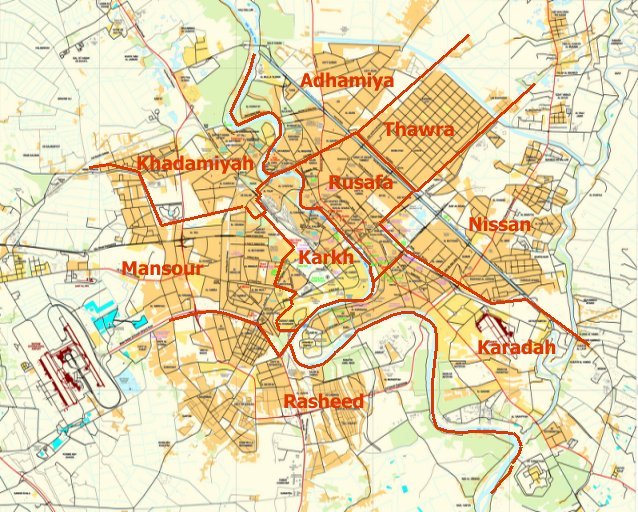
In the Kadhimiyah district of the city, home to Kadhim's tomb and the centre of the celebrations, the curfew will begin on Tuesday night, he added. "The aim of the curfew is to deny terrorists and takfiri (sectarian extremists) any opportunity to strike," Atta, the chief spokesman of the Baghdad security plan, told state television. Atta said civilians would not be allowed to carry weapons and that the route that pilgrims will follow on foot to the shrine would be tightly controlled by Iraqi security forces.
Imam Kadhim was the seventh of the 12 Shiite imams and died in Baghdad in 799 after he was poisoned in prison. Every year tens of thousands of Shiite pilgrims mark his passing by visiting his tomb in Kadhimiyah.
Iraq is in the grip of sectarian war and previous pilgrimages have been marred by violence and accidents. In August 2005, at least 965 people were killed when fears of attack triggered a stampede on a Tigris river bridge.
Labels: Baghdad, Brigadier General Qassim Atta, curfew, Imam Musa Kadhim, Kadhimiyah, lockdown, religious festival, Shiite pilgrims
Monday, March 12, 2007
Shias mourn Sunday's attack as Minister's convoy is bombed
The men and boys were celebrating their good fortune when one noticed a car racing far too fast, coming toward them from behind. The bomber barreled into their flatbed truck, setting off an explosion that killed at least 32 and wounded at least 24. One of the pilgrims, Mustafa Moussawi, accused officials of not providing enough security. "I blame the government," he said. "They didn't provide a safe route for us even though they knew we were targets for attack."
In the past two years, the Shiite militia Mehdi Army provided security for the pilgrimage. This year, however, the Mehdi militiamen has been sent to the wings under a deal between its leader, radical cleric Muqtada al-Sadr, and the government to ease the way for the Baghdad security sweeps. The pact apparently has led to a decrease in execution-style slayings blamed on Shiite death squads. It also made the pilgrims easier prey.
Also Monday, a roadside bomb blasted an Agriculture Ministry convoy in southeastern Baghdad, killing three security guards and wounding another, officials said. The blast targeting the ministry employees occurred in the Zayouna area of the city. Agriculture Minister Yarrub Nazim was not in the convoy.
Labels: Moqtada Al-Sadr, Shiite pilgrims
Sunday, March 11, 2007
More pilgrims killed
In Karrada, a car bomber drove into a truck that was bringing about 70 men and boys home from the holy city of Karbala, south of Baghdad. Hundreds of thousands of pilgrims had gone to Karbala to mark the Arbaeen ceremony, one of the holiest events in the Shia calendar. "I blame the government," the Associated Press news agency quoted one man injured in the blast as saying. "They didn't provide a safe route for us even though they knew we were targets for attack."
Last week, in the run-up to the ceremony, scores of pilgrims were killed in bomb and gun attacks across Iraq.
Sunday's separate suicide attack happened in Baghdad's Shia stronghold of Sadr City, injuring at least eight people.
Labels: bombings, Karrada, Sadr City, Shiite pilgrims
Friday, March 09, 2007
2.5 million pilgrims arrive in Karbala
The Arbaeen religious festival will take place ahead of a planned international conference in Baghdad on Ira'q's situation. Rituals begin on Friday to mark the end of a 40-day mourning period commemorating the death of Imam Hussein, Prophet Muhammad's grandson, more than 1,300 years ago
Labels: Al Arbayeen, Karbala, Shiite pilgrims
Thursday, March 08, 2007
Al-Sadr speaks out against U.S. and attacks on pilgrims
Last month a US military spokesman said that Sadr had left Iraq for Iran ahead of a large-scale Iraqi and US joint security operation, which has since netted several members of his Mahdi Army militia. Sadr office denies this, as does Tehran, but it has been many weeks since Sadr appeared in public or attended prayers at his mosque outside Kufa. Previous statements have expressed support for the Shiite-led government's security forces in the operation, but have demanded that they halt their close cooperation with US troops, whom Sadr calls "the enemy occupier".
Sadr's statement also condemned attacks over the past three days on Shiite pilgrims heading to the holy city of Karbala to mark Arbaeen, which have killed more than 150 people in a series of bombings and shootings.
"May God bless the souls of the marytrs and may those responsible for these despicable crimes burn in hellfire," he said. Nevertheless, the Shiite leader called for unity rather than revenge on Sunnis, telling Iraqis: "I beg God to unite you and distance you from the spectre of sedition and sectarian war."
Labels: Al Arbayeen, Moqtada Al-Sadr, Shiite pilgrims
Bloodshed continues as 1 million pilgrims head for Karbala
Iraqi security forces have been bracing for more trouble this weekend at the climax of Shiite religious rites as hundreds of thousands of Shiite pilgrims were streaming by bus, car and foot into Karbala, 50 miles south of Baghdad, many of them marching behind banners affirming their reverence for Imam Hussein.
With the militia on the sidelines, Shiite leaders have expressed anger that the Shiite-led government security force had failed to protect the marchers. Attacks against pilgrims have also sharpened sectarian tensions at a time when U.S. officials had hoped the Baghdad security operation would encourage Shiite, Sunni and Shiite leaders to come together in power-sharing agreements to end the crisis. Instead, new strains have emerged, not only between the rival Islamic sects but within the dominate Shiite political bloc itself.
Labels: Al Arbayeen, Karbala, Shiite pilgrims, suicide bomber
Wednesday, March 07, 2007
Pilgrim death toll rises as attacks continue
Crowds of pilgrims were out on the streets of Baghdad on Wednesday, undaunted by Tuesday's attacks, causing traffic jams as they headed on foot along major roads, conspicuous in their black clothing with white shrouds on their shoulders. Masses of Shi'ite pilgrims are heading to Kerbala on foot and by bus to commemorate Al Arbayeen, the end of a 40-day mourning period since Ashura, which marks the death of Prophet Mohammad's grandson in 680. Kerbala, one the holiest cities in Shi'ite Islam, lies 110 km (68 miles) south of Baghdad.
Hilla, scene of Tuesday's deadliest attacks, is nearby. Two suicide bombers strapped with explosives detonated themselves almost simultaneously there on Tuesday on a busy street lined with tents, set up to offer food, drink and resting areas for pilgrims on their journey. Local hospital officials said at 115 people were killed and 200 more wounded. Another source, Babel health department head Mohammed Abd-Radha al Hafaj, put the death toll at 105, of whom 35 were still unidentified.
Shi'ite Prime Minister Nuri al-Maliki blamed Sunni militants and supporters of former President Saddam Hussein for the "barbaric crime," according to a statement from his office. Security in and around Kerbala is tight for fear of a repetition of suicide bombings and attacks on Shi'ite religious rituals by suspected Sunni insurgents of the sort that killed 171 people in Baghdad and Kerbala in March 2004.
Labels: Al Arbayeen, attacks, Karbala, Shiite pilgrims
Tuesday, March 06, 2007
Shiite pilgrims attacked
Labels: Al Arbayeen, Karbala, Shiite pilgrims